Category Archives: legalism

legalism

Re-Examining the Divorce Controversy

Recently, I have been asked about the issue of divorce and whether or not it ultimately disqualifies one from ministry, especially the pastorate. Even though I know there will be many of you who disagree with me on this, here are my thoughts on the subject. Please understand that I did not come by them lightly.

My Story

I will never forget the phone call I got from a church in Rome, GA about 16 years ago. Someone on the other end of the line was part of a search committee looking for a new pastor.  They had gotten my resume and were impressed enough to give me a call.  Everything was going well until they asked a very pointed question, “Bro. Anthony, does your wife have a spouse that is still living?”  I responded coldly, with squinted eyes and through clinched-teeth, “Yes, ME.”  Unfortunately, this would not be the last time something like that happened.

What I encountered on the telephone that day was not unusual, nor unexpected, but it stung, nevertheless. I had chosen to marry a woman who had been divorced and it cost me. But even though our (then) pastor told me marrying Valerie would “put the final nail in the coffin” of my ministry hopes, I was aware the scripture (1 Tim. 3:2) being used against me was lacking in exposition, and it was ultimately up to God whether or not I pastored a church.  So, after much study, I felt peace that what I was doing was right (but it didn’t hurt when the late Dr. Spiros Zodhiates gave us his approval).

But let me be clear about a few things…

wedding picture fourFirst,  I have never been divorced, so for me the whole argument of 1 Timothy 3:2 should be moot.  Second, my wife was left with no choice but to divorce; furthermore, it happened before she was a believer.  Third, my wife’s ex-husband remarried and divorced again before I even met her. By all accounts my wife was free to remarry, so both she and I were clear from any “adultery” issues.  

Also, I am “the husband of one wife,” and Scripture NEVER said a bishop “must be the husband of one wife who was the wife of only one husband, ever.” Just a minor observation.

So, what DOES the Bible say?

1 Timothy 3:2 says,  “A bishop then must be blameless, the husband of one wife...”  Also, verse 12 says, “Let the deacons be the husbands of one wife...”  The difficulty with these verses is not what is being said, but how it is interpreted.  

Is Paul telling Timothy that in order to be a pastor, deacon, or elder in a church, you must have only been married once?  Could it even be possible that Paul is saying that a man of God MUST have a wife, because being single would disqualify one from ministry?  These are things that have been debated for centuries.  

Some believe that a pastor, deacon, or elder should have never been divorced (or married to a divorcee) . Others believe that in order to be a proper leader, one must be married.  Still, many commentators believe that the proper rendering of the Greek is “one-woman man,” implying faithfulness and character over the number of wives.  In reality, what the Bible says is one thing, but as William D. Mounce put it, “The Greek gives us a range of possibilities, but our theology is going to determine our interpretation.” 

I think there’s another way to look at it…

Take a look at 1 Timothy 3 and read through verse 12.  The best I can figure is that there are between 16 and 17 qualifications for the bishop, and between 6 and 8 for the deacons.  All of these are preceded with a literal or an implied “must be,” as in “must be blameless,” or a “must have.”  How does this affect the argument that an elder “must have” only been married once, never remarried, or never divorced?    

Think of any great man of God you know that has stood behind the pulpit and faithfully proclaimed the Word of God.  Has he always been blameless?  Has he always been on his best behavior?  Did he ever get drunk, covet, lose his patience, or curse his wife or children in anger?  Was he ever a novice, a beginner subject to pride? If so, then according to the logic of some, he should never be able to preach or lead in God’s church, for just as a man “must be the husband of one wife,” so he also must be “blameless, vigilant, sober, well-behaved, given to hospitality, patient, never greedy, and always in control of his house and children.”  

Do you see it?  If your interpretation leads you to believe that the bishop must have only had one wife – ever – then the same hermeneutic (the study of the principles of interpretation) should apply to the other “must be’s.”  “Must be the husband of one wife” = never divorced.  “Not a novice” = never been a beginner in the faith. Doesn’t make sense, does it?

1 Timothy 3:1-12 is in the present infinitive tense (i.e., must be / dei einai).  The requirements listed are ones that describe a man of character and faithfulness, of sobriety and gravitas; not a beginner or one untried and unproven.  What I see is a list of requirements that may not have always been present in a man, but should be NOW, after God has done a verifiable work in his life.  In other words, the Bible says a bishop “must be,” not “must have always been,” or “must have never done.”  Paul said, “and such were some of you:  but ye were washed, but ye are sanctified, but ye are justified in the name of the Lord Jesus, and by the Spirit of our God.” – 1 Corinthians 6:11

Here’s my point…

I believe that there are plenty who are sitting back or hiding out because someone has convinced them that they are used up and un-usable.  For example, I can think of men right now who, for whatever reason, are divorced.  Yet, these men, now Christians, are sold-out, God-fearing, faithful, Spirit-filled fathers and husbands with proven testimonies and unimpeachable character.  Sadly, however, because of mistakes made when they were young, unsaved, and stupid, they cannot serve as deacons, much less as pastors.  

On the other hand, I can think of several pastors today who were once murderers, drug dealers, fornicators, extortioners, and abusers of mankind (do I need to explain that last one?). Yet, only because they don’t have “divorced” to add to the list of past sins, they are accepted and given full reign as leaders in the church. 

Sad.

It’s time the body of Christ re-examine this issue in the light of GRACE.

6 Comments

Filed under baptist, Divorce, General Observations, Independent Baptist, legalism, Relationships and Family, Uncategorized

What to Wear to Church? (2014)

“What to Wear to Church?” has consistently been the number one search entry leading people to this site. What does that tell you?

If you’ve never read my thoughts on this before, this is the post all the search engines bring up. Originally written in 2010, it has been updated for today.

Clothing

A while back I was asked to be the guest speaker at a larger, more contemporary church. Out of respect for each other, the pastor of that church and I jokingly discussed what I should wear. You see, he never wears a suit, while I almost always do. His congregation has become more “contemporary,” while my congregation remains more “traditional.” So, to make me comfortable, the pastor told me whatever I wanted to wear was fine. Therefore, I will compromise – I will probably wear a sport coat, khakis, and flip flops…not really.

The way I dress to go to church may not be the way you dress. My style may not suit your tastes, nor yours mine. But the fact of the matter is that unless you’re totally too liberal, or don’t go at all, you wear some kind of clothing to church, correct? Well, have you ever wondered if what you wear to church is appropriate?

Below are some of my thoughts on the subject.

It’s Not About You

If you are planning to attend a worship service where God is supposed to be the center of attention, don’t dress like a clown! Or, in other words, don’t dress like you’re the star – going to church shouldn’t be a fashion show.

Some cultures believe people should come to church in clothing that could damage someone’s retina. Gettin’ “fancied up” is what’s expected. But it’s this type of clothing, in most cases, that draws attention to the congregant, not Christ. My advice is to stay away from neon suits and flashing bow ties. Church clothing should be a covering, not a calling card.

Show Some Respect

Some people think it is totally appropriate to wear enough jewelry and feathers to keep pawn shops in business and all geese naked. Others think it is completely acceptable to look like a drunk that slept in an alley all night (no offense to the drunk). Neither shows a sense of respect. The first steals God’s glory, while the second implies God’s house is no different than anywhere else.

Here’s a couple suggestions. Try going to a White House dinner looking like a hobo or a hippie from the 60’s. Receive an invitation to tea from Queen Elizabeth and show up looking like you just got out of bed and never took a shower. Unless you’re a bona fide rock star, or simply Bono, security personnel may escort you to a private room to “get acquainted.” Therefore, if dignitaries of earthly kingdoms demand respect, why shouldn’t we offer it to our Heavenly King? Is God not greater than Obama? (clear throat)

Beware of Legalistic Standards

However, whatever you wear, don’t be too quick to judge another’s spiritual condition by what they wear. Only God knows the heart.

Who art thou that judgest another man’s servant? to his own master he standeth or falleth. Yea, he shall be holden up: for God is able to make him stand. – Rom 14:4 KJV

Sadly, I have been around many believers who consider one style of clothing a sign of spiritual maturity, while another style a sign of spiritual waywardness.  And you know what’s funny? It doesn’t matter which side of the spiritual tracks, there’s always somebody looking at another thinking, “They’re not right with God.”

Legalism cuts both ways, dear friend. For example, I have been to churches that ridiculed any woman who wears pants, or a man who never tucks in his shirt. On the other hand, I have been in congregations that blatantly condemned all dress and tie-wearers as right-wing, self-righteous, fundamentalist, nut jobs. In both cases someone judged another’s spirituality based on outward appearances, alone. In both cases one group’s set of standards were being used as a guide to what is spiritual behavior and what is not. That’s LEGALISM!

Believe it or not, the most modern, non-denominational, praise-and-worship-style congregation can be just as legalistic as the narrow-minded traditionalist. I may not prefer to preach in blue jeans on Sunday morning, but I’m not going to condemn someone who does. Likewise, when I don’t wear a suit and tie on Sunday night, I am not going to condemn someone who dresses like he’s going to a funeral.

Context, Context, Context

Ultimately, how you dress should be determined by the context of your community. Small, rural congregations might not feel comfortable dressing for church in the same way a metropolitan First Baptist may. Similarly, churches in depressed economies may adopt different dress codes than upwardly mobile societies. The key is to be respectful, honorable, and considerate of the holy moment at hand. Whatever fits that bill is good enough.

Just keep this principle in mind:  Grace accepts, Maturity develops, and Love constrains.

Don’t make appearances the only thing about which you’re concerned. The Gospel of Jesus Christ is far too important a message to be drowned in petty arguments about whether it is appropriate to dress up for church, or go dress-casual. Many people in the world have to worship Christ underground – literally. Dress codes are the least of their worries. Additionally, the drug addict who needs hope and help may not have any clothes left that he hasn’t already sold to get high. The single mother of five that walks into your church may have barely enough energy to survive, much less do her hair.

Do all things to the glory of the Lord, but keep things in perspective, OK?

My brothers, as believers in our glorious Lord Jesus Christ, don’t show favoritism [or be legalistic]. Suppose a man comes into your meeting wearing a gold ring and fine clothes, and a poor man in shabby clothes also comes in. If you show special attention to the man wearing fine clothes and say, “Here’s a good seat for you,” but say to the poor man, “You stand there” or “Sit on the floor by my feet,” have you not discriminated among yourselves and become judges with evil thoughts? Listen, my dear brothers: Has not God chosen those who are poor in the eyes of the world to be rich in faith and to inherit the kingdom he promised those who love him? – Jam 2:1-5 NIV

11 Comments

Filed under baptist, Christian Living, Christian Maturity, Christian Unity, Culture Wars, Do not judge, legalism, wisdom, worship

You Might Be a Legalist…

A while back I posted a list I found on a website called PTM.org. I don’t know who wrote it, but I wish I had.

So, without further ado…

You might be a legalist, if…

1) God’s love for me depends on what I do.

2) Meeting the expectations of others, especially those in my congregation or in positions of authority, are paramount.

3) Moral and ethical questions are usually black and white and only made into fuzzy shades of gray by hand-wringing, bleeding-heart types.

4) I try hard to obey God and it irritates me that others think they can get away with avoiding the same level of dedication.

5) I fall short because I don’t have enough faith, or because I haven’t prayed enough, or because I just need to be a better person.

6) God is predisposed to be angry with me because I am a sinner. My main goal in life is to try to gain God’s favor by doing things that will impress him.

7) My sense of spiritual well-being is linked to a Christian leader or membership in my church rather than a personal relationship with God.

8) I tell my children not to do something in church or around other Christian families that I allow in my home.

9) I believe my church is God’s true church and that most other Christians may be sincere, but are sincerely wrong.

10) The exterior choices a person makes in what they wear, hairstyle, piercings, tattoos, etc. is a clear indication of that person’s character.

11) I sometimes worry that people might take advantage of grace if it’s preached too much —people might think they can do anything they want.

12) After being around Christians for a while I feel drained —weary of putting up a false front.

13) When I happen to miss a service or activity of my church I feel guilty.

14) I will likely get into heaven, even though I’m far from perfect, because I have tried to be a basically good person and God will take that into account.

So, are you a legalist? I used to be, but I still struggle. That’s the reason for this blog. That is why I call myself a “recovering” legalist.

1 Comment

Filed under abuse, baptist, legalism, Life Lessons

Thursday Thoughts (Doctrines & Brandy)

Greetings, friends, family, and followers (including the freakily-weird ones)! It is another Thursday, so time to share some random-like thoughts.

  • Subscribers and Followers. Is it just me, or is it strange when you have people “following” your blog, but they are absolutely nothing like, they’re not even from the same planet, as you? OMC (Oh my cupcake)! Some of my subscribers are hookers, Satanists, self-proclaimed aliens in bodily form, atheist (they’re more normal, actually), and visual artists who leave nothing to the imagination. I even have a few Democrats lingering in the shadows. Strange, isn’t it?
  • Essential Doctrines. Today I was asked by someone, “Can you tell me what you consider to be the essential doctrines of the faith?” I began by listing off the top few that came to mind, such as the Trinity, salvation by grace through faith, the divinity of Christ, etc. But then it became clear that the easiest thing to do was to start listing the doctrines/teachings that were not essential, especially the ones that typically divide the body of Christ. There are certainly doctrines that are essential, but there are so many more that are not. The problem is determining which is which.
  • Field Trip Disappointment. Today I drove a group of teenagers from Belvoir Christian Academy (a Lutheran school) on a field trip to the Hunter Museum of Art in Chattanooga. I thought I was going to be able to go in with the little kiddies, but I had to stay with the bus or get a parking ticket (not fair). So, after the cold, wintery disappointment got hold, I left the bus anyway and walked across the street to my favorite coffee and pastry shop, Rembrandt’s. Even though I didn’t get to tour the museum, a Russian tea cookie, a chocolate-covered brandied cherry, and a cup of locally-roasted coffee made me feel much better.

    photo 1

    Rembrandt’s

  • Brandied Cherries. If you ever happen to be walking through downtown Chattanooga, please stop by my favorite coffee shop. Not only do they roast their own beans, but they craft their own gourmet candies. And it is because of this I must warn you of something: when they say “brandied cherry,” they’re not talking about artificial flavoring. Biting into one of those, especially if you are a teetotaler, will get your attention real quick.
  • Legalism. No, I’m not going to go to hell, nor will I lose any eternal reward, because I ate a chocolate-covered brandied cherry.

4 Comments

Filed under Alcohol, Food, legalism

Thursday Thoughts

It’s another Thursday – and a cold one! – here in Chattanooga, Tennessee.  It was a whopping 5 degrees Fahrenheit this morning, and that’s cold enough to make Joel Osteen preach on hell to get warm. [Laugh, I know you want to]

The weather leads me to the first of one of my short thoughts for the day…things I want to write about, but don’t want to take the time to go into much detail…

Comparisons between the North and the South. 

I am getting really weary of people making fun of how we Southerners deal with snow. They make fun of us because we make such a big deal out of a “dusting,” while Yankees take their kids to school on bobsleds. Give it a rest, you lutefisk-loving haters of state’s rights!

Believe it or not, I have driven in Rochester, New York while there was 6-inches of snow on the roads. But that is totally different from driving on asphalt covered with a quarter-inch of ice.


Screen grab from Dr. Oz's website

Screen grab from Dr. Oz’s website

Dream Analysts (with freaky-colored hair)

This week I saw a segment on Dr. Oz that featured a “Certified Dream Analyst.” Giiiiive meeeee uuuuhhhh breaaaak!

Patient: “I have this dream where I am falling.” Analyst: “That is your body responding to you being out of control in your life.”

Patient: “People chase me in my dream, and I can’t get away.” Analyst: “That’s a classic sign that you are running from something in your past, or something you don’t want to deal with.”

Patient: “I keep having this dream that I am in school.” Analyst: “Your body is trying to teach you something.”

What a joke! After the first person’s dreams were analyzed, I figured out how to do the rest. How much does this pay?

Continuing Education

preaching magazineEven preachers who preach all the time (i.e., me) need to continue learning. It never hurts to seek ways to improve what you do, to hone one’s skills, even if you already do it well. That is why I was happy to see my first copy of Preaching come in the mail. My oldest daughter, Alicia, bought me a subscription for Christmas.

Never See Eye-to-Eye

A recent Facebook conversation reaffirmed an already sad realization: there are some people with whom I will never, no matter how much I try, see things eye-to-eye. For example, a preacher named Jon Dabill and I got into a long, long exchange over the issue of KJV-onlyism.

Fact is, he was wrong…I was right. What more can I say?

Oh, I know! I could say, “This is my opinion based on serious, objective study and a scholarly approach toward the original texts.” On the other hand, Jon would say, “You can’t trust the originals, just the perfect King James version, so phooey on all your study! You gonna trust scholars, or the Bible?”

Personally, I prefer truth. If a word in the KJV could be changed to better convey the original meaning of the passage, even the translators of the KJV thought it should be so (see their letter to the reader in the introduction to the KJV). Jon said, “I could care less what the translators believed.”

Well, there you have it. Another Thursday, and more stuff to think about. 

Leave a comment

Filed under baptist, blogging, General Observations, legalism, Preaching

Thursday Thoughts (Who Knew?)

Hello, dear friends and subscribers (both friend and evil, stalking foe)! It is another Thursday evening where I am, and boy is it getting cold! Cold, I tell you! Explanation point!

So, what is on my mind? Oh, nothing too much, only the fact that I am now the wearied owner of a new label: Bible corrector.

Yes, according to someone on Facebook with the last name of LaRue, I am…

“…a Bible corrector. At least that’s settled. You can take your Egyptian mentality and shove it.”

A Bible corrector? Yes, a Bible corrector.

And according to other comments, I’m not a Bible believer, either. No, I am but an “apostate” Bible corrector with an “Egyptian mentality” evidently capable of being inserted into my nether regions. Eeeeewwww!

But why?

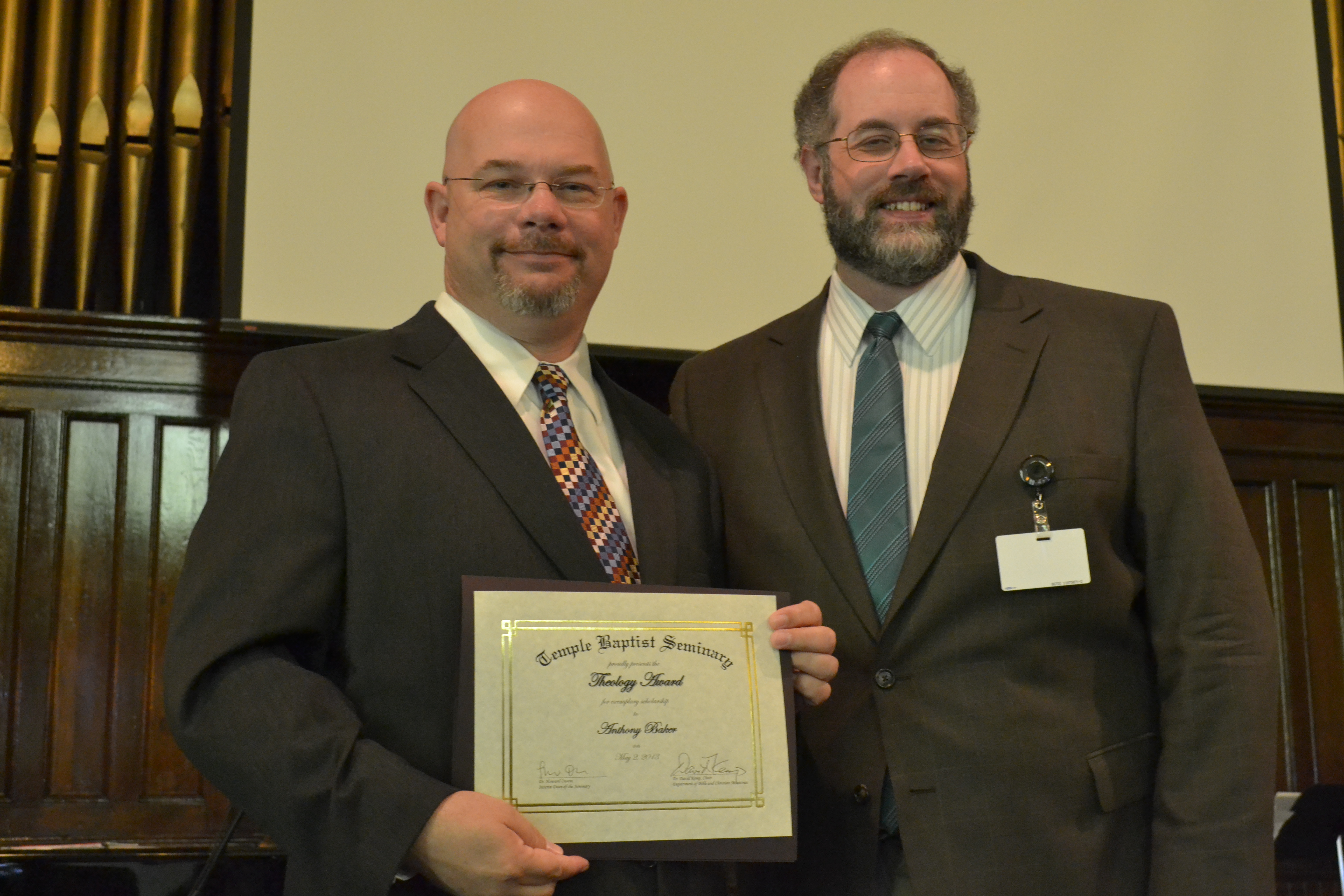
Receiving the Theology Award from Temple Baptist Seminary

Receiving the Theology Award from Temple Baptist Seminary

Why is this preacher…this defender of the faith…this hated conservative…this herald of God’s grace…this humble little Baptist fuzzball…not a believer, but a correcter?  Simple…I dared to suggest a word in the King James Version of the Bible could be amplified by a closer study of the original Greek (New Testament).

I mean, seriously! Who knew that suggesting κεράτιον (translated as “husks” in Luke 15:16) might be something other than what covers an ear of corn could be equal to getting in bed with Beelzebub?

Therefore, instead of an Independent, Fundamental, Bible-believing Baptist, I’m a Non-autonomous (cause I’m Southern Baptist), Convoluted, Bible-correcting, Apostate Egyptian. And all this time I thought I was following Christ.

That’s not a cross I’m carrying?

Who knew?

Leave a comment

Filed under Independent Baptist, legalism, Southern Baptist, Theology, translations

Favorites of the 500

Favorite Posts

post-milestone-500-1xI first started blogging back in 2009. Since then I have written over 500 posts, but many have all but been forgotten – out of sight, out of mind.

Therefore, I have gone back and picked several of my favorites from the first couple of years and listed them below. I hope you will have the time to look at a few, especially the ones specifically dealing with legalism (my pet subject).

  1. The Doctrine of Separation Examined (Where most of my Independent Baptist friends and I – I’m Baptist, too – disagree the most)
  2. Why Be a Legalist?
  3. Prostitots? (One of my most in-your-face, no-punches-pulled posts)
  4. Does Divorce Disqualify? (Very controversial post)
  5. What to Wear to Church? (Many people should read this, then send a copy to everyone in their church!)
  6. Study to Show Thyself Approved On a Survey
  7. Smoking: The Legalists Are Alive and Well
  8. Let God Be True, and Luther a Liar
  9. The Recovering Legalist Meets Building 429 (My first mega-hit piece, thanks to the band putting this on their website 😉 )
  10. The REAL Problem With the Problem of Evil (Pretty much a personal essay on the problem of evil)
  11. “You might be a legalist if…” (Did Jeff Foxworthy write this?)
  12. Anthony’s Appetite #6 (Marinated Herring) (I used to be an amateur food critic)
  13. You Call THAT a Church?
  14. Don’t Be Skeerd (my own list) (A funny list at what Christians should NOT be afraid of)
  15. Monday Monkey Meets Benny Berry (I still get teary-eyed when I watch this!)

3 Comments

Filed under blogging, General Observations, Independent Baptist, legalism

Perfection Not Required

“Two men went up into the temple to pray; the one a Pharisee, and the other a publican. The Pharisee stood and prayed thus with himself, God, I thank thee, that I am not as other men are, extortioners, unjust, adulterers, or even as this publican.”

“And the publican, standing afar off, would not lift up so much as his eyes unto heaven, but smote upon his breast, saying, God be merciful to me a sinner.” – Luke 18:11, 13

Looking for a Pastor

Imagine that instead of the temple, a Pharisee and a publican walked into a pastoral search committee meeting (like we have in the Baptist denomination).  They walk in, introduce themselves, compare resumes, and one gets the job.

pharisee and publicanWhich one do you think would be hired? Answer (typically): The one that fits the picture of what every Christian fit for service should be – perfect.

But God doesn’t use perfect people; He uses REAL people. Yet sadly, within the church, there are many men and women who have felt inferior and useless because of sinful and broken pasts.  They are the people who sit on the pews, week after week, doing all they can to be faithful in life, but are forbidden to hold positions in the church.  They are much like the Publican, men and women who know they have failed before, but want to be forgiven and start new.  They are not the ones that look down on others for mistakes they’ve made. 

Genesis of Dysfunction

A while back I read through the book of Genesis in a couple of sittings.  Reading a book of the Bible that way, especially in a different translation, can help you see the story from a new perspective.  This time I was just astounded at how messed up these people really were!  There was so much “stuff” going on that if it were today, it would make an episode of Jerry Springer look tame!

Consider, if nothing else, the sad story of Jacob, Leah, and Rachel. This was a seriously messed up family with real marital problems.  At one point, Leah and Rachel get into a jealous argument over a son’s mandrakes.  Just imagine you were a marriage counselor and listened in to the following story…

Reuben went out during the wheat harvest and found some mandrakes in the field.  When he brought them to his mother, Leah, Rachel asked, “Please give me some of your son’s mandrakes.”  But Leah replied to her, Isn’t it enough that you have taken my husband?  Now you also want my son’s mandrakes?”

“Well,” Rachel said, “you can sleep with him tonight in exchange for your son’s mandrakes.”  When Jacob came in from the field that evening, Leah went out to meet him and said, “You must come with me, for I have hired you with my son’s mandrakes.”  So Jacob slept with her that night. – Geneses 30:14:16 HCSB

Check this out…

  • Twice Abraham told other people that his wife, Sarah, was his sister so that he would not be harmed.
  • Joseph’s brothers hated him and sold him to traveling salesmen.
  • Jacob and Esau were seriously at odds.
  • Leah, poor thing, kept trying to have children so that her husband, Jacob would love her.

And there’s more!

  • Jacob’s father-in-law, Laban, got him drunk on his wedding night and gave him the wrong wife – on purpose.
  • The son’s of Jacob (founders of ten of the tribes of Israel) lied to a bunch of men about making a covenant, then proceeded to slaughter all of them after they had convinced them to be circumcised.

It just goes on and on.  Messed up, I am telling you! MESSED UP!

Nevertheless,

God told Abraham in Genesis 12:2-3: “And I will make of thee a great nation, and I will bless thee, and make thy name great; and thou shalt be a blessing: And I will bless them that bless thee, and curse him that curseth thee: and in thee shall all families of the earth be blessed.”  How is this even possible?  

If God can use Abraham and his family with all their problems to bless the nations, then He can use ANYBODY!


4 Comments

Filed under Abortion, abuse, Christian Living, Do not judge, Faith, General Observations, legalism, Relationships and Family, Struggles and Trials, World View

A Long Post About “Begotten” and Awkward Outbursts

I hate it when someone tells me that they are listening to me, but then do other things while I am talking. For example, when I talk to my wife, I prefer that she put down the phone, the dishes, the laundry, and quit sending emails and texts when I have something important to tell her (notice I used the word “and,” not “or” in the list of things she does). Call me selfish, but it is important to me that I know someone is listening when she says she is.

The reasoning for this preference of mine became embarrassingly evident last night at Taco Bell. My wife said she was listening to me, but only partly so. I will now share with you how I know this to be true.

The Subject

Yesterday (Sunday) morning I preached a sermon drawn from John 3:16. It was a powerful message stressing the grace of a loving God who would give His One and Only Son, Jesus, as a ransom for our souls. It was a message that also stressed, among other things, the uniqueness of Jesus Christ. Therefore, part of the sermon dealt the Greek word monogenēs (translated “only begotten”).

So, last night, after church and choir practice, my family and a friend went to Taco Bell for a late night gut bomb. As we sat there in the restaurant, my wife asked me to go back over some of the things I shared regarding the King James word “only begotten.” As I began to do so, I noticed she was only half-listening as she tried to maintain another conversation with our two daughters sitting with us.

I shared how that it was unfortunate for so many KJV-only-ers to come down harshly on other translations that change “only begotten Son” to “One and Only Son.” Many claim that the change is an attempt to pervert Scripture; to deny the divinity of Jesus. Yet, what many don’t understand is that the word “begotten” is not the best word that could be chosen to support the very biblical doctrine of the Trinity.

“Only-Begotten”

The King James Study Bible’s notes on John 3:16 explain monogenēs (translated “only begotten”) in the following way (note the highlighted parts):

The Greek word monogenēs is used by John to convey only the unique relationship between God the Father and Jesus as the Son of the Father. It serves to distinguish Christ as the only Son of God, in contrast with the many children of God. The uniqueness of this relationship is further emphasized by the fact that we become the children of God whereas Jesus always was the Son of God.[1]

Note, nothing is said about why the word “begotten” was used in the first place, nor what the  definition of monogenēs actually is. According to sources such as A Concise Greek-English Dictionary of the New Testament, the Louw-Nida Greek Lexicon, the Lexham Analytical Lexicon to the Septuagint, and the Greek Lexicon of the Septuagint, the word translated “only-begotten” actually means “unique,” “only,” and “the only member of a kin, only-begotten, only (of children) Jgs 11,34; id. (of God) Od 14,13; alone in its kind, one only.”[2]

So, even though “only-begotten” can be used to translate monogenēs, it is obvious that the actual theological meaning implied is that Jesus is the One and Only, totally unique, never created, always God, Son of God – the Word made flesh. Therefore, in my opinion, it is unnecessary for KJV-onlyists to condemn the translating of monogenēs into language that more accurately reflects the theology they are actually trying to preserve.

I find the following selection from Eardmans Bible Dictionary very interesting…

The KJV translation of Gk. monogenḗs “only, unique, one of a kind,” used (following Vulg. Lat. unigenitus) with reference to both Jesus Christ (John 1:14, 18; 3:16, 18; 1 John 4:9) and Issac (Heb. 11:17). Most other translations consistently read “only,” while the NIV translates “the one and only” with regard to Jesus. In English “only begotten” implies a created being, an implication not conveyed by the Greek term (cf. Luke 7:12; 8:42; 9:38).[3]

As I explained to my wife and a friend, there is nothing wrong with changing a word to better reflect the actual meaning, especially when the modern understanding of the word being used tends to give credence to an un-biblical, heretical theology!! Consider the following section (especially the bolded parts) from Baker Encyclopedia of the Bible

The phrase “only-begotten” is not an accurate translation and should not be used in any of the nine passages. This phrase is derived from the Latin Vulgate (a translation of the Bible from about the 5th century which has been quite influential on other translations) and reflects certain theological debates about the person of Christ. …Ultimately the phrase “begotten not made” leads to what theologians call the doctrine of the eternal generation of the Son. …“Only-begotten” is an incorrect translation. The idea being stressed is the uniqueness of Jesus’ relation to the Father. [4]

The irony is that I am the one who will be slammed and denigrated as a liberal “operative of Satan” who wants to change the Truth of Scripture. In the meantime, I am doing nothing but trying to “take heed unto…thy doctrine” (1 Timothy 4:16).

The Punchline

So, sitting in Taco Bell, I talked with my friend about monogenēs, at one point breaking down the word into its two parts, “mono” and “genes.” Unfortunately, sometime in the conversation I made a slip and mixed my words, saying “homogenes” (as in homogeneous). When I looked at my wife and asked, “Are you even listening?” She loudly, where everyone in the whole stinking place could hear her…

“HOMO! I got it! I GOT the HOMO!”

Here’s a lesson: if Greek bores you, keep silent about it in public places.


[1] King James Version Study Bible ., electronic ed. (Nashville: Thomas Nelson, 1997).

[2] Johan Lust, Erik Eynikel, and Katrin Hauspie, A Greek-English Lexicon of the Septuagint : Revised Edition (Deutsche Bibelgesellschaft: Stuttgart, 2003).

[3] Allen C. Myers, The Eerdmans Bible Dictionary (Grand Rapids, MI: Eerdmans, 1987), 782.

[4] Walter A. Elwell and Barry J. Beitzel, Baker Encyclopedia of the Bible (Grand Rapids, MI: Baker Book House, 1988), 1590.

1 Comment

Filed under God, Humor, legalism, Love of God, Preaching, Theology, translations

Legalism In Pink

Football

It’s called football, but it’s not soccer, which is football everywhere else. It’s a game in which boys and men (if you can distinguish the two), and now sometimes even females, put on helmets and plastic body armor in order to give coaches a job and colleges a way to make money.

Football is a game that is so associated with testosterone and adrenalin that even the girls who now play in the game are said to be growing beards. There is supposed to be nothing wimpy, wussy, or feminine about football.

However, due to the rise in popularity of promoting breast cancer awareness, the color pink has infiltrated the formerly masculine gridiron.

“Save the Ta Tas”

To be honest, I am sick of the sexualization of such a deadly disease. Each October the adds start appearing everywhere, seemingly promoting more breast awareness than cancer awareness. And even though I have family who have been hurt by this disease, I question the ultimate value of “ta tas” and “boobies” around every corner.

pink footballBut just when some thought football was one of the last bastions of male chauvinism and immune from feminization, along came the publicists and promoters of pink ribbons. Now, every October, football players of every age, from elementary school to the NFL, wear more pink than a newly birthed piglet.

Legalism on Display

Now, just in case you are getting angry with me, as if I want women to get breast cancer, just chill and listen to what I have to say. What really irritates me is not the attempt to raise breast cancer awareness; it’s the attitude shown to those who don’t want to wear pink.

Not long ago I had to drive a middle school football team to a game. As these tough, smelly, sweaty football players were preparing to load the bus I started asking them, “Why are you wearing pink socks?” The reply was typically, “I don’t know, they just gave us this stuff to wear.” Literally, none of these boys had a clue why they were wearing pink. All they knew was that they were supposed to wear pink because that’s what they were told to do, just like the professionals whom they idolize.

 Legalism: “Do what you’re told and you won’t get in trouble.” Legalism: “If you aren’t wearing pink, you must want women to get cancer.” Legalism: “I want the girls to like me, so I’ll wear these pink shoes and wrist bands.” Legalism: “I don’t know why I am wearing this, but if I don’t, people will get angry and look down on me.”

Grace: Playing the game without feeling you have to change the way you look in order to please someone else, then donating to breast cancer research because you want to.

5 Comments

Filed under legalism