Category Archives: Christian Maturity

Monday Monkey Decorates the Tree (Episode 6)

We just got our Christmas (not holiday) tree, but haven’t decorated it. That will happen sometime today or tomorrow. It’s not something I look forward to, except for the eggnog.

However, while we were out to church, Mr. Monkey decided to decorate the tree all by himself. Bad idea.

You see, just because he is a monkey, he thinks that climbing a tree is no big deal. What he doesn’t take into consideration is the fact that climbing a tree and decorating it with electric lights is complicated. He should have just waited until he could have help.

Sadly, it’s pretty common for people to think they can handle things alone. Their pride makes them think that they are strong enough, smart enough, independent enough, and perfectly capable of anything, even when they’re weak, hurting, and needy. Pride will lead to a fall.

Mr. Monkey’s Bad Idea

And for the record, it takes help to make these little videos. I can’t do them alone. So, a big thanks goes out to Kevin Miller, my old friend, for giving me a hand this time around.

4 Comments

Filed under Christian Maturity, Christmas, Humor, Life Lessons, Monday Monkey

Bad Week in Lake Wobegon

Yep, it’s been a rough week, here in Lake Wobegon. It seems that all illusions of self-sufficiency are fading away with the realization that I can’t do everything, only a few things, and not many very well.

Lake Wobegon

Some of you never listen to public radio, therefore you are probably googling the afore-mentioned town to determine its location. Don’t bother – it’s fictitious. It only exists in the mind of Garrison Keillor and the imaginations of Prairie Home Companion listeners.

In Lake Wobegon, “all the women are strong; all the men are good-looking; and all the children are above average.” There, somewhere in Minnesota, Norwegian bachelor farmers make flour for biscuits that are “pure, mostly,” and “give shy persons the strength to get up and do what needs to be done.” Everything is great there, even when things are tough. People just know how to handle things in Lake Wobegon…and if they don’t, they just eat more Powder Milk Biscuits.

The Lake Wobegon Effect

Interestingly, there is actually a syndrome which has been called the Lake Wobegon Effect. People that suffer from this think that everyone in their own group are above average, better able to “do what needs to be done.” It is described as “the human tendency to overestimate one’s achievements and capabilities in relation to others.” The effect has been observed among CEO’s, stock market analysts, college students, etc. [1] I bet it is real common with Christians, too; especially pastors.

I Need More than Biscuits

I am not above average. My middle initial is even “C.” Yet, I have been called to do a work that is far above average: imitate Jesus Christ. Now how in the name of all that is Norwegian am I supposed to do that? I’m not even a great actor, much less one who could play the part of the greatest character in the history of history (and before)! I can’t even do all that an average human needs to do, like be a good husband, father, student, or pastor.

This week, if never before, I had to come to terms with the fact that I do not live in Lake Wobegon. In my own strength everything I touch falls to pieces right before my eyes, that is, if it ever gets built in the first place. What am I supposed to do? Eat make-believe biscuits?

I am the vine, ye [are] the branches: He that abideth in me, and I in him, the same bringeth forth much fruit: for without me ye can do nothing. – John 15:5

I can do all things through Christ which strengtheneth me. – Philippians 4:13

Well, that makes sense, doesn’t it? If we are supposed to live like Christ and do what He calls us to do, having His power and presence in our lives would make all the difference. I wonder why I always stress out when I have so much to do, thinking it can’t be done?

Maybe I’ve been getting too many Powder Milk Biscuits, and not enough Jesus. How about you?

P.S. Your prayers would be appreciated.


2 Comments

Filed under Christian Living, Christian Maturity, ministry, Uncategorized

Keeping Watch at Night

2Samuel 7:4 “And it came to pass that night, that the word of the LORD came unto Nathan…”

2:30 a.m.

Believe me, I am not one who enjoys getting out of bed before the sun even hits the snooze button on its alarm clock. If it were up to me, I would prefer stumbling to the coffee pot in daylight. But that’s not my life – I’m a school bus driver. 5 o’clock mornings are my norm.

But I am also a pastor. A shepherd. And because I am a shepherd of souls, I sometimes have to do like the shepherds of old, keep watch over my flock by night. That requires being on call all the time, including the dark times. And when I say “dark times,” I mean that literally and figuratively.

The Night

Just like the time mentioned above, sometimes shepherding involves looking out for your sheep while they sleep. In the Christmas story we read of shepherds “keeping watch over their flocks by night.” Why? Because evidently wolves and thieves work third shift, too. It’s in the dark times that pastors and intercessors are needed most.

It was in the night that “the word of the LORD came unto Nathan.” What would have happened if Nathan had refused to wake up? What would have happened had he refused to listen, but instead said, “I have GOT to get some sleep?”

This morning, at 2:30 a.m., the Lord placed a prayer on my heart. He gave me a “vision in the night.” I could have griped, rolled over, looked at the clock, and asked, “Why now?” Instead, I sat up on my elbows and began to intercede for the one God placed on my heart, and for a ministry for which he has given me a burden. What would have happened had Nathan refused the word meant for King David, all because it was after working hours? Would the Temple have been built by God’s design?

Your Call

Have you ever woken up at night with another person on your heart? When that happens, what do you do? You see, dark times come at all times, especially when it’s most inconvenient. As a matter of fact, the “darkness” may even be a difficult time in your own life. It may be in the wee hours of your own “night” that God chooses to speak.

Don’t ignore Him. He wouldn’t call in the middle of the night if it wasn’t important.

9 Comments

Filed under Christian Maturity, Christmas, Life Lessons, ministry, Preaching

What Kind of Friend Are You?

Do you consider yourself to be a good friend? What makes a good friend? More than that, what makes a real, true friend? I believe there is a difference.

A Good Friend

Good friends are the ones you have over to watch a ball game, but don’t worry if the house is messy. He’s the type of friend that you don’t mind bringing along to dinner with the family. She’s the one with whom you don’t mind sharing your gripes and complaints, like when your spouse ticks you off, or your co-worker make you jealous.

A good friend is one that remembers to invite you to a birthday party, a movie, or loans you a pick-up truck to move a piano (God bless’em). They’re the type of friends you get along with, even though you may have different tastes or opinions. You care about each other and say things like, “If you need anything, just let me know.”

Job had Good Friends

Job (as in the Bible, not to be confused with Steve) had some good friends. Really, they were not that bad. Just look at how they acted when they saw Job after the tragedies came about.

And when they raised their eyes from afar, and did not recognize him, they lifted their voices and wept; and each one tore his robe and sprinkled dust on his head toward heaven. So they sat down with him on the ground seven days and seven nights, and no one spoke a word to him, for they saw that his grief was very great.” – Job 2:12-13 NKJV

Obviously, his friends cared enough about him to break down into tears at the sight of his brokenness. They were good enough friends to even tear their clothes, sit down with him on the ground, and weep with him for seven days. They even cared enough to keep silent seven days so Job could pour his heart out in grief. They were good friends.

Superficial Friends

If the friends of Job had only been the partying type, do you think they would have come to see him after hearing of his loss? No, if they had only been superficial friends, they would have stayed far away from Job and his problems. They would have said, “Oh, that’s so sad…we should send him a Hallmark card…Honey, where are my keys?…I’m going to be late to the gym.”

Religious Friends

Anyone who goes to church has these. Religious friends are the ones who always have a smile and a warm handshake, but never really want to hear about your life. These type of people give a bad name to church folk. Have you ever met any? If you have, you know. They ask, “How are you doing today?” Then, just as you start to give a response they say, “Great, great…love your heart…well, I’ll be praying for you, honey, don’t you worry.” Riiight.

User Friends

This is not a scientific assessment of friendship types, but sometimes I think most friends are only users. When you stop and think about it, how many friends would you have if you had nothing to offer? At least Job’s friends weren’t users. They came around when Job had nothing to offer but tears. They came to offer him something – if only judgmental advice.

True Friends

This may only be my definition, but I think it is a good one:  A real, true friend is one who lets you cuss, spit, and even question God when times are tough. A real, true friend is one who will not only cry with you when you hurt, but stand there by your side as you kick the furniture, throw the dishes, slam the door, or even ask, “Why?!

The truest test of real friendship is how he/she responds when you say things you may regret. This is where Job’s friends fell behind.

Job came to the point where he “cursed the day he was born,” and asked God, “What have I done to you? Why have you made me a target?” Job literally became suicidal and terribly depressed as he struggled with trying to understand the reason for his troubles. But instead of keeping quite, or simply saying, “It will be OK, Job,” his friends started accusing him of wrongdoing. They blamed him for the trouble he was enduring, even though they had no proof. All they could do was pour salt on his wounds.

When Job cussed and spit, these friends said things like, “How long will you speak these things, and the words of your mouth be like a bunch of wind (Job 8:2)?” They called his painful rants “empty talk” and “vain words” which proved he deserved God’s judgment.

A real friend will let you expose your pain in ugly ways, with ugly words. Job’s friends should have understood that his words were spoken in grief. They should have understood that sometimes we say things we don’t mean when we are hurting, but need to say them, anyway. A real friend would have taken it, listened, and given only kind words of encouragement.

To him who is afflicted, kindness should be shown by his friend, Even though he forsakes the fear of the Almighty.” – Job 6:14 NKJV

If you know someone who is going through a tough time, don’t be judgmental – just love them. Even if they say things that are wrong, even vulgar, let God be the Judge – you just love them.

Job had to answer to God for the things he said, but the only ones who incurred the wrath of God were Eliphaz and his cohorts (42:7). As I see it, God understood Job, but He found no excuse for the response of his self-righteous friends.

Don’t just be a good friend – be a real friend. You may wish you had one, someday.

  • Friends (anotherchristianblog.org)

3 Comments

Filed under Christian Maturity, Christian Unity, Do not judge, legalism, Relationships and Family, Uncategorized

God-Centered, or Christ-Filled (Pt. 2)

Continuing from last time, let me conclude my thoughts on the difference between being God-centered and Christ-filled.

The Realization

When contemplated what I had asked of God (to make me characterized by a God-centered life), the mental picture of a wheel came to mind. It was the picture of a wheel with a center hub and spokes, much like a bicycle or wagon wheel. As I thought about this, however, something seemed wrong. Something seemed almost selfish.

You see, when you look at a wheel, especially the kind with spokes and a hub, it may not be obvious at first, but there are parts. In such a wheel I can distinguish the spokes from the hub, and the rim from the spokes. I can even see that there are spaces in between the spokes that are empty and not attatched or filled with anything – just empty. If God is supposed to be represented by the hub, the center of the wheel, then the wheel is not really all about the hub, but the wheel itself.

It’s about Jesus

The Apostle Paul told the Athenians (Acts 17:28) that in Jesus we “live, and move, and have our being.” In a letter to the Galatians he said “I am crucified with Christ: nevertheless I live; yet not I, but Christ liveth in me” (Galatians 2:20). It would seem to me that Jesus should be more than our “hub.” He should be our “ALL.”

That is when I thought of a different picture. This time I imagined a solid circle – a disk. Unlike the other picture where God was the center of everything, yet separate, here was a picture of wholeness. In this picture, if my life is this type of wheel, people won’t notice anything about me, just Christ.

All of the spokes (my life, my dreams, my habits and hobbies, my talents, and my desires); the empty spaces (the areas of my life that seem irrelevant); and the rim (the total expanse of who I am – my identity, my sphere of influence); each part is now inseparable from the life and power of Christ who lives within me.

May they see Jesus

So, I no longer want to be characterized as a man with a God-centered life. I want to be a man characterized by the life of Christ. When people look at me, I don’t want them to say, “Hey, that guy really knows how to serve God,” or “Hey, that guy really loves the Lord.” Even though there is nothing wrong with those things, how much better would it be if they could say, “Hey, I met this guy… at first I thought he was that man they call Jesus.

Remember, it was to the Church at Corinth that Paul said, “Examine yourselves, whether ye be in the faith; prove your own selves.” There must have been some hearing this letter read who were deceived. Don’t be like them. Make sure your life is in Christ, and He is in you.

May your activities be “God-centered;” but your life “Christ-filled.” May the world see Jesus in you.

For Discussion:

Can you distinguish between a God-centered and a Christ-filled life? What characteristics would you expect to see?

Do you think someone could live a God-centered life and still be unsaved?

Your comments would be appreciated. 

3 Comments

Filed under Christian Living, Christian Maturity, legalism, Uncategorized

Barriers to Church Growth #9

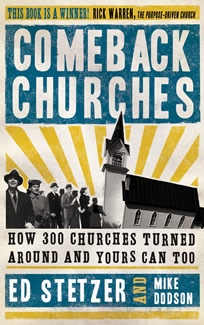
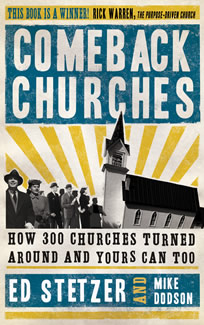
A very revealing study was done, leading to a book detailing how 300 churches went from declining or dying, to growing. In Comeback Churches, written by Ed Stetzer and Mike Dodson, there is a list of 30 different barriers to church growth. Having received permission from the publisher (B&H Publishing Group), I would like to discuss a different barrier each week.

Traditional practices are done without a heart for God (Malachi 1:6ff).

A son honors his father, and a servant his master. If then I am a father, where is my honor? And if I am a master, where is my fear? says the LORD of hosts to you, O priests, who despise my name. But you say, ‘How have we despised your name? – Malachi 1:6 NIV

In a reading of Malachi 1:6-14 it is obvious that God is greatly offended by priests who care little about the One to whom the sacrifices are being made. They offer “polluted” and “blind” offerings, and for what? To gain His approval?

In verse six God was saying, “Look, you give more honor and respect to men than Me. Am I not greater than mere men?” Of course He is, so what was their problem? Did they not care what God would think of inferior offerings?

Essentially, God views giving anything less than one’s best nothing more than an insult to Who He is. God deserves better than the best we would give as a present on Father’s Day. He deserves far, far better than we would give to an employer on Boss’s Day. He is God.  We should give Him our best. Period.

But how have we despised your name?

Maybe we should ask the same question. Are our churches not growing? It might be because we “despise His name” with our poorly executed traditions, our just-getting-by attempts at worship, or our whatever’s-in-my-pocket-besides-the-big-bill offerings.

Notice that Stetzer and Dodson are not putting down traditional practices, only those which are done “without a heart for God.” For many in the church, these practices are only a list to check off, not a means to express appreciation to our Father and LORD. And without true worship, traditional practices suffer the neglect associated with only doing what is necessary to get by. Our God deserves so much better.

Who gets the best effort?

Just take a moment and compare they way we do things on the job, or at school, as compared with worship. What if God gave a paycheck each Sunday based on the way we fulfill our worship duties? What if he gave a grade for how well we listened to and studied His word? Would we even care if poor performance would result in getting fired or expelled?

We say, “God is good – He wouldn’t do such a thing!” And that is one reason why many churches don’t grow. We do enough, we give enough, we sacrifice enough to get by; but without a real heart for God. We never stop to consider that He might be offended…angered…hurt.

What a shame. Why would He want us to multiply?


1 Comment

Filed under book review, Christian Maturity, worship

Going Up Hill

The road of life has it’s ups and downs. At least that’s one of the sayings I have heard.

Another one of those sayings is, “You’ve got to roll with the punches.” I have never really understood the reasoning behind that one, though. Shouldn’t you be standing up and not rolling on the ground when people are punching you? If they are still punching you when you are rolling on the ground, then isn’t that a sure sign you are not getting very far in the fight?

Well, yesterday morning I published a video that I have already decided to take down. It was not that it was bad, or anything. It was just that it went beyond the intended purpose. I have shuffled, not rolled, with the punches. I have re-examined the road.

The Reason

A few weeks ago I decided to start something to help draw in more readers. The “Monday Monkey” segments were supposed to be quick, humorous segments to bring a smile to everyone’s face. This last one was just too long, too complicated, and too weird – especially the part where I wore makeup.

Aside from being too long, I felt that the video, although humorous, tended to give the wrong impression. You see, I like being considered a funny guy, but not at the expense of being taken seriously. Bringing people to this site was never meant to be solely for entertainment purposes. The whole reason for this blog was to address serious issues that affect the lives of Christians, present a grace-oriented view of ordinary situations, and hopefully present the gospel to seekers along the way. The video I just pulled seemed to steer away from that purpose a little too far.

Over the last few months I have witnessed some folks stray from their walk with Christ, which breaks my heart. People who I thought were doing so well suddenly decided to throw in the towel and walk away, all because the struggle was too hard. Sadly, going up hill is never easy.

The Nature of the Walk

But that’s the nature of the Christian walk, isn’t it? It’s never easy. What IS easy is putting life in neutral and coasting downhill at every-increasing rates of speed, forgetting that the bottom is down there somewhere. The struggle is in climbing up hills and mountains every day, knowing the view at the top is worth the climb.

The video I just pulled made me look like all I wanted to be was a comedian. It made me look too goofy and satirical. That side of me would be better left for the comedy stage, I guess. Ultimately, even though I want to bring a smile and a laugh, I don’t want anyone to think my direction has changed.

Keep checking back on Mondays for more “Monday Monkey” segments, but I will be trying to keep them simple and short. The blog is not supposed to be all about a monkey, or even a man. It’s supposed to be more about the Son of Man who taught me that walking up lonely hills is the best way to go.

5 Comments

Filed under Christian Maturity, Monday Monkey, Witnessing

A Small Observation

Politically Incorrect

OK, I will admit it, once you read what this is all about you will tell me that I am being politically incorrect, insensitive, or mean-spirited. You will say that the title of this post is inappropriate and beneath me (well, the beneath part is right). You may tell me that I should not make fun of those who are “vertically challenged.”

If you say these things because you think I am making fun of short, small, or otherwise non-tall people, then think again. I am only being humorous at their expense to make a point. Actually, it won’t be at their expense for long. I am going to pay the bill.

Children Can be Cruel

You know that is true. I know it more than I want to. When driving around a bus load of elementary children, one can hear a lot of cruel comments come from their little, angelic, crumb-crunching mouths.

Little girls, as well as little boys, can get downright mean with the things that they say. They think what they say, however, is purely harmless. They have no idea of lasting consequences. They have yet to sit through months or years of counseling.

Because kids can be unintentionally cruel, I try to steer them (literally) away from opportunity. But on one occasion, even though I did the best I could, the kids jumped at the chance to gawk and laugh. I will never forget what I saw.

Choosing Not to Hear

Not long ago I was driving my school bus down a two-lane road when just ahead of me I spotted a dwarf…a short guy…a midget…walking by the curb. Immediately, I knew what was about to happen.

Right ahead of where this guy was walking was a place I had to make a stop. Sadly, I could not just speed on by, but had to slow down. When the first child saw this little man it didn’t take long for the 20+ others to shift over to that side of the bus to take a look. In an instant there was laughter.

But in all honesty, the laughter was not all that loud. My kids are aware that stuff like that makes me angry, so they try not to get caught. So, only if one had been really listening or paying attention could that person have heard the giggles and jokes. The little man on the road didn’t want to take any chances.

As soon as I started to pass by this 3ft-tall little bald guy with biker tattoos (wearing a tank top and little jeans), he did something that really broke my heart -he put his finger in his ear. He knew what was coming, and he didn’t want to hear.

That simple action said a whole lot. 

  • He had heard cruel laughter before
  • He expected to hear it again
  • He knew what kinds of things would be said
  • He did not have the will, nor the ability to defend himself
  • He decided to not listen, but to close his ears
Sadly, many are convinced what other people say about them is true. The jeers and the laughter not only offend, but cut deeply, causing irreparable scarring and pain. How many have given up? How many have quit defending themselves?

One of the characteristics of a true Christian should be that he defends the defenseless, the ones who can not speak up for themselves. Psalm 82:3 says that we should “defend the poor and fatherless: do justice to the afflicted and needy.” Couldn’t this also apply to standing up for those who are made fun of or mocked unjustly?

Consider the words of Jesus: “Thou shalt love thy neighbor as thyself” (Mark 12:31). What kind of person would want to be laughed at because of something he/she could not help?

Be Considerate

The next time you are tempted, consider what you are doing. The next time you are around someone, even a child, who makes fun of another person, stop and take the time to “defend” and “do justice.”

Don’t walk around with a finger in your ear.

1 Comment

Filed under Christian Maturity, Do not judge, General Observations, self-worth, Uncategorized

Barriers to Church Growth #8 (Selfish Fasting)

A very revealing study was done, leading to a book detailing how 300 churches went from declining or dying, to growing. In Comeback Churches, written by Ed Stetzer and Mike Dodson, there is a list of 30 different barriers to church growth. Having received permission from the publisher (B&H Publishing Group), I would like to discuss a different barrier each week.

“People think of fasting as being for themselves.”

Moreover when ye fast, be not, as the hypocrites, of a sad countenance: for they disfigure their faces, that they may appear unto men to fast. Verily I say unto you, They have their reward. But thou, when thou fastest, anoint thine head, and wash thy face; That thou appear not unto men to fast, but unto thy Father which is in secret: and thy Father, which seeth in secret, shall reward thee openly.” – Matthew 6:16-18

Wherefore have we fasted, say they, and thou seest not? wherefore have we afflicted our soul, and thou takest no knowledge? Behold, in the day of your fast ye find pleasure, and exact all your labours.” – Isaiah 58:3ff

One of the great tools of prayer is fasting. But before we go off too quickly and label it as a “tool” or a “key” to answered prayer and holiness, consider the motive behind it.

Why do people fast? Why do people abstain from food or drink when they pray. Honestly, many do it only to either be seen by men, or to be thought more highly of by God. Neither are proper motivations for fasting.

It’s all about me…

In today’s church culture there are many who promote various ways and means to health, wealth, and spiritual success. You know the type – they’re constantly begging for you to sow a “seed of faith” into their ministries (or should I say “scams” and “snake oil factories?”). There are even those who promote fasting as a way to becoming more holy (then offer a book in exchange for a gift of any amount above $20).

The real problem with all of that is the fact that it preys on the flesh, the sinful tendency to think of “self” more than the will of God. It may help a televangelist get rich when you sow a “seed,” but it won’t bring you closer to God if you are expecting a hundred-fold return on your “investment.” When it’s “all about me,” God is not glorified.

Not a means to an end…

Without getting into a long study of the topic of fasting, let’s just say that most fasting is done for the wrong reasons. Look at the rest of the verses in Isaiah 58, for example. It was not that the people were avoiding fasting; they were even abusing themselves. Yet, God was not pleased. He was not interested in their fastings. He wanted their hearts.

There are so many ways the church could benefit if we would seek the heart of God, not our own desires. If we sought after God with a pure heart, asking Him to burden us with a desire for the lost and broken, fasting would come naturally. Most examples of fasting in the Bible were not begun with intent, but were the result of brokenness. Most of the time the fast was the result of one’s lack of desire for anything other than hearing from God. How different is that from the modern Christian who gives up a meal or two and expects, in return for their great sacrifice of earthly pleasure, an answer to a selfish prayer?

Fasting should never be a means to an end. It should be the natural result of one who can find no pleasure, no solace, no comfort in anything other than a word from the Bread of Life. Anything else borders on an attempt to manipulate the King of Glory into feeling sorry for us. What’s worse, fasting as a means to an end for a request which is intended to be “consumed upon [our] lusts” is no different than self-mutilization or witchcraft.

God will not grow a church that seeks to glorify itself or seek its own desires, especially if it attempts to bribe God in the process.

5 Comments

Filed under book review, Christian Maturity, Food, God, Uncategorized

Barriers to Church Growth #7 (Self-honoring Giving)

A very revealing study was done, leading to a book detailing how 300 churches went from declining or dying, to growing. In Comeback Churches, written by Ed Stetzer and Mike Dodson, there is a list of 30 different barriers to church growth. Having received permission from the publisher (B&H Publishing Group), I would like to discuss a different barrier each week.

“People think of giving as being for their own honor.”

Therefore when thou doest thine alms, do not sound a trumpet before thee, as the hypocrites do in the synagogues and in the streets, that they may have glory of men. Verily I say unto you, They have their reward. But when thou doest alms, let not thy left hand know what thy right hand doeth: That thine alms may be in secret: and thy Father which seeth in secret himself shall reward thee openly.” – Matthew 6:2-4 KJV

I don’t have a problem with buildings, wings of buildings, rooms, sanctuaries, pews, or stained-glass windows being named in honor of people. It’s when those people give money in order have their names put on those things.

One of the most commonly used complaints against the church is, “They only want your money.” Just throw a rock into any crowd and the chances are high that you’ll hit a disgruntled, self-proclaimed atheist who thinks that way.

But even though most churches aren’t all about money (if they were, then why are so many struggling with tight budgets?), there are some folk within the church that like others to know how much money they have. These are the ones who pay the bills, and everybody knows it.

Jesus spoke of those who give just to be seen. I know people like that. They don’t give anonymously, heaven forbid. No, they hold a new conference and write an over-sized, four-foot-long check to the church, while posing for the camera.

These are the people who think they have more say-so in the congregation of believers. They think they have earned the right. Some even give in order to purchase titles, such as “prophet.” What’s worse, that very practice is applauded within a particular denomination. How sad.

What we need are more people who are willing to give because they love the Lord, not praise. I love the scene in Facing the Giants where a wealthy man gives the coach a new truck. Then he looks over at his son and says something like, “Don’t you say a word.” Now THAT’S what I’m talking about!

God gives to us so that we can give to Him. When it is money that we give, it is to be for His glory, not ours. So, if you want recognition, why not wait a little while for the kind that will come from your Heavenly Father?

The praise of men is worthless, if not simply envy in disguise. 

3 Comments

Filed under Christian Living, Christian Maturity, General Observations, Uncategorized