Category Archives: book review

Feedback Needed! Don’t Be a Snotty Susie!

The following is an excerpt from a new book I am trying to complete within the next few days. It will be called Life Lessons from the School Bus. Let me know what you think. Marketable? Funny? Gets the point across? 

“Losing Marbles”

Once there was a little girl on my bus who cried over everything, especially when she didn’t get her way.  She ended up losing her marbles.

Snotty Susie

One morning this little girl – let’s just call her “Snotty Susie” – was crying about how everybody hated her.  Seriously, not two minutes after getting on the bus she started in with her caterwauling (the howling or wailing noise a cat makes). For the next 15 minutes the rest of the kids tried to console her, but all she kept saying through the sniffing, slobbering and crying was “Nobody wants to be my friend! Everybody hates me! WAAAAAH!

Fortunately, we reached the elementary school before everyone went deaf from the crying. Then, just as “Snotty Susie” was stepping off the bus, a little boy who had gotten off in front of her looked back and said, “Nobody hates you, Susie; we just don’t like you.”

At least the little guy was being honest.

The Great Giveaway

Well, that afternoon, when the elementary kids were getting on the bus to go home, “Susie” got on first and sat on the front row. “Would you like a marble, Mr. Baker?” she asked. “No,” I said, “I have plenty.”

What kind do you have?” she asked. “The round kind,” I replied.

Then, as the other children entered the bus, just as soon as they walked past her, she would ask, “Would you like a marble? You can have it for keeps. EVERYONE! Get your FREE marble, if you WANT one!

I asked, “What are you doing? Why are you giving away your marbles?” She said, “Because I am going to MAKE them like me.

Honestly, I felt sorry for the poor little girl. No one had ever taught her how to make friends.

Life Lesson

When we treat people poorly, and then try to buy their friendship with shiny trinkets, we end up losing our marbles.

“Snotty Susie” usually had a bad attitude about everything. She regularly talked mean to other kids, made fun of them, and then cried out in emotional pain when someone wasn’t nice to her. No one wanted to be her friend because she was NOT friendly! She couldn’t even buy friends for a day.

The saddest part was that I picked up a handful of marbles after all the children got off.

Route Suggestions

  • King Solomon said, “A man that has friends must show himself friendly” (Proverbs 18:24). How can you be nice to someone today?
  • Don’t try to buy your friends. If you do, you’ll just go broke (marble deficient) trying to keep them.
  • Don’t let anyone buy YOUR friendship. Be a real friend to somebody who’s a marble short.

[UPDATED IN AN ATTEMPT TO BE LESS SOPHOMORIC. I HOPE IT WORKED.]

10 Comments

Filed under book review, Humor, Life Lessons

Book Release!

Proverbial Thought

OK, when I say “my” book, it was my idea, but I’m just the editor and co-writer; I didn’t do all the work by myself. As a matter of fact, I had help from around the world. The full title of this voluminous work is Proverbial Thought: Your Daily Word of Wisdom from Proverbs.  We couldn’t put everything into one book, or it would be entirely too large – and expensive. That’s why this book is the first of several volumes.  At 318 pages, Volume One contains thoughts on chapters 1-10 of Proverbs. There’s 21 more chapters and a lot more detail to go!

book cover

Click Here to Purchase 🙂

I am very proud of what we have accomplished. Below is the preface that explains how all this came about.

Preface

What you are about to read is a work that came together over a period of two years. It first started out with an idea placed on my heart, I believe, by the Holy Spirit. Then it proceeded to be something that I tossed around to others, asking for advice, picking their brains. Finally, what it ended up being was a collection of personal commentary on one of the most famous collections of wisdom known to man – the book of Proverbs.

When the Lord impressed me to start a blog called Proverbial Thought, it wasn’t because I had a lot of time on my hands. As a matter of fact, in February of 2012, besides being a husband and a dad with two daughters still at home and being homeschooled, I was a pastor who had decide to finish a long-pursued seminary degree. In other words, I had plenty to do. However, I kept feeling led to start a daily devotional/commentary.

Since 2009, I had been publishing a blog called The Recovering Legalist.com, which introduced me to other bloggers, such as David Welford in Herefordshire, UK. After some prayer, I contacted David and asked him what he thought of co-contributing to another blog dealing with Proverbs. His immediate response was positive, even suggesting others who might want to get involved, such as his son, Nick. Ultimately, I approached over twenty individuals around the world and in my own community; eight came on board.

By the way, it was very important, I believe, to gather contributors from around the world and from different walks of life. By doing so, instead of relying on the limited life experiences and from one culture, the wisdom of Proverbs could be approached from various perspectives, lending insight that might not be available to another. For example, in one post a writer from England describes the wisdom from a proverb in light of the Iron-age fortress in his back yard. Seriously!? How many people can address a subject from that perspective? Not me!

So, in March of 2012, I put together a Google document that contained a list of dates with a corresponding proverb. Those who agreed to contribute to Proverbial Thought were asked to periodically go to that online community list and write in their names beside the verses on which they wanted to comment. Sometimes the selection was purposeful based on our knowledge of a particular Bible verse. But for the most part, each one of us went to that master list and wrote in our names, never knowing what the subject matter was going to be about. That led to a lot of “God moments.”

Eventually, nearly two years and almost 700 entries later, the project that enlisted writers from the United States, Canada, and England was complete. However, along the way a lot of “life” happened. Some of that “life” can be read in the following daily entries; more than a few words are dotted with tears. God knew what He was doing when He led us to “arbitrarily” choose which proverbs we would write about. He knew what we would be going through at the time we sat down to a computer to write. So, in one sense, what you are about to read is spiritual journey, almost a diary, of what God wanted these contributors to learn, and to share, about true Wisdom. -Anthony C. Baker


Special Thanks!

I just want to thank David Welford, Daniel Klem, Jason Sneed, Chris Jordan, Rev. Ken Welford, Nick Welford, and Katie Marie for lending their “thoughts” over the last couple of years. Without their help this would not have been possible.

I would also like to thank Dr. David Myers for referring David Tullock at Parson’s Porch Books (a publisher who’s profits go to take care of the needy).

It is also necessary that I thank my wife and daughters. They are the ones who put up with me as I sat for many hours in front of a computer screen. Maybe all this was worth it.

Last, but not least, I must thank my Savior and Lord, Jesus Christ. He is the Wisdom that confounds the foolishness of men, and on Whom I totally rely (1 Cor. 1:23-25).

3 Comments

Filed under blogging, book review, Life Lessons, wisdom

Don’t Feel Like a Failure

Depressing Motivation

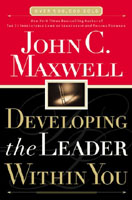
I have been reading a great, classic book on leadership by John C. Maxwell, Developing the Leader Within You. The book is excellent (click here for a summary), but one part really made me question the author’s intentions. Was he trying to depress me?

In the 10th chapter, “Staff Development,” Maxwell decided to share with us a time when he took stock of his life. He went on to list what he was doing by the time he’d reached the ripe old age of 40 (I guess that’s because life’s about over by then?).

“When I turned forty,” Maxwell said, “I began to review my life. I made a list of all the things I was doing at that time.” Get that! At “that” time! Not what he had accomplished in his whole life, but what he was doing “at that time.” His list included (and I quote):

  • senior pastor of a congregation of 3,500 attenders;
  • oversight and development of thirteen pastors;
  • president of Injoy, Inc., a company that develops resource materials for thousands of people;
  • a national and internaional speaking schedule with over four hundred engagements annually;
  • producing a monthly leadership tape for Injoy Life Club subscribers;
  • writing a book every eighteen months;
  • working on another education degree;
  • and most important – taking enough time for my wife, Margaret, and our two children, Elizabeth and Joel Porter. – Dr. John C. Maxwell, 179-180

Give me a break! Are you kidding me? I’m nearly 45 and I’ve never had an international speaking schedule or even written one book! Good grief, John!

Bigger and Better

Today’s culture is all about “bigger and better.” Many people even think about churches in that way, too – the bigger the better. But is that really the case? Is bigger always better?

It may be news to some of you, but pastors sometimes get discouraged when they compare the sizes of their ministries to those of people like Dr. Maxwell. Instead of 3,500 attendees, most pastors lead churches with only 35 in attendance (1/100th). Does that make them failures? Of course not.

Don’t misunderstand, if a congregation is small because it refuses to follow God’s will, then that’s one thing. However, most churches are not mega-churches with coffee shops and book stores. As a matter of fact, most congregations average 100 or less. And that’s OK.

Little Flocks

I am encouraged by a little-talked-about Greek word, poimnion(ποίμνιον). Jesus used it when he spoke to the disciples in Luke 12:32, “Fear not, little flock (poimnion); for it is your Father’s good pleasure to give you the kingdom.” Paul used it when he said to the elders of the church in Ephesus, “Take heed therefore unto yourselves, and to all the flock (poimnion), over the which the Holy Ghost hath made you overseers…” (Acts 20:28). In both instances the idea was not that of a mega-church, but of small groups of believers.

Pastor, God knows where you are. He has you right where He wants you. Don’t get discouraged when you see larger congregations. The King has need of shepherds He can trust to watch over the “little flocks” in His fields.

Do you ever get discouraged? Do you ever feel life has passed you by? There’s still time to make a difference. You can do all things through Christ who strengthens you (Phil. 4:13).

Leave a comment

Filed under book review, Christian Maturity, ministry, Preaching, Uncategorized

6 Weeks of Reading

Want a Book?

Some of you might find it interesting to know over the rest of the summer (the next 7 weeks) I will be taking a class in leadership.

Aside from the Bible, I will be reading, doing research, and writing papers based on topics found in four books (who needs to go to the beach, anyway?). They are listed below. Who knows, you just might want to pick one up and read along with me. (Insert hopeful-looking smiley face)

Leave a comment

Filed under book review, ministry

Prayer Before Writing

While reading a required book for one of my seminary classes, I came across something that convicted me. It was a prayer.

Holy One, you wrote my name in the palm of your hand before time began. You commanded the prophets to write down your will for your people. Please let me, as I write, share your love and grace and wisdom through my words.” – Deborah Core

The Seminary Student Writes is a small book, but it is full of helpful instruction and insight for writing at the seminary level. However, the above prayer, or its equivalent, should precede not only research papers and dissertations, but blog posts as well.

Every time I sit down to write I should say a prayer. Before I hit the “publish” button I should be sure my words comply with His words. For you see, words are powerful. Words are tools. Words are weapons. Words should be used with the utmost care and wisdom.

It never fails to amaze me when I see how my words reach so many place all over the world. Most of the places my blog is read I will never visit. Yet, what I write here has the potential to minister in ways I could never imagine. With so much potential to influence lives in places only God knows, how much more should I ask Him to give me the words?

Do you pray before you write?

9 Comments

Filed under book review, Christian Maturity, God, ministry, Witnessing

Waiting Room Literature

I don’t know if it has ever crossed your mind, but I have a mind that is crossed by a lot of strange and unusual observations, including this one…

The worse the literature in a waiting room, the longer you have to wait.

Really! It’s true! It is a fact as verifiable as the truth that ginger ale tastes better in an airliner at 30+ thousand feet (I would love comments on that one). Here’s another observation…

The better the literature, the quicker you will be seen by a doctor.

Trust me, I have a wife and three daughters. I have spent more time in OBGYN, pediatrician, emergency room, and hair stylist waiting rooms than I care to calculate. On top of that, I have spent countless hours sitting in waiting areas while either my car was serviced, or one of the females in my life tried on more garments than a sweat shop in China can make in a month.

I KNOW waiting room literature. What typically happens to me is that I will either be sequestered in a room full of cooking magazines and back issues of AARP Today, or I will be handed five men’s magazines and be called back in three minutes.

You see, it’s like this… If a waiting room has 10 issues of Women’s Health or Ladies Home Journal beside every chair, consider yourself in purgatory. On the other hand, if there are new issues of Car and Driver, Smithsonian, Robb Report, or the latest edition of Jane’s Book of Weapons that Every Man would Like to Have, expect Gabriel’s trumpet to sound at any moment, because you won’t get a chance to read them.

So, this brings me to the following picture. Sitting in the pediatrician’s office with my wife and two of our girls, having to endure the constant dripping of word after word, I needed to zone out – I needed a distraction. Honestly, with the battery on my iPhone going dead, there was NOTHING else to read. Can you guess how long we were there?

I’m always looking for a way to make a spiritual application to life’s situations. But honestly, I am at a loss for this post. There has to be a Biblical truth that is applicable to enduring the waiting rooms of life. Can you think of one? Hmmm?

Who knows, I may use it in an upcoming sermon 😉

4 Comments

Filed under book review, General Observations, Life Lessons, Relationships and Family

Barriers to Church Growth #9

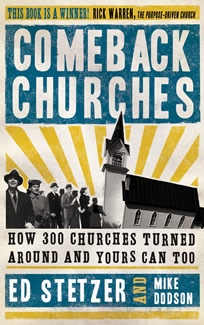
A very revealing study was done, leading to a book detailing how 300 churches went from declining or dying, to growing. In Comeback Churches, written by Ed Stetzer and Mike Dodson, there is a list of 30 different barriers to church growth. Having received permission from the publisher (B&H Publishing Group), I would like to discuss a different barrier each week.

Traditional practices are done without a heart for God (Malachi 1:6ff).

A son honors his father, and a servant his master. If then I am a father, where is my honor? And if I am a master, where is my fear? says the LORD of hosts to you, O priests, who despise my name. But you say, ‘How have we despised your name? – Malachi 1:6 NIV

In a reading of Malachi 1:6-14 it is obvious that God is greatly offended by priests who care little about the One to whom the sacrifices are being made. They offer “polluted” and “blind” offerings, and for what? To gain His approval?

In verse six God was saying, “Look, you give more honor and respect to men than Me. Am I not greater than mere men?” Of course He is, so what was their problem? Did they not care what God would think of inferior offerings?

Essentially, God views giving anything less than one’s best nothing more than an insult to Who He is. God deserves better than the best we would give as a present on Father’s Day. He deserves far, far better than we would give to an employer on Boss’s Day. He is God.  We should give Him our best. Period.

But how have we despised your name?

Maybe we should ask the same question. Are our churches not growing? It might be because we “despise His name” with our poorly executed traditions, our just-getting-by attempts at worship, or our whatever’s-in-my-pocket-besides-the-big-bill offerings.

Notice that Stetzer and Dodson are not putting down traditional practices, only those which are done “without a heart for God.” For many in the church, these practices are only a list to check off, not a means to express appreciation to our Father and LORD. And without true worship, traditional practices suffer the neglect associated with only doing what is necessary to get by. Our God deserves so much better.

Who gets the best effort?

Just take a moment and compare they way we do things on the job, or at school, as compared with worship. What if God gave a paycheck each Sunday based on the way we fulfill our worship duties? What if he gave a grade for how well we listened to and studied His word? Would we even care if poor performance would result in getting fired or expelled?

We say, “God is good – He wouldn’t do such a thing!” And that is one reason why many churches don’t grow. We do enough, we give enough, we sacrifice enough to get by; but without a real heart for God. We never stop to consider that He might be offended…angered…hurt.

What a shame. Why would He want us to multiply?


1 Comment

Filed under book review, Christian Maturity, worship

Barriers to Church Growth #8 (Selfish Fasting)

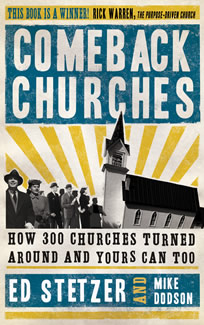
A very revealing study was done, leading to a book detailing how 300 churches went from declining or dying, to growing. In Comeback Churches, written by Ed Stetzer and Mike Dodson, there is a list of 30 different barriers to church growth. Having received permission from the publisher (B&H Publishing Group), I would like to discuss a different barrier each week.

“People think of fasting as being for themselves.”

Moreover when ye fast, be not, as the hypocrites, of a sad countenance: for they disfigure their faces, that they may appear unto men to fast. Verily I say unto you, They have their reward. But thou, when thou fastest, anoint thine head, and wash thy face; That thou appear not unto men to fast, but unto thy Father which is in secret: and thy Father, which seeth in secret, shall reward thee openly.” – Matthew 6:16-18

Wherefore have we fasted, say they, and thou seest not? wherefore have we afflicted our soul, and thou takest no knowledge? Behold, in the day of your fast ye find pleasure, and exact all your labours.” – Isaiah 58:3ff

One of the great tools of prayer is fasting. But before we go off too quickly and label it as a “tool” or a “key” to answered prayer and holiness, consider the motive behind it.

Why do people fast? Why do people abstain from food or drink when they pray. Honestly, many do it only to either be seen by men, or to be thought more highly of by God. Neither are proper motivations for fasting.

It’s all about me…

In today’s church culture there are many who promote various ways and means to health, wealth, and spiritual success. You know the type – they’re constantly begging for you to sow a “seed of faith” into their ministries (or should I say “scams” and “snake oil factories?”). There are even those who promote fasting as a way to becoming more holy (then offer a book in exchange for a gift of any amount above $20).

The real problem with all of that is the fact that it preys on the flesh, the sinful tendency to think of “self” more than the will of God. It may help a televangelist get rich when you sow a “seed,” but it won’t bring you closer to God if you are expecting a hundred-fold return on your “investment.” When it’s “all about me,” God is not glorified.

Not a means to an end…

Without getting into a long study of the topic of fasting, let’s just say that most fasting is done for the wrong reasons. Look at the rest of the verses in Isaiah 58, for example. It was not that the people were avoiding fasting; they were even abusing themselves. Yet, God was not pleased. He was not interested in their fastings. He wanted their hearts.

There are so many ways the church could benefit if we would seek the heart of God, not our own desires. If we sought after God with a pure heart, asking Him to burden us with a desire for the lost and broken, fasting would come naturally. Most examples of fasting in the Bible were not begun with intent, but were the result of brokenness. Most of the time the fast was the result of one’s lack of desire for anything other than hearing from God. How different is that from the modern Christian who gives up a meal or two and expects, in return for their great sacrifice of earthly pleasure, an answer to a selfish prayer?

Fasting should never be a means to an end. It should be the natural result of one who can find no pleasure, no solace, no comfort in anything other than a word from the Bread of Life. Anything else borders on an attempt to manipulate the King of Glory into feeling sorry for us. What’s worse, fasting as a means to an end for a request which is intended to be “consumed upon [our] lusts” is no different than self-mutilization or witchcraft.

God will not grow a church that seeks to glorify itself or seek its own desires, especially if it attempts to bribe God in the process.

5 Comments

Filed under book review, Christian Maturity, Food, God, Uncategorized

Barriers to Church Growth, #6 (Selfish Prayer)

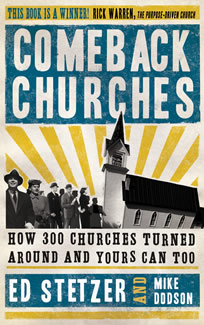
A very revealing study was done, leading to a book detailing how 300 churches went from declining or dying, to growing. In Comeback Churches, written by Ed Stetzer and Mike Dodson, there is a list of 30 different barriers to church growth. Having received permission from the publisher (B&H Publishing Group), I would like to discuss a different barrier each week.

People think of prayer as being for themselves (Matthew 6:5).

“And when thou prayest, thou shalt not be as the hypocrites are: for they love to pray standing in the synagogues and in the corners of the streets, that they may be seen of men. Verily I say unto you, They have their reward.” – Matthew 6:5 KJV

Over the last few months I have preached several messages dealing with prayer. Just this Wednesday night I preached from Romans 12:1-3 and verse 12. There is a great need for prayer that is not self-centered, but sacrificial and “other” focused.

The Hypocrite Prayer

It should always be considered a great honor to be called upon to lead a congregational prayer. When this happens, what is not needed is a long, drawn-out speech meant to make everyone else think the one praying is practicing for an oral theological exam. However, there are those who use this opportunity to do almost that.

How many times have you been in a church service when some “godly” gentleman was asked to give the closing prayer, the result being you fell asleep and hit your head on the pew in front of you? Many times the reason for a prayer like that is simply to make the one praying sound righteous. Is that not what the Pharisee did (Luke 18:11)? His intent was to be heard of men, not God.

On the other hand, if the intent is for God to hear, do we think He is going to be impressed with our seminary-level language? More often than not, when somebody goes on and on in a public prayer, God is no more impressed than the people in the audience…nobody is fooled. Fancy words can never hide a faulty character.

The Selfish Prayer

What I believe is more dangerous than the hypocritical prayer is the prayer that focuses only on one’s personal needs, not the needs of others. The reason these prayers are dangerous is because they cause us to be narrow-minded and self-centered. They are the opposite of sacrificial prayer.

Does anyone seriously think that Christians pray as much as they should? And when we do pray, how often do you think we pray for the needs of our neighbors, our friends, or even our enemies before we “name-and-claim” our own desires? My friends, this is a barrier to church growth. The lack of prayer is far more deadly to the church than the few who “stand in the corner of the streets” to be heard.

Sacrificial Prayer

In the first verse of Romans 12 the Apostle Paul begs us to “present [our] bodies” as living sacrifices. “Living sacrifices” don’t care about self, only the glory of the One to whom the sacrifice is made. And when we are transformed by “the renewing of [our] minds,” we have the mind of One who would lay down His own life for the sake of others.

When we look further down into this chapter it becomes obvious that we not to think of ourselves as better than others, but to minister to their needs as our own. With that in mind, when we come to verse 12, what kind of prayer should we be continuing in?

When we become more like Christ, our prayers become more like His. We don’t know every prayer Jesus prayed, but of the ones we have a record of, how many included requests for better jobs, a better car, a nicer home, better health, etc? More often than not, He prayed for the Church, for unity, for His Father to receive glory, for His Father’s will to be done.

How awesome it would be if we all spent more time on our knees in prayer? How powerful would it be if we sacrificed our time in prayer for self and focused on others within the body? What would happen if we would just spend time praying, not just for our own congregations, but for the Church, the body of Christ?

5 Comments

Filed under book review, Christian Living, Christian Maturity

Barriers to Church Growth. #5 (Honoring Self)

A very revealing study was done, leading to a book detailing how 300 churches went from declining or dying, to growing. In Comeback Churches, written by Ed Stetzer and Mike Dodson, there is a list of 30 different barriers to church growth. Having received permission from the publisher (B&H Publishing Group), I would like to discuss a different barrier each week.

“People do works for their own honor and not the glory of God (Matthew 5:16).”

“Let your light so shine before men, that they may see your good works, and glorify your Father which is in heaven.” – Matthew 5:16 KJV

Why do we do good works? Why do we feed the poor, shelter the homeless, tend to the elderly, etc. Do we do these things so that our Father will be glorified, or do we do them in order to get glory for ourselves?

To be Seen.

Some people do good works for the sole intention of being seen and considered especially spiritual. Jesus said that “Everything they do is for show” (Mt. 23:5 NLT). Jesus spoke of those who wanted to be seen as pious and holy by wearing boxes containing Scripture on their foreheads or arms. The bigger the box the better. All this was in an attempt to say, “I am keeping the law better than you!” (See Deuteronomy 6:5-9)

Then there are other people who do plenty of good deeds without even acknowledging God. For example,  go to any charity ball held by your local “high society” club. There you will find plenty of people who willingly give thousands to worthy causes, but smile as big as they can when the magazine photographers come around.

They may even be members of local churches and give large offerings to the building fund (as long as it’s named after them); buy the pastor a new car; or pay for a youth mission trip. “And they love to sit at the head table at banquets and in the seats of honor in the [congregation].” – Matthew 23:6 NLT

To be Accepted

Some people do good works in order to be accepted by God. They give away fortunes and spend their lives doing good deeds, but not to be seen of men. They want to be seen by God and thought of as worthy of His love. The only problem is that salvation is “not of works, lest any man should boast.” They work themselves to death in order prove their loyalty, thereby supposedly insuring a place in heaven. But the glory goes not to God, for attached to the works is an expectation of reward based on merit.

Soli Deo gloria

All glory should be to God alone. If our works are done in order to receive praise, then God is not getting the glory. If our works are meant to earn credit with God, then God is not getting the glory. If we work ourselves silly to meet the legalistic requirements placed on us by men, then God is not getting the glory. However, if out of a heart of love we do good works without expectation for reward, recognition, or acceptance, then God will receive the glory.

When all glory, honor, and praise is given to the Lord, He will draw all men unto Himself. Church growth will be unstoppable. Yet, if we expect credit for anything, then what should we expect but further decline? “For mine own sake, even for mine own sake, will I do it: for how should my name be polluted? and I will not give my glory unto another.” – Isaiah 48:11 KJV

We want others to see our good works, but not for our own glory. May they “glorify [our] Father which is in heaven.”

2 Comments

Filed under book review, God, legalism, Uncategorized