Category Archives: Apologetics

Real-World Apologetics (Jack Knows “Jack”)

This is probably going to be the longest post I’ve ever published, but I didn’t write it.

Apologetics

The body of this post was copied (with permission from both parties) from Facebook. On the day I read it I was so impressed that I asked if I could just re-post the whole thing on this blog.

Jack Seiler is a pastor who obviously has a heart for his people and a love for truth. But instead of remaining in some “ivory tower,” Pastor Seiler is all about getting down where the rubber meets the road. He uses Facebook to directly engage others with the Truth of God’s Word, especially in the realm of apologetics (defending the faith).

What made this particular Facebook entry so impressive to me was the length to which Jack went to respond to Amy North, a former congregant at the church he pastors. But more than being well-written, it was a wonderful example of how a Christian should respond to genuine questions – with love, humility, and patience.

The following Facebook conversation is a direct copy of the original. The only thing I did was adjust the format a little.

[Jack Seiler]:
A point of interest to me is the contradiction within most atheists and even agnostics. They directly and/or indirectly claim to have a corner on reason, yet seem to be irrational and highly emotional when confronted with reason contrary to their supposed conclusions. Then, in turn, they are unwilling to consider and forcefully ignore the point.

Man cannot survive as man without an ultimate anchor and reference point for what he calls “reason.” Dismissal of dialog does not justify any position of this great a significance, and when eternal gain or loss is the proposed outcome of reaching or not reaching a reasonable conclusion, refusal to consider the possibility of a loving God in Christ Jesus based on emotional disappointments is not only intellectual suicide, its just plain dishonest.

Amy Lang North
As an atheist it seems to me the practicing religious clans do exactly the same which u ponder upon. According to – well, you – man cannot survive as man without an “ultimate anchor” — really? Says- you? I have considered the reason behind my decision as well as sat in the pews of many a church throughout my life so far — listening — and thinking – and have drawn a conclusion to abandon the cult of “religion by human stories” and “I know it all” sermons that dictate that there is only one way – I respectfully ask how do you with you human capabilities know? Or how do u decide u have the authority to tell everyone else – “this is THE only way?” Maybe it is the religious that stubbornly judge the atheists as shallow and ignorant who think they have all the right ways/answers.

Amy Lang North
As an atheist it seems to me the practicing religious clans do exactly the same which u ponder upon.

Pastor Jack:
**No doubt. Willful ignorance abounds in every corner! That is another subject I have taken aim at and am happy to address. Christian apologetics has been around for a very long time but it seems to me that the “rank and file” Christianity of today is largely shallow and unstudied. However, this willful ignorance is not confined to Christians. But for now, here we are . . . and I am glad you have taken interest in making some very thoughtful points.

Amy:
According to – well, you – man cannot survive as man without an “ultimate anchor” — really? Says- you?

Pastor Jack:
**Well put and a good question.

Actually no . . . this is not simply only according to me. But please allow me first to clarify and complete what was said. “Man cannot survive without an ultimate anchor and reference point for what he calls ‘reason.’” This is not just an isolated view from little old me. This is a philosophical argument that has been around for a very long time. And it is playing out in the world around us in an undeniable fashion.

All reasoning is based upon underlying presuppositions. Have you ever listened to two contrary positions debated? Both individuals believe, within their reasoning, that what they believe is right and rationally sound. Both individuals had a starting point from which their reasoning process began. Yet because these presuppositions were different they came to contrary positions. For most, it is not because their process of reasoning was right or wrong but because their presupposition was right or wrong. Certainly, some have defective reasoning, but that is a different story from what I am addressing here. Starting from an absolute brings unity, meaning and purpose even in diversity. It gives man a “rallying point” if you will. How we arrive at an absolute I will discuss latter on.

In the world around us we have seen the process of the dismissal of the moral absolutes (which is a very broad statement, I know, but I will define later as well) of God as the presupposition in reason. As this has happened we have seen before our eyes the destruction of the United States and chaos in the world . . . . which is escalating at break-neck speed. Confining my focus on America, the divisions are multiplying and have become diametrically opposed and irreconcilable and increasingly hostile one to another. Each position, such as pro-life/pro-choice; liberal/conservative; Democrat/Republican; Sodomite/Straight; etc. etc. etc… has a line of reasoning which each one separately regards as completely sound, yet the conclusions are totally opposed. I’m not here to argue for or against any of these positions right now (though I certainly have my positions firmly ensconced). My objective here is to point out that the presuppositions in each line of reasoning determines the conclusions.

So, in answer to your first objection I state once again: Man cannot survive without an ultimate reference point and anchor for the process of reason. He will, ultimately, destroy himself. And I am not an isolated voice!

Amy:
I have considered the reason behind my decision as well as sat in the pews of many a church throughout my life so far — listening — and thinking – and have drawn a conclusion to abandon the cult of “religion by human stories” and “I know it all” sermons that dictate that there is only one way

Pastor Jack:
***Being the Pastor of one of those churches you attended for a short time I am deeply ashamed of myself as a Pastor and teacher and sorry that we left you in such a questioning position and added to your lack of satisfactory answers. I must take responsibility for missing the mark in ministering to your intellectual needs. This is not an excuse, but it is a very difficult task to find a balance in reaching those who are simple and would neither be interested nor able to follow what I am talking about right now, and those who have the need to be satisfied with further depth. I don’t want to sound insulting or discourteous to anyone, though at times I am taken this way, but some people enjoy swimming deeper than others. The beauty of the Gospel is that it can and does satisfy the simplest mind of a child and meet the intellectual needs of the philosophical giant.

It appears from what you have said here that one of your presuppositions are becoming apparent. The phrases, “Religion by human stories” and “I know it all” sermons” seems to be coming from an underlying position that man in some way discovered or invented God and/or that Christianity is just another man made mythology. I certainly understand the thought, because I also took that position at one time. I am wondering if you are more of an agnostic than an atheist. Are you saying that God does not exist? or that God is not knowable?

If you are saying He does not exist, the same burden of proof rests on you that you would ask of the theist. If you are saying that he is not knowable, I believe you are correct from our present human perspective. Unless God reveals Himself and His will we are left with a God Who is unreachable and unknowable. From my perspective, knowing that there IS a God is a logical conclusion based on the evidence of existence itself. Knowing Who He is and what His mind is, however, is another matter altogether.

As I said . . . unless He reveals Himself and His mind! This is something else that needs to be addressed here . . . and I plan on it.

Amy:
– I respectfully ask how do you with you human capabilities know? Or how do u decide u have the authority to tell everyone else – “this is THE only way?”

Pastor Jack:
A very intelligent agnostic (I think he would categorize himself agnostic at any rate) person very close to me once said that he believed it was arrogant to think that we have figured out God and what He wants. It appears that you are coming from the same direction. If his statement were true concerning the basis of Christianity I would whole heartedly agree. But the reasoning is based on an erroneous premise. Here is where I want to pull together the thoughts I have proposed. I hope you don’t mind the length of what I am going to attempt to discuss.

First, simply stated, Christianity is not man reaching to God to discover Him or figure Him out. It is a revelation of God TO man! It is not man in his pride and strength dissecting God and testing Him in a tube on his philosophical bench. Man CANNOT know God unless God reveals Himself to man. It is God condescending to man to seek and to save that which was lost, revealing Himself incarnate in the Person of Jesus Christ . . . Crucified and risen from the dead. I intend on expanding this thought but wanted to state it here for the sake of keeping the direction of the given knowledge of God in focus. The direction of the knowledge is from Him to us, not from us to Him.

As for there only being one way…..
The teaching of exclusivity is not confined to Christianity. Without going into long drawn out details, even the atheist claims exclusivity. So I suppose the same question could be leveled in your direction . . respectfully. Even those who claim there are no absolutes make a self-defeating statement in their claim. In reality, every line of reasoning is making the claim of an absolute whether they like it or not.

First let me deal as briefly as I can with the claims of Christianity and why, outside of the proposed authority of the Bible (which I also shall discuss), they are intellectually sound and exclusive of all other positions.

There are 4 questions that need to be dealt with in the minds of every human being.

1. Origin (where do I come from? . . and everything else for that matter!)
2. Meaning (Why am I here?)
3. Morality (How am I supposed to live?)
4. Destiny (Where do I go,, if anywhere, from here?)

These are questions every human being who has ever lived and thought has had to cope with. These four questions need to be answered in two ways in order to meet universally satisfactory standards:

1. Every question must correspond according to truth; either by empirical form of measurement and/or the logical reasoning process. (It must make sense)
2. When these four questions are answered, the answers must cohere and not be incoherent. (They must work together and not be contradictory)

Correspondence and Coherence
I guarantee you that ONLY in the Judeo/Christian world view will you find these four questions answered with corresponding truthfulness and with the coherence of a world view. And these answers have stood the test of time an adversity being as relevant to man today as they were thousands of years ago.

All of the world views in existence can very basically be grouped into three categories: (All positions can be categorized under one of these headings)

1. Only the universe exists (Naturalism and Atheism)
2. Only God exists (Eastern religions and spiritualism-many forms but they all boil down to this)
3. Both God and the Universe exists (Judaism, Christianity, Islam)

It is relatively easy to subject each of these categories to the above tests. Number three is the only position which passes these tests. Then we examine the three positions contained within the third category with the same criteria and discover that Christianity is a continuation and fulfillment of Judaism, and the third, Islam, destroys itself in its own contradictory nature of the god it proclaims and the self-evident nature of the intrinsic value of human life.
I realize there is much that can be detailed by way of shared questions and dialog here, but basically stated in examination of one’s presuppositional standards this is how one comes to a factual position to start with.

What is happening in the system we are now seeing overtake and destroy what we have come to know and enjoy in life is the replacement of rationally sound suppositions with emotionally based motivations. Facts are no longer considered . . . just how one feels about it. Truth is no longer a matter of thesis/antithesis (if one is true the opposite is false), but a supposed matter of synthesis. But even the proposition of “synthesis” is disintegrating into this post modernistic cesspool. Truth has become a matter of opinion and force. Life has no intrinsic value because the only thing that sets human life apart from insect life is the posit of man being created in the image and likeness of God. The emotions we have as human beings are reduced to meaningless electro-chemical functions accidentally falling into place in a mad dance of atoms. To say to your wife or child “I love you” has no more value than saying “my back itches” or “I have a headache.” Both are nothing more than hormonal secretions and the functions of a machine. Man cannot and does not live this way. He assumes that love, ethics and some form of morality have value but without something to GIVE it value it is an empty romanticism with nothing to refer to for a coherent reason.

I love my children and grandchildren and I know you love your children. Do you not understand that it means nothing if there is no God? I know why I love them and I know what its value is. Do you?

On to the nature of revealed truth from God.
First the nature of revelation is not just propositional, it is embodied . . . it is incarnated. But I would like to deal with the propositional side because that is really the point at hand. It is a very important issue because on this hangs just about everything the Christian believes, and it is shameful to know that so many Christians don’t possess the understanding to articulate it.

There is something about the enscripturation process that is very important. Because truth is primarily a property of propositions. When you look at the Bible, it is a very distinctive book. Unlike Buddha’s teachings, which are little sermons of Buddha. Or the Koran, which is the utterance of one man and the compilation of it posthumously. This takes 66 books from about the mid 1400’s BC all the way to the first century; 29 in the Old Testament, 27 in the New Testament, and there is a single thread going through all of it. The collusion factor would have been impossibly incredible to bring this about. For example, going back to the prophecy of Isaiah, writing 700 years before Christ, to talk about the virgin birth, Micah speaking of the city where He would be born, Zechariah talking about the way the Messiah would ultimately be crucified, take these writers most of whom were not contemporaries, talking all of the converging lines of evidence, the hundreds of prophecies, and bring them into the Person of Jesus Christ . . . it would have taken an extraordinary stroke of genius to retroactively bring all of that to the convergence of one single Person! If falsification were possible you would be able to do so rather quickly. That has been attempted by many over millennia but to no avail. Even the supposed “new” documentaries and arguments in the latest books are nothing more than old rehashes of debunked attempts from the past.

(Just a quick side note: it is very interesting to note that so many who have set out in an attempt to disprove Scripture have actually become believers, and there have never been any death threats to those who seek to malign the Bible. Yet the thrashing of the Koran by authors like Salman Rushdie, which rather conclusively discredit Islam and its not-so-holy book, end with proclamations of vicious death to both him and his family. Can you imagine if a trash book and movie like “The Da Vinci Code” come out concerning Islam? The Islamic zombies would go into meltdown mode faster than they are now.)

After 2000 years of Christ’s incarnation, and 3500 years since the enscripturation process began, no book has been more studied, no book has been more scrutinized. No book has changed the lives of countless millions. No writing of any atheist has changed a drunkard into a saint. No book written promoting atheism has lifted a broken man from the gutter and set his feet on solid ground. NO atheism has given hope to the hopeless or purpose to the destitute.
I will bring you 1000 men changed and made right by the Christ of the Bible if you can bring me 1 saved from a life of broken sin by atheism.

Yes . . . I am deeply sorry that these truths were not presented clearly or to your satisfaction in any of the churches you attended . . . including my own. I take that seriously to heart. But rejecting God, specifically Jesus Christ, because of these lacks of answers really didn’t change anything in your life. Pains were still there . . . life was still happy one minute sad the next . . . answers were still absent . . . purpose was still transient . . . death is still imminent . . . and ultimately all that you hold dear has no intrinsic value or meaning.

I know that there are many more question that cannot be answered in one discussion, and it is not possible to address every objection that would arise while reading this. However, I am more than willing to continue exchange in dialog. I feel that I have failed you in my responsibilities as a minister of the Word of God, and if you . . . then how many others? If nothing else I am being spurred to be more concise and address the needs of the soul with more awareness.

Amy:
Maybe it is the religious that stubbornly judge the atheists as shallow and ignorant who think they have all the right ways/answers.

Pastor Jack:
I will repeat what I said in the beginning . . . no doubt that unjust judgment abounds and is in no short supply in every corner. May God help me not to do what he condemns. It is only because God has revealed what is right that anyone can know it and be definite about it. God has the right answers . . . and the real arrogance is in rejecting what He reveals.

Amy:
And ps I do enjoy reading what u write bc ur writing do give me things to think about.

Pastor Jack:
You have always been nothing less than respectful to me Amy. I appreciate that . . . not everyone is! Lol. I hope that what I have laid out here is understandable and also gives you food for thought. It is my wish that you would truly come to know Christ as Lord and Savior and find the relationship with Him that He so deeply desires to have with you.

PS
There is so much more I wanted to say concerning the inspiration and recording of Scripture, but this has already taken me many hours to write and I need to rest.
Thanks

Conclusion

So what do you think? No pulpit banging, as many would expect. No all-cap YELLING and calling Amy all kinds of derogatory names. Just a calm, organized explanation and defense of one’s beliefs.

My advice? Try to be a little more like Jack.

1 Comment

Filed under Apologetics

“But Some Doubted”

Then the eleven disciples went away into Galilee, into a mountain where Jesus had appointed them. And when they saw him, they worshiped him: but some doubted. – Matthew 28:16-17

Have you ever doubted? Sometimes it’s the wise thing to do. 

Many people have placed faith in Jesus only to lose that faith later, like when they find out the Jesus they thought they knew was not who he claimed to be. Are you one of those?

Believe it or not, even some of the disciples of the real Jesus found themselves doubting when they saw Him face to face after His resurrection. In the book of Matthew we read that on one particular occasion, after meeting up with the disciples at a pre-determined location, most worshiped, but “some doubted.”

Wait! How is this possible?! Weren’t these the same guys who saw Jesus appear to them when they were hiding, afraid for their lives (Luke 24:36; John 20:19)? Even doubting Thomas finally believed (John 20:28), so who were the the ones doubting in Matthew 28? Could it have been one of them? Possibly, or maybe even one of those who may have tagged along.

Here’s what I think happened. The disciples were gathered together, Jesus miraculously appeared, and before He could speak the crowd began to worship Him. Some, however, were a little skeptical; they had seen things before, including fakes, charlatans, and impostors. Who was to say what they saw was really Jesus Himself?

What convinced the doubters, then? I believe it was when Jesus spoke.

And Jesus came and spake unto them, saying, All power is given unto me in heaven and in earth. Go ye therefore, and teach all nations, baptizing them in the name of the Father, and of the Son, and of the Holy Ghost: Teaching them to observe all things whatsoever I have commanded you: and, lo, I am with you alway, even unto the end of the world. Amen. – Matthew 28:18-20 

It’s not like this was the first time Jesus appeared to the disciples, causing not only doubt, but also stark terror. Remember when He walked on the water?

And when the disciples saw him walking on the sea, they were troubled, saying, It is a spirit; and they cried out for fear. – Matthew 14:26

It took Jesus speaking to calm down the frightened boatmen…

But straightway Jesus spake unto them, saying, Be of good cheer; it is I; be not afraid. – Matthew 14:27

Is it possible that some of the disciples present when Jesus met up with them on that mountain had a right to be skeptical? I mean, hey, wasn’t Jesus himself who earlier warned the disciples that “false Christs” and “false prophets” would arise, deceivers so convincing that, “if it were possible, they [would] deceive the very elect” (Matthew 24:24; Mark 13:22)?

Matthew doesn’t exactly say what happened to those who doubted, but I have my suspicions. I believe it was when Jesus spoke that their doubts disappeared. On the other hand, if they still doubted, maybe they were only there for the bagels and mountain air.

Jesus answered them, I told you, and ye believed not: the works that I do in my Father’s name, they bear witness of me. But ye believe not, because ye are not of my sheep, as I said unto you. My sheep hear my voice, and I know them, and they follow me: And I give unto them eternal life; and they shall never perish, neither shall any man pluck them out of my hand. – John 10:25-28

It was never Jesus’ plan to convince to the world of who He is by physically appearing to everyone. As a matter of fact, Jesus told Thomas, “because thou hast seen me, thou hast believed: blessed are they that have not seen, and yet have believed” (John 20:29).

The Word made flesh (John 1:1) gave us His Word (the Bible). When in doubt, read and listen to His voice.


2 Comments

Filed under Apologetics, Christian Maturity, cults, Faith, God, worship

I “Beck” to Differ

For Starters

Let me be very honest about several things.

  • As a radio and television personality, I really like the politically conservative Glenn Beck.
    • I would jump at the opportunity to have lunch with him.
    • His love for America and our Christian heritage is admirable.
    • I consider him a great guy, and have no hate whatsoever towards him.
    • I’d rather have him (or Mitt Romney) as president than Obama any day.
  • I believe Liberty University has a lot to offer on many levels.
    • Liberty is a large, influential Christian university.
    • Liberty has a strong heritage of proclaiming the faith.
    • I’m sure the folks at Liberty want nothing less than the best for their students.
    • I almost attended college there, myself.

Let me be very clear about some other things, too.

  1. Although a great American, Glenn Beck is a Mormon, NOT a Christian.
  2. Liberty University is supposed to be a Christian University, not a political party university.
  3. Mormons might be outstanding moral people, but Mormonism is NOT just another Christian denomination; it is a totally different religion based on the teachings of Joseph Smith, not the Bible.
  4. Those who object to a Mormon missionary giving the convocation at Liberty University are not “haters,” but lovers of the Christian faith who want nothing more than to “take heed” to our doctrine (1 Timothy 4:16) and protect it from error (Titus 1:9).

Responses

Glen Beck’s Response

In response to the criticism still being leveled at Liberty University for allowing the likes of Mitt Romney and himself speak to the students during graduation convocations, Mr. Beck said the following on his program (as reported in the Christian Post):

(Credit: Reuters)

(Credit: Reuters)

“There is no difference between you and the people who are trying to run other people out of the square. See this is the reason why progressives are so frightening. This is why you lose a lot of people. This is why your churches are dwindling. You think you’re standing for something when instead you’re standing for hate and bigotry and I think Jesus was hanging out with prostitutes and sinners wasn’t he?”

My Response to Mr. Beck’s Response

In response to the above quote, I would first like to say I’m sorry, but hanging out with “prostitutes and sinners” in order to love them and show them a better way, THE Way to life eternal, is not the same as asking the “prostitutes and sinners” to promote their erroneous philosophies of life to young and impressionable graduates!

Also, it is no more “hate and bigotry” to seek to protect the gospel of Jesus Christ from those who would pollute it with poisonous error than it is “hate and bigotry” to protect a life-saving vaccine from those who would want to add a little arsenic in the name of “diversity.”

Lastly, I would rather see the Church lose “a lot of people” than have the Church be made up of people who are deceived into thinking they are actually a part. In order to be an orthodox Christian, one must believe that Jesus is the Christ, the one-and-only Son of the Eternal Father, not one of many celestial children born to one of a countless number of humans elevated to godhood.

Had Glenn Beck been around during the time described in John chapter 6, I wonder if he would have labeled Jesus a “hater,” or a “bigot?” I wonder if he would have ran after those who walked away and said, “Wait, don’t leave the square! Jesus didn’t know any better! He was just trying to stand for something!

 Hey, Glenn! I’m still available for lunch!

7 Comments

Filed under America, Apologetics, Christian Unity, cults, current events, God, politics, Theology

There IS Purpose

To Begin With…

The world is in a state of turmoil. Pain and suffering are everywhere. Worry and fear are some of the more common emotions among men and women these days. In the midst of all this unforgiving stress, the hurting need comfort; yet, where are they to find it?  I believe that comfort can be found in the belief that this world is not the result of an accident, but design. I believe that there is more to life than what we can see. I believe in a Creator. I believe in God. This belief gives me comfort in the midst of pain and suffering.

But…

Many (but not all) scientists, however, do not believe in a Creator, so they pursue meaning and purpose through the discovery of new things, improving mankind’s situation, and better anticipating the future of the universe. Even though great scientists of the past viewed science as a means to further understand God’s creation, leading them to give God praise for His magnificent design, many modern scientists see the universe through a naturalistic worldview. They tend to comfort themselves in the supposed fact that this universe, made of matter, is all that there is – nothing more. They reason that since life is just a natural process and that matter is all that there is, what does it matter (pun intended) if there is no purpose to life? To the naturalist (the typical scientist), it is all about the here-and-now, occasionally sprinkled with purposeless wonder and meaningless awe.

Science?

A recent “scientific” study was conducted that shed some interesting light on the reasons why people choose to believe that there is a Designer of the universe, rather than purposeless existence after death. Just consider the title of the study: “Death and Science: The Existential Underpinnings of Belief in Intelligent Design and Discomfort with Evolution.” (Tracy, Hart, Martens) This study showed that when faced with the ultimate reality of death, most choose to find comfort in the belief that there is a design to everything, which would suggest purpose, rather than hold to Darwin’s theory of evolution. When faced with what was called “mortality salience,” even the unreligious tended to be “uncomfortable” with the theory of evolution. The conductors of the experiment were amazed (I found it perfectly logical), even indignant at times (which I thought was funny). Sadly, the researchers who conducted the study were obviously predisposed to atheism and the idea that the universe is un-designed. Surely they included themselves in the category of “certain individuals who are more deeply invested in the scientific worldview (e.g., scientists),” and, like Carl Sagan, viewed “naturalism as providing human life with meaning and purpose.” (Tracy, Hart and Martens 10)

Only a fool could look at a working machine that had every feature capable of performing a particular task and call that machine a random collection of atoms without purpose or meaning. Even the Psalmist said, “the fool hath said in his heart, [there is] no God.” On the other hand, the logical person would conclude, at some point, that the universe machine must have been designed by a Designer. To illustrate this, William Paley (1743-1805) used a pocket watch as an analogy to describe what one should conclude when he looks at the universe. Like a lone watch found on a beach, the universe should be to the observer an intricate work of art made for a purpose. People that are logical also see themselves as instruments of purpose, because they can recognize things that bear the marks of design. Why should it be a surprise to anyone, that when faced with death, the need for meaning would be important to the same, thoughtful, logical observer? “When we see evidence of intelligent design…we naturally assume that an intelligent designer was responsible for constructing the object.” (Phillips, Brown and Stonestreet 78)

Ten Words

The Christian can find his whole sense of purpose in the ten words that make up Genesis 1:1, “In the beginning, God created the heavens and the earth.” The Christian scientist can also read these words and find confirmation to his observations. It is the naturalistic scientist that looks at William Paley’s watch analogy (teleological argument) and comes to the illogical conclusion that “chance plus time” created a beautifully intricate machine out of nothing.

If the universe is Godless, and it was not designed for a purpose, then meaning is irrelevant. The thing that is designed for a purpose, even if only to amuse, has a purpose, which gives meaning to every aspect of its being. Something that was not designed, created, or brought about either in reality or in the abstract, exists, at best, by accident. There is no purpose inherent within an accident (accidents are by definition unplanned), unless, of course, the accident was caused. If an accident is caused, even if it was not purposeful, then it was at least caused, was it not? So, either way, it could be argued that whether the universe was designed or came about by accident, there was a Something that brought it about, for both are objects of a Creator, else neither would have existed.

Waxing Philosophical

In conclusion, I would now argue that if the universe was either designed or the result of an accident, and if both design and accident have to have a cause; and, since accidents usually don’t result in the promotion of life-sustaining details, but rather carnage; and, since the universe mirrors best an intricate machine full of life; therefore, it must be designed, not an accident. If, then, the universe was the product of a Designer, then there must be a purpose inherent in the design. In other words, there is a reason for everything we see. It may be hidden somewhere in the workings of this great machine. Or, it could be found in the revelation of the Designer – the Bible.

There is, according to Scripture, a purpose for everything. Even amidst all the turmoil of the Vietnam War era a song came out by a group call The Byrds entitled, “Turn, Turn, Turn.” The lyrics included a line from Ecclesiastes 3:1 which said, “a time to every PURPOSE (emphasis mine) under heaven.” To everything there is a purpose, even though it may not be plain to the observer. For example, unless they are meant to be a prank, buttons and levers on a machine usually have a purpose. Even if they don’t do anything, they had the purpose to illicit a response of some kind from the observer. That being understood, if there seems to be any design to the universe, wouldn’t it make the most sense to assume there was a Designer? If there was a Designer, then there was a purpose for the design. And the Bible says that the purpose, if for no other reason, was to cause “…all the inhabitants of the world stand in awe of him [the LORD]. For he spake, and it was [done]; he commanded, and it stood fast.” – Psa 33: 8-9 KJV

God made everything for a reason. You have a purpose. There IS hope in Jesus Christ.

Be of good courage, and he shall strengthen your heart, all ye that hope in the LORD. – Psalm 31:24 KJV

Works Cited

Tracy, J. L., J. Hart and J. P. Martens. 2011. Death and Science: The Existential Underpinnings of Belief in Intelligent Design and Discomfort with Evolution. PLoS ONE. 6 (3): e17349.

Phillips, W. Gary, William E. Brown and John Stonestreet. Making Sense of Your World, A Biblical Worldview. Salem, Wisconsin: Sheffield Publishing Company, 2008.

Here is a link to the Institute for Creation Research article addressing the study mentioned above: http://www.icr.org/article/6039/?utm_source=feedburner&utm_medium=feed&utm_campaign=Feed%3A+icrscienceupdate+%28Science+Update+from+ICR%29&utm_content=FaceBook

(originally posted 4/10/11)

3 Comments

Filed under Apologetics, Faith, God, World View

The Real Problem with the Problem of Evil (re-post)

One of the most common reasons for denying the existence of God is the problem of evil in the world. Just ask any group of atheists to give their top ten reasons for unbelief and surely one will claim as number one, “If there is a God, then why is there so much evil in the world?” For many, this is the pièce de résistance of rebuttals. How could a good God be real and allow all the suffering in the world to continue unabated – assuming He is even good? The eighteenth century philosopher, David Hume described the problem this way in Dialouges concerning Natural Religion, 1779:

“Is God willing to prevent evil, but not able? then he is impotent. Is he able, but not willing? then is he malevolent. Is he both able and willing? whence then is evil?” (Stackhouse 1998, 11)

So, the “problem of evil,” and its source, has been an issue of philosophical debate for centuries.  The existence of evil in the world, along with unanswered questions, has even become evidence enough for some to even embrace atheism.  Therefore, because so many philosophers and theologians have tried for ages to reconcile the existence of God with the existence of evil, I dare say that nothing I write will be new.  But, if anyone were to challenge my belief in God, along with my faith in Jesus Christ, with the argument that the problem of evil constitutes proof God does not exist, then I would possibly respond with arguments based on the following thought: without the existence of God, there should be no evil to be a problem, and that’s the real problem with “the Problem of Evil’

What exactly is “evil?” Now, that may sound like an absurd kind of question to ask, but if the existence of evil is the evidence that is supposed to expose my faith as a fraud, at best, or even a lie, then what is it?  Is it something tangible? Is it metaphysical? Is ittheoretical? What is it, exactly? Does it have any particular form? How can it be distinguished from what is called good? On what do the atheists and agnostics base their definition of this thing called “evil?” Amazingly, the answers are not all the same, nor in some cases even grounded in reality. However, it is imperative to understand that we must define this God-killer, because its definition will determine our conclusions and help to clarify our assumptions. When C. S. Lewis was an atheist, for example, his “argument against God was that the universe seemed so cruel and unjust.” (Lewis 1989) There he had it, or so he thought. God could not exist because so much evil exists. But how did he arrive at “this idea of just and unjust?” Lewis said, “A man does not call a line crooked unless he has some idea of a straight line.” (Lewis 1989) “Tell me,” I would say, “what is evil, and how do you recognize it when you see it?

To start, evil must be understood to be an adjective. Evil is a description of something that is not good. Evil is not a thing. The word “evil” only describes the thing, the thought, and the action. Technically, “evil” does not exist, only what it describes. Some people say that they cannot believe in God because why or how could a good God, if He was perfect, create evil? They think of evil as something that must have not existed until God made it. But evil “isn’t a kind of molecule or a virus…infecting or affecting everything it encounters.  There was no time when God said, ‘Let there be evil,’ and there was evil.” (Stackhouse 1998)  As John G. Stackhouse put it, “evil becomes a noun only in the abstract.” Additionally, in his book Can God Be Trusted, Stackhouse says of evil:

“An action can be evil, or an event can be evil, or a quality can be evil, or a being can be evil. And we can lump all these particular evils together in our minds and come up with a category ‘evil.’ We can even go on to discuss it as if it were a particular thing, so long as we do not forget that we are always dealing with a category or group of particular evil things, not a thing itself.” (Stackhouse 1998, 31)

So then, if evil is a description, how is it that we come to use the adjective, or as Lewis put it, the “crooked line,” without first having some idea of what is a “straight” one?  Defining what is good is as important as defining evil. To know what is evil, we must first have some assumption as to what is not evil. The crazy thing is that if God does not exist, and man is nothing more than a collection of random matter, both good and evil are purely relative – their existence is based purely on one’s perspective.  So, in other words, the one who says that there is no God, based on the existence of evil, is literally basing his belief on pure opinion, not on anything objective; therefore, in order to bring an accusation against the goodness of God, one must have a base line. What is the standard by which we determine what is good and what is evil?

Some use Man as the baseline. They compare God to the standard set by what is thought to be good behavior in this world. They rationalize that if God is real, at least according to monotheistic dogma, He must be all-powerful, perfectly good, and the supreme example of love, kindness, and providential care. Because it is preached that God is a better Father than earthly fathers, Mark Twain took it upon himself to write:

The best minds will tell you that when a man has begotten a child he is morally bound to tenderly care for it…[yet], God’s treatment of his earthly children, every day and every night, is the exact opposite of that, yet those minds warmly justify those crimes…when he commits them.” (Tonie Doe Media 2007)

So then, according to Twain, God could not exist because if He did, He would act consistent with our understanding of what a good and loving earthly father would do.  In other words, if God cannot, in all His perfection, behave better toward His children than the most common man, His credentials are therefore revoked, and He must cease to exist.  However, this is so illogical. Who are we to say that God, if He is perfect, and we are imperfect, ever treats His children poorly? Do the protesting cries of a toddler who has had poison taken from his grasp carry more weight than the decision of the earthly father to take it away? How, then, are we to automatically assume that the infantile tendencies of finite man are wiser than the infinitely Mature?  Using Man as a baseline for what is good and evil is pure arrogance.

In reality, the problem of evil is really a problem for the atheist. He, who denies the existence of a Creator and accepts only the realities of evil in the world, essentially has nothing about which to complain.  Everything should be just fine and dandy, but it’s not.  The atheist knows that evil things happen to good people, as well as bad.  He sees the hurt, feels the pain, and begs for justice. The reality of evil in the world causes men to cry out for justice; for things to be made right. This is a problem, though, because knowing that a crooked line is not straight hints at the fact that a Line-drawer exists.

Of course, there are others who take a different approach. They claim that God does not exist except in the evil intentions of his followers to control others through guilt. They claim that God is just a fabrication of priests to keep mankind from behaving “naturally.” They say that nature is good, and if anything, God is evil for trying to get man to behave contrary to the very way he was created to behave. One guru said, “It seems that for those who worship God, the opposite to God is not that which is ‘evil,’ but that which is natural.” He said of animals, comparing them to men, “They don’t worship God, they don’t go to church, they don’t have any theology.  They don’t have any feeling of guilt, they are simply natural.” (Osho 2009)  In other words, if there is evil in the world, it is because our belief in God has inflicted it.

But for the majority of the hurting world, pain is real, loss is real, and evil is manifested daily.  Many see the things that happen to innocent people, especially children, and wonder, “If there is a loving God, why doesn’t he do anything about this?”  These people, many of which hold on to hope as long as they can, finally succumb to their doubts and conclude that the only way to explain away the pain is to admit that it is just part of life, part of the natural world, part of what makes us human; alone, in our quest to make life easier, free of pain, free from evil; alone, without God. These are the ones, I believe, that lure more away from the faith than any Darwinist.  They are the ones who have seen evil face-to-face and cannot fathom a God who would allow it to continue.  And because their experiences are so painful and tragic, the devout are left speechless and without explanation. Ellie Wiesel is a good example.

Wiesel was a teenager when he saw his family murdered in the Nazi death camps.  But it was only after witnessing one particular act of horror – the slow, hanging death of a young boy – that he turned away from his faith in God. In the book Night, his Nobel prize-winning autobiography, Wiesel said he heard a man behind him ask, “Where is God now?” As he stood there, being forced to stare into a pitiful, wide-eyed, swollen face of a dying child, a voice within replied, “Where is He? Here He is – He is hanging here on the gallows…” (Wiesel 1982) Because there was no justification, even in the big scheme of things, Ellie Wiesel’s God died with the executed boy.  But as sad as it is, without God, who can say what happened to that boy was any worst than the slaughter of an animal?  Are we not all just animals – some more evolved than others?

To me, the problem of evil is not a problem for the believer, but for the non-believer.  Aside from the theological arguments about the character of God, without God, to turn Hume’s question around, “whence then is evil?” Without God, evil is relative to one’s desires and personal pleasure.  Does it really even matter whether or not God could do anything about evil in the world when the whole question is moot if He didn’t exist?  With God, evil is defined as that which is against His law, that which stands opposed to His standards, and that which describes all who take pleasure in such rebellion. Without God, evil is just a matter of opinion. That is the real problem of evil.


Works Cited

Lewis, C. S. “Atheism.” In The Quotable Lewis, by C. S. Lewis, 59. Wheaton: Tyndale House Publishers, Inc., 1989.

Osho. The God Conspiracy: the path from superstition to superconsciousness. New York: Osho Media International, 2009.

Stackhouse, John G. Can God Be Trusted. New York: Oxford University Press, 1998.

Tonie Doe Media. In The Atheist’s Bible, 129. New York: Harper Collins, 2007.

Wiesel, Ellie. Night. New York: Bantam Books, 1982.

1 Comment

Filed under Apologetics

Debates and Doubt

Reflections On the Debate

Last night we watched the highly-anticipated debate between Bill Nye (The Science Guy) and Ken Ham (Answers In Genesis / Creation Museum). But I must admit, one of the funniest things about it was watching the people in the audience, both on video and where we were. Some were getting it, while others had a strange, confused, glassed-over look.

promo-slideOthers have already posted reviews of the debate, so I’m sure you will be able to find a host of opinions supporting your own conclusions (Here’s a good one).  The evolutionists will probably claim a victory, as well with most creationist. However, my opinion is that there were no clear winners at all. As a matter of fact, what is most disturbing is that the debate may have done more harm than good for many young Christians. Last night one of my daughters left the debate much more solemn than she arrived. To state it simply, her faith was challenged. She said, “The only thing I got out of that debate was doubt.”

Why did my daughter leave with feelings of doubt? Well, one reason, I believe, was the evidence Bill Nye presented for the age of the earth, such as star light, ice samples, the ages of trees, etc. Ham stuck to a “young earth” creation model that, at least in the debate, never adequately addressed, from a “reasonable” perspective, these evidences. So, when the evolutionist threw out all of these seemingly undeniable proofs, and since the debate format really didn’t allow for any back-and-forth questioning, the proofs were allowed to stand unchallenged. As Ken Ham dutifully stuck to the main point of the debate, Nye flanked Ham and fired rounds which could not be deflected.

On a positive note, I was able to reassure my daughter as we drove home. I reminded her of two things, one of which was brought up in the debate, and another which was not. First, there was the ultimate issue of where did everything come from. Even though the age of the earth could be debated based on how one interpreted the evidence, when Bill Nye was asked the ultimate question of where did matter come from in the first place, he didn’t have the faintest idea. All he could say was, “I don’t know.” But as Ken Ham said, “There’s a Book out there” with the answer.  No matter what the evolutionist claim, they have no clue how to account for something coming from nothing, unless they creatively attempt to redefine “nothing” as “something” – which then means something came from something, not nothing.

The second thing I reminded her of was the hinge on what the whole Christian world view rests: Jesus. Nye and Ham completely disagreed on the definition of “science.” Ham argued that there is “observational science” and “historical science,” while Nye maintained that there is no difference. At times, Nye even questioned Christian dogma as a way to belittle the viability of Ham’s worldview. According to the evolutionist, there is nothing “testable and verifiable” about faith. But that’s where we disagree, at least on one critical point: Jesus.

In my opinion, although I believe in a “young-earth” creation model, I believe there is room for a larger span of time than 6,000 years for age of the earth. I certainly don’t accept the billions of years idea, but I am perfectly open to 10’s of thousands. Most importantly, I am open to the miraculous, where Bill Nye is not. But had Nye been debating an “old-earth” creationist, I definitely believe Nye would have lost 90% of his wind.

But whether or not creation is young or old, the history of Jesus Christ IS testable and verifiable. Was Jesus who He said He was? Did Jesus come to earth, go to the cross, and rise again from the dead? If Jesus was who He said He was (not a liar or a lunatic), then He is Lord (C.S. Lewis). If Jesus is who He said He is, then we can trust the Bible, despite all of the “evidences” and statistics Bill Nye offers. If Jesus is the Christ, then our worldview begins with the opening statement of Genesis, thereby proving this world, and we, have meaning and purpose, as opposed to being the product of random chance.

I believe Jesus was and is who He said He was. I believe He came into the world that He, the Word of God, first spoke into existence and became flesh. I believe Jesus walked the paths of this world as man, showing that a transcendent God could know our pain, and then went to the cross in order to reconcile fallen man to God. I believe, too, that Jesus, as He promised, rose again, thereby becoming the “firstfruits” of those who put their trust in Him. And I believe that the observable world testifies to the account of Genesis, that it is a fallen world, a broken version of the original, waiting for the day it, too, will be made new. Jesus, not “discovery,” brings me hope…brings me joy…and gives meaning to what otherwise would be meaningless, or as the writer of Ecclesiastes would say, “vanity.”

So, my dear daughter, be strong in your faith! “If in this life only we have hope in Christ, we are of all men most miserable. But now is Christ risen from the dead, and become the firstfruits of them that slept. For since by man came death, by man came also the resurrection of the dead. For as in Adam all die, even so in Christ shall all be made alive.” – 1 Corinthians 15:19-22 KJV

8 Comments

Filed under Apologetics, Culture Wars, Faith

National Christmas Tree Speech – A Response

Dear Friends, I don’t want to burst any bubbles or shatter any Christmas ornaments, but Christmas, at least the meaning of Christmas, might not be what you think it is. At least I know this, it is not what the President of the United States’ speech at the 2013 lighting of the National Christmas Tree made it out to be.

Why do I make such a bold and controversial statement?  I say it because the message of Christmas is too important to have pluralists, universalists, and atheists redefine it – even if they occupy the White House.

The U.S. National Christmas Tree shines bright...

Below is an excerpt from President Obama’s December 6th speech at the lighting of the National Christmas Tree. Please read it, then my comments.

Each Christmas, we celebrate the birth of a child who came into the world with only a stable’s roof to shelter Him.  But through a life of humility and the ultimate sacrifice, a life guided by faith and kindness towards others, Christ assumed a mighty voice, teaching us lessons of compassion and charity that have lasted more than two millennia.  He ministered to the poor. He embraced the outcast.  He healed the sick.  And in Him we see a living example of scripture that we ought to love others not only through our words, but also through our deeds.

It’s a message both timeless and universal — no matter what God you pray to, or if you pray to none at all — we all have a responsibility to ourselves and to each other to make a difference that is real and lasting.  We are our brother’s keeper.  We are our sister’s keeper.

When I recently shared my thoughts about this on Facebook, a friend of mine responded with the following words: “[The] president is simply making an appeal to shared values– that even if you don’t believe in God, that you still have the responsibility to make a positive influence in the lives of others– which is exactly what Jesus did.” Oh, I completely understand the reason why a national leader would want to make a universal appeal to “shared values” and the “responsibility to make a positive influence.” However, just for comparison’s sake, listen to what former President Ronald Reagan had to say.

Why don’t we look at the things Obama said about Christmas? Let’s see if we can square what he said with Scripture and try to determine if the President clearly defined the TRUE meaning of Christ’s birth – the “message” of Christmas.

“Each Christmas, we celebrate the birth of a child…” I know this may sound like grasping at straws, but Christmas is not about celebrating “a” child’s birth; it is about celebrating the birth of THE child of whom the prophets foretold…God in flesh, Emmanuel (Matthew 1:23).

“For unto us a child is born, unto us a son is given: and the government shall be upon his shoulder: and his name shall be called Wonderful, Counsellor, The mighty God, The everlasting Father, The Prince of Peace.” – Isaiah 9:6 KJV

“Christ assumed a mighty voice…” Christ did more than “assume a mighty voice” as a result of his life of humility, sacrifice, and kindness; Jesus did what he did to prove he was not only the Voice, but the literal Word of God made flesh.

“And the Word was made flesh, and dwelt among us, (and we beheld his glory, the glory as of the only begotten of the Father,) full of grace and truth.” – John 1:14

“He ministered to the poor. He embraced the outcast.  He healed the sick. And in Him we see a living example of scripture that we ought to love others not only through our words, but also through our deeds.” Yes, Virginia, there is a Jesus, and He did do all of these things. But why? A social gospel is wonderful, except when it leaves out the fact that Jesus did good works to fulfill Scripture (see Isaiah 61:1-2).

“The Spirit of the Lord is upon me, because he hath anointed me to preach the gospel to the poor; he hath sent me to heal the brokenhearted, to preach deliverance to the captives, and recovering of sight to the blind, to set at liberty them that are bruised, To preach the acceptable year of the Lord.” – Luke 4:18-19

“It’s a message both timeless and universal…” This is where we get into some serious, pluralistic territory. What, exactly, is the “message” that is “timeless and universal”? Obama said “It’s” a message. What’s a message? The birth and life of Christ? Christmas?

I will agree with Mr. Obama on this one thing, that is certainly our responsibility “to ourselves and to each other to make a difference that is real and lasting.” The fact that we are our brothers’ and sisters’ keepers is most certainly a “timeless and universal” message, regardless whether or not we are pagans or atheists. But is this the message of Christmas? Is caring for others the message of Christmas? Simply put, no. It’s so much more than that.

The reason we celebrate Christmas with generosity, usually expressed with the giving of gifts, is because on that morning of which the angels sang (Luke 2) the most extravagant gift ever bestowed upon mankind was delivered, wrapped in the same cloth used to coddle newly-born sacrificial lambs, and laid in a manger. It was the Gift of God to desperate souls. THIS is the reason why we should “love one another.”

“In this was manifested the love of God toward us, because that God sent his only begotten Son into the world, that we might live through him. Herein is love, not that we loved God, but that he loved us, and sent his Son to be the propitiation for our sins. Beloved, if God so loved us, we ought also to love one another.” – 1 John 4:9-11

In Luke 19:10 Jesus stated that the whole reason he came was not to set an example, be a good role model, or even start a religion…he came to save sinful men and women, boys and girls.

“And Jesus said unto him, This day is salvation come to this house, forsomuch as he also is a son of Abraham. For the Son of man is come to seek and to save that which was lost.” – Luke 19:9-10

Truly, the real message is meant for all, for God so loved the world (John 3:16). So, if President Obama wants to call that “universal,” then so be it. But the message of Christ coming to save the lost is NOT “one of many ways to God,” or one of many ways to unite the brotherhood of man. No, the message of Christmas is that Jesus came because there was no other way. The message of Christmas is exclusive to the core (which is the real reason why so many want all vestiges of it removed from public life).

“Jesus saith unto him, I am the way, the truth, and the life: no man cometh unto the Father, but by me.” – John 14:6

“Neither is there salvation in any other: for there is none other name under heaven given among men, whereby we must be saved.” – Acts 4:12

America is a nation that accepts people from all walks of life and from every religious background. With rare exception, Lady Liberty will turn no one away (the Department of Immigration is another story). So, the “spirit of Christmas,” that common feeling of generosity and good will we all enjoy this time of year, should be a blessing enjoyed by all. But let us be careful, Mr. President, when we define the Reason for the season as anything other than what the Scripture says.

2 Comments

Filed under America, Apologetics, Christmas, Faith, General Observations, Love of God, World View

A Call to Engage

Engage Atlanta 2013

About a month ago (April 17) I had the opportunity to attend a one-day conference in Atlanta, Georgia. It was a call for Christians to engage our communities, not run or cower. It was a time of teaching and equipping.

The conference itself was sponsored mainly by Summit Ministries, the Manhattan Declaration, and World Magazine. It was the first conference of its kind.

The keynote speakers were:

IMG_0286

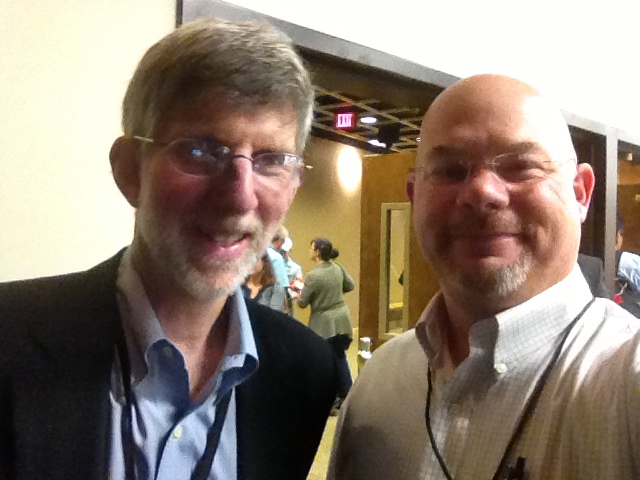
Marvin Olasky and myself

  • Jeff Myers, Ph.D., President Summit Ministries
  •  Marvin Olasky, Editor-in-Chief, WORLD Magazine

Other speakers were:

  • John Stonestreet — Speaker and Fellow, Chuck Colson Center for Christian Worldview
  • Warren Smith — Associate Publisher and Editor, WORLD Magazine
  • Jeff Ventrella — Senior Vice President, Alliance Defending Freedom
  • Scott Klusendorf — President, Life Training Institute
  • Eric Teetsel — Executive Director, Manhattan Declaration

A Non-Religious Response

Myself and Eric Teetsel

Myself and Eric Teetsel

One of the speakers, Eric Teetsel, gave a very compelling argument in support of heterosexual marriage – from a non-religious point of view (believe it or not, there are actual scientific reasons to oppose homosexual marriage). In this post I would like to share with you the audio from Eric’s lecture, along with a link to the slides he used.

For the Good of All: Restoring Marriage Ethic Across Society (by Eric Teetsel)

Click here to see the slides that accompanied Eric’s presentation.

I hope that you find this information useful and thought-provoking. Please, take the time and check out the other links available. They are being provided with no restrictions on sharing. Click the image below and find links to all the audio from the conference.

engagelogo2


Note: I would like to add that I found Mr. Olasky very soft-spoken and humble. I also found Mr. Teetsel to be kind and gracious. It was an honor to be able to speak with them. Their work is very much appreciated.

12 Comments

Filed under America, Apologetics, Christian Living, Christian Unity, Culture Wars, current events, Defending Traditional Marriage, Defining Marriage, politics, Relationships and Family, World View

God’s Not Dead

Nietzsche said it, so it must be true. Right? 

God is dead. God remains dead. And we have killed him. —Nietzsche, The Gay Science, Section 125

I disagree.

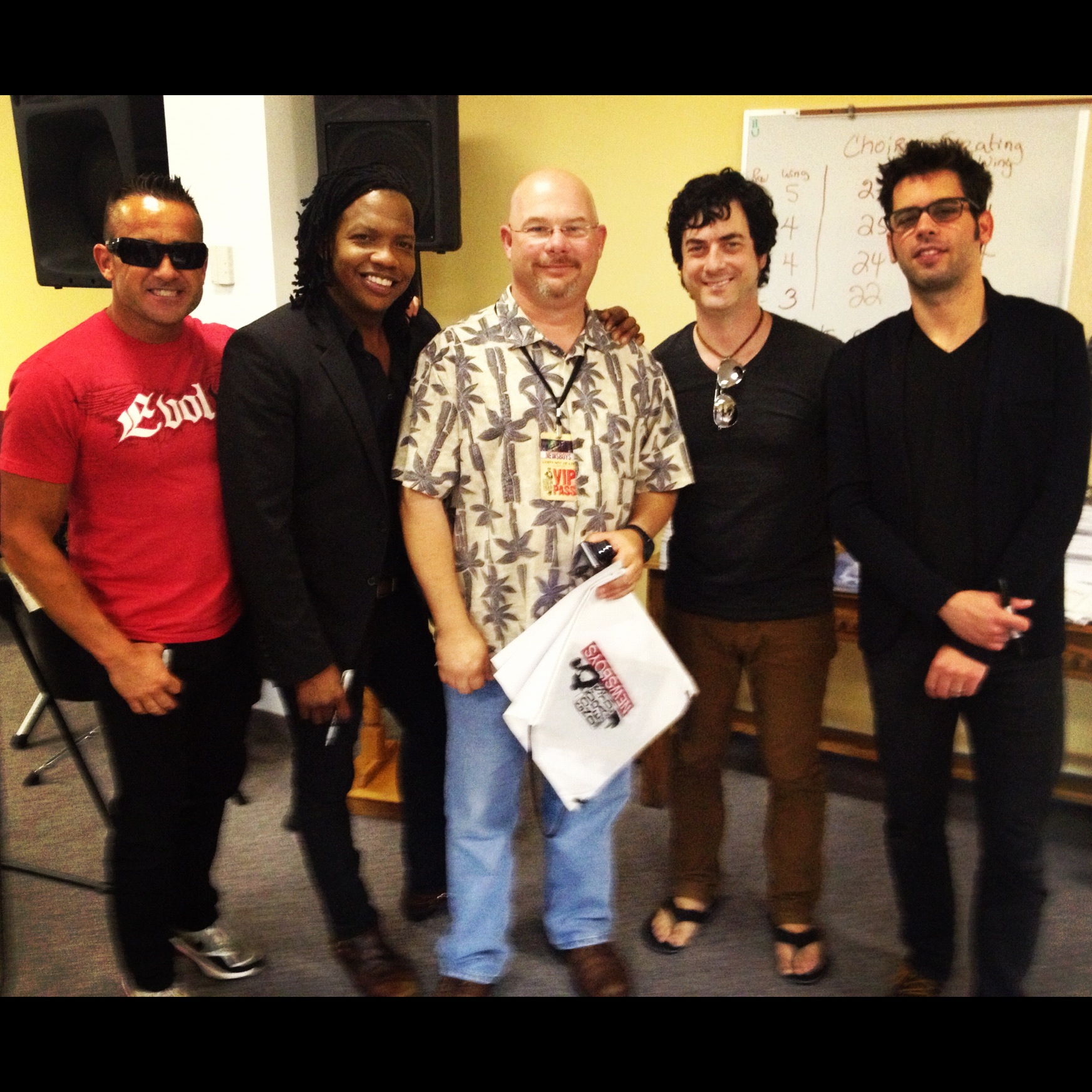
IMG_8606The News Boys have been around a long time. When Michael Tate became the lead singer, their sound changed a little, but not the message in their music. That’s why I really like this song.

I know that stuff like this is a juicy worm wrapped around a hook, just hanging there for you atheists to chomp. But please, don’t think of it as bait; it’s not, really. It is just a great video proclaiming what many others, beside myself, believe to be true.

God’s NOT dead.

5 Comments

Filed under Apologetics, Faith, God, worship

Monday Monkey “What if You Cross a Monkey With Time?” (Episode 28)

A Little Late

I am sorry that this edition of Monday Monkey did not make it out on Monday, but life is not a picnic – or is it? Life is not a bed of roses – or is it?

Picnics have scavenging insects and flying blood-suckers, while roses are covered with thorns. If you were to lay on a bed of roses while out on a picnic without insect repellent, you could die from blood loss and starvation.

Yesterday was not a good day. Let’s just say my family and myself would appreciate your prayers.

A Little Different

This edition of Monday Monkey was done in black and white. Believe it or not, I had to take multiple videos with my Socialcam app in order to achieve the effect. I could not find a single app for my phone that would record in black and white the way that I wanted, especially for free.

It is also a little different because I made up an accent. I don’t know what it really is. Maybe it is a combination of French, Russian, and Romanian. I don’t know.

And believe it or not, I did everything by myself this time. I had no help in the “camera girl” department. I even did the music on an old Yamaha Clavinova.

A Little Controversy

Where’s the controversy? Well, one could say that it is the fact that I call a certain kind of bread “monkey bread,” when it isn’t. But the real controversy can be found in the fact that I make it perfectly clear where I stand with the issue of Creation and Evolution. It’s quick, but it’s in there.

I’m sure, based on previous experience, that some will come on this blog and challenge my beliefs. That’s OK. The last thing I want to be known for is cowering from expressing my beliefs.

A Little Encouragement

That brings me to a final thought. There is no reason for Christians (or those who just believe that the world did not just appear out of nothing or by accident) to cower under the attacks from evolutionists. Sure, a lot of those guys are smart, but that doesn’t mean they are right (I’m sure that won’t set well, either). If you have the truth, don’t be afraid to stand up for it. Just be sure you are able to defend your beliefs with something solid, not just tradition or feeling.

One well-known “scientist” was recently shown telling parents to stop teaching their kids about creation. He said, “We need them [to be engineers, scientists, etc.].” Immediately my mind recalled one of the greatest scientist this country has known, George Washington Carver (1864-1943). Carver said, “I love to think of nature as an unlimited broadcasting station, through which God speaks to us every hour, if we will only tune in.”  – Brainyquote.com

“What if You Cross a Monkey With Time?”

57 Comments

Filed under Apologetics, God, Humor, Monday Monkey, Uncategorized, Witnessing, World View