Tag Archives: Theology

Is There a “Hired Heretic” Union?

Happy Whatever!

Whether you are celebrating Halloween or Reformation Day, I hope your day is a happy one. I don’t wish anyone ill will, even if you’re dressed like a witch with a sugar craving, or sneaking around nailing lists to church doors. Just have fun and be safe, OK?

Bus Sitting

At this moment I am sitting on a school bus in Riceville, Tennessee. After my morning route I drove 60 kids from Battle Elementary to a farm. So, while the little munchkins are out finding pumpkins and petting goats, I’m trying not to freeze.

My only problem is that I forgot to bring a hat, a jacket, or any kind of food or drink. All I have is my iPhone, so that’s why I’m blogging. It will take my mind off my hunger.

Caustic Comment

A while back I wrote a post entitled “Was John R. Rice a Heretic?” In that piece I dealt with the issue of KJV-onlyism and the fact that Dr. Rice, founder of Sword of the Lord, was not a KJV-only subscriber. What came after were a slew of hateful comments from KJV-onlyists (preservationists).

Therefore, instead of complaining about being cold and hungry in a bus parked in a corn field, I wanted to share with you the latest and greatest comment I’ve received. I hope you will be encouraged and uplifted as you read the following words most assuredly written in love…

My beloved, nothing is ever going to change the truth that God has preserved his word in the English language only in the old king james 1611. Frankly speaking,If you don’t see the truth it is just because the god of this world has blinded you.
Your modern versions translate the word virgin to young woman,perverting the virgin birth of our saviour. Are you not ashamed of that,you hired heretic from the pit of hell?
You can say I’m harsh but the fires of hell will be more harsh on you because these modernists who pervert God’s word have hired a candidate of hell like you to speak good of them.
Who do you even think you are to copyright God’s word? CAN’T YOU SEE WHY GOD WILL THROW YOU INTO HELL AND LEAVE YOU THERE FOREVER?

Besides never knowing I owned a “copyright” on any version of the Bible, I am surprised to find out that I was hired by modernists to pervert the very doctrines I thought I believed. If the dark forces of liberalism paid this “candidate of hell” anything, it wasn’t negotiable at the bank. I’ve been cheated!

I guess that’s why I’m sitting, shivering, and starving on this bus as I try to earn a few extra dollars. Evidently, being an unknowingly hired heretic from the pit of hell doesn’t pay very well.

4 Comments

Filed under baptist, blogging, legalism, Martin Luther, Theology, translations

A “Perfect” Role Model

Sermon Prep

Not long ago I was doing some research for a sermon on Jonah. In the process I came across a Muslim website that made an interesting observation (and I will paraphrase), “The Bible proves it is not true because God would not allow the prophets’ reputations to be smeared.”

It went on to say (paraphrasing, again), “What kind of role model would a prophet be if we read of him making mistakes?”

What kind of role model? That’s a good question! Was the Muslim author trying to say that role models had to be perfect in order to be real? Here’s a shocker – in one way or another, everybody is a role model.

If the defining characteristic of a role model is “perfection,” that would rule out King David, Solomon, Moses, Joshua, Abraham, Isaac, Jacob, Peter, Paul, Sarah, Mary (all of them), the woman who washed Jesus’ feet with her tears, and many, many others…

…especially Jonah.

Jonah

Now, Jonah wasn’t exactly the type of person after which I would want to pattern my life, but he was a prophet of God. He had some serious character flaws, though. He was angry, disobedient, and was a racist who constantly talked suicide. He even spouted off to the Lord for being too forgiving!

No, Jonah’s not the type of person I would want to emulate. But hold the whale puke! I am more like him than I thought!

  • I have run from God.
  • I have harbored racism at times, as much as I am ashamed to admit.
  • I have been angry and disobedient.
  • I have wondered if life was worth living.
  • I have even wanted to see whole cities destroyed, innocent people and all, after September 11, 2001.

I have been more like Jonah more than I care to admit.

The Encouraging Part

The fact is that the Bible is not only full of role models, but models of the people we already are. Flawed, broken, and human. But here is the encouraging part: even when we are not perfect, God can still use us – and change us.

  • Jonah ran from God, but God pursued.
  • Jonah disobeyed God, but it didn’t derail God’s plan.
  • Jonah got angry with God, but God responded to him with the understanding kindness of a wise Father.
  • Jonah even wanted to die, but God never belittled him. He only focused Jonah’s attention on the bigger picture: 120,000 souls, not to mention animals, whose lives were spared (Jonah 4).

I thank God that the Bible doesn’t white-wash humanity. There are so many examples of how people, just like me, can find hope, even when we’re not perfect.

The Perfect One

It is not hard to come to the conclusion that there were some really dysfunctional people in the Bible. But you know what? That’s what adds to the authenticity of Scripture. There are no “perfect” role models in the Bible, except for one – Jesus.

“For to this you have been called, because Christ also suffered for you, leaving you an example, so that you might follow in his steps. He committed no sin, neither was deceit found in his mouth.” – 1 Peter 2:21-22 ESV

“For we do not have a high priest who is unable to empathize with our weaknesses, but we have one who has been tempted in every way, just as we are–yet he did not sin. Let us then approach God’s throne of grace with confidence, so that we may receive mercy and find grace to help us in our time of need.” – Hebrews 4:15-16 NIV

I want to be more like HIM!

4 Comments

Filed under Christian Living, General Observations, God, Life Lessons, Preaching, Struggles and Trials

Sunday School – Something Has to Change!

 This week I was given a discussion question. I was asked to “present a list of diagnostic questions that can be used to evaluate the theological foundations of the discipleship program of a local church.” At least three of the diagnostic questions needed to address God, Jesus Christ, and the Holy Spirit. Therefore, in response, I prepared several evaluation questions aimed at discovering how God, Jesus, and the Holy Spirit are being presented to our youth, including questions aimed at discovering the level of understanding regarding the importance of teaching theology on an applicable level.

Questions to Evaluate the Theological Foundations of a Youth Discipleship Program

In The Teaching Ministry of the Church Octavio J. Esqueda defined the word theology as “the study of God,” which comes from the Greek words theos (God) and logos (speech, reason, word). Then he went on to say, “To do theology is to reflect on God. Our theology, or the lack of it, affects the way we think and live.”[1] So, the first question is

“What are we teaching our youth about God that will not only inform them of his nature, but will cause them to live differently than they are taught in the world?”

How we think about God should affect how we live, but even though many may learn about God’s attributes, they rarely learn to appropriate the truth that He is ever-present, all-knowing, and all-powerful in their lives. The problem that many churches face, including ours, is scores of children who learn enough about God to describe him intellectually, but know little of him from an experiential perspective. Do they fear Him? Have they ever made the personal connection that what God did to his Son should have been done to them? Do they know that how they live outside of church is more important than their Sunday school attendance? How they really understand God as a real person will affect how they think and live outside of the classroom. They need to be imitators of God (Ephesians 5:1) in the world, not just church.

In two different places (Matt. 16:13; Mk. 8:27) we read how Jesus asked, “Who do men say that I am?” Who do our youth say that Jesus is? Is He a perpetual baby wrapped in swaddling clothes? Is He just the namesake of the club (the church) they were forced by their parents to join? Do they think of Him as God, or as a moral teacher akin to the founders of other “great” religions? Michael J. Anthony wrote in A Theology for Christian Education that being able to articulate one’s understanding of the deity, humanity, earthly ministry, and work of Christ is essential to one’s spiritual maturity.[2] Are we turning out “mature” young adults when they leave our youth department? The second question is…

“How are we teaching who Jesus Christ is, and in what ways can we determine what we are teaching is effective?”

When it comes to the Holy Spirit, Baptists are typically scared to death. They are more likely to talk about fried chicken than the “fire” of the Holy Ghost. However, Jesus spoke very clearly when he said that he would send another Comforter to abide with us (John 14:16). The Holy Spirit is not only critical to our ability to teach, but to understand the Bible, the core of our curriculum. Do we ever teach our young people about the indwelling power of the Spirit which enables them to deal with peer pressure and temptation? Do they know about His ability to help them understand the “bronze-aged” document their atheist professors routinely ridicule? Therefore, the third question is…

“What are we teaching our youth about the Holy Spirit?”

The sad truth is that many youth programs, if not the majority, lack quality teaching, and we are sending our youth into the unbelieving world unprepared. Just take the word school in “Sunday school” – it’s a misnomer – it doesn’t exist. If it does exist, then most youth programs are the equivalent of a high school that sends students to college without ever teaching them how to read!

Something drastic has to be done, that is for sure. Regular teachers in regular schools try to prepare students to deal with life once they graduate. They teach with a goal in mind. They have lesson plans. They are forced to show that their students are learning. What are we doing in the church? Are our children any more prepared for the world than when they first started coming? Will their faith endure or fall apart once they reach college?

We have such a narrow window through which to teach our youth how to be Christians, not just wear a label. They spend eight hours a day in a school that teaches them how to “gain the world,” but what will if profit them, or us, if they lose their soul (Mark 8:36) due to one hour a week of poor Christian education? Proverbs 22:6 says, “Train up a child in the way he should go: and when he is old, he will not depart from it.” The reason so many are departing is not because the proverb is false; it’s because they have never been taught.

God help us. One day we will give an account.


[1] William R. Yount. The Teaching Ministry of the Church. 2nd edition. (Nashville: B&H Publishing, 2008), 32.

[2] James R. Estep, Jr., Michael J. Anthony, and Gregg R. Allison. A Theology for Christian Education. (Nashville: B&H Publishing, 2008), 125.

1 Comment

Filed under baptist, Christian Maturity, Faith, General Observations, Southern Baptist, Theology, Uncategorized, Witnessing

Christmas Is the Gospel

The first Sunday of December brought with it many sermons about Christmas, I am sure. Riverside Baptist Church was no exception. The message this morning had to do with Christmas, but especially the “good news” of Christmas…the Gospel.

You may never have the opportunity to visit our little church in Chattanooga, but today I am going to give you an opportunity to hear what I preached. The recording isn’t fancy, but it is understandable. I recorded it on my iPhone…the same one I used to record Mr. Monkey acting like a fool (or is that me?).

Pick up a Bible and turn to the book of Luke, chapter two, and follow along.

Listen: Christmas is the Gospel

1 Comment

Filed under Christmas, God, Preaching, salvation

Just a Comparison

Before you get mad at me for what you are about to read, it’s only a comparison, not a dogmatic definition of right or wrong.

In Line

Every Tuesday my wife and girls go to Precept Ministries (Kay Arthur) in Chattanooga for Bible study. On some days I go with them and use the time to study. It’s a nice place to study, believe me. However, I am writing this on a computer at Precept while Kay Arthur is talking to someone a few feet away. She is distracting me.

Then, there are other days when my wife and I leave the girls and sneak out to get a biscuit. Today we had to sit in line forever. For jelly biscuits.

Jelly Biscuit – May I insert just one question at this juncture? Why is it you always have to ask for jelly when you order a jelly biscuit? What is it about “jelly biscuit” that confuses people? If I ordered a plain biscuit, I would not expect jelly. But when I order a jelly biscuit, why don’t they assume I want jelly? Why do I always have to ask for it?! Good Grief!

I Hear a Song

It was while we were sitting in line that I heard a song on Christian radio (J103). The song caught my attention because of the lyrics. May I share with you the words from the chorus?

You make me happy…Uhhh
You make me feel the way I do…
You make me happy, Yeah!
I wish the whole world knew you, too! (and then the song ends with a bunch of “la-la-la’s.”)

I started to laugh. Honestly. Was I supposed to be blessed? Encouraged? Uplifted? Edified? Happy?

I know, I know, I know…I know that there are plenty of great, contemporary songs out there. Chris Tomlin, for one, has more than a few. I love several songs from Building 429, Avalon, and the Newsboys. But seriously, why can’t more of them take the subject matter at hand a little more seriously?

I Hear the Past

Some lines from the past need to be heard more often, especially if the best we can come with today is “uhh” and “yeah.”

  • My hope is built on nothing less than Jesus’ blood and righeousness.
  • A mighty fortress is our God, a bullwark never failing.
  • Alas! and did my Savior bleed, and did my Sovereign die? Would he devote that sacred head for such a worm as I?
  • I will cherish the old rugged cross.
  • Riches I heed not, nor man’s empty praise: be thou mine inheritance now and always; be thou and thou only first in my heart; High King of Heaven, my treasure thou art.

Dear Christian song writers, you can do better than “uhh’s” and “yeah’s” and “la la la la.”

8 Comments

Filed under legalism, music, worship

Simple Preacher

“Simple Preacher”

I’m just a simple ol’ preacher
I know what I know, I think
But when I’m around the scholars
I find that my knowledge stinks

They impress with their didactic polemics
And their proofs of amanuenses
But at the risk of sounding solipsistic
I know that I know I have Jesus

– Anthony Baker

3 Comments

Filed under God, poetry, Preaching

A Doctrine from Eden Reborn

Once again I am writing a post on my iPhone 4, but this time my words are being composed in a hotel laundry room (believe it or not, there’s a funny story here, but I will save it for later).

And, if you remember, a couple of posts ago I promised to tell you about an unbiblical, heretical doctrine sweeping parts of the church. Since I have 30 minutes left on the dryer cycle, now is a good time.

The Beginning

In order to put things in perspective, we must start with the beginning. And when I say beginning, I mean THE beginning. Please consider the following verses, for they are critical:

Genesis 1:1 In the beginning, God created the heavens and the earth.

John 1:1 In the beginning was the Word, and the Word was with God, and the Word was God.

John 1:14 And the Word was made flesh, and dwelt among us, (and we beheld his glory, the glory as of the only begotten of the Father,) full of grace and truth.

It should be obvious, according to the above verses, that not only did God create the universe, but that the Word which He spoke was none other than Jesus Christ. The doctrine that Jesus is the “express image” of God the Father, even God Himself (Hebrews 1:3), is at the core of orthodox Christianity. Jesus was not just a good man or prophet, and neither were the words of God at creation just words spoken in faith.

Did you get that last part? That’s the part I want to address.

Faith in Words

There is a teaching still being taught that essentially says, “If you have faith in your words, as God had faith when He spoke the worlds into being, you can also create a miracle, your own reality. You can be like God, if you have the faith of God.

Excuse me? God had faith? Really? If so, in what?

First, stop and think about this! Do you realize that God is the Giver and Author of faith (Hebrews 12:1-2), not One who puts His faith in something or someone? There is something fundamentally wrong with the idea that Omnipotence would have any reason to have faith, for the very definition of faith requires a sense of dependence. When God speaks, things happen; not because of His faith, but because He’s God!

Secondly, ask yourself, “If God had faith in His Word, then would that make Him the first Christian?” How silly does that sound? But in reality, if we are to believe that God had faith in His words, which brought about creation, then would it not stand to reason, if John 1:1 is correct, that God the Father put His faith in Jesus? Was not Jesus the Word that created all things?

Then, there is the worst part…

Words of the Serpent

Do you remember how Satan tempted eve in the garden of Eden? Remember how he tried to convince her that by eating the fruit, she could “be as gods?” How similar, then, is the promise, “If you have faith in your words, as God had faith in His words, you can create like God did?”

If you think I’m making this stuff up, my friends, consider the following statements by one of the foremost teachers of this false doctrine:

“You have the same creative faith and ability on the inside of you that God used when he created the heavens and the earth.”
Kenneth Copeland, ‘Inner Image of the Covenant,’ side 2.

“God used words when He created the heaven and the earth….Each time God spoke, He released His faith — the creative power to bring His words to pass.”
Kenneth Copeland, The Power of the Tongue (Fort Worth: KCP Publications, 1980), 4.

It may anger some of you, my readers, but please don’t be offended. Do as Paul told Timothy, “take heed unto thyself, and to [thy] doctrine” (1 Timothy 4:16). Please understand, to claim one has the power to create, as God created, is heresy of the highest order! Faith in our words, outside of faith in God, especially in order to bring about our will, as opposed to, or in spite of God’s will, is nothing less than witchcraft. Even more, it is the doctrine of Eden reborn: “you shall be as gods.”

Laundry is Done

Well, my laundry has been done for a while, now. Morning comes early.

I hope this post was beneficial to you in some way. But, if your were a Kenneth Copeland fan, I’m sorry. At least I didn’t mention Joel Osteen, so we can still be friends, right? Right?

6 Comments

Filed under Christian Maturity, cults, God, ministry, Theology, Uncategorized

Does Divorce Disqualify?

I will never forget the phone call I got from a church in Rome, GA about 14 years ago. Someone on the other end of the line was part of a search committee looking for a new pastor.  They had gotten my resume and were impressed enough to give me a call.  Everything was going well until they asked a very pointed question, “Bro. Anthony, does your wife have a spouse that is still living?”  I responded with a cold, clinched-teeth, squinted-eye “Yes,…..ME.”  Unfortunately, this would not be the last time something like that happened.

What I encountered on the telephone that day was not unusual, nor unexpected; but it hurt.  You see, I had chosen to marry a woman who had been divorced, even against the wishes of our (then) pastor, who said marrying Valerie would “put the final nail in the coffin” for my ministry.  However, even knowing that many disagreed, we married, anyway.  I was aware of the Scripture (1 Tim. 3:2) being used, but I was also in the process of becoming free from the legalism that had bound me for so long…legalism that oozed with a self-righteousness that wanted to limit me based on another’s determination of my spirituality, not Biblical truth (and it didn’t hurt that the late Dr. Spiros Zodhiates gave his approval).

Let me be clear about a few things…

First,  I have never been divorced, so for me the whole argument of 1 Timothy 3:2 should be moot.  Second, my wife was abandoned and left with no choice but to divorce (she was the innocent party), and it happened before she was a believer.  Thirdly, her ex-husband remarried and divorced again before I even met her.  By all accounts, both she and I were clear from any “adultery” issues.  Also, I am the husband of one wife, and Scripture NEVER said “must be the husband of one wife who was the wife of one husband ever.”

What DOES Scripture say?
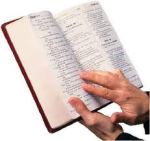
1 Timothy 3:2  “A bishop then must be blameless, the husband of one wife...”  Also, verse 12 says, “Let the deacons be the husbands of one wife...”  The difficulty with these verses is not what is being said, but how it is interpreted.  Is Paul telling Timothy that in order to be a pastor or deacon or elder in a church, you must have only been married once?  Could it be possible that Paul is even saying that a man of God MUST have a wife, because being single would disqualify one from ministry?  These are things that have been debated for centuries.  Some believe that a pastor or deacon or elder should have never been divorced (or married to a divorcée) . Others believe that in order to be a proper leader, one must be married.  Still, many commentators believe that the proper rendering of the Greek is “one-woman man,” implying faithfulness and character over the number of wives.  What the Scripture says is one thing, but as William D. Mounce put it, “The Greek gives us a range of possibilities, but our theology is going to determine our interpretation.” (http://www.koinoniablog.net/2009/03/can-an-elder-be-divorced.html#comment-captcha)

I think there’s another way to look at it…

Take a look at 1 Timothy 3.  Read through verse 12.  The best I can figure is that there are between 16 and 17 qualifications for the bishop, and between 6 and 8 for the deacons.  All of these are preceded with a literal or an implied “must be,” as in “must be blameless,” or a “must have.”  How does this affect the argument that an elder must have only been married once, never remarried, or never divorced?  Well, think of any great pastor that you know of.  Think of any great man of God that has stood behind the pulpit and faithfully proclaimed the Word of God.  Has he always been blameless?  Has he always been on his best behavior?  Did he ever get drunk, covet, lose his patience, or curse his wife or children in anger?  Was he ever a novice, a beginner subject to pride? If so, then according to the logic of some, he should never be able to preach or lead in God’s church, for just as a man “must be the husband of one wife,” so he also must be “blameless, vigilent, sober, well-behaved, given to hospitality, patient, never greedy, and always in control of his house and children.”  Do you see it?  If your interpretation leads you to believe that the bishop must have only had one wife ever, then the same hermeneutic (the study of the principles of interpretation) should apply to the other “must be’s.”  “Must be the husband of one wife” = never divorced.  “Not a novice” = never been a beginner in the faith. Doesn’t make sense, does it?

1 Timothy 3:1-12 is in the present infinitive tense (i.e., must be / dei einai).  The requirements listed are ones that describe a man of character and faithfulness, of sobriety and gravitas; not a beginner or one untried and unproven.  What I see is a list of requirements that may not have always been present in a man, but should be NOW, after God has done a verifiable work in his life.  In other words, the Bible says a bishop “must be,” not “must have always been,” or “must have never done.”  Paul said, “and such were some of you:  but ye were washed, but ye are sanctified, but ye are justified in the name of the Lord Jesus, and by the Spirit of our God.” – 1 Corinthians 6:11

Here’s my point…

I believe that there are plenty of men and women (especially men) that are sitting back or hiding out because someone has convinced them that they are used up and un-usable.  For instance, I can think of men right now, who because of whatever reason, are divorced.  Yet these men, now Christians, are sold-out, God-fearing, faithful, Spirit-filled fathers and husbands with proven testimonies and unimpeachable character.  Sadly, however, because of mistakes made when they were young, unsaved, and stupid, they cannot serve as deacons, much less as pastors.  On the other hand, I can think of several pastors today who were once murderers, drug dealers, fornicators, extortioners, and abusers of mankind (gay, for those of you in Rio Linda).  They are accepted and given full reign as leaders in the church, but not the ones who were divorced.  So, like I said in a previous post…

if the Pharisee and the Publican sat down with a pulpit committee in the average Baptist church, which one do you think they would hire?
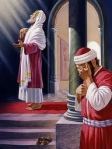
Answer:

Depends on which one “had a living spouse.”

26 Comments

Filed under baptist, Divorce, General Observations, Independent Baptist, legalism, Relationships and Family, Uncategorized