I didn’t think of the cigarette part until I started writing the title, but it’s an honest question worth exploring.
Is there one addiction more dangerous than another? Of course. Honestly, cigarettes would kill me sooner than cancer from my phone.
The point that I want to make this morning is that I think I might be addicted to my cell phone. And if I am, then admitting it to the world is a good way to overcome it.
Hello, my name is Anthony. I’m an iPhonaholic. I think.
Official Terms and Stats
OK, so let’s look at what the professionals have to say. When I did a quick google search of “what do you call someone addicted to looking at their phone?”, I discovered that much of the research and writing that popped up was several years old. Even the most recent professional articles referenced research that was done as far back as 2008.
The official term, nomophobia, was derived from combining “no mo-bile” with phobia (irrational fear). Simply defined, nomophobia is “an extreme fear of not having your phone or not being able to use it.”
Since this is not an official research paper, and I don’t really want to get into the work of sourcing everything I read, just google what I did and you can find it all. But when it comes to the numbers, they are pretty disturbing.
- In the original 2008 UK study that coined the term nomophobia, 57% of men and 47% of women suffered mobile phone anxiety.
- In another study of college students (2013), 64% were at risk of developing nomophobia, while 77% checked their phones at least 35 times per day.
- A 2010 study showed that 61% of adults check their phones first thing in the morning.
- In 2014 it was observed that with college students there was a correlation between low GPA’s and frequent cell phone usage.
If you are reading this and wondering, “Do I have nomophobia?”, then social psychologists at Iowa State University have put together a 20-item questionnaire meant to help you self-diagnose. Now, this, too, was from several years ago, so I don’t know if anything has changed. But if you’re like me, we’ve got problems.
Not So Fast
But on the other hand, back in 2015 Brian Fung, a reporter with the Washington Post, questioned the legitimacy of equating nomophobia with ” real, clinical addictions.” Fung argues that true addictions and disabling phobias generally affect only 10 to 12 percent of the population, so, cellphone “addiction” might not be as bad as described.
And let’s think about this… Before there were cell phones, how did we stay in contact? We had pay phones, didn’t we? And before we had Waze or Google Maps, how did we find our directions to destinations? We either used maps or wrote down directions. Yet, where are the pay phones these days? Have you tried to buy a map, lately?
Before there were cell phones, business was conducted over land lines, desktop computers, in stores, and on paper. Nowadays, as you know, business, shopping, and even legal documents have been adapted to mobile devices. And what’s more, a lot of our daily activities now require we have a cell phone, or the immediacy of the transaction demands it.
As one researcher rightfully noted, the increased usage of cell phones may not be the result of increasing addiction as much as it is the increased demand put on individuals by the culture and evolving economy.
But We Can Do Better
So, back to the original assertion that I have an addiction… Do I? Probably not, at least not in a clinical sense.
Am I going to give up my iPhone? No. Do I go to bed with it and wake up with it? Yes, because it has replaced my clock and my alarm and the “white noise” app helps me sleep.
But do I look at it too much? Are my daily “pick ups” excessive? Am I comforted by feeling of the phone in my left hand? Do I reach for my phone at the first sense of boredom? Do I panic if I leave home without it? Do I take it with me to the shower? Is it the first thing I look at when I open my eyes in the morning and the last thing I look at before i go to sleep?
Yes. Yes. Yes. Yes. and Yes.
SO…
Below are MY stats from this morning and last week. Are you willing to share yours?
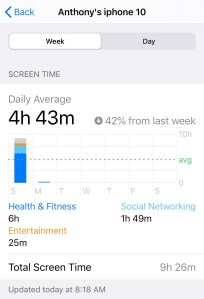
This Monday morning, with Sunday’s stat’s setting the average.
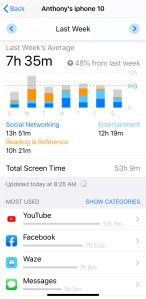
Last week’s average per day, along with a breakdown of what I viewed.

The average number of pickups per day – 74.
Let’s come back to this next Monday and see what changes can be made. I will not quit using my phone, but I am going to try to lower the screen time stats and change what is most commonly viewed.
Would you like to post something like this and join me?



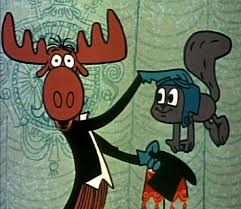 But back in the 70’s there were at least some good cartoons on the air, so my parents didn’t mind me staying over at my grandparents’ house on Friday night… so that I could wake up to Rocky and Bullwinkle the next morning… at 6 a.m.
 I miss the days of pre-Scrappy Scoobydoo; the predictable and comforting theme music drawing me into another rerun of Bugs Bunny; and the pre-scandalized Bill Cosby teaching me about junkyard life through the voice of Fat Albert. I miss thinking the dinosaurs actually looked real on the Land of the Lost, and I really miss learning about the Constitution and grammar from School House Rock – I can still remember the song that taught the Preamble… Can you sing it with me?





 The Recovering Legalist
What Does a Woman Look Like?
I have a strong feeling that this post is going to infuriate some people. It may even get me in trouble with somebody somewhere. However, I am going to mix metaphors, jump right in, and open a can of worms.
What does a woman look like?
By now you are probably familiar with the Matt Walsh documentary What is a Woman? If you haven’t seen it, you need to, because it seems to have made possible conversations many have been too afraid to have until now. And when you consider that just recently Bill Maher (on HBO) questioned the trans-gender community’s growing numbers, particularly with children, I think it’s time for me to point a few things out, too.
Let’s face it, the most influential and powerful women today are not biological women; they’re men who identify as women. Men who identify as women are stealing all the spotlight from the females who once fought for equality. They’re even showing that if you want to be the best woman you can be, you should be a man. You know, like Lia Thomas.
But thinking about Lia Thomas, why is it that Lia Thomas looks like a woman? I mean, why is it that Lia Thomas has long hair? Why does Lia wear makeup? Is it because “she” wants to look into the mirror and see someone besides his self?
Why is it that men who transition into women (which they’re really not; they just look like them), they generally go with the feminine look that is so stereotypical of natural femininity? Why not stay looking like the guy they are, just without the penis? Are appearances that important when what is really supposed to matter is what’s inside?
It just seems a little strange to me, that’s all. For so long there was a certain look that women were expected to have. Women wore dresses, had long hair, did their nails, and always had on some kind of makeup. They were expected to have higher, softer voices, hourglass figures, and shapely legs perched on high heels. But these stereotypes are the very ones biological women fought against. Who said women had to look a certain way? They could wear the pants in the family, too!
Have you ever heard of a Barbie Doll? Of course, you have. Go ahead, google “Barbie too feminine” and what you will find are articles going back nearly a decade that blast Barbie’s stereotypical looks.
So, then, why the long hair, Lia? Why does any trans female feel the need to LOOK female? And the same thing can be asked about women transitioning into physical copies of men.
But let’s not stop with transgender, let’s take this even further down the rabbit hole and ask why it is that, again, generally speaking, homosexual and lesbian couples so often mimic the heterosexual image? In other words, why are there often male and female counterparts?
Dare I say Ellen and Portia?
Could it simply be that the way God designed us is innate, not fluid or socially constructed, therefore no matter how much we want to dismiss the Creator, His design still bleeds through? It’s like His will for humanity’s relationships is a holy nicotine stain that no amount of paint can hide for long.
What does a woman look like? I guess that’s a difficult question if you can’t even define what a woman is. But are “tomboys” not women enough? Are they actually men in women’s bodies? Should biological women with facial hair, deeper voices, and a love for Stanley tools exchange their baby-bearing club cards for urinals and prostate exams?
Because, after all, REAL women get breast implants and lip plumping.
Share this:
2 Comments
Filed under Culture Wars, current events
Tagged as commentary, culture, Lia Thomas, questions, social issues, transgender