Tongues and the Church Today


A Guest Post by: David Fuller (Non-Cessationist)


The gift of tongues in Acts is always associated with the baptism in the Holy Spirit. The promise of the Father, baptism with the Holy Spirit, filled with the Spirit, and references to the Holy Ghost being poured out or falling upon believers are terms used interchangeably in Scripture with one exception which R. A. Torrey notes: Baptized with the Holy Spirit, is nowhere used in the Bible of any experience but the first and suggests an initial or initiatory experience.(65) He suggests we therefore use this term only to describe the initial filling of the believer with the Holy Spirit.

This point is generally agreed upon even by those who reject tongues, since the New Testament clearly and repeatedly admonishes believers to be filled with the Spirit. The points of contention are whether the initial filling necessarily happens to every Christian at the moment of regeneration, and whether or not tongues should still be expected as a necessary sign of it. This debate necessarily narrows down to the purpose of speaking in tongues. Given Luke’s relatively cursory mention of this gift, one could ask what his purpose is in mentioning it at all?

Luke’s purpose in writing, as stated by himself in Luke 1:1-4, was to set down an orderly account of those prophesies concerning the Messiah and His church which had been fulfilled before their very eyes, in order to strengthen the faith of Theophilus. In Acts, he shows how the church fulfilled not only O.T. prophecy, but Christ’s commission as well. Since Jesus Himself, in referring to the enduement with power as the promise of the Father, as well as Peter in Acts 2 and Paul in 1 Cor. 14:21, each indicate that the gift of tongues is a fulfillment of O.T. prophecy concerning the church and the last days, Luke includes it in his account; documenting its part in the fulfillment of Christs commission as well. Thus, the fulfillment of prophecy and of Christs commission are the only two purposes for tongues with which Luke is concerned, since this is the focus of his writing. An extensive treatment of the purpose of tongues in collective worship or the spiritual life of the average believer of that day would be a departure from his point.

Also, since he is writing for Theophilus, not for us, he naturally would have excluded extensive information about subjects with which Theophilus would undoubtedly have been all-to-familiar, such as the structure and events of a typical early-church worship service.

We know from Paul’s testimony in 1 Cor. that apparently quite a number of the believers in Corinth spoke with tongues, as did Paul himself. That the Ephesian believers spoke with tongues is indicated by his admonition that they should pray in the Spirit (Eph. 6:18 cf. 1 Cor. 14:15). The fact that Luke mentions only three major instances of tongues, and relates them to the spread of the gospel to the major people groups, while neglecting their mention in ch.8 and the many other salvation accounts, does not mean they did not occur in these instances. Luke may have just been avoiding redundancy (especially in light of that days paper costs) and sticking to his purpose, which was to chronicle the fulfillment of prophecy and Christs commission.

Luke also chooses not to teach us of the Eucharist in Acts, so we base our understanding of it on Christs command and Paul’s teaching on the meaning of and procedure for observing it, given to the Corinthians because of their abuse of this ritual. Likewise, we must look elsewhere for detailed treatment of the gift of tongues; and we find it from the same sources. In Mark 16:17, Jesus states that tongues are a sign that will be manifested in those who believe. Luke leaves us wishing for the testimony of one who was there as to what part, if any, tongues played in the individuals spiritual life and collective worship at that time. Paul gives us exactly this, and again his most detailed treatment is directed toward those who were abusing it. Thank God for the Corinthians! Is it not comforting to see how God can use even our shortcomings to the benefit of His church?

What does Paul tell the Corinthians (and us) about the correct purpose and use of the gift of tongues? Citing Isaiah 28:11, he says that tongues function as a sign. Just as the strange tongue of the Assyrians was to be a sign to Ephraim of Gods judgment, so the gift of tongues in the N.T. served as a sign to the Jews of Gods involvement in those events as well. There is, however, a further purpose for tongues. Paul says the gift, when properly used, is intended to edify the individual and, when interpreted, the church body.

But how is this accomplished? What is the point, after all, of speaking a language even you yourself cannot understand? Paul answers this question in 1 Cor. 14:2, For he that speaketh in an unknown tongue speaketh not unto men, but unto God. In verse 14, he states, For if I pray in an unknown tongue, my spirit prayeth (emphasis mine) and continues in verse 15 with, I will pray with the spirit and, I will sing with the spirit. In verses 16 and 17 Paul indicates that tongues are used to bless and give thanks to God. Instead of being in the form of a message directed toward the church, which is always the case with prophecy, it is intended to be a form of worship and prayer. This worship and prayer interpreted generates participation on the part of other members of the body, and thus it becomes a means of edification equal to prophecy, In prophecy the edification springs from the Spirit-quickened Word, while in tongues and interpretation the edification springs from Spirit-quickened worship and prayer.(Brandt, 55).

The speakers in tongues in Acts 2:11 were proclaiming the wonderful works of God. In the house of Cornelius, they heard them speak with tongues, and magnify God.(Acts 10:46). In Acts 19:6, who were the speakers in tongues addressing? Paul, who witnessed the event, tells us that he that speaks in an unknown tongue speaks not unto men, but unto God. Furthermore, he encourages the Ephesians to pray in the Spirit(6:18), and Jude likewise tells us to build ourselves up in our faith by praying in the Holy Spirit.

According , then, to both the record of Luke and Paul’s teaching, the gift of tongues serves two primary functions. It is a sign to the unbeliever of Divine presence and activity, and a means of building up the believer and the church through Spirit-inspired prayer and worship.

Although some contend that the gift of tongues was meant only for the early church, Scripture nowhere states that this is so. In fact, there are two quite strong statements to the contrary: Paul’s command in 1 Cor. 14:39 to forbid not to speak in tongues, and Peters statement in Acts 2:39, For the promise is to you and to your children, and to all who are far off, as many as the Lord our God shall call (emphasis mine). Taken together with Christs statement in Mark 16:17, as well as the various admonitions to pray in the spirit throughout the N.T. , I see no scriptural reason for believing the gift tongues is not meant for believers throughout this church age.

Works Cited

Brandt, R.L. Tongues, the Greatest Gift?; Bridge Publishing, c.1981

Torrey, R.A. Baptism With The Holy Spirit; Revell, c.1897

Link to R. A. Torrey

28 Comments

Filed under Christianity, Church, Guest Posts, Prayer, worship


Guest-Post Gamble

As most of you know, I have been making use of guest posts for the last several weeks in order to free up some time during preparation for a move. For the most part, all of the posts submitted by guest authors have been well-written pieces with acceptable content (content that doesn’t conflict with my personal beliefs).

However, just the other day I received a guest post from a blogger friend who has a different take on a particular teaching. His view is that the gift of speaking in tongues (languages unknown to the speaker), as mentioned in the books of Acts and 1 Corinthians, is still applicable and important for verifying the validity of one’s personal faith.

But here’s the thing: I don’t believe that. Shocker?

So, I had a discussion with the contributor of the post and stated that if I published his work without any clarification, there might be some confusion and unwanted repercussions.  Essentially, to publish his post without a caveat would be a big gamble on my part.

Therefore, I have decided to try something… a guest post open discussion on the topic of speaking in tongues.

Loose Your Tongues

Let us have a discussion on the topic of glossalalia (i.e., “speaking in tongues”) within the church. If you have a particular view, why not share it? The only thing I will not permit is attacking each other.

The first post on the topic is going to be the one submitted by David Fuller: “Tongues and the Church Today.” David is not a cessasionist (cessationist = one who believes the gift of tongues has ceased), consequently he will be arguing that the gift of tongues is still alive and well, even under-used.

The next post will come from me, and that post will be a treatment of 1 Corinthians 14:4, the verse where Paul talks about self-edification. That post will be argued from the perspective of a near cessasionist (nearly 100%, but not quite…more like 98%). I’ve yet to write it, but it will be done soon.

After that, I would love to publish more posts from other bloggers willing to enter the discussion. All I ask is that you focus on good scholarship to support your understanding, not attacks on those with different beliefs. The posts will publish as regularly as you submit them.

How This Fits My Blog

You might be wondering, “Why do this?” I mean, why bring up a topic with so much potential for hurting feelings or exposing differences and inconsistencies within the Church? Well, the answer is pretty simple.

  • We don’t all have to agree on secondary issues to be family
  • Open and honest dialogue helps to clear up confusion, not create it.
  • Atheists use our differences to bolster their argument against Christianity; therefore, it benefits the Church and the Gospel to demonstrate how followers of Christ can differ on certain non-essential doctrines and still remain connected by the fundamental and primary doctrines of the faith.
  • An open discussion of this topic will help to combat the legalistic tendencies we all have to lessen the spirituality of others as we judge them through the lenses of our own particular beliefs.

A Challenging Challenge

So, before I publish the first post in this open-ended series, let me issue a challenge to you all (or y’all, if you’re here in the South). When you submit your views on the subject/doctrine of speaking in tongues, remember to exhibit grace.

For example, if you don’t believe the gift of tongues is still in effect, that’s fine, but try to find a way to say something positive about those with whom you disagree. The goal of this series of posts is not to offend, but to build up and encourage each other as we seek to better understand Scripture.

If there be therefore any consolation in Christ, if any comfort of love, if any fellowship of the Spirit, if any bowels and mercies, Fulfill ye my joy, that ye be like-minded, having the same love, being of one accord, of one mind. – Philippians 2:1-2

6 Comments

Filed under Bible Study, blogging, Christian Unity, Guest Posts, legalism, Theology

Jesus Paid It All, and the Payment Was Permanent (Part 4)

Guest post by Wally Fry

jesus saves

Not only does The Bible teach that grace and security are not a permit to sin, but Christians should keep in mind that we all face a judgment one day.  Understand clearly that a truly saved person will never face judgment for their sins; the issue of Heaven and Hell is decided only in this life. Believers will, however, be judged at some point in time for how they lived their lives for Jesus Christ while they were alive. The ultimate goal of every believer at the Judgment should be to hear the same words the  good steward heard in the Parable of the Talents which Jesus told, “Well done, good and faithful servant.”

Let’s take a look at this judgement believers face. We learn in Romans 14:10-12 as Paul wrote to the Roman believers, that we will all stand at the Judgment Seat of Christ and account for how we lived our lives for him. Since we aren’t going to be judged for our sins what then is the purpose of this judgment? The judgment believers face is to determine our rewards we will receive for the things we have done for Jesus while living. One of the best descriptions of what will happen can be found in 1 Corinthians 3:10-17

What we receive are crowns for various services we have rendered on behalf of Jesus Christ during our lives. Descriptions of these can be found in several places in Scripture: 2 Timothy 2:5, 2 Timothy 4:8, James 1:12, 1 Peter 5:4, and Revelation 2:10.

You can also read a full post on rewards for believers here

3 Comments

Filed under Christianity, Guest Posts, salvation

Don’t Threaten the Bad Guys, You Bad Guy!

As I sit here at my computer, my blood is boiling and I’m darn near writer’s block. There’s just so much, and I don’t know where to begin.

Why not talk about one of the most insane news stories of the day? Why not do a little political ranting? 

Mean ol’ President!

The media has been having a collective hissy fit because President Trump said something insensitive about the sweet little boys who like to draw cute little designs on their faces. You may know them as the nice young men from El Salvador, MS-13. But all the media seems to see is another opportunity to twist anything Trump says into a far-fetched negative.

Believe it or not, our President, the man chiefly responsible for keeping the American public safe, decided to use some strong words when discussing his plans for a gang who’s motto is “mata, viola, controla” or,  kill, rape, control. He called them…(take a deep breath)…“Animals!”

But what does the mainstream media do? They bring out law enforcement commanders who condemn the President for suggesting we shouldn’t go easy on MS-13, even suggesting that we “throw them” into the back of the paddy wagons. Oh the horror!

What was he supposed to say to a bunch of slashers who specialize in child prostitution and use knives and machetes instead of guns, because blades hurt and make the kill more up-close and personal?

“Dear MS-13, unfortunately we are not huge fans of the way you shave people too close around the neck with your huge, sharp, blades – and let me just say, they are wonderful blades, just wonderful. So, would you pretty please stop doing bad things? The last thing we want to do is politely and gently place you in the back of a well-padded government vehicle.”

We have millions of people entering our country illegally. They care little about our laws, beginning with the very first one they break, and yet the left wants to welcome them. Then, when we get a president who actually takes serious his pledge to return illegals across the border, the left accuses the same president of strengthening MS-13. 

“I think it’s emboldening them, because this gives them the opportunity to tell immigrants, ‘What are you gonna do? Are you going to report us? They’re deporting other innocent people … (so) they’re going to associate you with us by you coming forward,'” said Walter Barrientos, Long Island coordinator with Make the Road, an immigrant advocacy group. (source: CNN)

Let’s be honest, people. If Donald Trump blows his nose, the media in America will find something to complain about. This whole story about what he said about MS-13 is a perfect example.

He uses a few tough words about some murdering monsters, then the left defends the monsters. When the President tries to stop illegal immigration, the left accuses the President of helping the monsters by scaring the lawbreakers. Should the President apologize, he’d be considered week and pandering. Should he take action, he’d be a bully.

Trump can do nothing right in the eyes of the left.

Instead of agreeing we have a problem worth attacking with every resource available, all the left-wing media sees is another offended group they can use to bring accusations against a President that wasn’t supposed to defeat their chosen Clintonian goddess.

I’m done ranting. 


3 Comments

Filed under America, politics

Humility ~ Part 1

The following is the first post by a new contributor, Donald N. Norris. You can usually find him at My Heart is for Israel, where he regularly impresses me with his in-depth, Israel-loving, Bible study 🙂

Guest Post by: Donald N. Norris

In this post, we will begin to explore the Godly characteristic of humility.  For those that really know me, they are probably wondering why I would even begin to attempt this topic!  I certainly don’t have much of a reputation for being humble.

Confessions of a Self-Centered Man

I have recently come out of my denial and now freely admit that most of my life has been spent as an extremely self-centered man.  It’s all about me!  My over-eating and anger issues are a primary function of my ingrained self-centeredness.

I’m not proud of this at all.  But, with the power of my Savior Yeshua and His indwelling

Ruach, I know in my heart that I have embarked on a recovery journey to transform and renew my mind and my actions to incorporate the Godly character of humility into my walk with the Lord.

After reading my testimony on this blog, you may be wondering how I became so self-centered.  You need look no closer than my given name ~ Donald.  All my life, I have been told that my name means world ruler, leader and overcomer.  Unfortunately, I bought into that, at least the leader and overcomer part.  And it is true that one of my spiritual gifts is leadership.

But despite my self-centeredness, I have always thought of myself as a servant-leader.  One of my favorite hymns, based on James 4:10, has been “Humble Thyself In The Sight of the Lord” by Bob Hudson.  James writes, “Humble yourselves in the presence of the Lord, and He will exalt you. (NASB)  Mr. Hudson wrote:

“Humble Thyself In The Sight Of The Lord”

Humble thyself in the sight of the Lord (echo)
And He shall lift you up
Higher and higher and He
Shall lift you up.

So I will humble myself in the sight of the Lord (echo)
Humble myself in the sight of the Lord (echo)
And He shall lift me up
Higher and higher and He
Shall lift me up.

So I will humble myself in the sight of You, Lord (echo
Humble myself in the sight of You, Lord (echo)
And You will lift me up
Higher and higher
And You will lift me up.

I bought into the servant-leadership style of Yeshua early in my own walk, especially at work and church.  Sadly, I did not buy into it in my own home.  There, I thought I had to be that ‘world ruler.’  It was my way or the highway.  Trust me that didn’t work out well for me or my loved ones.  In many respects, I’m still reaping what I sowed. I’ve had to make my amends and rebuild those relationships.

So, how is it that I came to blog on the topic of humility?  At our church, I am on a team of people developing the curriculum for a disciple-making training program that will take a new believer along a pathway of becoming like Yeshua and eventually be able to replicate their own journey with other new believers; in short, making a disciple to become a discipler.

Since I knew that I needed to learn and live-out the characteristic of humility before I could ever train someone else, I volunteered to write that module.  This series on humility is a result of my exploration of humility from the Word of God.

Humility Defined

Humility is a personal quality in which an individual shows dependence on God and respect for other persons.  Various Bible translations use humble, meekness, gentleness, tender, mild, afflicted and considerate to describe the characteristic of humility.

In my next post, we will explore the concept of humility in the Tanakh (Old Testament).


1 Comment

Filed under Bible Study, blogging, Christian Maturity, Guest Posts

Got Sin?

The following also appears on my other blog, ProverbialThought.com.


Proverbs 28:13

“He that covereth his sins shall not prosper: but whoso confesseth and forsaketh them shall have mercy.”

Hidden Sin

Hidden sin is the stuff we hide from view, maybe even from ourselves. Hidden sin is the kind of sin we don’t want others to know about for fear of being embarrassed, judged, or condemned. Hidden sin could even be what we choose to label “character flaws,” “idiosyncrasies,” or simply “bad habits.” They are buried, closeted, covered, disguised, or even renamed in order to keep from admitting what they really are.

Do you sneak away to where no one will see? Do you wait till the kids are asleep? Do you clean up the mess so no one will know? Do you hide records and notes? Do you cover your tracks? Do you say it with a fake smile? Do you daydream about what you would do if you could get away with it?

Keep on, keep covering and you will never find relief; you will never find peace; you will never lose the weight of guilt; you will never, ever prosper.

Look at It!

There were so many times when I was younger that I was injured and didn’t want to look at the wound. One time I was cleaning an automotive valve grinding machine when I briefly touched my left hand to the sharp surfacing stone that was spinning at 5,000 r.p.m. In a micro second flesh was ground away to the bone and blood began to drip forming a puddle by my feet. I grabbed my hand with my other, called for help, then said, “I don’t want to look!”

Had I kept my hand covered, I would have never seen that the injury was not as extensive as I first thought. But had I kept my wound covered, denied it ever happened, and went on about my day, I could have bled to death, or at least lost my hand to a horrible infection. My life could have been changed forever.

Thankfully, I looked at my wound, then began to feel the pain, but then began a long healing process. Quite frankly, the same thing needs to happen with hidden sin. We need to admit the problem, deal with the pain, and allow others and God to bring healing to our lives.

Need Mercy?

Hidden sin is dangerous for many reasons. Hidden sin eats away at one’s soul and callouses the conscience to the warning signs of life-threatening disease. Though hidden, it is contagious and harms others.

Like the hidden ring in J.R.R. Tolkien’s stories, the longer we keep it, the more deadly it becomes – and the more deadly we become. But to he who confesses, admits what he has, turns from it, and asks for help, there awaits mercy.

Got sin? Need mercy? You know what to do.

Leave a comment

Filed under Bible Study, grace, Life Lessons, wisdom

When GI Jane has her monthly pain

Since I don’t have anything new for this weekend, I thought I would share this post from a follower, one who knows far more about military things than myself.

SLIMJIM's avatarThe Domain for Truth

Someone asked me about my thought about women in their period while on a mission with military “elite” units.  Obviously I’m not a woman so my comment is going to be more on the military side of things.  I imagine that many within such units have reservation about combat units being no longer exclusively all-male.  Here’s my thoughts.

View original post 1,169 more words

2 Comments

Filed under Uncategorized

Walking or Riding?

A Familiar Story

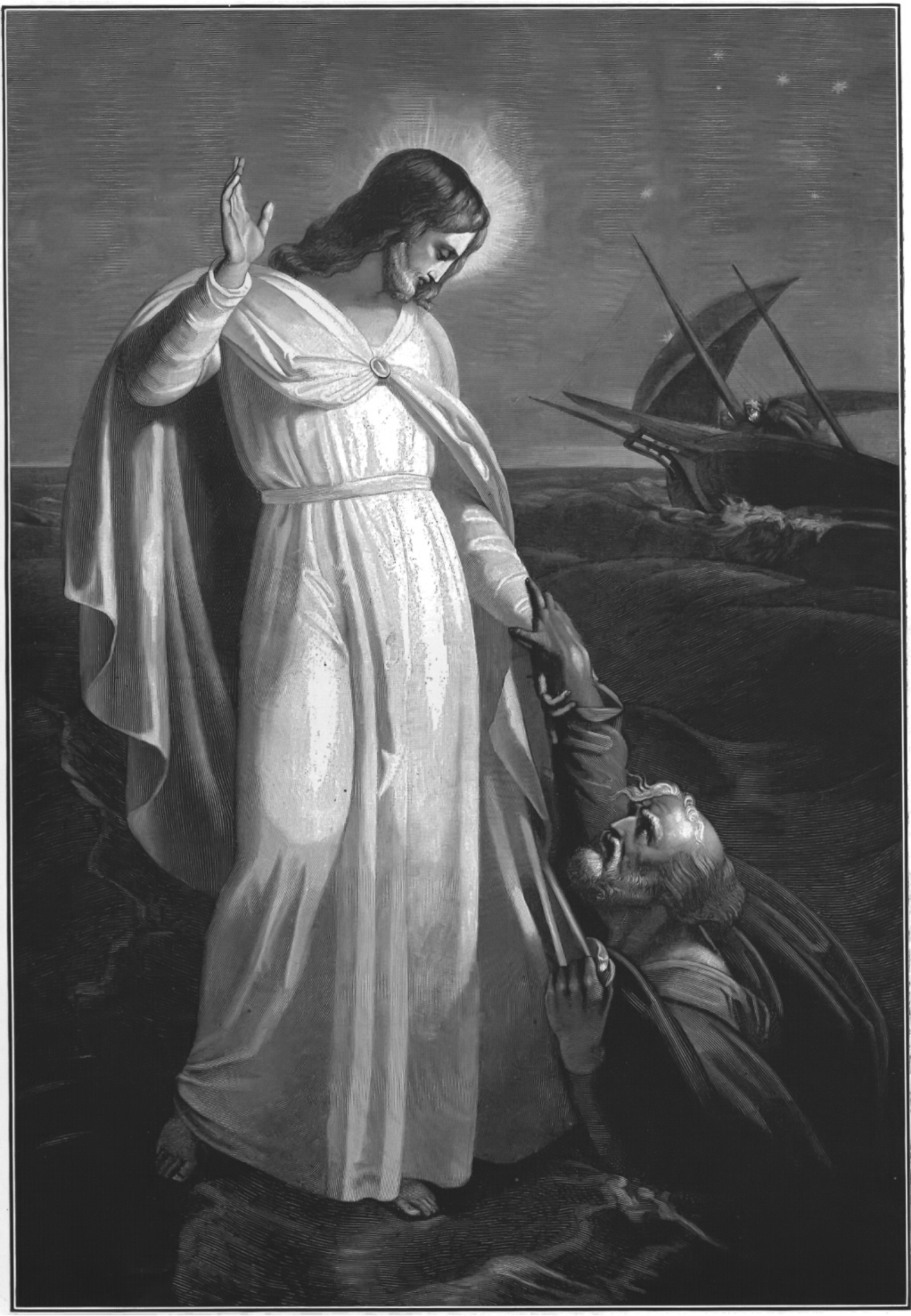
If you are familiar with the Bible, you probably remember the story of Jesus walking on the water. And if you remember that, you may also recall that the apostle Peter was the one who walked on the water with Jesus – until he began to look around.

But if you don’t remember the story, here it is as found in the NIV version of Matthew 14:25-33.

During the fourth watch of the night Jesus went out to them, walking on the lake. When the disciples saw him walking on the lake, they were terrified.

“It’s a ghost,” they said, and cried out in fear. But Jesus immediately said to them: “Take courage! It is I. Don’t be afraid.”

“Lord, if it’s you,” Peter replied, “tell me to come to you on the water.” “Come,” he said. Then Peter got down out of the boat, walked on the water and came toward Jesus.

But when he saw the wind, he was afraid and, beginning to sink, cried out, “Lord, save me!” Immediately Jesus reached out his hand and caught him. “You of little faith,” he said, “why did you doubt?”

And when they climbed into the boat, the wind died down. Then those who were in the boat worshiped him, saying, “Truly you are the Son of God.”

Familiar Pictures

Now that you are familiar with the story, have you ever seen paintings or illustrations depicting this passage of Scripture? Of all the ones I have ever seen, Jesus is usually portrayed as a calm, sad-looking, and often effeminate water-stroller. Peter is always some scruffy-looking, heavy-as-stone fraidy-cat.

Then what about those waves? In all the depictions of this story, how high are the waves? Usually they are no more than just a few inches high around the Lord and his bobbing disciple, Peter.

Well, I am here to challenge the common perception based on these fallacious (that means stupidly wrong) paintings.

The Waves

I am not a seafaring man like my friend David Welford, but I would bet even he would say that 6-8 inch waves would have been NO problem for some experienced fishermen. What ever frightened Peter, once he looked around, had to have been more than a ripple on the surface.

Consider how the Bible described what was happening to the boat in Matthew 14:24: “But the ship was now in the midst of the sea, tossed with waves: for the wind was contrary.” Do kiddie pool waves toss a boat? No, but real waves do.

In stead of tossed, other translations use words like buffeted, beaten, and battered. The New Living Translation says that “a strong wind had risen, and they were fighting heavy waves.” It would seem to me that the disciples were facing a life-or-death struggle, not inconvenient weather.

The Wacky Request

People often belittle Peter for his “lack of faith.” They think less of him because he took his eyes off of Jesus and began to sink. But who on this earth that is not currently on anti-psychotic medication would actually ask a UWG (Unidentified Walking Ghost), “If it is you, compel me to do something totally irrational and dangerous, OK?” What kind of crazy question was that?

I believe there is more to this story than we have been told. Why didn’t Peter just ask Jesus to come a little closer? Why not just ask Him to get in the boat and take a load off? What would have caused Peter to think of leaving the boat?

Maybe, just maybe, what Jesus was doing looked like fun.

Wave Riding

The next time you look out over a stormy sea capable of sinking a boat, try to find the smooth spots. The paintings that show the Savior walking delicately over glassy H2o in the middle of a gale are unrealistic.

My guess is that Jesus was doing more than simply walking. He was having fun! He was probably surfing without a board. It is possible that He was going up and down…up and down…up and down…smiling the whole time. That’s when Peter said, “If it is you, Lord, tell me to come out there with you…that looks like fun!”

Seriously, just stop and think about it. Here was a storm that was beating up a boat and wearing out the crew; waves that were anything but small; a boat full of panicking people; and a Man walking on water. Peter must have concluded that if there was going to be any place to be, it was with Jesus, riding the waves.

With Jesus

We can’t help the fact that storms come. But if there is any lesson to be learned from this story it is that the worst possible place to be can be the safest and most peaceful, as long as our eyes are on Jesus and we are walking with Him.

Does it make sense? No. Is it irrational? Maybe. But as long as we have faith in Jesus, we can ride atop the tallest tsunami, admiring the view.

9 Comments

Filed under Faith, Struggles and Trials, Uncategorized, worship

The Unbearable Secret

Do you have a secret? 

If it is true that “we are only as sick as our secrets” then sexual abuse is one of the most lethal secrets in our society today. There are an estimated 60 million adult survivors in the U.S., and one in 10 young people will be sexually abused by age 18.

I am one of these statistics. And, I just published a book inspired by true events, about a friend who also was victimized, but did not live to share his story.

Many survivors will tell you their abuse was the worst thing that ever happened to them. From my perspective it is not; denial is.

Denial perpetually re-victimizes, extending pain’s power over victims’ lives and adding fuel to a fire of self-destruction that can include substance abuse, relational brokenness, and pornographic and other sexual addictions.

Why We Hide

Why do sexual abuse victims hide the truth about what happened to them?

Shame.

Unlike in other crimes, victims of sexual abuse experience an intense, if misplaced sense of responsibility for what happened. In my conversations with survivors I’ve been repeatedly stunned by how often I hear a version of this statement:

“What happened to me wasn’t sexual abuse; it was my fault because I __________.”

How victims fill in the blank is not important if you understand that “sexual abuse involves any contact or interaction whereby a vulnerable person (usually a child or adolescent) is used for the sexual stimulation of an older, stronger or more influential person.” [“When Trust is Lost,” by Dan B. Allender]

The shame we feel creates the secrecy, but sadly even when we find the courage to break our silence, those we choose to trust often are unprepared and ill-equipped to receive such a difficult disclosure in a life-giving manner, at least initially.

The questions asked or the emotions expressed can serve to confirm victims’ worst fear — that what happened to them really was their fault — so rather than bringing freedom, disclosure can lead to a deepening of shame, self-contempt and denial.

  • When I first told my future husband that I was abused by my high school teacher he asked, “Was it consensual?” Now  a strong supporter and advocate, he deeply regrets his initial response, which didn’t reflect a lack of love, rather a lack of understanding of sexual abuse.
  • My friend, Paul, was an adult when he told his parents about his abuse by a priest in high school. When they learned of his intention to join other classmates in taking the allegations public, his parents questioned why he would “cause trouble for the church.” It took months for them to process their fears and anxiety and join him in his quest for justice.
  • My friend’s sister visited her aunt and uncle for the summer as a teenager. She called her parents and tearfully plead to come home because her uncle was molesting her. They dismissed her claims and told her to “stop being dramatic.”

The Secret Cost

Victims eventually escape their abusers, yet many live in fight-or-flight mode. Who is the enemy they fear most? Intimacy.

As human beings we were created to live in intimacy with each other and with God. Survivors find themselves locked in an internal conflict against this God-given desire. And as with any battle, it leaves a trail of destruction—self-destruction in this case, in the form of relational struggles, divorce, substance abuse, sexual addictions and far too often, suicide.

My friend, Paul, looks for these battle scars to identify likely victims among his high school alums. Netflix’s “The Keepers,” reports these outcomes were common among survivors of the abuse scandal at the center of this series. And The Boston Globe Spotlight team has showcased myriad cases where such fallout plagues survivors.

Secrets Don’t Keep

In Mark Chapter 4, 21-23, Jesus says to his apostles:

Do you bring in a lamp to put it under a bowl or a bed? Instead, don’t you put it on its stand?

For whatever is hidden is meant to be disclosed, and whatever is concealed is meant to be brought out into the open.

 If anyone has ears to hear, let him hear.

Secrets don’t keep. Sooner or later they find their way into the light…and that is for our good.

As difficult as it is, the first brave step for a survivor of sexual abuse is to speak up about what happened. Bring it to someone you love and trust to come alongside you in grace and truth, even if imperfectly. Pursue recovery; I’ve created a short list of resources to help you get started.

And most importantly, bring your abuse to the Lord. Admittedly, this is no small step, especially for those wounded inside the church. Yet we serve a God who promises, “You will find me when you seek me with your whole heart.” (Jeremiah 29:13)

If you’ll take the risk, God will heal your broken heart. And in the process, as only he can do, he will use your brokenness to become a light to others.

It’s in this way that we discover our purpose, our value to one another and our infinite, unconditional value in the eyes of the one who created us. And that’s when something truly incredible happens:

We connect…intimately

…and we hear two of the most healing words a hurting person can hope to hear from another person:

“Me too.”

You are not alone. You are forgiven. And not only can you be delivered from the darkness of your suffering, but you can become a brilliant point of light in the lives of others.


About the Author

Nanette Kirsch is author of the Faith Runner blog  and of the just-released book, Denial: Abuse, Addiction and a Life Derailed, based on a true story, of how denial of childhood sexual abuse led an outwardly highly successful man into a secretive and dangerous double life.

2 Comments

Filed under abuse, Christianity, current events