Category Archives: God

Barriers to Church Growth #8 (Selfish Fasting)

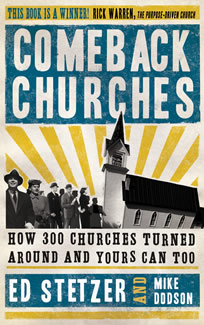
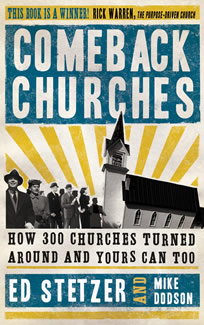
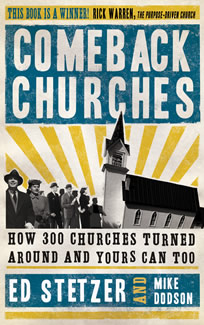
A very revealing study was done, leading to a book detailing how 300 churches went from declining or dying, to growing. In Comeback Churches, written by Ed Stetzer and Mike Dodson, there is a list of 30 different barriers to church growth. Having received permission from the publisher (B&H Publishing Group), I would like to discuss a different barrier each week.
“People think of fasting as being for themselves.”

Moreover when ye fast, be not, as the hypocrites, of a sad countenance: for they disfigure their faces, that they may appear unto men to fast. Verily I say unto you, They have their reward. But thou, when thou fastest, anoint thine head, and wash thy face; That thou appear not unto men to fast, but unto thy Father which is in secret: and thy Father, which seeth in secret, shall reward thee openly.” – Matthew 6:16-18

Wherefore have we fasted, say they, and thou seest not? wherefore have we afflicted our soul, and thou takest no knowledge? Behold, in the day of your fast ye find pleasure, and exact all your labours.” – Isaiah 58:3ff

One of the great tools of prayer is fasting. But before we go off too quickly and label it as a “tool” or a “key” to answered prayer and holiness, consider the motive behind it.

Why do people fast? Why do people abstain from food or drink when they pray. Honestly, many do it only to either be seen by men, or to be thought more highly of by God. Neither are proper motivations for fasting.

It’s all about me…

In today’s church culture there are many who promote various ways and means to health, wealth, and spiritual success. You know the type – they’re constantly begging for you to sow a “seed of faith” into their ministries (or should I say “scams” and “snake oil factories?”). There are even those who promote fasting as a way to becoming more holy (then offer a book in exchange for a gift of any amount above $20).

The real problem with all of that is the fact that it preys on the flesh, the sinful tendency to think of “self” more than the will of God. It may help a televangelist get rich when you sow a “seed,” but it won’t bring you closer to God if you are expecting a hundred-fold return on your “investment.” When it’s “all about me,” God is not glorified.

Not a means to an end…

Without getting into a long study of the topic of fasting, let’s just say that most fasting is done for the wrong reasons. Look at the rest of the verses in Isaiah 58, for example. It was not that the people were avoiding fasting; they were even abusing themselves. Yet, God was not pleased. He was not interested in their fastings. He wanted their hearts.

There are so many ways the church could benefit if we would seek the heart of God, not our own desires. If we sought after God with a pure heart, asking Him to burden us with a desire for the lost and broken, fasting would come naturally. Most examples of fasting in the Bible were not begun with intent, but were the result of brokenness. Most of the time the fast was the result of one’s lack of desire for anything other than hearing from God. How different is that from the modern Christian who gives up a meal or two and expects, in return for their great sacrifice of earthly pleasure, an answer to a selfish prayer?

Fasting should never be a means to an end. It should be the natural result of one who can find no pleasure, no solace, no comfort in anything other than a word from the Bread of Life. Anything else borders on an attempt to manipulate the King of Glory into feeling sorry for us. What’s worse, fasting as a means to an end for a request which is intended to be “consumed upon [our] lusts” is no different than self-mutilization or witchcraft.

God will not grow a church that seeks to glorify itself or seek its own desires, especially if it attempts to bribe God in the process.

5 Comments

Filed under book review, Christian Maturity, Food, God, Uncategorized

Missing God

My Dad

My father (Terry L. Baker) passed away back in 1991. I miss him very much.

One of the fondest memories I have is running and jumping into his lap after he came home from work. I can still remember the smell, too. You see, my dad worked in an auto machine shop and was very acquainted with sweat, grease, metal shavings, and Varsol. But even his words of “Don’t jump on me, son, I stink” never made a difference. When he finally got home, all I wanted to do was run to him (tears fill my eyes as I write this).

Another memory is his old (new then) 1968 Ford truck. It didn’t matter where I was, whether it be at school, the baby sitter, a friend’s house, or wherever; the sound of his truck was as distinctive as a fingerprint. I could hear him drive into a driveway, but more precisely, I could hear the distinct, redemptive sound of the shutting of the door. Whenever I heard that sound it meant my dad was there to take me away with him. What I wouldn’t give to hear that sound in my driveway right now.

I miss my daddy. I miss being his son. When everything seemed scary, wrong, broken, or hopeless, my dad would show up and let me know everything would be alright. Even when I got too big to jump into his lap, just being with him made me feel safe, loved, accepted, and never alone or intimidated. He was our family’s rock.

My God

There are also times when I miss my God.

For example, I have been taking a required biology class which requires me to read a secular, humanistic textbook. Do you know how hard it is to experience the joy of learning when all you read is telling you that your Heavenly Father is a myth? I can see His handiwork in the obvious design of this world, all the way down to the sub-atomic level, yet I am told “evolution” is my “real” parent. Why shouldn’t it make me feel cold and alone?

Also, I have been surfing the “tags” on WordPress.com. How depressing it is to find that so many of the articles included under the tags of “religion,” “Christianity,” and “God” are all hateful, atheistic, snide comments made by self-justifying Libertines secretly hoping God is a lie. Sometimes, on occasion, I don’t want to read them for fear that they might be right, and I might be alone, that there is no hope, and that life is meaningless.

That’s when I cry, “Abba! That’s when I just want to run into His arms, jump in His lap, feel His embrace, and stick my tongue out at all the ones that deny Him.

I don’t know what it will sound like when my Father comes to take me home. I may hear the sound of a trumpet, or He may just whisper in my ear while I sleep. But if God had a truck…..well, I’ll recognize the sound, whatever it is.

And now, little children, abide in him; that, when he shall appear, we may have confidence, and not be ashamed before him at his coming.” – 1 John 2:28 KJV

(Even now, tears fill my eyes more than before as the Hope of Glory fills my longing soul. But if He ain’t your Daddy, you wouldn’t understand.)

5 Comments

Filed under God, the future, worship

Monkeys in Space: Almost

Disclaimer: Due to the author’s sense of humor, those without one should skip this article.

True Story

Sometime last month (between August and September, 2011) the primates of Iran were in mourning. What was supposed to be a small step for monkey, a large tree swing for monkeykind, ended in tragic failure. Now, all space monkey programs are on hold, indefinitely.

Recently, it was learned that Iran had attempted to send a live monkey 75 miles into space for a 20 minute orbit. Soaring into history inside the Kavoshgar-5 rocket, this little squeaker was going to show the world that Iran was that much closer to either putting a man in space, or launching banana hurling chimps at America. But something went wrong – terribly wrong. (Click here for the news story)

Old Story

What amazes me is that it has been over 52 years since NASA sent 2 monkeys, Able and Baker, into space (May 28, 1959). Both survived. Miss Baker even went on to live to 27 years while staying at the Huntsville Space and Rocket Center in Alabama.

NASA went on to send even more monkeys into space. The lessons learned from these missions were invaluable to the growing space program which ultimately put men on the moon in 1969, just ten years after the first monkey went ballistic (pun intended).

Now we have Iran attempting to do what we did 52 years ago (without Windows 8), and they still failed. How depressing that must be! How embarrassing for the poor little dessert monkeys! Surely they are wishing they could defect to a Western zoo about now.

Advanced Griping Standards

So, I couldn’t help but think about something. We all know that Iran hates us, correct? I think I know why. We have more advanced griping skills. Let me explain.

Since 1969 Americans have been without excuse for failure. Since then there have been unbelievable advances in every kind of technology known to man. Why? Because whenever there was a need, all somebody would have to say was, “We can put a man on the moon, but we can’t…” Here are a few examples of how that would sound…

  • We can put a man on the moon, but we can’t make an fast-cooking oven?
  • We can put a man on the moon, but we can’t make a cordless telephone?
  • We can put a man on the moon, but we can’t have more than 3 television stations?

You see, all someone would have to do is throw out that “man on the moon” thing and genius would be shamed into action. I just can’t help but wonder if that is why Iran is always in such a bad mood. Is this why they hate us so much, aside from supporting Israel, and all? I mean, when you stop and think about it, they can’t even elevate themselves to the same level of complaining!

  • We can put a man on the ……..wait…….
  • We can put a monkey on the ………no, wait…….
  • We can kill a monkey strapped to a bottle rocket, yet we still can’t find a cure for camel bad breath?

There’s just no comparison, is there? No wonder they are so far behind. No wonder they hate us. We’re 50 years ahead in griping standards!

The Greatest Standard

But when it comes to standards, there is one that we all fall short of – the holiness of God. We can look at our own achievments and compare them to others, but how do they compare to God? We can compare our righteousness to the deeds of our neighbor, but how do we compare with God?

“Sanctify yourselves therefore, and be ye holy: for I am the LORD your God.” – Leviticus 20:7 KJV

“Because it is written, Be ye holy; for I am holy.” – 1 Peter 1:16 KJV

We can put a man on the moon, but we can’t save ourselves. We can do great and wonderful things, but we can’t achieve holiness. The heart of man is “desperately wicked” (Jeremiah 17:9). The only way we can truly be “holy” is when we “put on Christ” (Romans 13:14). Then, and only then, can we rise to our full potential, for we can “do all things through Christ.”


1 Comment

Filed under America, General Observations, God

Even Though It’s Monday

No Time Off 

Many preachers/pastors take Monday off. I don’t. I can’t. So, Monday mornings around 5 a.m. I am getting ready to greet the dark with a smile.

This morning, like many Mondays, the last thing I wanted to do was get out of bed. I just wanted to stay covered up and deaf to any alarm that dared wake me.

Then, after getting up and on the bus, a thought crossed my sleep-deprived mind – even though it is Monday

At Least I’m Not a Toy Monkey

No, I am not a monkey. Specifically, I am not a 25-year-old puppet monkey named Buddy. I am human…a man…a divinely created person. I am not a synthetic, stitched toy with a hand up my…well, you get it.

Even though it is Monday, and I have 2 weeks worth of work to do in 5 days, I am loved by God. Buddy the monkey is only loved by 3 people, maybe 4 or 5, depending on the mood of the day.

Even though it is Monday, and burdens weigh heavy on my heart, I do not carry them alone. Buddy, even though he has no burdens, has been secluded in a box more years than he has seen the daylight. Buddy doesn’t understand pain or heartache, but neither does he understand joy, love, worship, or fellowship.

Even though it is Monday, I was created by God. Buddy was made on a Chinese sewing machine.

Even though it is Monday, I can praise God for another day. Buddy, a toy monkey, knows nothing about praise. He’s just cute.

“So God created man in his own image, in the image of God created he him; male and female created he them.” Genesis 1:27

“LORD, what is man, that thou takest knowledge of him! or the son of man, that thou makest account of him!” Psalm 144:3

“This is the day which the LORD hath made; we will rejoice and be glad in it” Psalm 118:24


4 Comments

Filed under General Observations, God, Life Lessons, self-worth, worship

Barriers to Church Growth. #5 (Honoring Self)

A very revealing study was done, leading to a book detailing how 300 churches went from declining or dying, to growing. In Comeback Churches, written by Ed Stetzer and Mike Dodson, there is a list of 30 different barriers to church growth. Having received permission from the publisher (B&H Publishing Group), I would like to discuss a different barrier each week.

“People do works for their own honor and not the glory of God (Matthew 5:16).”

“Let your light so shine before men, that they may see your good works, and glorify your Father which is in heaven.” – Matthew 5:16 KJV

Why do we do good works? Why do we feed the poor, shelter the homeless, tend to the elderly, etc. Do we do these things so that our Father will be glorified, or do we do them in order to get glory for ourselves?

To be Seen.

Some people do good works for the sole intention of being seen and considered especially spiritual. Jesus said that “Everything they do is for show” (Mt. 23:5 NLT). Jesus spoke of those who wanted to be seen as pious and holy by wearing boxes containing Scripture on their foreheads or arms. The bigger the box the better. All this was in an attempt to say, “I am keeping the law better than you!” (See Deuteronomy 6:5-9)

Then there are other people who do plenty of good deeds without even acknowledging God. For example,  go to any charity ball held by your local “high society” club. There you will find plenty of people who willingly give thousands to worthy causes, but smile as big as they can when the magazine photographers come around.

They may even be members of local churches and give large offerings to the building fund (as long as it’s named after them); buy the pastor a new car; or pay for a youth mission trip. “And they love to sit at the head table at banquets and in the seats of honor in the [congregation].” – Matthew 23:6 NLT

To be Accepted

Some people do good works in order to be accepted by God. They give away fortunes and spend their lives doing good deeds, but not to be seen of men. They want to be seen by God and thought of as worthy of His love. The only problem is that salvation is “not of works, lest any man should boast.” They work themselves to death in order prove their loyalty, thereby supposedly insuring a place in heaven. But the glory goes not to God, for attached to the works is an expectation of reward based on merit.

Soli Deo gloria

All glory should be to God alone. If our works are done in order to receive praise, then God is not getting the glory. If our works are meant to earn credit with God, then God is not getting the glory. If we work ourselves silly to meet the legalistic requirements placed on us by men, then God is not getting the glory. However, if out of a heart of love we do good works without expectation for reward, recognition, or acceptance, then God will receive the glory.

When all glory, honor, and praise is given to the Lord, He will draw all men unto Himself. Church growth will be unstoppable. Yet, if we expect credit for anything, then what should we expect but further decline? “For mine own sake, even for mine own sake, will I do it: for how should my name be polluted? and I will not give my glory unto another.” – Isaiah 48:11 KJV

We want others to see our good works, but not for our own glory. May they “glorify [our] Father which is in heaven.”

2 Comments

Filed under book review, God, legalism, Uncategorized

Barriers to Church Growth. #4 (Hold to God)

A very revealing study was done, leading to a book detailing how 300 churches went from declining or dying, to growing. In Comeback Churches, written by Ed Stetzer and Mike Dodson, there is a list of 30 different barriers to church growth. Having received permission from the publisher (B&H Publishing Group), I would like to discuss a different barrier each week.

“People are unwilling to take hold of God (Isaiah 64:7).”

“And there is none that calleth upon thy name, that stirreth up himself to take hold of thee: for thou hast hid thy face from us, and hast consumed us, because of our iniquities.” – Isaiah 64:7 KJV

Every time we heard a gospel song that had words similar to “hold on to God,” or “hold to His hand,” my parents quickly reminded us that “we don’t hold God’s hand – He holds ours.” Understandably, what my parents were referring to was salvation. In that sense, we are held and He will never let go.

But that is not what this verse is talking about. Isaiah is saying that part of the problem his people were facing was the fact that none had the desire, nor even the desire to have a desire, to grab hold of God. If that is true today, then it may not only be a huge barrier to church growth, but to individual growth as well.

Take Hold of Thee

It is interesting and revealing when we look at this phrase and compare its usage to other places in Scripture. To begin with, the word chazaq (Strong’s H2388) essentially means “to tie fast, to bind bonds strongly” (Gesenius’s Lexicon). It is a verb that is translated into English as words such as strong, retain, urgent, and caught. Here are just a few examples.

“And the LORD said unto Moses, Put forth thine hand, and take it by the tail. And he put forth his hand, and caught[2388] it, and it became a rod in his hand:” – Exodus 4:4

“And the Egyptians were urgent[2388] upon the people, that they might send them out of the land in haste ; for they said , We be all dead men.” – Exodus 12:33

“Then said his wife unto him, Dost thou still retain[2388] thine integrity? curse God, and die .” – Job 2:9

Moses “caught.” Look at the first verse. Moses had been commanded by God to throw down his rod, after which it became a serpent. Then, against all logic, God told him to pick it up again, but this time by the tail (riiiiigghht!). I would have had to be seriously “stirred up” to pick up a deadly snake by the tail – it BITES! Yet, that’s what Moses did. He “caught it” by the tail.

The Egyptians were “urgent.” Next, after suffering under all the plagues, the Egyptians “were urgent” in there pushing the Israelites out of town. They had come to realize that their own lives were in jeopardy if the Jews stayed one day longer. It was imperative that they be pushed out as quickly as possible.

Job “still retained.” Now, look at poor Job. He had lost everything dear to him, including his health, and then came his wife telling him to curse God and die. She couldn’t believe that he could just sit there and hold on to his belief that God was worth serving. “After all this, are you still holding on to your integrity? What for? What’s the use? Quit putting yourself through this nonsense and just curse God and die!” Yet, he held on.

Making it Apply

When we view Isaiah 64:7 in the light of the verses above, what we have is astounding and convicting. Let’s see if we can work it all together:

1) Taking hold of God is something that we should take seriously, not flippantly. Don’t reach out for Him in a way that implies half-heartedness. Take hold like you mean it! Who do we think God is, a stick to be used by us in our own power to accomplish our own desires? NO! He is alive and dangerous. As Aslan in The Chronicles of Narnia, He is NOT tame. He is not here to be played with.

2) Do we not understand that without the power and presence of God we will die?In Him we live, move, and have our being” (Acts 17:28). There should be an urgency in our desire for Him, no less than the kind the Egyptians had to expel the Jews from their land. Do we want to live? We must urgently “take hold.”

3) We must hold on to God even when it seems insane to others. We must consider our relationship with our Heavenly Father so precious that even when Hell seems to be winning, faith tells us otherwise. Like Job of old, we should hold on to God even when we lie broken and wasted amid the ashes of seeming defeat. Our Redeemer LIVES!

The Barrier that Must Fall

If we are to see growth in our churches, not to mention our own lives, we must seek after God with urgency, intensity, and passion. He must be sought after and adhered to like no other treasure on earth. Anything less betrays our divided, adulterous hearts. God will bless and grow a people who “take hold.” No church will grow who only takes hold of God when it is convenient, fun, or fashionable. We must cleave to Him. It IS a matter of life or death.

Time is filled with swift transition
Not of earth or moon can stand
Build your hope on things eternal
Hold to God’s unchanging hand

Trust in Him who will not leave you
Whatsoever years may bring
When my earthly friends forsaken
Still more closely to Him cling

Hold to God’s unchanging hand
Build your hope on things eternal
Hold to God’s unchanging hand

2 Comments

Filed under book review, Christian Maturity, God, Uncategorized, worship

Barriers to Church Growth. #2

A very revealing study was done, leading to a book detailing how 300 churches went from declining or dying, to growing. In Comeback Churches, written by Ed Stetzer and Mike Dodson, there is a list of 30 different barriers to church growth. Having received permission from the publisher (B&H Publishing Group), I would like to discuss a different barrier each week.

“Pastors are more concerned about self-interests than about God and His people (Philippians 2:21).”

 “For all seek their own, not the things which are Jesus Christ’s.” – Philippians 2:21

How sad is it to think that you can’t trust a man of God? Very! But, obviously, there are many men out there who care more about their own interests than for the church.

In the second chapter of Philippians, Paul was faced with this problem. According to the Apostle, Timothy was the only one he could trust with the care of this church, because all the others sought their own, “not the thing’s of Jesus Christ.” Imagine, there were others capable of doing the work, but only Timothy proved selfless.

What an indictment! What a troubling accusation to cast upon men of God! Shouldn’t the very fact that we are called and equipped for the task of shepherding sheep qualify us for the work? Not if the work is only a tool for self gratification or gain.

Humility Needed

What kind of pastor was Paul looking for when he finally decided on Timothy? All one has to do is examine the previous verses and see that he was looking for a man with a heart and mind like that of the Savior. “Let this mind be in you, which was also in Christ Jesus: Who…made himself of no reputation, and took upon the form of a servant…humbled himself…unto death (2:5-8).”

Jesus was the highest example of a man who could have taken advantage of His position; yet, He was the one who washed others’ feet; wore the same clothes; never demanded special treatment; allowed Himself to be abused and mistreated; even went to a cross. How would modern pastors fare if asked to be more like Him?

The Man Paul Picked

Think about Timothy for a moment. When you do, what kind of mental picture comes to mind? Did he wear the nicest suit? Did he drive a new car? Did he publish a new book every week, or host 15 conferences listing his name on neon parchment?

Did Timothy get offended when not addressed by the correct title? Did Timothy have an “earned doctorate?” Would you have had to make an appointment to see him in his office? If you did, would you have felt intimidated by his presence and demeanor? I don’t get this picture when I think of Timothy, but I do about a lot of preachers.

Self-Examination

What kind of pastor am I? Am I a barrier to church growth? This is a question I have to ask myself, even though it may dig up some stuff of which I am ashamed.

You see, the church is more important than my ego. It is more important than what people think of me. The church was not put here for my benefit. I was sent to care for them. I was sent to feed and protect the sheep, not sell them off to make a profit. They don’t belong to me. They belong to Jesus Christ.

Do I look at every church as a stepping stone? Do I view people as objects, or worse, servants? Am I willing to sacrifice my pride, even my life, for the sake of those for whom Christ died? If not, then I don’t deserve this “good work” (1 Timothy 3:1). Unless I want to be like Christ, as modeled in the life of Paul and Timothy, then I desire the work for the wrong reasons, which would make me a “barrier to church growth.”

Dear friend in ministry, whatever your role, are you more concerned with self? Go back and read Philippians 2 and see how your intentions stack up. Like me, you may find some barriers that need to be torn down.

7 Comments

Filed under book review, Christian Maturity, God, ministry, Preaching, self-worth, Uncategorized, worship

Legalistic Fasting

This is now the umpteenth time I have written several paragraphs, only to turn around and delete everything. Maybe I should just keep this very simple and to the point.

Don’t be legalistic about fasting.

There, I said it. It’s off my chest. I can sleep better, now.

You see, a lot of folks in the Christian community act no differently than the Muslim community during the month of Ramadan. They treat fasting as something necessary to gain favor with God. They think fasting is somehow required to be spiritual. I disagree.

Matthew 6:16 is a verse commonly used way out of context.  In that verse Jesus said, “when you fast.” It was not a command, but a prelude to a command. He said, “Moreover when ye fast, be not, as the hypocrites, of a sad countenance.” Jesus wasn’t commanding anyone to fast, only to not be like the hypocrites who make themselves look all pitiful.

When Jesus said “when,” He was speaking on the assumption that fasting was a common practice with those in the audience. However, we must be careful to take note that it was not a command to fast, nor one that gave instructions. All He said was that when you do fast, don’t be as one of those who seek attention from men.

Lest we forget, there is nothing that we can do to earn the favor of God. His grace is unmerited. His love is not based on the prerequisite of starving one’s self once a year, month, or week. There is nothing wrong with fasting, but there can be serious flaws with our intentions.

False Biblical Examples

It is evil to teach formulas for health, wealth, and happiness based on select passages of Scripture. A good example would be the Prayer of Jabez teaching that says, “Pray this prayer and you will be wealthy.” But examples of fasting in the Bible are also used for exploitation. The first one that comes to mind is the Daniel Fast.

If you remember, in the first chapter of the book of Daniel, Daniel “purposed in his heart that he would not defile himself with the portion of the king’s meat, nor with the wine which he drank.” Because of Daniel’s courageous stand, based on his faith in God and the dietary laws given to Moses, God chose to work a miracle and honor the Hebrew children, in turn bringing glory to Himself. Sadly, there are those who look at what Daniel did and say, “Hey, if I just eat vegetables and water (because meat and wine are obviously evil), then I will be guaranteed health, wealth, and favor.” This is a classic example of misapplication.

True Biblical Examples

When I read the Bible, there are 3 things that seem to be common with true fasting: 1) Desperation, 2) Mourning, and 3) God’s glory. Nowhere do I see it taught that it should be used as a way to become a better person, a more spiritual saint, or a healthier individual. Nowhere do I see it taught that if one did not regularly fast, then that person should be considered spiritually inferior.

What I DO see are examples of people who, when faced with insurmountable trials, impending defeat, or crushing repentance, found food to be the least of their concerns. I think of David when he was praying for his dying son (2 Samuel 12:16 & 17). I think of Nehemiah when he heard of the broken wall (Nehemiah 1:4, 6).  I think of Queen Ester faced with the annihilation of her people (Ester 4:3). I think of Ezra, who, fearing the name of the LORD would be tainted, called the people to a fast before God (Ezra 8:22). These are the common examples.

Too often we take something from Scripture and cheapen it to the point that it becomes a simple 4 or 5-point how-to bestseller. In our slightly inconvenienced world we resort to claiming the only thing truly desperate people had at their disposal. We say, “if you do this, then that will happen.” More often than not, when people in the Bible fasted, it was not because they wanted to – they couldn’t do anything else.

Modern Legalists

Then there are those who like to flaunt the fact that they are disciplined and spiritual – the modern “hypocrite.” They look with derision upon the one who has not fasted once a week. They proudly proclaim “I fast twice in the week, I give tithes of all that I possess” (Luke 18:12), when in reality their fasting is nothing more than a supposed means to a selfish end. Because of their judgmentalism, they force others to be like them. They create a law to which they hold all others accountable, while in the darkness the truly humble is beating his breast, saying, “God, be merciful to me a sinner.”

One Last Thing.

There is no denying that we probably do not fast enough. As a matter of fact, according to Jesus (Matthew 17:21), many a spiritual battle has been lost because of a lack of fasting and prayer. That is the key – prayer.

Fasting without prayer is nothing more than scheduled Anorexia. The whole point of fasting is to seek the face of God, laying all other allurements aside, such as food (even marital relations – 1 Cor. 7:5). It is not that we need to fast; we need God. If fasting is what it takes, then that is what we should do. But one thing is for sure, if we are hungry enough for God, then we won’t need anyone to tell us when or how to fast.

Let me know what you think. Do you fast? How long? Why? Results? 

7 Comments

Filed under Food, God, legalism, worship

Barriers to Church Growth. #1

A very revealing study was done, leading to a book detailing how 300 churches went from declining or dying, to growing. In Comeback Churches, written by Ed Stetzer and Mike Dodson, there is a list of 30 different barriers to church growth. Having received permission from the publisher (B&H Publishing Group), I would like to discuss a different barrier each week.

“Churches aren’t concerned about God’s glory, believing the church is just for them (Isa. 42:8; 48:11).”

I [am] the LORD: that [is] my name: and my glory will I not give to another, neither my praise to graven images. – Isa. 42:8

For mine own sake, [even] for mine own sake, will I do [it]: for how should [my name] be polluted? and I will not give my glory unto another. – Isa. 48:11

When we read the above verses it should be very clear to us that God is not interested in sharing His glory. Yet, too many times we rob God of the glory that is due Him by seeking it for ourselves. We do this in many ways, including the reason many of us go to church.

Lest we forget, “it’s not about us.” However, if you polled the majority of church-goers, I believe you’d find that the reasons for attending congregational worship are more selfish than we’d like to admit. To many believers, church is about what one can get, as opposed to what one can give.

The Tale of the Hymns

Have you ever stopped to listen to the words of those old-time hymns many of us grew up with? You may have sung them all your life, but stop and think about the following: “This world is not MY home, I’m only passing through. / My treasures are laid up somewhere beyond the blue…;” “I’ll Fly Away;” “I’ve got a mansion just over the hilltop;” “All I Need.” What is the common denominator of these lyrics and titles? “Me, me, me.”

If the Church Hymnal (© 1951,1979) was used as a tool to determine what we think of church, stop and think about this: there are 80 hymns with a title that start with the words, I, I’m, I’d, I’ll, I’ve, or My. In contrast, less than 10 contain the word glory. Those that do include “Glory Hallelujah In My Soul” and “I’ll Live in Glory.

I think it is pretty obvious that many of us come to church to get from God, not to give to God. He deserves our worship and our praise. He deserves all the glory because His is God, and not man (Hosea 11:9). We deserve nothing, yet His grace and mercy bestows upon us all the treasures we enjoy. Why do we come expecting anything?

Surely our churches would grow if God was glorified. Imagine a congregation of people who came together to lift up praise and adoration to Jesus for His glorious love. Imagine a group of folks who set aside all their own desires and petty differences in order to lift up holy hands unto the King of Glory. What did Jesus say? “If I be lifted up…I will draw all men unto me.”

So, what do you think? How could we do better in giving the glory to the One who truly deserves it?

Related Post: Un-“Christian” Ministry?

20 Comments

Filed under Christian Maturity, General Observations, God, Uncategorized, worship

Starting Something that Won’t Die

“Dinosaur Bones Found on the Moon”

That was the title of a post I wrote a while back. Funny thing is, though I only wrote it as a joke to catch people’s attention, I have had more people read this than most anything else. 

Little did I know that when I posted the article about finding bones on the moon there would be so many people who were wondering if it was true. Nearly everyday I get a visitor to my blog because they are searching for information about “dinosaur bones on the moon.” What’s the deal?

I don’t know if it was popular before my article, but I know it is popular now. I just hope I didn’t start something that won’t die.

Wait a minute…What am I saying?!! Let the rumor live on! As long as people keep finding this blog, maybe they’ll learn about the Son of God. If so, it wont’ matter if bones are on the moon. 

Thou art worthy, O Lord, to receive glory and honour and power: for thou hast created all things, and for thy pleasure they are and were created. – Revelation 4:1

Click here to read the original post. https://therecoveringlegalist.com/2010/10/29/dinosaur-bones-found-on-moon/

2 Comments

Filed under Aliens, Apologetics, General Observations, God, World View