Good grief, people. Mormons and the rest of orthodox (technical, not denominational term) are at complete odds on core Theology, Christology, and Soteriology. If you don’t know what those words mean, please don’t act like an authority on the subject. You only expose your lack of knowledge and affirm your ecumenical liberality.
That being said, Mormons are unquestionably conservative and hold to a religion that holds one accountable for their immoral actions. And whether or not they ARE Christian, they CLAIM to be, so that places a target on them. Because of this, all of us are in the same peanut gallery, and more and more shooters are coming to the carnival to play.
The recent shooting at the Mormon church is a tragedy because every human being has a soul, and each one is created in the image of God and is intrinsically infinitely valuable. You just don’t kill people because you hate them. Period.
But there is a growing worldwide spiritual conflict between those who believe hate justifies violence and those of any faith that preaches meekness in any form. The Christian world is NOT WEAK! We are meek. There is a difference. Should we rise up as militants do from other groups and defend ourselves, the cowardly jihadists of the world would either run in terror or die for their demonic causes as the untapped might of our assets were poured out upon their heads.
Remember, Jesus COULD have summoned 10,000 angels to deliver him from the Roman cross to which he was nailed. But he didn’t. When they came to Jesus in the garden to seize him, he didn’t have to allow it. For that matter, in just one humorous nod to the omnipotent power meekly restrained before them, all the soldiers fell backwards when Jesus answered, “I am.” I sometimes wonder if our Lord fought a slight grin when that happened. Those who were wise would have realized He wasn’t being arrested, but going willingly.
At the root of all evil stands the liar himself—Lucifer, Satan, the Devil. And whatever bears even a glimmer of Christ—be it His chosen nation Israel, whose unfaithfulness only magnifies God’s faithfulness, or His blood-bought church—Satan rages against it with a hatred as old as time and as fierce as hell itself. If Mormons want to be included as objects of Satan’s hate, that’s up to them.
Those who shoot children or praying adults in schools or churches, whether Christian, Mormon, or Muslim, are tools of Satan. They can clothe themselves in whatever cloak they prefer—Marine uniform, anarchist black, or Muslim hijab—the impetus for their actions is the Enemy of God. They are all the same. Our enemy is the same.
However, the fatal flaw of our enemies’ strategy is that fear and bloodshed will secure victory. They are convinced violence will void valor, deceit will destroy decency, and terror will trounce the timid. But they, just like those who supposed their chains could bind Omnipotence, are truly impotent. Their end will come. Their progeny will cease.
“Blessed are the meek, for THEY shall inherit the earth,” said Jesus. He also cried from the cross, “Father forgive them, for they know not what they do.” The simple truth is that the proof of who is winning the war can be seen every time the victim says, “I forgive.”
For we wrestle not against flesh and blood, but against principalities, against powers, against the rulers of the darkness of this world, against spiritual wickedness in high places. —Ephesians 6:12
As of this writing, there are only five days until Christmas. If I had only spoken out a few months ago, things might have been different today. But I didn’t say anything earlier because I didn’t want to hurt feelings or offend. I can only hope that by protesting now, something good can come of it.
You may recall that a few years ago I wrote a scathing critic of Dean Martin’s “Baby It’s Cold Outside.” I wasn’t the first to point out the song’s sexually abusive lyrics. Nevertheless, my article did get attention. This wasn’t surprising since the #metoo movement was going strong at the time.
But here we are in yet another Christmas season and what do we have? More offensive lyrics in Christmas songs. What makes it worse is that they are part of worship services. These services are meant to celebrate the birth of Jesus Christ, not a sexual conquest.
It seems that all one must do these days is include the word hallelujah in a song, no matter the context of the borrowed lyric or tune, and it’s sure to be a hit at your next Christmas cantata.
“Hallelujah”
Let me be clear. It is not my wish to trash Leonard Cohan’s famous, beloved and oft-covered “Hallelujah.” Why would I want to? My complaints would just fall on deaf ears. Since the 1984 release of Cohen’s “Hallelujah,” near universal praise has been given for its lyrical, poetic, and harmonic beauty. But I’m not a fan. I can’t stand the song – not because of the tune, but the message.
But as with many things, even though I’m not a fan, if it stays within the bounds of its intended secular audience, I’m content to let rotting dogs lie.
It’s only when the putrid scent of death begins to taint the fragrant incense of worship that I get offended. My gag reflexes tempt me to puke.
Unfortunately, as of late, I’ve had to keep a barf bag close by. It seems that more and more Christians have gone odor blind and cannot detect even the slightest stench. Everywhere I turn, Cohen’s agnostic and broken Hallelujah” is being incorporated into holy worship.
A Little Background
With just a little digging, I found that the first time “Hallelujah” became linked to Christmas was in 2010. Susan Boyle from Britain’s Got Talent included it on her Christmas album. It featured the original lyrics.
Then, early in December of 2012, Cloverton released the now popular Christmas version of “Hallelujah” which tells the story of Christ’s birth. Below is the first verse.
I’ve heard about this baby boy Who’s come to earth to bring us joy And I just want to sing this song to you It goes like this, the fourth, the fifth The minor fall, the major lift With every breath, I’m singing Hallelujah
In 2017 the group Anthem Lights released “Hallelujah Medley,” a mashup of two classic Christian songs with “Hallelujah” woven throughout. The other two songs were “Hallelujah, What a Savior” and Michael W. Smith’s “Agnus Dei.”
This year I heard both the Cloverton and the Anthem Lights versions in the same church Christmas cantata. However, as an instrumentalist in that church, I couldn’t bring myself to accompany either one.
Giving Grace
But I want to extend grace. I don’t want to disparage anyone who sings these covers or re-writes of “Hallelujah.” Their intention might be to glorify God. They may also encourage others to praise Him. Even Paul was hesitant to condemn those who, out of jealously, added to his suffering, for even then the Gospel was being preached (see Philippians 1:15-18). That was the main thing.
I’m compelled to show grace, too, because others may genuinely see things differently. They may consider what is being done with “Hallelujah” as an act of sanctification. They might argue that the tunes of some of the greatest and most beloved hymns were once big hits in the pubs and ale houses. Therefore, incorporating the tune or some of the lyrics into Christmas music is no different than how we sing “Amazing Grace” to the traditional tune of “New Britain.”
And, if nothing else, I must be careful to offer a lot of grace because I’m not perfect. I’ve had a bad cold, recently, and lots of things irritate me more when I feel sick.
What Are the Issues?
So, what is the issue (or issues)? What is there to complain about this time? What makes me cringe? What makes me nauseous?
Issue 1: The Lyrics
To begin with, it all goes back to Leonard Cohen’s original “Hallelujah” and its meaning. You see, I like music, but I also try to understand the lyrics. Just because a song has a happy tune, that doesn’t mean it’s worth listening to. I try to feed my soul with good stuff, not garbage.
Compared to many songs, though, “Hallelujah” is downright tame. It’s not a vulgar, pornographic jingle celebrating wet body parts (e.g., Cardi B). But it isn’t religious, nor is it wholesome for all ages, either. Actually, it is a song that draws loosely from the lives of biblical characters to describe dysfunctional, sexually-involved relationships that seek consolation through mutual brokenness.
But as a Christian, what bothers me most is the way Cohan distorts and contorts the word hallelujah. It offends me that such an intrinsically holy word (made up of two Hebrew words,hālal and yâ, which means “praise the Lord”) is used to describe a sexual release in the second verse.
Your faith was strong but you needed proof You saw her bathing on the roof Her beauty and the moonlight overthrew you She tied you to a kitchen chair She broke your throne, and she cut your hair And from your lips she drew the Hallelujah
It may seem petty, but it also irritates me how Cohan (born a Jew, but a practicing Buddhist) not only mixes the stories of King David and Samson, but does so in a self-justifying, slanderous way. David needed proof for his faith? Whose throne got broken?
But who really cares about the verses of this song, right? I mean, all that people really care about are the melody and the haunting chorus that repeats the word erroneously attributed to a “baffled” king.
Hallelujah is the real money maker, after all.
Issue 2: The Fusion of the Holy and the Unholy
The other big issue I have is not only the willingness, but the ambivalence toward fusing holy, Christian works with unholy, secular, even blasphemous works in an attempt to be creative.
Here’s the thing. I can’t sing “Amazing Grace” without including the accompanying tune once connected to bar songs. However, when I or any other person hears “Amazing Grace,” the words of “New Britain” never enter our minds. The older song is totally disassociated from Newton’s “Amazing Grace” and the author of “New Britain” never gets any credit.
But “Hallelujah” is a different thing entirely. Whenever either the tune or the lyrics of “Hallelujah” are used in either a lyrical remake or a mashup with other Christian songs, some sort of attribution must be given to Leonard Cohan.
Issue 3: Ignorance is Blessed
I asked my wife for her thoughts on the rendition of Cloverton’s version of “Hallelujah” that our praise band did last week. Like everyone else, she thought it was beautiful. And from a purely musical perspective, even a worshipful one, it was moving.
But on the other hand, on hearing “It goes like this, the fourth, the fifth, the minor falls, the major lifts,” when does one wonder: “Why are the words of an agnostic Jewish Buddhist being used out of their context to praise the God and Savior he doesn’t even believe in?”
But that’s just it. Most people don’t know.
Most people aren’t aware of the source material. For that matter, most people never parse the lyrics to any of the songs they sing, even in church, and are usually content remaining ignorant, but blessed. Honestly, I can’t blame them. It’s easier that way.
And frankly, at least in this case, what you don’t know probably won’t hurt you, so worship away.
But I do know. That’s why I just had to say something.
Recently I saw a bumper sticker – actually, it was on the rear of the car, on the PAINT! – that stated in simple black and white, “There is no god.”
I guess, because it was meant to strike at the very core of what I believe, along with every other person with a positive view of the existence of deity, it caught my attention, so much so that I took a picture with my cell phone.
But instead of getting angry or indignant – I mean, what’s the use? – instead, I started thinking about the statement itself: there is no god.
The significance of the little “g” instead of a capital one should not be overlooked; it was certainly intentional (I am supposing…and I’m going to be generous in my assumption, here…that the creator and user of the sticker were cognizant of the theological implications). To have used a capital “G” instead of a small one would have only addressed the existence of the personal being whom we collectively refer to as “God.” Therefore, whether the God of Christianity or not, the creator and user of this sticker could not limit their four-word statement; it had to be all-inclusive. To only say that there is no God (with a capital G) could leave open the possibility that there is, still, other gods.
But this does raise at least one question that I will also assume the users of this sticker are prepared to answer. Were they actually referencing the words of the God of the Bible? Was it a brilliantly disguised doctrinal declaration? In Deuteronomy 32:39 we read:
“See now that I, even I, am he, and there is no god with me: I kill, and I make alive; I wound, and I heal: neither is there any that can deliver out of my hand.” (Emphasis added)
If so, instead of assuming the sticker “There is no god” is an atheistic statement, should we infer a pro-monotheistic, Judeo-Christian intent? I mean, words matter, right?
But a second question came to mind shortly after the first: Where’s the evidence?
You see, for the longest time, even from the Bible days, there have been those who not only question the existence of God but ask believers for evidence that supports the existence of God. “Show me the evidence” has been the first and most successful weapon in their arsenal, for it has often silenced and reduced, even intimidated believers into all they could bring to the table was a non-scientific, faith-only kind of argument. However, it shouldn’t be so!
“Where’s the evidence” should not be an exclusive question from the atheist or agnostic; believers should be quick to ask the same thing. If the sticker is meant to be a dogmatic statement, and we can only assume that it is, where is the evidence that supports such a declaration?
Now, here’s the thing: if you want to use the same condescending, arrogant, elitist response that the atheists use, whatever the sticker’s owner says, no matter what they present as evidence for their conclusion, your only reply needs to be, “Well, that’s not evidence,” or “That’s not good enough.”
What’s so funny, you see, is that there IS evidence and it’s all over the place for BOTH sides of the argument! As a matter of fact, the crazy thing is that it’s the SAME evidence! The key to the argument before the judge and jury is how the evidence is to be interpreted. For example, in a murder trial you may have a truck load of evidence such as bloody carpet, a gun, a body, fingerprints, DNA, powder residue, personal effects, and eyewitness statements. But depending on the ability and the agenda of the lawyer using the evidence, what should be a key piece that leads to conviction ends up being a parody of the whole trial. Anyone remember the bloody glove and the saying “If it doesn’t fit, you must acquit”?
But then there’s another thing. Why is it that those who insist there is no god can at the same time be adamant that extraterrestrial life is a statistical necessity? Where’s the logical consistency in that?
I mean, if the universe is so infinitely huge that it is juvenile and arrogant to think we might be the only ones living in it, considering the untapped depth of research into things like quantum physics and parallel dimensions and the constantly repeated statement of “This might change all we know about da da da…,” who is more arrogant, the one who says, “Based on the preponderance of evidence, I personally conclude that there must be a Creator, for the universe, as complicated and beautiful as it is, could not have come into existence out of nothing or create itself,” or the one who can sum up all knowledge in a bumper sticker that says, “There is no god.”?
Fortunately, my wife won’t let me put stickers on our cars.
The following is an outline for a sermon I have preached a few times. It starts off with some arguments against the “once-saved-always-saved” position. The next part lists six basic arguments in favor of the eternal security of the believer.
Please keep something in mind as you consider the outline: evidence is cumulative. In the legal world it is called the “preponderance of evidence.” In other words, one bit of evidence might not convict, but the collection of evidence pointing in that direction, when overwhelming, leaves little other choice.
Of course, this is only an outline, not the sermon. However, take what I am giving you and print it off, do your own study, and then let me know your thoughts.
“Eternal Security”
Arguments Against “Once Saved, Always Saved”
Observational – How people live that believe it.
Free Will – We are created with a will; we’re not slaves.
Scriptural* (Hebrews 6; 1 John 3:9; 5:18) *These passages, when used against the doctrine of eternal security, are most often themselves misunderstood or taken out of context.
Arguments FOR “Eternal Security”
Creational Argument: We are New Creations (2 Cor. 5:17)
It took a supernatural act to change us
We can’t act supernaturally to change us back
New Birth Argument: We are Born Again (John 3:7,16)
By the Spirit – Jn 3:6
By the Word of God – 1 Peter 1:23
We are not God, so we must remain “born again”
Children of God ArgumentBorn that way – 1 John 5:1; 1 Peter 1:23
Adopted – Rom. 8:15; Gal. 4:5; Eph. 1:5
Abba – Gal. 4:1-7
The Possession Argument – We belong to Christ
Purchased – 1 Cor. 6:19-20; 7:23 (Bought with a Price)
Given by the Father – Jn. 6:37-40; 10:28-30
Will never be separated – Rom. 8:35-39
Romans 14:8 – For whether we live, we live unto the Lord; and whether we die, we die unto the Lord: whether we live therefore, or die, we are the Lord’s.
He can keep what is His – 2 Tim. 1:12 “…for I know whom I have believed, and am persuaded that he is able to keep that which I have committed unto him against that day.” See also:2 Timothy 4:18 And the Lord shall deliver me from every evil work, and will preserve [me] unto his heavenly kingdom: to whom [be] glory for ever and ever. Amen.
The Marriage ArgumentEphesians 5:25-28, 31-32 – Husbands, love your wives, even as Christ also loved the church…This is a great mystery: but I speak concerning Christ and the church.
He is faithful, even when we are not.
2 Timothy 2:11-13 “…if we believe not, yet he abideth faithful…”
He is God, not man! – Hosea 11:7-9
It’s a Gift2:8-9 Gift of God, by grace
Romans 11:29 KJV – For the gifts and calling of God [are] without repentance (irrevocable)
My lovely wife, Valerie, has been going through containers of “keepsakes” and “treasures” which have been packed away for the last two years, or so. What was supposed to be a library in our house had turned into a “put it there until we figure out where to put it” storage facility.
Within one of the plastic totes full of seemingly random notes, old greeting cards, and priceless “I LOVE YOU” drawings made by our little girls were old sermon outlines. I don’t know why they were there, but I’m glad they were preserved.
One of the outlines is one I preached, but I don’t remember when or where. Honestly, I don’t even remember if it was original or borrowed. Therefore, I won’t take credit (at least not all of it) for what I’m going to share. Just know, whoever developed this outline, he was preaching the truth!
How to Love Sin in Seven Easy Steps
“Abhor that which is evil, cleave to that which is good.” – Romans 12:9
To be clear, the following is an outline showing the progression one can make from that of hating (abhorring) sin, to that of loving it with equal passion.
I. Abhoration
At this stage, even the mention of sin is shocking. One might ask, “How could anyone even do that?” Unfortunately, even though it is a good thing that one abhors (hates; is totally repulsed by it) a particular sin, the danger – the crack in the foundation – is to understand that “God says that is sin; but I don’t know why.”
Folks, if you will remember, Eve took of the fruit when offered because her doctrine was off a bit. In other words, the message she’d been taught (by Adam) was that touching the fruit was deadly. In her mind she knew what God supposedly thought, but she didn’t know the “why.” That’s where legalism begins, and ultimately apostacy.
II. Awareness
Step two on the path to loving sin is becoming more aware of the sin. You know it’s there, you’ve heard more about it, and it’s not quite so shocking the more you hear of it. Granted, it’s still HORRIBLE to you at this point, and you cannot for the life of you see how anyone could get involved in it.
This is one of the greatest dangers we face in modern times – the increase of knowledge. In centuries past, even up to the mid-20th century, many shameful sins were hidden from the general public (Ephesians 5:12). Back in those days it was shocking that someone you knew was caught smoking cigarettes in the school bathroom. Now the sky’s the limit with what children can get away with, even in the classroom!
Years ago, it wasn’t that we would have just been shocked by where the sin was committed; we would have shocked to even hear that such a sin existed!
III. Association
The third step toward loving sin begins when some sort of contact with the sin is made. In other words, it’s no longer something you’ve heard about in sermons or gossip; it’s something with which you’ve had a run in.
Often what happens at this stage is that your belief about the sin isn’t affected, but the contact (i.e., association with someone who commits the sin) develops curiosity. Oh, you still think this sin is wrong, even abhorrent, but you’re beginning to become accustomed to it. Still disturbing, but not as shocking.
IV. Acceptance
This is the stage where so many Christians are right now. They’ve watched so much television, movies, and social media that they are no longer shocked, but they’ve come to accept sin as a matter of choice.
As a matter of fact, it is during this stage toward loving sin when morals become relative. You assimilate into the thinking that there is “good and bad in all things.” Personally, you think the sin is wrong, but it’s not as big an issue anymore.
Now the Spirit speaketh expressly, that in the latter times some shall depart from the faith, giving heed to seducing spirits, and doctrines of devils; Speaking lies in hypocrisy; having their conscience seared with a hot iron;
1 Timothy 4:1-2
V. Admiration
At this step you are not only well on your way to loving sin, but your feet are tripping over each other as you run down the slippery slope. This is the “Devil’s Advocate” stage.
After being around those who are regularly practicing a sin (not just on media, but in your associations), you start to believe that maybe the sin in question was not as bad as you first thought. Granted, you don’t actually get involve, per se, but you become defensive of those that are involved. You become an advocate, a fellow-traveler, and create “safe places” where the sin can be affirmed.
At this stage you have forgotten your original feelings, the ones you now see as “backward,” and focus on “redeeming values” that outweigh the bad.
VI. Assimilation
Here we are at step 6, the point in your journey where you begin participating on some lower level. If nothing else, you would not say you’re fully into it; you’re just experimenting and having fun.
Regardless of your level of participation, the sin in question is no longer in question. You start saying things like, “God must have been talking about something different.” As a matter of fact, now you become more of a Bible and Theology expert than ever before! If anyone challenges your exegesis, you become terribly defensive, for this is now part of your life’s fabric.
VII. Adoration
What was evil is now good – what was good is now evil. You’ve done an about flip and now adore the thing you once abhorred.
Non-involvement becomes total involvement and is accompanied by championing praise for the sin and those who commit it. You’re proud of it, actually.
You’ve now become a lover of sin, and all it took were seven easy steps.
Wasn’t hard, was it?
Ye have wearied the LORD with your words. Yet ye say, “Wherein have we wearied him?” When ye say, “Everyone that doeth evil is good in the sight of the LORD, and he delighteth in them;” or, “Where is the God of judgment?” – Malachi 2:17
He that justifieth the wicked, and he that condemneth the just, even they both are abomination to the LORD. – Proverbs 17:15
Woe unto them that call evil good, and good evil; that put darkness for light, and light for darkness; that put bitter for sweet, and sweet for bitter! – Isaiah 5:20
Back in 1976 I was nothing more than an impressionable middle-schooler with a friend who liked KISS. Even though I went to a Christian School, my classmate introduced me to the group, and I thought they were kinda cool. Sorta.
Like I said, I was impressionable, and I wanted to be liked. Maybe that’s why I fell for the whole “KISS actually stands for Knights in the Savior’s Service” line. I guess it sounded cooler than “The Old-Fashioned Mountain Top Gospel Singing Boys from Bryson City, North Carolina.”
Now, to be fair, I never listened to KISS. It only when “Beth” came out that I actually heard them on some TV variety show. This song was unlike anything else they performed, and the one line that I’ll never forget was, “Beth, what can I do?”
What does this have to do with anything?
Well, it’s just that this year Beth Moore, the former darling of SBC women’s study groups, left the Baptists and the Baptist Faith and Message 2000 and went full-on liturgical Anglican.
Beth, what can I do. . . but say, “I told you so”?
Beth, what can I do. . . but shake my head at all the money you made off the backs of Lifeway shoppers while you secretly disavowed their beliefs?
Beth, what can I do. . . but wonder how many more there are like you within the Southern Baptist Convention secretly denying our unifying beliefs while attempting to undermine the greatest missionary-sending organization in history with woke heresies?
I guess the irony of all this is that unlike the ’70s hit from KISS, you’re not waiting at home alone while the boys are out playing; you joined EISS (Egalitarians in Satan’s Service).
Beth Moore behind the lecturn at St. Timothy’s Anglican Church (from YouTube).
Sorry for the delay, but here is the final instalment of the mini commentary on Ephesians 4:1-16. I pray the whole series has been informative and a blessing in some way.
4:16 From whom the whole body fitly joined together and compacted by that which every joint supplieth, according to the effectual working in the measure of every part, maketh increase of the body unto the edifying of itself in love.
From whom the whole body fitly joined together
Here is where the metaphor of the body can get a little tricky, at least compared to the way things naturally work. When a human is conceived, his DNA is already present, passed from both the mother and the father. The “blueprint of life” dictates how a child will look, how big he will be, his color of skin, etc. But Jesus, the Head of the Body, is the one who oversees the construction and placement of body parts. The mind, the Person of God, is eternal; the Body – both when He walked the earth and when He left and sent His Spirit – came into being by the will of God. There is no accidental deformity withing the Body of Christ! There are no mutations, missing parts, or inadequate ones! The WHOLE body is FITLY joined together! Hallelujah!
Are you intimidated, discouraged, or feel out of place in the Body of Christ? Don’t feel that way! You were designed and created to fit exactly where the Head wants you. You have a purpose for which no other part in the body can fill. You are unique and designed by God.
and compacted by that which every joint supplieth,
Here we see that not only is every person who is part of the Body a specially designed member created for a particular purpose in the overall growth of the Body, but each has a part in the unifying of the Body into a cohesive whole.[1] Paul implied this same thought in his letter to the Colossians: “That their hearts might be comforted, being knit together in love, and unto all riches of the full assurance of understanding, to the acknowledgement of the mystery of God, and of the Father, and of Christ” (Colossians 2:2).
according to the effectual working in the measure of every part,
Now, despite the lofty example of Jesus, God “knows our frame,” that we are nothing but dust (Psalm 103:14). Therefore, notice that Paul says, “…the measure of every part.” The measure of one part of the Body, one Christian, is not going to be the same measure of another one. Too often we find ourselves comparing our spirituality to that of other more “godly” believers. In doing so we often find ourselves discouraged from not measuring up to their likeness. Look, we are all dust, and the most that we can ever be is only because of God’s grace.
But the encouraging hope is this: what we have and all that we are, yielded to the will of the Head of the Body, is guaranteed to be effective toward the purpose for which we have been designed.
maketh increase of the body
Simply put, a healthy member of the body, no matter the importance, will, if effectually being used, make increase to the Body. Does that mean that one must lead others to Christ in order to “make increase”? Possibly, but whatever the purpose, if doing what it’s designed to do, will contribute to the other members’ edification.
unto the edifying of itself in love.
Herein lies the overall purpose of the gifts God gives in Christ through the Spirit: the edifying of the Church – the building up into the image and likeness of Jesus Christ. Unfortunately, there are many within the Body of Christ who think the edification of the individual member takes precedent over the body as a whole. This can be seen in the doctrine that promotes “prayer language,” or private times of prayer that consist of ecstatic speech, unknown tongues, or what is technically referred to as glossolalia. Yet, Paul addressed this very topic in 1 Corinthians 14:14-19.
Paul said in 1 Corinthians 14:14: “For if I pray in an unknown tongue, my spirit prayeth, but my understanding is unfruitful.” He did not argue that it could never happen; he just said that if he did pray in such a way, he would not understand what was being said. Furthermore, in verses 15 and 16 he states that he would rather speak and sing in an understandable language so that everyone could benefit, especially those who “understandeth not” (v. 16). But it is in verse 17 where the letter to the Ephesians and the letter to the Corinthians cross paths: speaking in a prayer language might encourage the one praying, but “the other is not edified.” He gave (v. 11) … for (v. 12) … till (v. 13) … that (v. 14) … may (v.15) … edify (v. 16).
This was a more complicated section on which to comment. Frankly, this could have been much longer if I had focused more on the questionable doctrine called the “Harrowing of Hades.” Nevertheless, I hope what I have written will be of some help or encouragement.
4:8-108Wherefore he saith, “When he ascended up on high, he led captivity captive, and gave gifts unto men.” 9(Now that he ascended, what is it but that he also descended first into the lower parts of the earth? 10He that descended is the same also that ascended up far above all heavens, that he might fill all things.)
v. 8: Wherefore he saith, “When he ascended up on high, he led captivity captive, and gave gifts unto men.”
Point One:
Who is the one that “saith” in verse 8? For the answer we must go to Psalm 68:18; there we find the words of David describing God as a conquering King who spoils His enemies on the mountain and then distributes the spoils as gifts to the people, including to those who are rebellious.
However, one important question that could be asked is: to what extent do we take this comparison? In other words, how specifically analogous is the story of the conquering King to the argument that Paul is making regarding the gifts and the purposes of giving them by Jesus to the Church?
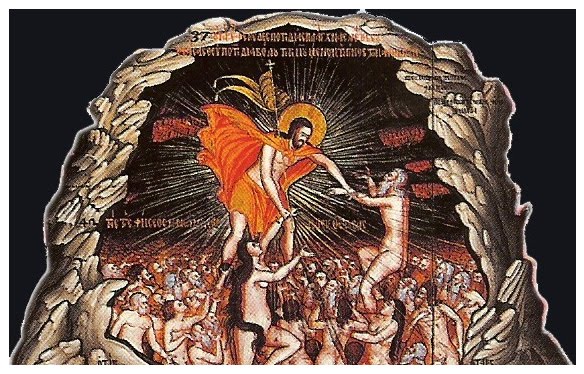
Some have suggested that what is being spoken of is Christ’s ascension to the cross, while others have suggested that after descending to the “lower parts of the earth” Christ rescued those held captive in Paradise and took them “captive” to heaven.
[Note: This teaching is also called “The Harrowing of Hades” and finds support in the Apostles’ Creed: “He descended into Hades.”]
Nevertheless, it would seem the best course of action to simply keep a consistent contextual reading in mind: one that of unity within the Church and individual gifts of grace which Jesus imparts, both to His friends and those who are rebellious, to exemplify His glory and wisdom.
Point Two:
Beginning with verse seven, the context of Paul’s argument is the supplying each individual the things it needs to function properly in the Body of Christ, the Church. Are there deeper truths to be uncovered? Most certainly? However, we must not carry the analogy too far.
For as long as the author can remember, nearly every time the resurrection of Christ has been preached, the subject of Jesus descending to Paradise and taking the Old Testament saints out of there and up to heaven. The only problem is that there is nothing in the context of Ephesians 4:1-16 that addresses Paradise, hell, heaven, or even death! All that Paul addresses in these sixteen verses is the subject of unity.
Another passage that is linked to this verse is 1 Peter 3:19: “By which also he went and preached unto the spirits in prison.” But what is often never included with verse 19 is verse 20, which reads [emphasis added]: “Which sometime were disobedient, when once the longsuffering of God waited in the days of Noah, while the ark was a preparing, wherein few, that is, eight souls were saved by water (1 Peter 3:20 KJV).
It is quite puzzling why 1 Peter 3:19 would be used as a supporting text (along with Luke 23:43, Psalm 68:18, and Ephesians 4:8-10) for a teaching claiming Jesus went to deliver the saints, when those to whom Jesus preached were the “disobedient.” It is therefore illogical to deduce from this passage in Ephesians that Paul was speaking of anything other than the unity of the Body of Christ, the power of God, the Kingship of Jesus the Conquering King, and Christ’s generosity.
v. 10b: …that he might fill all things.
Building on the image of the king that ascended to conquer his enemies, Paul speaks of Jesus’ all-encompassing Lordship with a parenthetical explanation of the logical comparison being made (beginning in verse 9). This imagery of Jesus’ omnipresent authority and power in this passage can be compared to other verses, such as: Eph 1:20-21(in the heavenly places, far above all principalities); Heb 4:14 (we have a great high priest that is passed into the heavens); Heb 7:26 (a high priest became us and made higher than the heavens).
After stressing unity in the Body, Paul now changes direction and tightens his focus onto the individual, including himself. In verses 1-6 Paul addresses the Church as a whole, the Preacher to the congregation. But now in verse seven we see Paul moving away from the plural “you”, using instead “every one” and “we.”
Christianity is about God’s love for the Church, the Bride of Christ, the Body of Christ, but it’s also about the individual member of the Body. The hope of the believer is not to be swallowed up into God as a Hindu might believe, but to be eternally loved by a personal God, one who has even reserved a special name on a white stone that only the Father and His child will know (Revelation 2:7). Yes, God loved the world so much that He gave His only begotten Son, but the offer of salvation is to “whosoever believeth” (John 3:16). The individual is uniquely important and particularly gifted for the work and the health and the unity of the Body.
It also should be noted that the “us” to whom Paul is speaking is the Church, the body of believers. This is an important observation to make because only those within the Body of Christ can experience being part of the Body of Christ.
is given grace
It is wonderful to read these words! It is much more wonderful know that it’s true! Who receives the gift of grace? It is the Church as a whole? Are those who are in the Church (i.e., baptized into the Roman Catholic Church) guaranteed a gift of grace from the Father? No, it is unto “every one of us” (v. 7a) that grace is given as a gift. The personal aspect of the relationship of the Father to His children should not be overlooked nor discounted.
Paul will go on to refer back to Psalm 68:18 in the next verse when he describes David’s description of Yahweh as a conquering King. But here what we have is the declaration that the gifts to be given are based not on our good works or position, but in the goodness and graciousness of God. The noun χάρις (charis) “is related to the verb χαρίζομαι (charizomai), which conveys the general concept of giving generously or forgiving a debt or a wrong.”[1] There are none who can say they deserve grace, for grace is “unmerited divine favor, arising in the mind of God and bestowed on his people.”[2] The idea that grace can be earned is contrary to the reality that the only thing earned by ungodly man is judgment.
There is also no maintaining of biblical unity without grace, for the natural man gives according to merit and expects to receive for the same reason. If God gave us grace according to measure of our good deeds, we would be doomed. But He gives grace to every man, not only to exhibit His mercy, but to manifest unto the greatest example of forgiveness and compassion which, if followed, will help the individuals within the Church to “keep the unity of the Spirit in the bond of peace” (v. 3).
according to the measure of the gift of Christ.
Here we find one of those lines in Scripture that seems simple enough, but upon deeper study, especially of the original languages, it is not simple in the least. As a matter of fact, “according to the measure of the gift of Christ” can be understood in different ways, leaving the context to be the only real determiner of the author’s meaning. For example, who is it that is to be giving the graces? Christ? God the Father on behalf of Christ? And what of the “measure” that is spoken? Is grace given to us based on a standard “measure,” that of the gift of Christ? Or is grace dispersed according to how Christ determines to mete (measure) it out? The best way to determine the meaning is to consider the context.
As has been mentioned earlier, verse seven shows us that God’s concern and work is not limited to the Church as a whole, but it also stretches to the individual and his place in the Body or Building. Not all bricks in a building are the same. And even if most of the bricks in a wall were made exactly alike, the positioning would be unique, for no two bricks could occupy the same space in the wall.
Unto “every one of us” is given grace (not saving grace, but special grace) according to the great architectural design of the Builder, Jesus Christ (“I will build my church” – Mark 16:18). As commentator Ernest Best explained, the giving is not random nor arbitrary, nor is it given in abundance for no reason; “he apportions gifts to believers”[3] in order to accomplish His architectural plan for the Church. Therefore, everyone is given special graces, such as will be touched upon in the next two verses, but they are not all the same, nor in the same amount.
[1] Joshua G. Mathews, “Blessing,” ed. Douglas Mangum et al., Lexham Theological Wordbook, Lexham Bible Reference Series (Bellingham, WA: Lexham Press, 2014).
[2] Gary S. Shogren, “Grace: New Testament,” ed. David Noel Freedman, The Anchor Yale Bible Dictionary (New York: Doubleday, 1992), 1086.


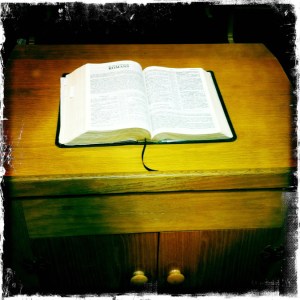 The following is an outline for a sermon I have preached a few times. It starts off with some arguments against the “once-saved-always-saved” position. The next part lists six basic arguments in favor of the eternal security of the believer.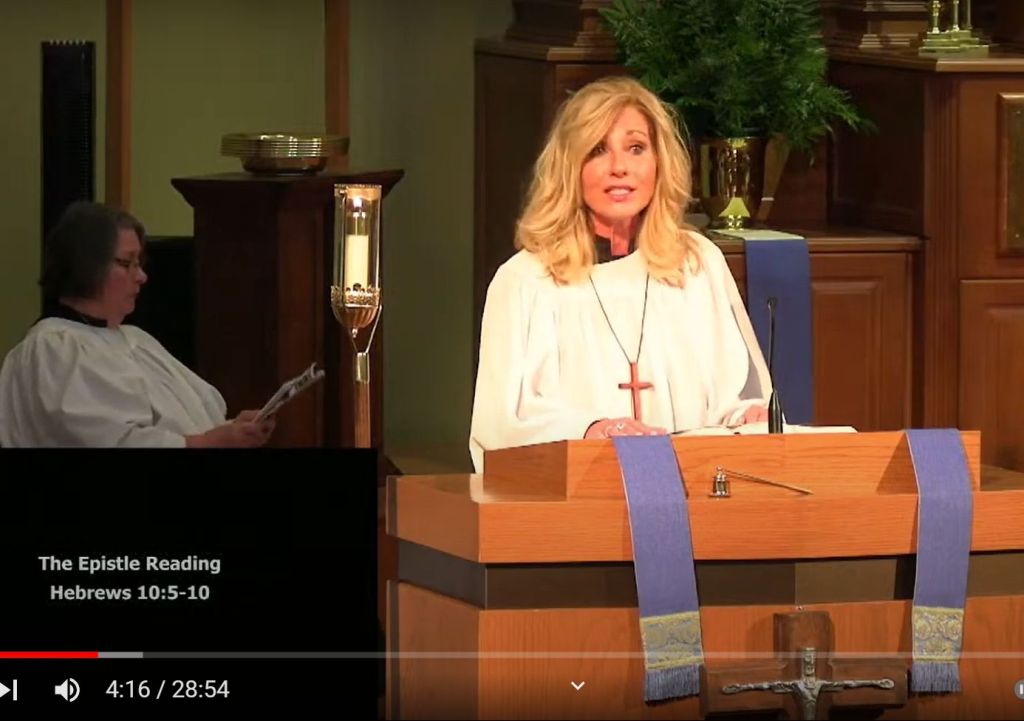







 The Recovering Legalist
Critique of ‘Hallelujah’ in Christmas Worship
As of this writing, there are only five days until Christmas. If I had only spoken out a few months ago, things might have been different today. But I didn’t say anything earlier because I didn’t want to hurt feelings or offend. I can only hope that by protesting now, something good can come of it.
You may recall that a few years ago I wrote a scathing critic of Dean Martin’s “Baby It’s Cold Outside.” I wasn’t the first to point out the song’s sexually abusive lyrics. Nevertheless, my article did get attention. This wasn’t surprising since the #metoo movement was going strong at the time.
But here we are in yet another Christmas season and what do we have? More offensive lyrics in Christmas songs. What makes it worse is that they are part of worship services. These services are meant to celebrate the birth of Jesus Christ, not a sexual conquest.
It seems that all one must do these days is include the word hallelujah in a song, no matter the context of the borrowed lyric or tune, and it’s sure to be a hit at your next Christmas cantata.
“Hallelujah”
Let me be clear. It is not my wish to trash Leonard Cohan’s famous, beloved and oft-covered “Hallelujah.” Why would I want to? My complaints would just fall on deaf ears. Since the 1984 release of Cohen’s “Hallelujah,” near universal praise has been given for its lyrical, poetic, and harmonic beauty. But I’m not a fan. I can’t stand the song – not because of the tune, but the message.
But as with many things, even though I’m not a fan, if it stays within the bounds of its intended secular audience, I’m content to let rotting dogs lie.
It’s only when the putrid scent of death begins to taint the fragrant incense of worship that I get offended. My gag reflexes tempt me to puke.
Unfortunately, as of late, I’ve had to keep a barf bag close by. It seems that more and more Christians have gone odor blind and cannot detect even the slightest stench. Everywhere I turn, Cohen’s agnostic and broken Hallelujah” is being incorporated into holy worship.
A Little Background
With just a little digging, I found that the first time “Hallelujah” became linked to Christmas was in 2010. Susan Boyle from Britain’s Got Talent included it on her Christmas album. It featured the original lyrics.
Then, early in December of 2012, Cloverton released the now popular Christmas version of “Hallelujah” which tells the story of Christ’s birth. Below is the first verse.
In 2017 the group Anthem Lights released “Hallelujah Medley,” a mashup of two classic Christian songs with “Hallelujah” woven throughout. The other two songs were “Hallelujah, What a Savior” and Michael W. Smith’s “Agnus Dei.”
This year I heard both the Cloverton and the Anthem Lights versions in the same church Christmas cantata. However, as an instrumentalist in that church, I couldn’t bring myself to accompany either one.
Giving Grace
But I want to extend grace. I don’t want to disparage anyone who sings these covers or re-writes of “Hallelujah.” Their intention might be to glorify God. They may also encourage others to praise Him. Even Paul was hesitant to condemn those who, out of jealously, added to his suffering, for even then the Gospel was being preached (see Philippians 1:15-18). That was the main thing.
I’m compelled to show grace, too, because others may genuinely see things differently. They may consider what is being done with “Hallelujah” as an act of sanctification. They might argue that the tunes of some of the greatest and most beloved hymns were once big hits in the pubs and ale houses. Therefore, incorporating the tune or some of the lyrics into Christmas music is no different than how we sing “Amazing Grace” to the traditional tune of “New Britain.”
And, if nothing else, I must be careful to offer a lot of grace because I’m not perfect. I’ve had a bad cold, recently, and lots of things irritate me more when I feel sick.
What Are the Issues?
So, what is the issue (or issues)? What is there to complain about this time? What makes me cringe? What makes me nauseous?
Issue 1: The Lyrics
To begin with, it all goes back to Leonard Cohen’s original “Hallelujah” and its meaning. You see, I like music, but I also try to understand the lyrics. Just because a song has a happy tune, that doesn’t mean it’s worth listening to. I try to feed my soul with good stuff, not garbage.
Compared to many songs, though, “Hallelujah” is downright tame. It’s not a vulgar, pornographic jingle celebrating wet body parts (e.g., Cardi B). But it isn’t religious, nor is it wholesome for all ages, either. Actually, it is a song that draws loosely from the lives of biblical characters to describe dysfunctional, sexually-involved relationships that seek consolation through mutual brokenness.
But as a Christian, what bothers me most is the way Cohan distorts and contorts the word hallelujah. It offends me that such an intrinsically holy word (made up of two Hebrew words, hālal and yâ, which means “praise the Lord”) is used to describe a sexual release in the second verse.
It may seem petty, but it also irritates me how Cohan (born a Jew, but a practicing Buddhist) not only mixes the stories of King David and Samson, but does so in a self-justifying, slanderous way. David needed proof for his faith? Whose throne got broken?
But who really cares about the verses of this song, right? I mean, all that people really care about are the melody and the haunting chorus that repeats the word erroneously attributed to a “baffled” king.
Hallelujah is the real money maker, after all.
Issue 2: The Fusion of the Holy and the Unholy
The other big issue I have is not only the willingness, but the ambivalence toward fusing holy, Christian works with unholy, secular, even blasphemous works in an attempt to be creative.
Here’s the thing. I can’t sing “Amazing Grace” without including the accompanying tune once connected to bar songs. However, when I or any other person hears “Amazing Grace,” the words of “New Britain” never enter our minds. The older song is totally disassociated from Newton’s “Amazing Grace” and the author of “New Britain” never gets any credit.
But “Hallelujah” is a different thing entirely. Whenever either the tune or the lyrics of “Hallelujah” are used in either a lyrical remake or a mashup with other Christian songs, some sort of attribution must be given to Leonard Cohan.
Issue 3: Ignorance is Blessed
I asked my wife for her thoughts on the rendition of Cloverton’s version of “Hallelujah” that our praise band did last week. Like everyone else, she thought it was beautiful. And from a purely musical perspective, even a worshipful one, it was moving.
But on the other hand, on hearing “It goes like this, the fourth, the fifth, the minor falls, the major lifts,” when does one wonder: “Why are the words of an agnostic Jewish Buddhist being used out of their context to praise the God and Savior he doesn’t even believe in?”
But that’s just it. Most people don’t know.
Most people aren’t aware of the source material. For that matter, most people never parse the lyrics to any of the songs they sing, even in church, and are usually content remaining ignorant, but blessed. Honestly, I can’t blame them. It’s easier that way.
And frankly, at least in this case, what you don’t know probably won’t hurt you, so worship away.
But I do know. That’s why I just had to say something.
Share this:
2 Comments
Filed under Christianity, Christmas, Church, music
Tagged as Christmas, Church music, commentary, critique, faith, God, Hallelujah, Jesus, Music, Theology