Barriers to Church Growth. #4 (Hold to God)

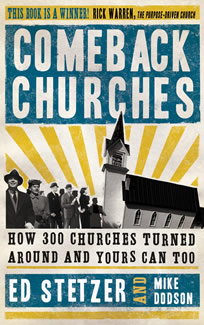
A very revealing study was done, leading to a book detailing how 300 churches went from declining or dying, to growing. In Comeback Churches, written by Ed Stetzer and Mike Dodson, there is a list of 30 different barriers to church growth. Having received permission from the publisher (B&H Publishing Group), I would like to discuss a different barrier each week.
“People are unwilling to take hold of God (Isaiah 64:7).”

“And there is none that calleth upon thy name, that stirreth up himself to take hold of thee: for thou hast hid thy face from us, and hast consumed us, because of our iniquities.” – Isaiah 64:7 KJV

Every time we heard a gospel song that had words similar to “hold on to God,” or “hold to His hand,” my parents quickly reminded us that “we don’t hold God’s hand – He holds ours.” Understandably, what my parents were referring to was salvation. In that sense, we are held and He will never let go.

But that is not what this verse is talking about. Isaiah is saying that part of the problem his people were facing was the fact that none had the desire, nor even the desire to have a desire, to grab hold of God. If that is true today, then it may not only be a huge barrier to church growth, but to individual growth as well.

Take Hold of Thee

It is interesting and revealing when we look at this phrase and compare its usage to other places in Scripture. To begin with, the word chazaq (Strong’s H2388) essentially means “to tie fast, to bind bonds strongly” (Gesenius’s Lexicon). It is a verb that is translated into English as words such as strong, retain, urgent, and caught. Here are just a few examples.

“And the LORD said unto Moses, Put forth thine hand, and take it by the tail. And he put forth his hand, and caught[2388] it, and it became a rod in his hand:” – Exodus 4:4

“And the Egyptians were urgent[2388] upon the people, that they might send them out of the land in haste ; for they said , We be all dead men.” – Exodus 12:33

“Then said his wife unto him, Dost thou still retain[2388] thine integrity? curse God, and die .” – Job 2:9

Moses “caught.” Look at the first verse. Moses had been commanded by God to throw down his rod, after which it became a serpent. Then, against all logic, God told him to pick it up again, but this time by the tail (riiiiigghht!). I would have had to be seriously “stirred up” to pick up a deadly snake by the tail – it BITES! Yet, that’s what Moses did. He “caught it” by the tail.

The Egyptians were “urgent.” Next, after suffering under all the plagues, the Egyptians “were urgent” in there pushing the Israelites out of town. They had come to realize that their own lives were in jeopardy if the Jews stayed one day longer. It was imperative that they be pushed out as quickly as possible.

Job “still retained.” Now, look at poor Job. He had lost everything dear to him, including his health, and then came his wife telling him to curse God and die. She couldn’t believe that he could just sit there and hold on to his belief that God was worth serving. “After all this, are you still holding on to your integrity? What for? What’s the use? Quit putting yourself through this nonsense and just curse God and die!” Yet, he held on.

Making it Apply

When we view Isaiah 64:7 in the light of the verses above, what we have is astounding and convicting. Let’s see if we can work it all together:

1) Taking hold of God is something that we should take seriously, not flippantly. Don’t reach out for Him in a way that implies half-heartedness. Take hold like you mean it! Who do we think God is, a stick to be used by us in our own power to accomplish our own desires? NO! He is alive and dangerous. As Aslan in The Chronicles of Narnia, He is NOT tame. He is not here to be played with.

2) Do we not understand that without the power and presence of God we will die?In Him we live, move, and have our being” (Acts 17:28). There should be an urgency in our desire for Him, no less than the kind the Egyptians had to expel the Jews from their land. Do we want to live? We must urgently “take hold.”

3) We must hold on to God even when it seems insane to others. We must consider our relationship with our Heavenly Father so precious that even when Hell seems to be winning, faith tells us otherwise. Like Job of old, we should hold on to God even when we lie broken and wasted amid the ashes of seeming defeat. Our Redeemer LIVES!

The Barrier that Must Fall

If we are to see growth in our churches, not to mention our own lives, we must seek after God with urgency, intensity, and passion. He must be sought after and adhered to like no other treasure on earth. Anything less betrays our divided, adulterous hearts. God will bless and grow a people who “take hold.” No church will grow who only takes hold of God when it is convenient, fun, or fashionable. We must cleave to Him. It IS a matter of life or death.

Time is filled with swift transition
Not of earth or moon can stand
Build your hope on things eternal
Hold to God’s unchanging hand

Trust in Him who will not leave you
Whatsoever years may bring
When my earthly friends forsaken
Still more closely to Him cling

Hold to God’s unchanging hand
Build your hope on things eternal
Hold to God’s unchanging hand


2 Comments

Filed under book review, Christian Maturity, God, Uncategorized, worship

Hiding in Sight

Last year I did a series of posts called “Life Lessons from the School Bus.” If you haven’t already, take the time to read some of them – most are pretty good.

But one lesson that I did not include last year was one that nearly cost me dearly. It had to do with missing what was hiding in plain sight.

The Story

As you can see in the picture, a typical school bus has two mirrors immediately to the left of the driver window (besides the convex mirror below). With mirrors everywhere, driving is made much safer and easier, even in heavy traffic. What you don’t see is what is on the other side of the mirrors.

This picture at the very spot an accident could have taken place.

I was beginning to exit a gas station directly across the street from another station, and a Hardee’s. I looked in every direction and checked my mirrors. Then, as I started to pull out, an 18-wheeler appeared out of nowhere…directly in front of me! It had been hiding behind the mirrors.

Take a look at the picture. Right behind the top mirror sat a Peterbilt. I never saw it. What saved me was taking my time and being cautious. Had I rushed on forward I may have pulled right into the path of that big truck. Only going slow and expecting the unexpected made the difference.

The Lesson

“Now therefore thus saith the LORD of hosts; Consider your ways” (Haggai 1:5 KJV).

So many tragedies in life could be avoided if only we would take the time to “consider our ways.”

Do we stop to think about where we are going? Do we take the time to make sure there is nothing hidden behind the obvious? Sometimes our judgment can be clouded by the determination to move forward with our plans. Wisdom understands that the Enemy loves to capitalize on things hidden.

How important it is for us to let the Holy Spirit lead us. His unseen hand can guide us around the unseen dangers.

2 Comments

Filed under Christian Living, Christian Maturity, Life Lessons

Glass or Wood? Depends On What You’re Hiding.

It may have never crossed your mind, but for some it is a question more important than whether or not someone chooses to be a Calvinist…

Glass or Wood?

What am I talking about? Pulpits. Sacred desks. Lecturns. The piece of furniture behind which preachers stand and do battle with the devil, not to mention anoint the blessed on the front row with sanctified spittle.

Believe it or not, many have nearly gone to fists over whether the wooden pulpit should be replaced with a more modern, see-through, beautifully-etched glass one. I don’t know why it is such a big deal, except for pastors who might feel totally naked with nothing to hide behind.

On the other hand, glass pulpits have one major disadvantage – you can’t put stuff in them. If you don’t think that is a problem, then you have never looked inside one. Or, maybe you have never been in a service that required the items contained behind those sacred doors.

I’ll never forget the first time I took a pastorate and decided to inventory the items in the pulpit. I opened the doors, sat down on the floor, and quickly realized that this was a place few ever saw. If they had, they may have claimed some of the items in there for themselves, if not for the owners (which had probably been buried in the church cemetery 10 years ago).

There were old bulletins, vials of olive oil, broken pencils and pens with dry ink. There were 20-year-old mother’s day poems, and stale breath mints. In one corner was a single gold earring, a half-stick of hard chewing gum, and a dead ant. To one side was a hymnal with pages missing and a Gideon Bible. To the other side were the minutes from a 1980 business meeting and a cassette tape. There were even old illustrations typed on 3×5 cards, a laminated obituary, three Happy Meal toys, and ten broken crayons.

None of those things would look good in front of a preacher’s knees, so a see-through pulpit would be unacceptable. Even if I had a big, rotating, golden skeleton of the earth behind me when I preached, someone would get distracted. You never see Joel Olsteen standing behind stacks of paper and old candy, do you? NO!

But if we are going to keep the old pulpits in many of our churches, shouldn’t we make better use of them? Why hide away useless memorabilia, tasteless mints, and dead bugs? Why not make it a tool shed? Why not store things that could actually be used in an emergency?

Here are some suggestions:

1. A cooler. Wouldn’t that be more convenient than having a deacon bring you water that sits out and gets warm during the message?

2. An air horn. This would be to wake up the 3rd-shifters that nod off in the service.

3. Altoids.

4. Kittens. You would never have to worry about losing anyone’s attention again. When the message starts to get dull, bring out a kitten and everybody wins.

5. Flame Thrower. Would be good for self-defense and an awesome illustrative tool for evangelistic services.

6. A Fire Extinguisher. For when illustrations go wrong. Safety first, you know.

7. Sermons that Work. For those days when nothing else seems to do the trick, a book of pre-written messages could help keep the preacher from looking like he didn’t study.

Well, whichever you choose for your church, just keep one thing in mind…

2 Timothy 4:2-4 “Preach the word; be instant in season, out of season; reprove, rebuke, exhort with all longsuffering and doctrine. For the time will come when they will not endure sound doctrine; but after their own lusts shall they heap to themselves teachers, having itching ears; And they shall turn away their ears from the truth, and shall be turned unto fables.”

4 Comments

Filed under baptist, General Observations, ministry, Preaching, Southern Baptist

I Will Remember

Ten years have come and gone, and many have already forgotten what happened on September 11, 2001. But I won’t forget.

Not only will I not forget, I will choose to remember.

I will remember…

  • that freedom isn’t free, and there are those who want to steal it.
  • that Christ came “to proclaim liberty to the captives, and the opening of the prison to [them that are] bound;” therefore America is never more “Christ-like” than when its people shed their blood for the freedom of others, whether they love us, or not.
  • that two, huge buildings once stood where one that doesn’t do them justice stands now.
  • that it wasn’t secularists, militarists, or white, Anglo-Saxon protestants that crashed four aircraft on that day, killing thousands.
  • that Islam is the enemy to liberty and freedom, no matter what the media or Muslim apologists attempt to say.
  • the Byzantine Empire and Constantinople – they weren’t converted to Islam through peaceful conversion.
  • who is considered the “Great Satan” and what countries are truly religiously intolerant.
  • the heroes who went back into those buildings to rescue anyone they could.
  • the heroes who fought back and said, “Let’s roll!”
  • the heroes who go into harm’s way for freedom every day.
  • that if it were 50 years ago we would have rebuilt the twin towers bigger and better, and would have said to the terrorists, “Just try that again!”
  • that if we had had generals and a president with the mentality of those in the 1940’s and before, there would be a lot of glass parking lots in the middle east right now.
  • that America was founded by men who knew God; who recognized the hand of Providence; and who knew when to bow a knee and call to God for deliverance.
  • that we (and all freedom-loving people) are in a life-and-death struggle between opposing worldviews – a war. Losing can’t be an option.

I will also choose to remember, and not forget, that America, no matter its current faults and flaws, is made up of a people, who, when push comes to shove, will take the fight for freedom anywhere in the world. We will also defend it. That’s who we are.

God Bless America!

3 Comments

Filed under America, Culture Wars, the future, World View

Barriers to Church Growth. #3

A very revealing study was done, leading to a book detailing how 300 churches went from declining or dying, to growing. In Comeback Churches, written by Ed Stetzer and Mike Dodson, there is a list of 30 different barriers to church growth. Having received permission from the publisher (B&H Publishing Group), I would like to discuss a different barrier each week.

“God withdraws Himself from the church because of sin. He hardens hearts and gives the people over to sin (Isa. 63: 15-19; Heb. 3:12-13).

“Take heed, brethren, lest there be in any of you an evil heart of unbelief, in departing from the living God. But exhort one another daily, while it is called To day; lest any of you be hardened through the deceitfulness of sin.” – Hebrews 3:12-13 KJV

Have you ever thought it possible for a church to be given over to sin? I am not talking about the “liberal” church down the street (every town has one, I suppose), but your church – my church. Is there no growth taking place? Maybe it is because of sin. Maybe it’s because of a hardened heart.

Do churches sin?

You know they do. Many times, however, the sin is not viewed as such. It is seen differently from something that smacks of unbelief. It is rarely seen as a departure from God. More often than not, the sin that churches commit is hidden or disguised with terms or labels meant to justify “an evil heart of unbelief.” Here are a few phrases you may have heard. If so, it might be time for a hard-heart check.

  • “We can’t do that.”
  • “We don’t have the funds for that.
  • “That area of town will never be receptive.”
  • “Maybe we should just pray about it, for now.”
  • “Why do we need to change? They need to change!”
  • “We’ve never done it that way before.”

Can churches have their hearts softened?

Absolutely! God is in the forgiving business, you know. All it would take is our churches turning away from the sins that so easily beset us, like legalism, traditionalism, racism, envy, and pride…not to mention fear that God will not provide for us the ability and means to accomplish His work.

“Let us search and try our ways, and turn again to the LORD.” – Lamentations 3:40

“Seek ye the LORD while he may be found, call ye upon him while he is near: Let the wicked forsake his way, and the unrighteous man his thoughts: and let him return unto the LORD, and he will have mercy upon him; and to our God, for he will abundantly pardon.” – Isaiah 55:6-7

7 Comments

Filed under book review, Christian Living, Christian Maturity, Christian Unity, General Observations, legalism, ministry, Uncategorized, worship

Work, Work, Work


Work

Just whistle while you work…” was a song that the Seven Dwarfs sang. Watching them slave away in the mines while they whistled made it all look sorta fun. But in reality, working in mines is hard, dirty work. And whistling? It may help you pass the time, but it won’t make working in a dish room or sewer any easier. Work is hard, but it is necessary.

However, for many people in our society, “work” is one of the dirtiest four-letter words. Those that refuse to include this word in their vocabulary think that it is their right to receive their living from others. To those folks I would like to share one portion of Scripture…

“For even when we were with you, this we commanded you, that if any would not work, neither should he eat. For we hear that there are some which walk among you disorderly, working not at all, but are busybodies. Now them that are such we command and exhort by our Lord Jesus Christ, that with quietness they work, and eat their own bread.” – 2 Thessalonians 3:10-12 KJV

Even back in the days of Paul were there people who wanted to live off of the work of others. Is it any wonder that people do it today?

Incentives to be Lazy

Why should the average person work when so many government programs are there to feed him. The idea of having to work to eat is completely foreign to many. As a matter of fact, each year federal agencies place adds and run commercials calling more people to enroll in the food stamp program.

With food taken care of, what is there to worry about? Well, a person could worry about shelter, medical care, clothing, childcare, transportation, internet, cell phones, etc. Oh! News Flash! The government’s got that covered, also. For every need or want, no matter how minor, there is a government program available to anyone who refuses to use the that dirty word, work.

Work is Biblical

According to J. L. Meredith’s Second Book of Bible Lists, there are 198 different occupations listed in the Bible. That’s amazing, isn’t it? I find it hard to think of that many different jobs in a modern context. Among the jobs listed, one could have been an Apothecary (Neh. 3:8), Candlestick Maker (Ex. 25:31), Forrest Keeper (Neh. 2:8), Innkeeper (Luke 10:34), Midwife (Gen. 35:17), Scientist (Dan. 1:4), or a Tentmaker (Acts 18:3). The list goes on and on.

As a matter of fact, both God the Father and Jesus worked (John 5:17). Why is it that we hate it so much?

Work was ruined by the Fall.

Adam was put in the Garden to work, not sit around all day and enjoy nature. God put Adam “into the garden of Eden to dress it and to keep it” (Gen. 2:15). Up until that time work was part of the original, sinless creation. It was something that was enjoyable and meant for a purpose. It was something that was meant to bring joy and fulfillment. It was only when Adam sinned that work became the burden it is today.

“And unto Adam he said, Because thou hast hearkened unto the voice of thy wife, and hast eaten of the tree, of which I commanded thee, saying, Thou shalt not eat of it: cursed is the ground for thy sake; in sorrow shalt thou eat of it all the days of thy life; Thorns also and thistles shall it bring forth to thee; and thou shalt eat the herb of the field; In the sweat of thy face shalt thou eat bread, till thou return unto the ground; for out of it wast thou taken: for dust thou art, and unto dust shalt thou return.” – Genesis 3:17-19 KJV

King Solomon, the writer of Ecclesiastes, realized that because of the Fall, work (from an earthly perspective) was vanity (Ecclesiastes 2:18-23). He saw that it was depressing to see that no matter what you do, you “can’t take it with you,” but have to leave it behind for someone else to flitter away. Nevertheless, he saw “[There is] nothing better for a man, [than] that he should eat and drink, and [that] he should make his soul enjoy good in his labour. This also I saw, that it [was] from the hand of God” (2:24).

In the Meantime

For now, even though work is not always fun, it is expected for a Christian to do all he can do to provide for his family. Paul told Timothy, “But if any provide not for his own, and specially for those of his own house, he hath denied the faith, and is worse than an infidel” (1 Timothy 5:8).  If a man (or woman) is able to work, but relies on government assistance by choice, he is not being a good example.

Even though the job you may have may not be the best, at least it is work. God will honor it and bring glory to Himself. We must keep in mind that if we work with our whole heart, as unto God, not unto men (Col. 3:23), He will be pleased and we will be blessed.

The Future

Someday God will restore work to what it was intended to be – a pleasurable experience. Speaking of the children of Israel, He said…

 “In those days people will live in the houses they build and eat the fruit of their own vineyards. Unlike the past, invaders will not take their houses and confiscate their vineyards. For my people will live as long as trees, and my chosen ones will have time to enjoy their hard-won gains. They will not work in vain, and their children will not be doomed to misfortune. For they are people blessed by the LORD, and their children, too, will be blessed.” – Isaiah 65:21-23 NLT

Just remember, let us not grow weary in our work (Gal. 6:9; 2 Th. 3:13). One day all of the sorrows and pains associated with the toil of this life will be replaced (Rev. 21:4). The thing that was supposed to be a blessing will be made perfect again, and maybe, just maybe, there will be whistling in heaven.


2 Comments

Filed under Christian Living, General Observations, Life Lessons

Barriers to Church Growth. #2

A very revealing study was done, leading to a book detailing how 300 churches went from declining or dying, to growing. In Comeback Churches, written by Ed Stetzer and Mike Dodson, there is a list of 30 different barriers to church growth. Having received permission from the publisher (B&H Publishing Group), I would like to discuss a different barrier each week.

“Pastors are more concerned about self-interests than about God and His people (Philippians 2:21).”

 “For all seek their own, not the things which are Jesus Christ’s.” – Philippians 2:21

How sad is it to think that you can’t trust a man of God? Very! But, obviously, there are many men out there who care more about their own interests than for the church.

In the second chapter of Philippians, Paul was faced with this problem. According to the Apostle, Timothy was the only one he could trust with the care of this church, because all the others sought their own, “not the thing’s of Jesus Christ.” Imagine, there were others capable of doing the work, but only Timothy proved selfless.

What an indictment! What a troubling accusation to cast upon men of God! Shouldn’t the very fact that we are called and equipped for the task of shepherding sheep qualify us for the work? Not if the work is only a tool for self gratification or gain.

Humility Needed

What kind of pastor was Paul looking for when he finally decided on Timothy? All one has to do is examine the previous verses and see that he was looking for a man with a heart and mind like that of the Savior. “Let this mind be in you, which was also in Christ Jesus: Who…made himself of no reputation, and took upon the form of a servant…humbled himself…unto death (2:5-8).”

Jesus was the highest example of a man who could have taken advantage of His position; yet, He was the one who washed others’ feet; wore the same clothes; never demanded special treatment; allowed Himself to be abused and mistreated; even went to a cross. How would modern pastors fare if asked to be more like Him?

The Man Paul Picked

Think about Timothy for a moment. When you do, what kind of mental picture comes to mind? Did he wear the nicest suit? Did he drive a new car? Did he publish a new book every week, or host 15 conferences listing his name on neon parchment?

Did Timothy get offended when not addressed by the correct title? Did Timothy have an “earned doctorate?” Would you have had to make an appointment to see him in his office? If you did, would you have felt intimidated by his presence and demeanor? I don’t get this picture when I think of Timothy, but I do about a lot of preachers.

Self-Examination

What kind of pastor am I? Am I a barrier to church growth? This is a question I have to ask myself, even though it may dig up some stuff of which I am ashamed.

You see, the church is more important than my ego. It is more important than what people think of me. The church was not put here for my benefit. I was sent to care for them. I was sent to feed and protect the sheep, not sell them off to make a profit. They don’t belong to me. They belong to Jesus Christ.

Do I look at every church as a stepping stone? Do I view people as objects, or worse, servants? Am I willing to sacrifice my pride, even my life, for the sake of those for whom Christ died? If not, then I don’t deserve this “good work” (1 Timothy 3:1). Unless I want to be like Christ, as modeled in the life of Paul and Timothy, then I desire the work for the wrong reasons, which would make me a “barrier to church growth.”

Dear friend in ministry, whatever your role, are you more concerned with self? Go back and read Philippians 2 and see how your intentions stack up. Like me, you may find some barriers that need to be torn down.

7 Comments

Filed under book review, Christian Maturity, God, ministry, Preaching, self-worth, Uncategorized, worship

Legalistic Fasting

This is now the umpteenth time I have written several paragraphs, only to turn around and delete everything. Maybe I should just keep this very simple and to the point.

Don’t be legalistic about fasting.

There, I said it. It’s off my chest. I can sleep better, now.

You see, a lot of folks in the Christian community act no differently than the Muslim community during the month of Ramadan. They treat fasting as something necessary to gain favor with God. They think fasting is somehow required to be spiritual. I disagree.

Matthew 6:16 is a verse commonly used way out of context.  In that verse Jesus said, “when you fast.” It was not a command, but a prelude to a command. He said, “Moreover when ye fast, be not, as the hypocrites, of a sad countenance.” Jesus wasn’t commanding anyone to fast, only to not be like the hypocrites who make themselves look all pitiful.

When Jesus said “when,” He was speaking on the assumption that fasting was a common practice with those in the audience. However, we must be careful to take note that it was not a command to fast, nor one that gave instructions. All He said was that when you do fast, don’t be as one of those who seek attention from men.

Lest we forget, there is nothing that we can do to earn the favor of God. His grace is unmerited. His love is not based on the prerequisite of starving one’s self once a year, month, or week. There is nothing wrong with fasting, but there can be serious flaws with our intentions.

False Biblical Examples

It is evil to teach formulas for health, wealth, and happiness based on select passages of Scripture. A good example would be the Prayer of Jabez teaching that says, “Pray this prayer and you will be wealthy.” But examples of fasting in the Bible are also used for exploitation. The first one that comes to mind is the Daniel Fast.

If you remember, in the first chapter of the book of Daniel, Daniel “purposed in his heart that he would not defile himself with the portion of the king’s meat, nor with the wine which he drank.” Because of Daniel’s courageous stand, based on his faith in God and the dietary laws given to Moses, God chose to work a miracle and honor the Hebrew children, in turn bringing glory to Himself. Sadly, there are those who look at what Daniel did and say, “Hey, if I just eat vegetables and water (because meat and wine are obviously evil), then I will be guaranteed health, wealth, and favor.” This is a classic example of misapplication.

True Biblical Examples

When I read the Bible, there are 3 things that seem to be common with true fasting: 1) Desperation, 2) Mourning, and 3) God’s glory. Nowhere do I see it taught that it should be used as a way to become a better person, a more spiritual saint, or a healthier individual. Nowhere do I see it taught that if one did not regularly fast, then that person should be considered spiritually inferior.

What I DO see are examples of people who, when faced with insurmountable trials, impending defeat, or crushing repentance, found food to be the least of their concerns. I think of David when he was praying for his dying son (2 Samuel 12:16 & 17). I think of Nehemiah when he heard of the broken wall (Nehemiah 1:4, 6).  I think of Queen Ester faced with the annihilation of her people (Ester 4:3). I think of Ezra, who, fearing the name of the LORD would be tainted, called the people to a fast before God (Ezra 8:22). These are the common examples.

Too often we take something from Scripture and cheapen it to the point that it becomes a simple 4 or 5-point how-to bestseller. In our slightly inconvenienced world we resort to claiming the only thing truly desperate people had at their disposal. We say, “if you do this, then that will happen.” More often than not, when people in the Bible fasted, it was not because they wanted to – they couldn’t do anything else.

Modern Legalists

Then there are those who like to flaunt the fact that they are disciplined and spiritual – the modern “hypocrite.” They look with derision upon the one who has not fasted once a week. They proudly proclaim “I fast twice in the week, I give tithes of all that I possess” (Luke 18:12), when in reality their fasting is nothing more than a supposed means to a selfish end. Because of their judgmentalism, they force others to be like them. They create a law to which they hold all others accountable, while in the darkness the truly humble is beating his breast, saying, “God, be merciful to me a sinner.”

One Last Thing.

There is no denying that we probably do not fast enough. As a matter of fact, according to Jesus (Matthew 17:21), many a spiritual battle has been lost because of a lack of fasting and prayer. That is the key – prayer.

Fasting without prayer is nothing more than scheduled Anorexia. The whole point of fasting is to seek the face of God, laying all other allurements aside, such as food (even marital relations – 1 Cor. 7:5). It is not that we need to fast; we need God. If fasting is what it takes, then that is what we should do. But one thing is for sure, if we are hungry enough for God, then we won’t need anyone to tell us when or how to fast.

Let me know what you think. Do you fast? How long? Why? Results? 

7 Comments

Filed under Food, God, legalism, worship

“Don’t Be Skeerd” (My Own List)

This is a post about a post about a post.

After reading a post today on GrowUp! (click for link), I couldn’t help but respond with my own list of things that a Christian shouldn’t be scared of. Maybe the first one should be, “Don’t be skeerd to end a sentence with a preposition that you’re sick of.”

OK, so if you don’t get it, “skeerd” is “scared” spelled that way we say it sometimes in the South.

Here are 8 things of which a Christian should not be afraid….of:

Dracula, or any other vampire that stalks you through your window.

Just show them your cross. If that doesn’t work anymore, then quote Scripture. Of course, if you are a girl, then you’d be better off to just call 911, or better yet, shoot the idiot trying to act like a character from Twilight.

Disclaimer – DO be afraid of Vampire Bats. They have rabies. You may be alright when they bite you, but then again, you may be wishing your church family had something else to pray for…(I ended with a preposition, see?).

Atheists

If they prove that there is no God, no reason for faith, and no reason for forgiveness of sin, then you have nothing to worry about. They can’t prove there is no God, you know, but if they ever did, then you are free to whack them in the head with the biggest hardcover KJV you can find. If there’s no God, then there’s no absolutes or basis for morality outside of what makes you feel good. Make yourself feel better when they take away your hope by knocking the grin off their face…they should understand.

Women wearing pants, or men wearing dresses.

It may help some of you to know that even though most of the Christian world is more concerned with staying alive amidst persecution than with dress codes, some of our brethren and sistren still freek over this. For them let me just say, “Don’t be skeerd!” If Obama gets re-elected then we will probably end up wearing potato sacks, anyway. As we go back to the economic lifestyles of pre-electric days, no one will be able to afford any fancy stitching and things. Who knows, the toga may come back in style and everyone will wear a skirt.

Crazy worship styles and screens on walls.

No reason to fear these things, people. As long as the worship is from the heart and it IS true worship, not self-satisfying, self-glorifying entertainment, then God will be pleased. On the other hand, if church attendance continues to decline in this country, you won’t be able to afford the electricity needed to run the projectors and fancy sound equipment used by many praise bands. Where two or three are gathered together, there the non-electric bluegrass will be in the midst of them.

Disclaimer – For the record, I love bluegrass gospel. Sorry. Wait, I’m not sorry. Scratch that. I love bluegrass and want to see the words projected on screens in church for all to sing along….with.

Stray dogs that wander in through an open door and listen to the church service.

Had it happen. Didn’t mind. At least when the dog fell asleep he didn’t snore.

Week-long revival meetings.

Where have these things gone? All we see anymore are the 3-day kind, if not the weekend ones that include Sunday, but not Friday.

Just think, if we went back to longer revival meetings, then……wait…..does anybody have revival meetings anymore? We must be too skeerd of having to get dressed up each night; miss some TV we could easily DVR for later; miss a ball game or party; or hear something from God that might convict us. THAT should scare our socks off.

Visitation

What is there to be scared of? Why do we hate knocking on doors, prayer-walking streets, etc.? As long as we’re not trying to sell anything, then most people are happy to meet someone who cares about them. Sure, there are the few vampires that don’t want you coming around, but most folks are at least cordial, at least here in the South. Folks don’t like being banged over the head with your Bible, but they do appreciate being greeted kindly and invited to some place nice. Just invite them to the King’s house for a meet-and-greet (with a little sweet tea and love, they might just figure we’re not out to take their money).

Change

Somethings remain the same, and they have stones above their heads. Now, when those things come back from the dead, you DO have something to be skeerd….of (one more preposition misplacement). Of course, it all depends on Who raises the dead, too. Are they being raised to “walk in newness of life,” or to eat the flesh of screaming movie-goers? Either way, just invite them to a homecoming dinner on the ground and they’ll be alright.

5 Comments

Filed under Christian Living, Christian Maturity, Culture Wars, General Observations, legalism, Witnessing, worship

Barriers to Church Growth. #1

A very revealing study was done, leading to a book detailing how 300 churches went from declining or dying, to growing. In Comeback Churches, written by Ed Stetzer and Mike Dodson, there is a list of 30 different barriers to church growth. Having received permission from the publisher (B&H Publishing Group), I would like to discuss a different barrier each week.

“Churches aren’t concerned about God’s glory, believing the church is just for them (Isa. 42:8; 48:11).”

I [am] the LORD: that [is] my name: and my glory will I not give to another, neither my praise to graven images. – Isa. 42:8

For mine own sake, [even] for mine own sake, will I do [it]: for how should [my name] be polluted? and I will not give my glory unto another. – Isa. 48:11

When we read the above verses it should be very clear to us that God is not interested in sharing His glory. Yet, too many times we rob God of the glory that is due Him by seeking it for ourselves. We do this in many ways, including the reason many of us go to church.

Lest we forget, “it’s not about us.” However, if you polled the majority of church-goers, I believe you’d find that the reasons for attending congregational worship are more selfish than we’d like to admit. To many believers, church is about what one can get, as opposed to what one can give.

The Tale of the Hymns

Have you ever stopped to listen to the words of those old-time hymns many of us grew up with? You may have sung them all your life, but stop and think about the following: “This world is not MY home, I’m only passing through. / My treasures are laid up somewhere beyond the blue…;” “I’ll Fly Away;” “I’ve got a mansion just over the hilltop;” “All I Need.” What is the common denominator of these lyrics and titles? “Me, me, me.”

If the Church Hymnal (© 1951,1979) was used as a tool to determine what we think of church, stop and think about this: there are 80 hymns with a title that start with the words, I, I’m, I’d, I’ll, I’ve, or My. In contrast, less than 10 contain the word glory. Those that do include “Glory Hallelujah In My Soul” and “I’ll Live in Glory.

I think it is pretty obvious that many of us come to church to get from God, not to give to God. He deserves our worship and our praise. He deserves all the glory because His is God, and not man (Hosea 11:9). We deserve nothing, yet His grace and mercy bestows upon us all the treasures we enjoy. Why do we come expecting anything?

Surely our churches would grow if God was glorified. Imagine a congregation of people who came together to lift up praise and adoration to Jesus for His glorious love. Imagine a group of folks who set aside all their own desires and petty differences in order to lift up holy hands unto the King of Glory. What did Jesus say? “If I be lifted up…I will draw all men unto me.”

So, what do you think? How could we do better in giving the glory to the One who truly deserves it?

Related Post: Un-“Christian” Ministry?

20 Comments

Filed under Christian Maturity, General Observations, God, Uncategorized, worship