Not as Formidable as You Thought

Am I the only one, or does it seem that Russia is not as formidable as we thought?

Oh, don’t get me wrong – I still believe Russia is a powerful force with which to be reckoned. If nothing else, they possess a massive nuclear arsenal which still poses a threat to all nations.

But how many of you remember the movie Red Dawn (not the remake, but the original)? Remember how Russia and Cuba were thought of, at least in Hollywood, as capable of mounting an invasion of the USA, splitting the nation in two? Scary stuff when I was young.

As a matter of fact, what is NATO but a reaction to the fear of conflict with Russia? NATO was created in order to solidify a unified defense against a monolithic existential threat which seemed unopposable on one’s own.

Yet, what do we see happening right now in Ukraine? What was supposed to be a cake walk for Putin and the well-equipped, numerically superior, immensely intimidating Russian military has turned into a classic example of “pride cometh before a fall.”

Recent stats released by Ukraine detailing Russian losses so far.

Years ago, shortly after the fall of the communist part in Romania, I visited there for about a month. One of the things I was able to do was explore much of the country via automobile, stay in Romanian homes, and talk candidly with those who had once served in the military, both Romanian and Russian.

Even then, all the way back in the early 1990’s, what became evident by what I saw and heard was that propaganda had built a much scarier enemy than what actually existed. I can still remember the exact words that came to mind as so many truths began to be exposed: “We were afraid of this?”

What Putin as done, and what the people of Ukraine have shown, is that Russia is not only completely incapable, but inherently unmotivated to conquer the West through conventional military means. In other words, despite what we have been led to believe, the Russian military is no more capable of rolling over Europe than a high school bully is able to stand up against a scrappy kid who’s decided not to run.

You know, there are spiritual parallels to this story. There are even stories in the Bible which teach us that numerically and technologically superior foes are often given more credit than deserved, especially in the face of indignant, defiant, and Spirit-led resistance.

So often the Church stands by and cowers, never moving forward and never making a stand, for fear that the Enemy is too powerful and the cost for victory is too high. Yet, even in the face of seemingly overwhelming military strength, the average citizens of Ukraine have taken up arms with a will to fight and have exposed the internal corruption already eating away at the gut of the Red Bear.

Remember what a ragtag group of rebels accomplished against what was then the most powerful military in the world, the “redcoats”? It took a change in tactics and was fueled by an undying hunger for freedom, but the American colonies eventually won their freedom from England.

My question to you is this: Is the struggle you face worth fighting for? Many times, the biggest enemy of freedom is our faulty perception of the foe.

Leave a comment

Filed under Countries, current events, politics, Struggles and Trials

I Went to Pakistan (Part 3): Objectives Met

There were two main objectives that needed to be accomplished when I went to Pakistan. Those two objectives were:

  1. To verify all that I had been told about the work and ministry of Grace Charity Schools and Pastor Victor Sammuel was true.
  2. To encourage local pastors and fellow believers with biblical teaching and preaching.

For several years I’ve been the funnel through which many people have given lots of money to support Brother Victor and the ministry in Pakistan. People send me money via PayPal or check, then I send it to Victor via MoneyGram or Western Union. And as you can imagine, each time I would do this there would be someone wondering in what fashion I was being scammed.

Let’s be honest, funding an overseas ministry you’ve never seen in person is risky enough. However, in this day and age when people are losing their life’s savings to scammers every day, it’s no wonder I’ve been thought of as naive, to say the least.

On a side note, we are still trying to get an updated “Memorandum of Understanding” from the Pakistani government, and that is all that remains before Grace Charity Schools can be vetted by an organization called CAFAmerica.org. Once that is done, no more Western Union transfers will be necessary. But until then, I’m stuck with the hand I’ve been dealt.

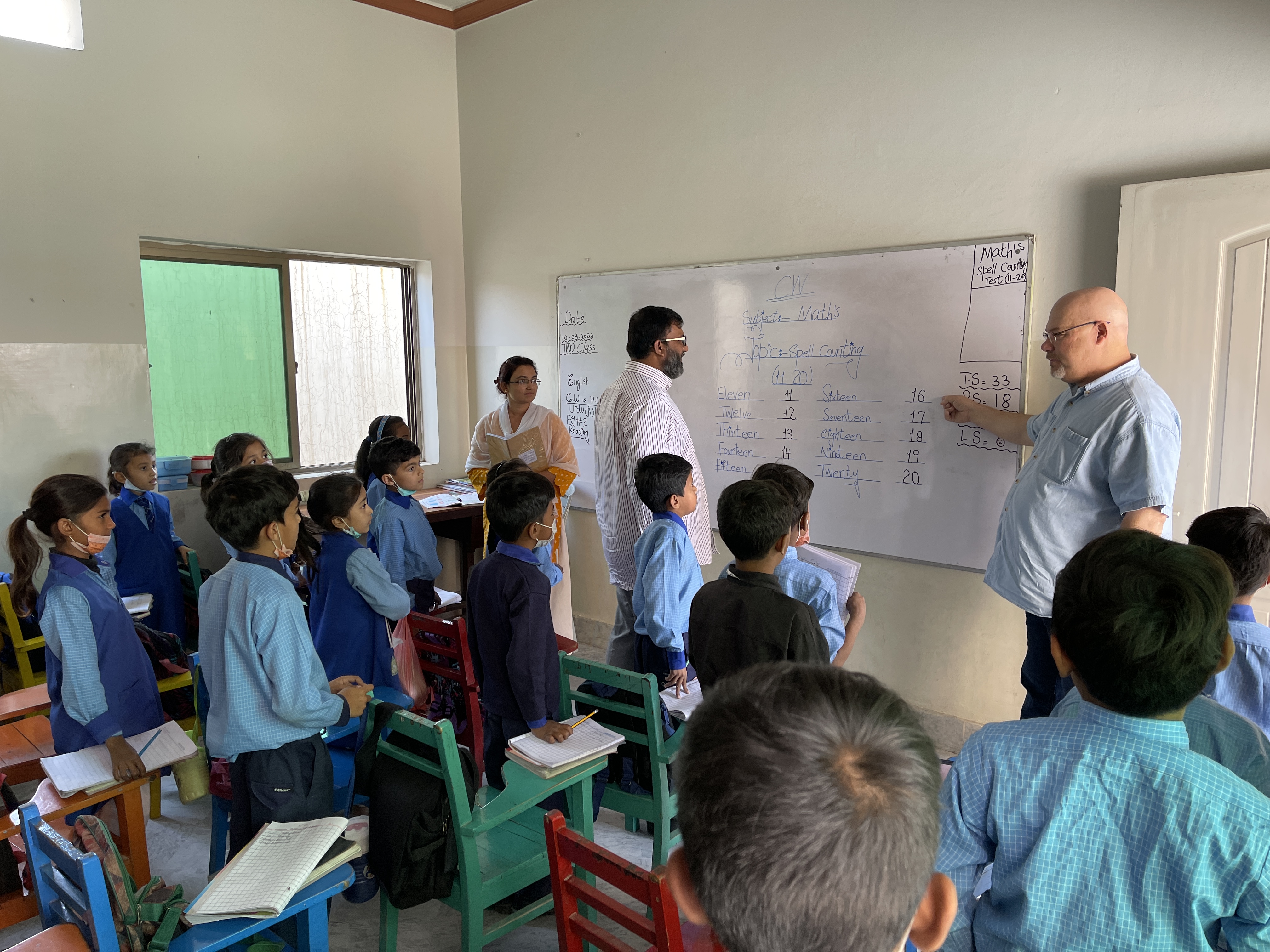
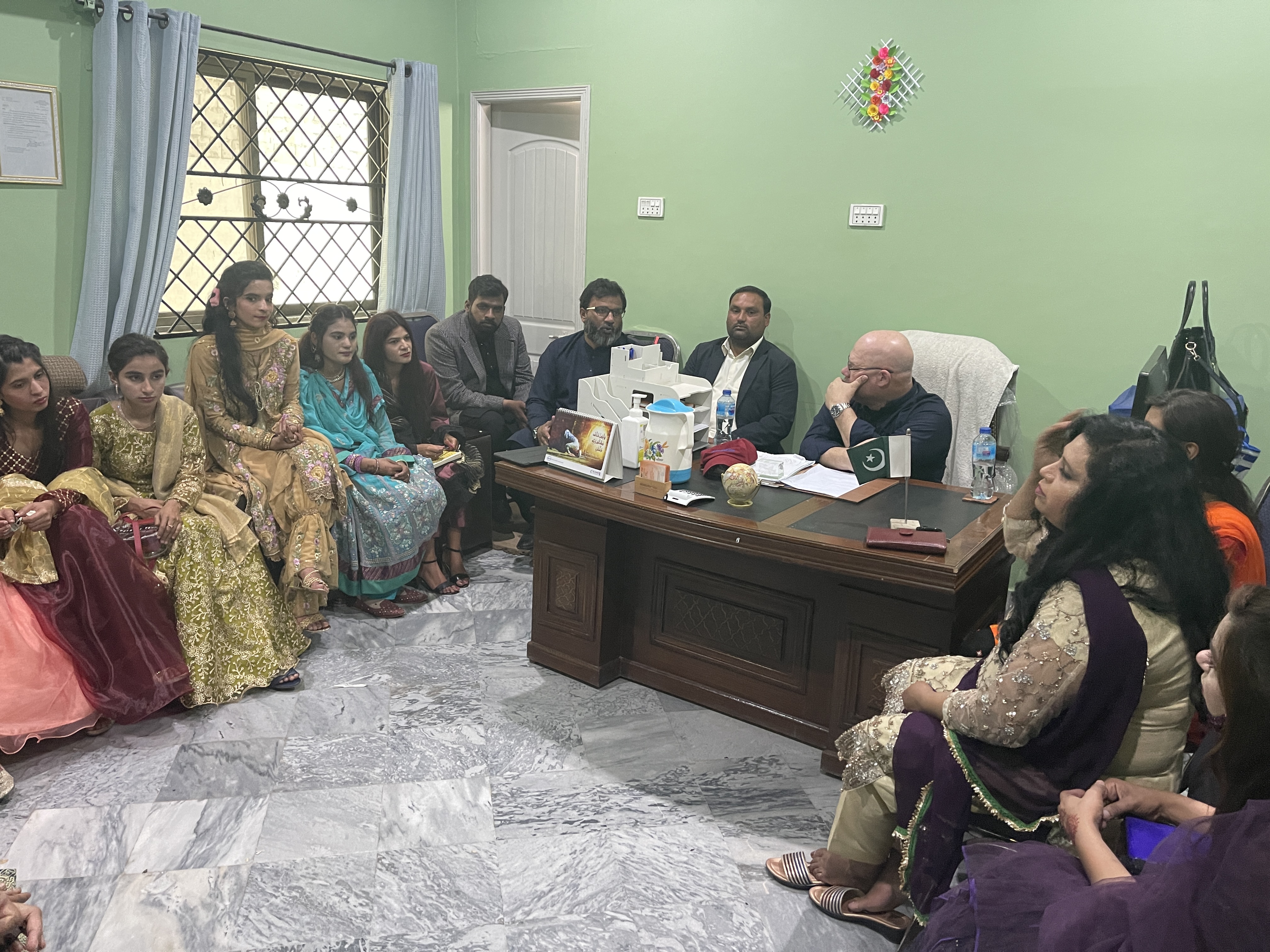
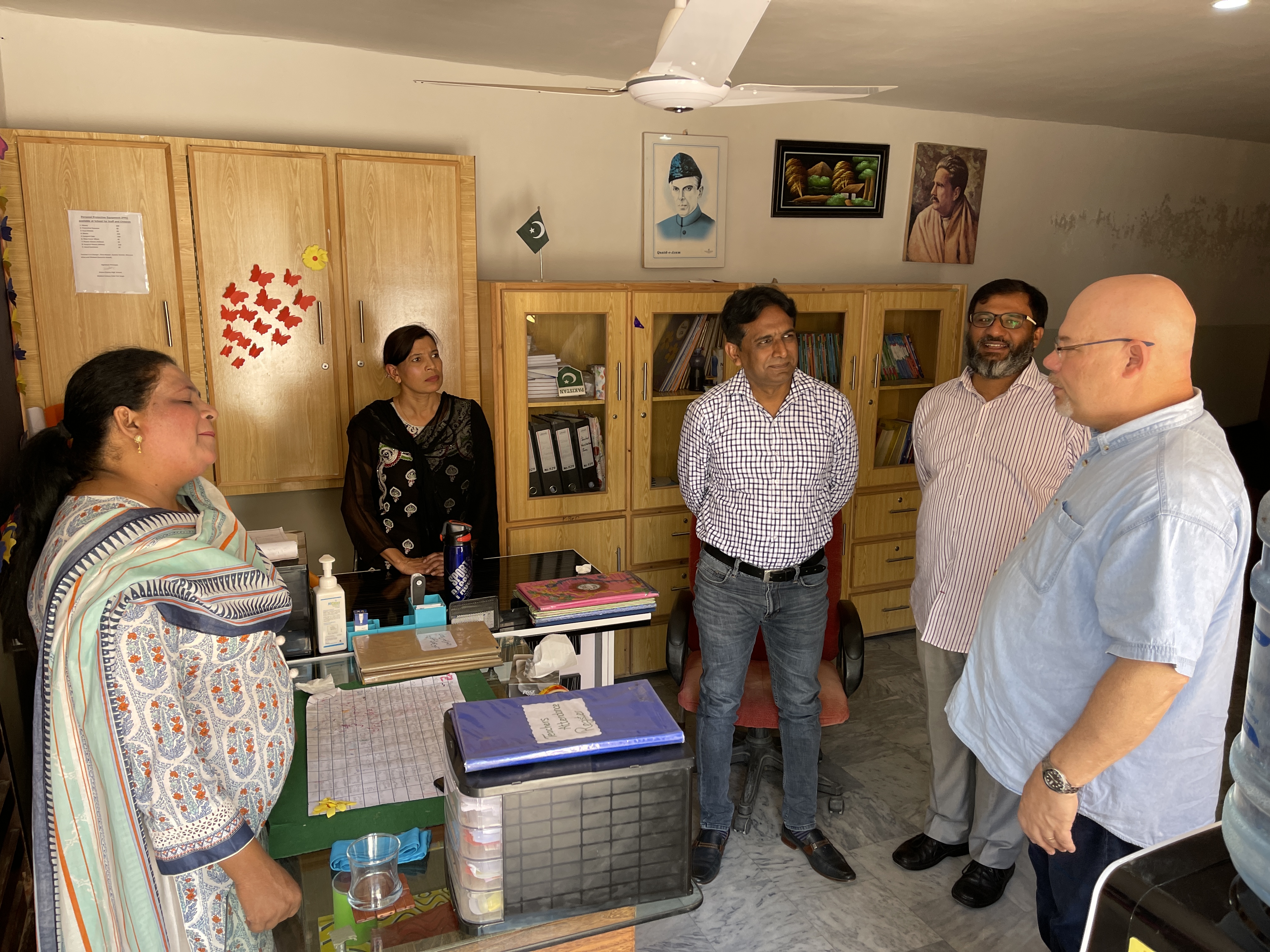
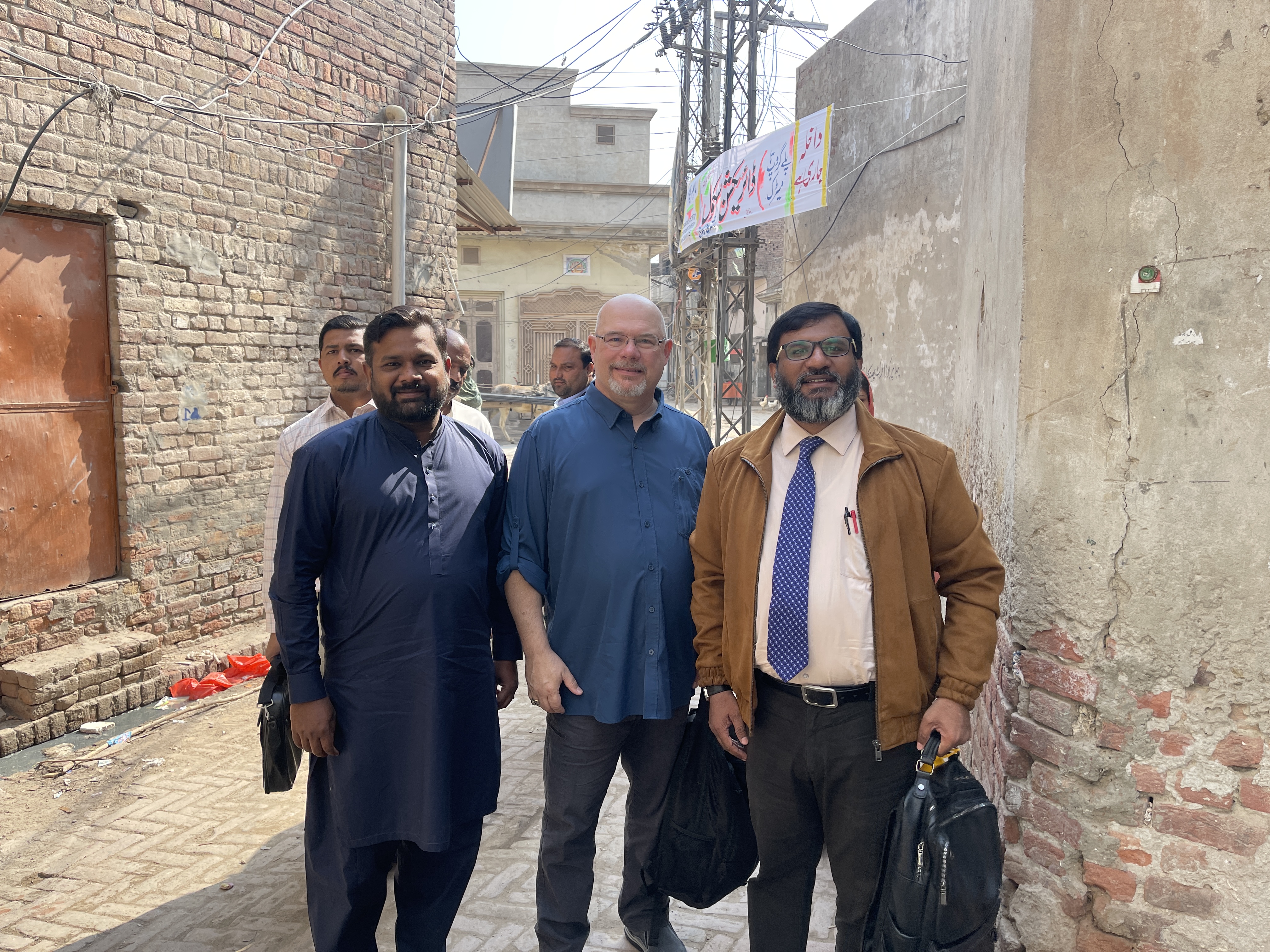
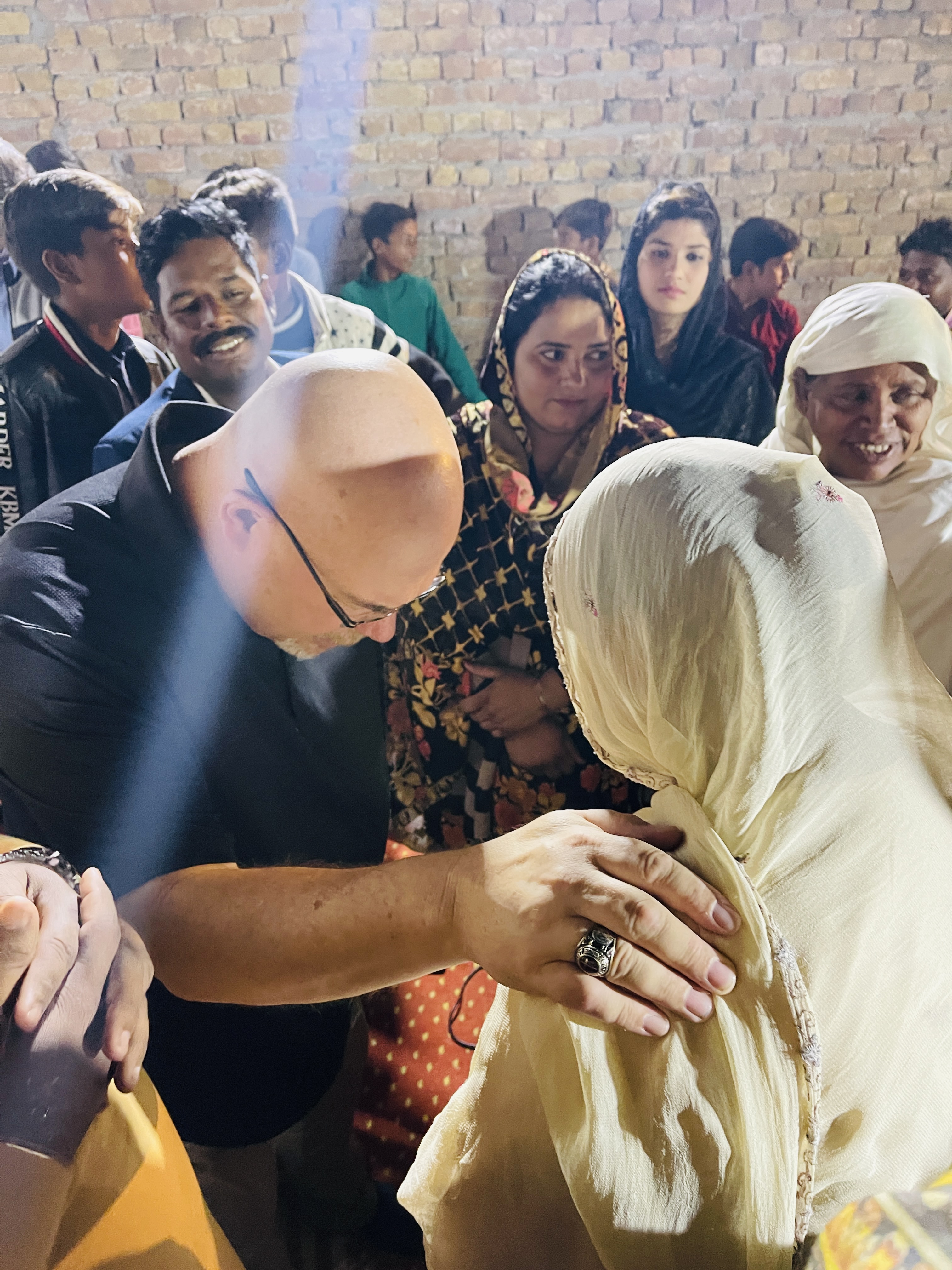
But, again, that is the main reason why I felt it necessary to travel to Toba Tek Singh for myself. I needed to see what was going on so that I could show everyone else. As the photos below will show, I made it to the school (both campuses) and can testify that the work is legitimate.

The second objective, that being to encourage local pastors and believers, was met in a huge way! Not only did I get to speak at two separate pastor conferences, but I got to speak at several other places, including to a small congregation of believers in a tent right next to a brick kiln.

There are so many other things, but I don’t have the time at this moment to share them with you. However, keep coming back for more insight into this part of the world. What I have to say may surprise you ๐Ÿ˜‰

God Bless!


Stay tuned for more. There’s a lot left to discuss ๐Ÿ™‚

2 Comments

Filed under Christian Unity, Church, places

6 Arguments that Support the Doctrine of Eternal Security

My Outline

bibleThe following is an outline for a sermon I have preached a few times. It starts off with some arguments against the “once-saved-always-saved” position. The next part lists six basic arguments in favor of the eternal security of the believer.


Please keep something in mind as you consider the outline: evidence is cumulative. In the legal world it is called the “preponderance of evidence.” In other words, one bit of evidence might not convict, but the collection of evidence pointing in that direction, when overwhelming, leaves little other choice.

Of course, this is only an outline, not the sermon. However, take what I am giving you and print it off, do your own study, and then let me know your thoughts.

“Eternal Security” 

Arguments Against โ€œOnce Saved, Always Savedโ€

  1. Observational โ€“ How people live that believe it.
  2. Free Will โ€“ We are created with a will; weโ€™re not slaves.
  3. Scriptural* (Hebrews 6; 1 John 3:9; 5:18) *These passages, when used against the doctrine of eternal security, are most often themselves misunderstood or taken out of context.

Arguments FOR โ€œEternal Securityโ€

  1. Creational Argument: We are New Creations (2 Cor. 5:17)
    1. It took a supernatural act to change us
    2. We canโ€™t act supernaturally to change us back
  2. New Birth Argument: We are Born Again (John 3:7,16)
    1. By the Spirit โ€“ Jn 3:6
    2. By the Word of God โ€“ 1 Peter 1:23
    3. We are not God, so we must remain โ€œborn againโ€
  3. Children of God ArgumentBorn that way โ€“ 1 John 5:1; 1 Peter 1:23
    1. Adopted โ€“ Rom. 8:15; Gal. 4:5; Eph. 1:5
    2. Abba โ€“ Gal. 4:1-7
  4. The Possession Argument โ€“ We belong to Christ
    1. Purchased โ€“ 1 Cor. 6:19-20; 7:23 (Bought with a Price)
    2. Given by the Father โ€“ Jn. 6:37-40; 10:28-30
    3. Will never be separated โ€“ Rom. 8:35-39
    4. Romans 14:8 – For whether we live, we live unto the Lord; and whether we die, we die unto the Lord: whether we live therefore, or die, we are the Lord’s.
    5. He can keep what is His โ€“ 2 Tim. 1:12 โ€œโ€ฆfor I know whom I have believed, and am persuaded that he is able to keep that which I have committed unto him against that day.โ€ See also: 2 Timothy 4:18 And the Lord shall deliver me from every evil work, and will preserve [me] unto his heavenly kingdom: to whom [be] glory for ever and ever. Amen.
  5. The Marriage ArgumentEphesians 5:25-28, 31-32 – Husbands, love your wives, even as Christ also loved the churchโ€ฆThis is a great mystery: but I speak concerning Christ and the church.
    1. He is faithful, even when we are not.
      1. 2 Timothy 2:11-13 โ€œโ€ฆif we believe not, yet he abideth faithfulโ€ฆโ€
      2. He is God, not man! โ€“ Hosea 11:7-9
  6. Itโ€™s a Gift2:8-9 Gift of God, by grace
    1. Romans 11:29 KJV – For the gifts and calling of God [are] without repentance (irrevocable)

Leave a comment

Filed under Bible Study, Preaching, salvation

I Went to Pakistan (Part 2) “Knowing”

There are always going to be people who question your plans. Not even the Apostle Paul was immune from the naysaying that came not from enemies, but from his most trusted companions. That’s not saying I’m anything like Paul, but I can sympathize with him.

When I made known my desire to go to Pakistan, as I said before, not one single person within my circle of friends and family approved. No, it was more like, “Yeah, riiiight.” And when they were not laughingly questioning my sanity, they were outright warning me that I would probably be killed or kidnapped – then killed.

But like when Paul knew that it was God’s will for him to go to Jerusalem, even though everyone advised against it (Acts 21:12-14), I knew that it was God who was opening the door for me to make this trip.

But how did I know? This is a question that deserves discussing.

How was I so sure that God was leading me to visit Pakistan? How could I be sure that it wasn’t my own desires, my thirst for adventure, or some deep-seated need to prove myself? Granted, the adventure was compelling and there was certainly a need to prove something about myself, but I also wanted to “prove” God!

As a pastor, people look to me for spiritual guidance. They look to me for answers regarding the Bible and how one’s faith can be applicable to life. Yet, when the rubber meets the hot asphalt, most Christians forget from where I power comes. The average Christian keeps the battle-winning Captain of the Lord of Hosts relegated to the cute stories told in Sunday School and forgets that He is still the Conquering King. Therefore, it’s no wonder they were worried for me – they were forgetting Whom they served!

I’ve been forced to put my God to the test in the past, and He was faithful as He promised. I’ve also witnessed Him supernaturally deliver me from a would-be killer who had planned to put a bullet in my head (while I was delivering pizza in Hopkinsville, KY). And, honestly, it’s because of these things, and others, that I kind of felt like young David when he was questioned about going up against Goliath (1 Samuel 17:34-37).

Friends, do you serve the living God that delivered David from the lion, the bear, and Goliath? Do you serve the God who delivered His people out of Egypt? Do you serve the God who opens prison doors? Do you serve the Mighty God who told Joshua, “Be strong and of a good courage; be not afraid, neither be thou dismayed: for the LORD thy God is with thee whithersoever thou goest (Joshua 1:9)”?

If you do – if you serve the God of David, Daniel, Moses, Joshua, etc. – then maybe you can understand the frustration and indignation I felt. If this trip was being orchestrated by the true and living God, then I believed without a doubt that He would take care of me.

But once again, was this trip put on my heart by God, or was I just seeking a thrill?

I guess the answer is simple to me, but unless you know what it’s like to walk with the Lord for a while it might sound crazy. What it amounts to is a legal term I learned when my youngest daughter competed in mock trial – “preponderance of evidence.” In other words, knowing the will of God for one’s life rarely comes down to one thing or another, but a combination of things, even a culmination of affirmations.

Consider the following points:

  • There was definitely a need in Pakistan
  • I have been supporting a ministry for years, even risking my own reputation
  • A plea was made for me to come
  • There was a clear and distinct objective my going would accomplish
  • There had been much prayer
  • My original feelings were a big “NO!”, but my heart became burdened over time
  • A sense of urgency existed
  • Not going would only serve to relieve me of danger, but the ministry abroad would only suffer
  • Now, more than ever before, my position and reputation could prove invaluable to others in need
  • People were willing to give generously when they knew I was actually going.
  • My going would have a direct impact on life and death circumstances involving hundreds of children.
  • I was never, ever, not once afraid or intimidated, nor did I doubt that God would provide the means to do everything that needed to be done.
  • I wanted people to see the God we serve is still the God of the Bible and Joshua 1:9 still applies!

It wasn’t one thing; it was multiple things! And on top of all that, when we seek to walk in the Spirit, not in the flesh, His desires become our desires.

Delight thyself also in the LORD; and he shall give thee the desires of thine heart. Commit thy way unto the LORD; trust also in him; and he shall bring it to pass. – Psalm 37:4-5 KJV

But there’s one more thing. God could have stopped this trip many times. I even asked Him to stop me from moving forward with it if it was against His will. Yet, doors kept opening and I could do nothing less than walk forward till they closed.


Stay tuned! Next time I will address the actual objectives this trip to Pakistan was meant to accomplish.

Leave a comment

Filed under Countries, Faith, ministry, Witnessing

I Went to Pakistan (Part 1) “Introduction”

The looks on the faces were not encouraging. When I told my wife and family, including my friends and church family, that I felt God wanted me to visit Pakistan, no one – not one – smiled with approval.

As a matter of fact, it was at least four or five years ago that Pastor Victor Sammuel of Grace Charity Schools asked me to come see the work there in Toba Tek Singh, a small town in the Punjab district. But when he first asked me to visit, the reflection of my face in a mirror would have mirrored the ones I was now seeing. You know, the kind with raised eyebrows and a slightly tilted head?

“I’ll pray about it,” was my typical response. But the actual prayers were more like: “God, did you hear what Victor asked me to do? Can you believe him? That would be crazy! I have NO desire to go there, and I don’t think YOU want me to go, either.”

However, time and association have a way of replacing apprehensions with burdens. As the Lord allowed me to be in a unique situation which caused me to become more and more involved with the work there in Pakistan, the more familiar I became with the needs. Yet, as I would share what I learned with others, skepticism remained. Honestly, I couldn’t blame them.

Even when I told the deacons in the church where I pastor that I wanted to go, their skepticism became evident when they immediately began discussing the possibility I was walking into a trap! “How do we know Victor Sammuel is who he really says he is?” one asked. “How do we know you’re not being set up?”

I didn’t. But I trusted God.

And that’s one of the main reasons I wanted – I needed – to go to Pakistan! I can’t tell you how many times I’ve had to defend myself for giving to a ministry I’ve never seen in person and a man that continually asked for money. If for no other reason, going to Pakistan would either clear Victor Sammuel’s name and my reputation for discernment, or it would confirm the skeptics were right all along and I had been snookered.

Hopefully, finding out I was being scammed would be the worst that would happen. But as everyone knows, Pakistan isn’t known for its Christian-loving hospitality. A lot worse could happen, especially since I would be going it alone.


Stay tuned for the next post! I will continue to unpack the story of my once-in-a-lifetime trip to the land of “killer busses.”

1 Comment

Filed under ministry, places

The Real Problem with the Problem of Evil

An Old Debate

One of the most common reasons for denying the existence of God is the problem of evil in the world. Just ask any group of atheists to give their top ten reasons for unbelief and surely one will claim as number one, โ€œIf there is a God, then why is there so much evil in the world?โ€ For many, this is the piรจce de rรฉsistance of rebuttals. How could a good God be real and allow all the suffering in the world to continue unabated โ€“ assuming He is even good? The eighteenth century philosopher, David Hume described the problem this way in Dialogues concerning Natural Religion, 1779:

โ€œIs God willing to prevent evil, but not able? then he is impotent. Is he able, but not willing? then is he malevolent. Is he both able and willing? whence then is evil?โ€ (Stackhouse 1998, 11)

So, the โ€œproblem of evil,โ€ and its source, has been an issue of philosophical debate for centuries.  The existence of evil in the world, along with unanswered questions, has even become evidence enough for some to embrace atheism.  Therefore, because so many philosophers and theologians have tried for ages to reconcile the existence of God with the existence of evil, I dare say that nothing I write will be new.  But, if anyone were to challenge my belief in God, along with my faith in Jesus Christ, with the argument that the problem of evil constitutes proof God does not exist, then I would possibly respond with arguments based on the following thought:

Without the existence of God, there should be no evil to be a problem, and that’s the real problem with “the Problem of Evil.”

Evil? What Is It?

What exactly is โ€œevil?โ€ Now, that may sound like an absurd kind of question to ask, but if the existence of evil is the evidence that is supposed to expose my faith as a fraud, at best, or even a lie, then what is it?  Is it something tangible? Is it metaphysical? Is it theoretical? What is it, exactly? Does it have any particular form? How can it be distinguished from what is called good? On what do the atheists and agnostics base their definition of this thing called โ€œevil?โ€

Amazingly, the answers are not all the same, nor in some cases even grounded in reality. However, it is imperative to understand that we must define this God-killer, because its definition will determine our conclusions and help to clarify our assumptions.

When C. S. Lewis was an atheist, for example, his โ€œargument against God was that the universe seemed so cruel and unjust.โ€ (Lewis 1989) There he had it, or so he thought. God could not exist because so much evil exists. But how did he arrive at โ€œthis idea of just and unjust?โ€ Lewis said, โ€œA man does not call a line crooked unless he has some idea of a straight line.โ€ (Lewis 1989) โ€œTell me,โ€ I would say, โ€œwhat is evil, and how do you recognize it when you see it?โ€

The Adjective

To start, evil must be understood to be an adjective. Evil is a description of something that is not good. Evil is not a thing. The word โ€œevilโ€ only describes the thing, the thought, and the action. Technically, โ€œevilโ€ does not exist, only what it describes.

Some people say that they cannot believe in God because why or how could a good God, if He was perfect, create evil? They think of evil as something that must have not existed until God made it. But evil โ€œisnโ€™t a kind of molecule or a virusโ€ฆinfecting or affecting everything it encounters.  There was no time when God said, โ€˜Let there be evil,โ€™ and there was evil.โ€ (Stackhouse 1998)  As John G. Stackhouse put it, โ€œevil becomes a noun only in the abstract.โ€ Additionally, in his book Can God Be Trusted, Stackhouse says of evil:

โ€œAn action can be evil, or an event can be evil, or a quality can be evil, or a being can be evil. And we can lump all these particular evils together in our minds and come up with a category โ€˜evil.โ€™ We can even go on to discuss it as if it were a particular thing, so long as we do not forget that we are always dealing with a category or group of particular evil things, not a thing itself.โ€ (Stackhouse 1998, 31)

So then, if evil is a description, how is it that we come to use the adjective, or as Lewis put it, the “crooked line,โ€ without first having some idea of what is a “straight” one?  Defining what is good is as important as defining evil. To know what is evil, we must first have some assumption as to what is not evil.

The crazy thing is that if God does not exist, and man is nothing more than a collection of random matter, both good and evil are purely relative โ€“ their existence is based purely on oneโ€™s perspective.  So, in other words, the one who says that there is no God, based on the existence of evil, is literally basing his belief on pure opinion, not on anything objective. Therefore, in order to bring an accusation against the goodness of God, one must have a base line. What is the standard by which we determine what is good and what is evil?

The Standard

Some use Man as the baseline. They compare God to the standard set by what is thought to be good behavior in this world. They rationalize that if God is real, at least according to monotheistic dogma, He must be all-powerful, perfectly good, and the supreme example of love, kindness, and providential care. Because it is preached that God is a better Father than earthly fathers, Mark Twain took it upon himself to write:

The best minds will tell you that when a man has begotten a child he is morally bound to tenderly care for itโ€ฆ[yet], Godโ€™s treatment of his earthly children, every day and every night, is the exact opposite of that, yet those minds warmly justify those crimesโ€ฆwhen he commits them.โ€ (Tonie Doe Media 2007)

So then, according to Twain, God could not exist because if He did, He would act consistent with our understanding of what a good and loving earthly father would do.  In other words, if God cannot, in all His perfection, behave better toward His children than the most common man, His credentials are therefore revoked, and He must cease to exist.  However, this is so illogical.

Who are we to say that God, if He is perfect, and we are imperfect, ever treats His children poorly? Do the protesting cries of a toddler who has had poison taken from his grasp carry more weight than the decision of the earthly father to take it away? How, then, are we to automatically assume that the infantile tendencies of finite man are wiser than the infinitely Mature?

Using Man as a baseline for what is good and evil is pure arrogance.

Whose Line Is It?

In reality, the problem of evil is really a problem for the atheist. He, who denies the existence of a Creator and accepts only the realities of evil in the world, essentially has nothing about which to complain.  Everything should be just fine and dandy, but itโ€™s not.  The atheist knows that evil things happen to both good and bad people.

He sees the hurt, feels the pain, and begs for justice. The reality of evil in the world causes men to cry out for justice; for things to be made right. This is a problem, though, because knowing that a crooked line is not straight hints at the fact that a Line-drawer exists.

The Followers’ Fault

Others take a different approach. They claim that God does not exist except in the evil intentions of his followers to control others through guilt. They claim that God is just a fabrication of priests to keep mankind from behaving โ€œnaturally.โ€

They say that nature is good, and if anything, God is evil for trying to get man to behave contrary to the very way he was created to behave. One guru said, โ€œIt seems that for those who worship God, the opposite to God is not that which is ‘evil,’ but that which is natural.โ€ He said of animals, comparing them to men, โ€œThey donโ€™t worship God, they donโ€™t go to church, they donโ€™t have any theology.  They donโ€™t have any feeling of guilt, they are simply natural.โ€ (Osho 2009)  In other words, if there is evil in the world, it is because our belief in God has inflicted it.

The Majority Response

But for the majority of the hurting world, pain is real, loss is real, and evil is manifested daily.  Many see the things that happen to innocent people, especially children, and wonder, โ€œIf there is a loving God, why doesnโ€™t he do anything about this?โ€

These people, many of which hold on to hope as long as they can, finally succumb to their doubts and conclude that the only way to explain away the pain is to admit that it is just part of life, part of the natural world, part of what makes us human; alone, in our quest to make life easier, free of pain, free from evil; alone, without God.

These are the ones, I believe, that lure more away from the faith than any Darwinist.  They are the ones who have seen evil face-to-face and cannot fathom a God who would allow it to continue.  And because their experiences are so painful and tragic, the devout are left speechless and without explanation. Ellie Wiesel is a good example.

Wiesel’s Observation

Wiesel was a teenager when he saw his family murdered in the Nazi death camps.  But it was only after witnessing one particular act of horror – the slow, hanging death of a young boy – that he turned away from his faith in God.

In the book Night, his Nobel prize-winning autobiography, Wiesel said he heard a man behind him ask, โ€œWhere is God now?โ€ As he stood there, being forced to stare into a pitiful, wide-eyed, swollen face of a dying child, a voice within replied, โ€œWhere is He? Here He is โ€“ He is hanging here on the gallowsโ€ฆโ€ (Wiesel 1982) Because there was no justification, even in the big scheme of things, Ellie Wieselโ€™s God died with the executed boy.

But as sad as it is, without God, who can say what happened to that boy was any worse than the slaughter of an animal?  Are we not all just animals โ€“ some more evolved than others?

The Real Problem

To me, the problem of evil is not a problem for the believer to explain, but one for the non-believer.  Aside from the theological arguments about the character of God, without God, to turn Humeโ€™s question around, โ€œwhence then is evil?โ€

Without God, evil is relative to oneโ€™s desires and personal pleasure.  Does it really even matter whether or not God could do anything about evil in the world when the whole question is moot if He didnโ€™t exist?

With God, evil is defined as that which is against His law, that which stands opposed to His standards, and that which describes all who take pleasure in such rebellion. Without God, evil is just a matter of opinion.

That is the real “problem of evil.”


Works Cited

Lewis, C. S. “Atheism.” In The Quotable Lewis, by C. S. Lewis, 59. Wheaton: Tyndale House Publishers, Inc., 1989.

Osho. The God Conspiracy: the path from superstition to superconsciousness. New York: Osho Media International, 2009.

Stackhouse, John G. Can God Be Trusted. New York: Oxford University Press, 1998.

Tonie Doe Media. In The Atheist’s Bible, 129. New York: Harper Collins, 2007.

Wiesel, Ellie. Night. New York: Bantam Books, 1982.

Leave a comment

Filed under Apologetics, Culture Wars, Faith, General Observations, Life/Death, Struggles and Trials

How to LOVE SIN in 7 Easy Steps

My lovely wife, Valerie, has been going through containers of “keepsakes” and “treasures” which have been packed away for the last two years, or so. What was supposed to be a library in our house had turned into a “put it there until we figure out where to put it” storage facility.

Within one of the plastic totes full of seemingly random notes, old greeting cards, and priceless “I LOVE YOU” drawings made by our little girls were old sermon outlines. I don’t know why they were there, but I’m glad they were preserved.

One of the outlines is one I preached, but I don’t remember when or where. Honestly, I don’t even remember if it was original or borrowed. Therefore, I won’t take credit (at least not all of it) for what I’m going to share. Just know, whoever developed this outline, he was preaching the truth!


How to Love Sin in Seven Easy Steps

“Abhor that which is evil, cleave to that which is good.” – Romans 12:9

To be clear, the following is an outline showing the progression one can make from that of hating (abhorring) sin, to that of loving it with equal passion.

I. Abhoration

At this stage, even the mention of sin is shocking. One might ask, “How could anyone even do that?” Unfortunately, even though it is a good thing that one abhors (hates; is totally repulsed by it) a particular sin, the danger – the crack in the foundation – is to understand that “God says that is sin; but I don’t know why.”

Folks, if you will remember, Eve took of the fruit when offered because her doctrine was off a bit. In other words, the message she’d been taught (by Adam) was that touching the fruit was deadly. In her mind she knew what God supposedly thought, but she didn’t know the “why.” That’s where legalism begins, and ultimately apostacy.

II. Awareness

Step two on the path to loving sin is becoming more aware of the sin. You know it’s there, you’ve heard more about it, and it’s not quite so shocking the more you hear of it. Granted, it’s still HORRIBLE to you at this point, and you cannot for the life of you see how anyone could get involved in it.

This is one of the greatest dangers we face in modern times – the increase of knowledge. In centuries past, even up to the mid-20th century, many shameful sins were hidden from the general public (Ephesians 5:12). Back in those days it was shocking that someone you knew was caught smoking cigarettes in the school bathroom. Now the sky’s the limit with what children can get away with, even in the classroom!

Years ago, it wasn’t that we would have just been shocked by where the sin was committed; we would have shocked to even hear that such a sin existed!

III. Association

The third step toward loving sin begins when some sort of contact with the sin is made. In other words, it’s no longer something you’ve heard about in sermons or gossip; it’s something with which you’ve had a run in.

Often what happens at this stage is that your belief about the sin isn’t affected, but the contact (i.e., association with someone who commits the sin) develops curiosity. Oh, you still think this sin is wrong, even abhorrent, but you’re beginning to become accustomed to it. Still disturbing, but not as shocking.

IV. Acceptance

This is the stage where so many Christians are right now. They’ve watched so much television, movies, and social media that they are no longer shocked, but they’ve come to accept sin as a matter of choice.

As a matter of fact, it is during this stage toward loving sin when morals become relative. You assimilate into the thinking that there is “good and bad in all things.” Personally, you think the sin is wrong, but it’s not as big an issue anymore.

Now the Spirit speaketh expressly, that in the latter times some shall depart from the faith, giving heed to seducing spirits, and doctrines of devils; Speaking lies in hypocrisy; having their conscience seared with a hot iron;

1 Timothy 4:1-2

V. Admiration

At this step you are not only well on your way to loving sin, but your feet are tripping over each other as you run down the slippery slope. This is the “Devil’s Advocate” stage.

After being around those who are regularly practicing a sin (not just on media, but in your associations), you start to believe that maybe the sin in question was not as bad as you first thought. Granted, you don’t actually get involve, per se, but you become defensive of those that are involved. You become an advocate, a fellow-traveler, and create “safe places” where the sin can be affirmed.

At this stage you have forgotten your original feelings, the ones you now see as “backward,” and focus on “redeeming values” that outweigh the bad.

VI. Assimilation

Here we are at step 6, the point in your journey where you begin participating on some lower level. If nothing else, you would not say you’re fully into it; you’re just experimenting and having fun.

Regardless of your level of participation, the sin in question is no longer in question. You start saying things like, “God must have been talking about something different.” As a matter of fact, now you become more of a Bible and Theology expert than ever before! If anyone challenges your exegesis, you become terribly defensive, for this is now part of your life’s fabric.

VII. Adoration

What was evil is now good – what was good is now evil. You’ve done an about flip and now adore the thing you once abhorred.

Non-involvement becomes total involvement and is accompanied by championing praise for the sin and those who commit it. You’re proud of it, actually.

You’ve now become a lover of sin, and all it took were seven easy steps.

Wasn’t hard, was it?


Ye have wearied the LORD with your words. Yet ye say, “Wherein have we wearied him?” When ye say, “Everyone that doeth evil is good in the sight of the LORD, and he delighteth in them;” or, “Where is the God of judgment?” – Malachi 2:17

He that justifieth the wicked, and he that condemneth the just, even they both are abomination to the LORD. – Proverbs 17:15

Woe unto them that call evil good, and good evil; that put darkness for light, and light for darkness; that put bitter for sweet, and sweet for bitter! – Isaiah 5:20

1 Comment

Filed under legalism, Preaching

The Brink of Unthinkable?

As I sit here tonight, there are a host of stressors giving my gut something to complain about. Heck, I just ended a sentence with a preposition! It’s getting bad.

Things as petty as my dog whining because I’m not playing with him (petty, that’s funny), all the way to thoughts of nuclear war (that’s NOT funny), are making me feel like huddling in a dark closet until the monster gets through trashing my house looking for me.

Then again, how do my stressors compare to those trying to stand their ground in Ukraine? Do my problems involve trying to find more ammo for my AK47? Hardly. The most I’ve got to be concerned about is not screwing up tomorrow’s sermon or missing Monday’s flight out of Atlanta.

But there’s one stressor that should be challenging the most iron-like intestines – the genuine threat of World War. . . even nuclear.

“Oh, come on!” you say. “There you go with all that fearmongering that’s so typical at times like this.”

Times like this? What kind of time is this, exactly? It’s crazy, if nothing else.

Think about it. Nobody thought Hitler would keep marching through Europe after Germany annexed the Sudetenland, the ethnic German territory lining the periphery of western Czechoslovakia in September of 1938. Yet, in September of 1939, World War II began when German tanks rolled into Poland.

Ironically, what Hitler claimed as the reason for annexing Sudetenland sounds extremely similar to the accusations Putin has made about Ukraine.

Denigrating the ethnic German population to โ€œimmigrantโ€ status, the Czech government instituted a policy of โ€œrapid de-Germanizingโ€ in Bohemia and in the Sudetenland.

Richard Tedor, “Hitler’s Revolution”

Hitler wanted to annex the territory around him because, as Putin claimed about those of Russian heritage in Crimea, the ethnic Germans were being disenfranchised and abused. Now Putin is saying the same about Ukraine and expecting the West to stand down.

However, looking at today’s news, it seems the western nations are not sitting idly by; it seems like we are ramping up sanctions (which hurst all of us, eventually) and upping troop numbers in nearby countries.

Does this mean that there is light at the end of this tunnel? Maybe. But the weapons in the hands of THIS madman are potentially catastrophic. Therefore, what may have been unthinkable at one point, much like what Europe believed in 1938, could be just around the corner, that is, if Putin’s pride is more valuable than human life.

Are we on the brink of the unthinkable?

Something to think about. But God is still God.


Therefore, don’t worry about tomorrow, because tomorrow will worry about itself. Each day has enough trouble of its own. – Matt. 6:34 CSB

Cast thy burden upon the LORD, and he shall sustain thee: he shall never suffer the righteous to be moved. – Psa. 55:22

Leave a comment

Filed under Countries, current events, Future, History

The Great Adventure

Friends, I would like to ask you simply to keep me in your prayers the next couple of weeks. I’m going on a great adventure and even though I’m not fearful, I am nervous.

Some of you may know where I am going. However, because of the sensitive nature of the adventure, I would appreciate you not publicly spilling the beans as I try to remain under the radar. It doesn’t help matters that Putin has started his nonsense and put the world on alert.

Despite what is happening in the geopolitical world, there is a fundamental truth that will never change: People need Jesus! Beyond that, churches still need pastors and pastors need encouragement, along with all the help they can get to combat against doctrinal and theological error.

Take heed unto thyself, and unto the doctrine; continue in them: for in doing this thou shalt both save thyself, and them that hear thee.

1 Timothy 4:16

Therefore, I am going alone – physically – to a place I’ve never been to before. I’m going alone, quite frankly, because nobody else dares go with me. That’s OK, and I don’t blame them, especially those who feel confident that God is not leading them to accompany me. Yet, I know I won’t be totally alone, and I am not even referring to the armed security that will be accompanying me the whole time.

The Holy Spirit will be with me!

And I know many, many brothers and sisters will be praying for me, too.

And speaking of prayer, may I ask that you pray for the following?

  • That all the COVID-19 rapid tests will come back negative for COVID.
  • That I will be able to bring all that I need in the luggage I am taking.
  • For safety to and from the airport Monday morning, and that includes the safety of my dear wife who will be taking me.
  • For my family to rest in the peace of Christ while I’m gone.
  • That my dog George will not be depressed and stop eating while I am gone – seriously.
  • For safe travels to and from the destination. I hate flying these days.
  • For safe commuting while abroad, for where I am going traffic rules barely exist.
  • For a clear understanding of what God wants me to preach and teach while there.
  • For me not to get sick from any contaminated water or food.
  • For the safety of the pastors who will be attending meetings.
  • That funding will be more than adequate for the needs.
  • That lasting relationships will be fostered.
  • That the sermons and lectures (i.e., during the pastors’ conferences) will be seamlessly translated and understood.
  • That all involved will experience spiritual revival (including YOU).
  • That God will bless all those who have generously contributed to the needs of this Great Adventure.

Now, to sum this up for today, back in the 1990’s Steven Curtis Chapman released a great song along with a great music video. It was called “The Great Adventure.” This will be my theme.

This is the Great Adventure!

5 Comments

Filed under ministry, Revival, worship

Why Don’t You Write Anymore?

That was the question my wife asked me the other day. I mentioned this blog and then out of the blue she asked me, “Why don’t you write anymore?”

Funny thing, I write all the time! The problem is that I have not been writing articles/posts for the blog that started it all. But what really caught me by surprise was the question. What ever happened to “You spend too much time on that blog”?

Have you ever had that feeling? You know, that kind of feeling that tells you winning is not an option. Like, “danged if I do, danged if I don’t” kind of stuff.

Here’s the thing, either way it’s really a win. Why? Because it just shows my wife cares.

Happy Valentine’s Day, Valerie ๐Ÿ™‚

1 Comment

Filed under blogging, Marriage