Worms Need a Savior

We All Do It

There are many people in the world that call right “wrong,” and wrong “right.” As a matter of fact, we all do it, and probably a lot more often than we think.

When is the last time you broke the law and sped down the highway? Did you justify your actions with something like, “They should have never made the speed limit that low.” When is the last time you watched a rated-R movie and condoned the sex or violence as “art” or “entertainment”? Does Philippians 4:8 (whatsoever things are pure…think on these things) ever cross your mind?

Friends of Murderers 

But before you get all depressed and feel like you have no moral high ground, at least you don’t steal from your parents, do you?

The one who robs his father or mother and says, “That’s no sin,” is a companion to a man who destroys. – Proverbs 28:24 HCSB

Simply put, the one who steals from his own mother and father, especially one who thinks there’s nothing wrong with it, lives in the gutter of humanity. He’s no better than a worm.

I personally like the way the New Living Translation puts this proverb:

“Anyone who steals from his father and mother and says, “What’s wrong with that?” is no better than a murderer.”

Oh, but wait! What does the Bible say in 1 John 3:15? It says: “Whosoever hateth his brother is a murderer…” A murderer! Seriously, I can’t stand the scum who would rob his parents and say, “No big deal.” That kind of person needs to be dealt with in the harshest manner. These guys are nothing but gutter-dwelling, scum-sucking worms.

But then again, what the thief, the hater, and the murderer really need is a Savior.

Alas! and did my Savior bleed?
And did my Sov’reign die?
Would He devote that sacred head
For such a worm as I? 
 – Isaac Watts (“At the Cross”)


The only problem is that too many of us are unwilling to admit we are “worms,” too.

3 Comments

Filed under Christianity, salvation, Theology

Saved from Irrelevance: the MacBook and Me

This morning I was seriously thinking about walking away from blogging for the next 30 days, or so. Last night was just one of those nights when all the emotional energy I had was sapped out of me, leaving me awake this morning with little or no desire to be transparent, much less creative. So, what was one of the first things that came to mind? Walk away from blogging for a while.

Now, the big question is why would I think like that? Well, it’s not really that difficult to understand: I wanted to atone.

Have you ever noticed how sometimes we like to act destructively in order to relieve stress or pain? Some people do it by drinking too much and getting drunk, while others shoot up drugs or watch porn (is this hitting home with any of you?). Many people, if not most, find some temporary comfort in doing something harmful or self-abasing in order to either punish themselves for something they feel they did wrong, or just prove to themselves they are as bad as they feel. Both options are tragic in their own right.

Why am I writing this? Well, what I am doing is the opposite of what walking away from blogging would do – I’m trying to make a difference.

If you have gotten this far I congratulate you. Most people, in my experience, would have tuned out by now, thinking the subject matter of this post is too emotional, depressing, or something. However, I am not writing this for anyone’s entertainment; I’m writing it because I need to.

And if I ramble, that’s because I am writing with no agenda, no editing, just to get this off my chest.

Anyway, last night was one of those nights that drained me, like I said. It was a night full of family drama, the kind parents sometimes have to go through when there are teens and young adults in the family. It’s that parenting thing that can be so hard…and the struggles within a marriage relationship…when multiple people get together, have differing opinions, different communication skills, and struggle to see things eye-to-eye. The single life does have its advantages in that one can just walk away when things get tense or uncomfortable – but not family. Family is hard work, and painful, too.

So, I woke up this morning, ready to quit blogging for a while. It just seemed like a statement I could make that would make me feel better. Really, the truth is nothing more than what I really wanted to have control over something. We can’t control other people (not unless we are tyrants, or something). Life itself is often nothing more than a four-wheel skid in a generally predetermined direction. Therefore, had I just announced that I was going to quit blogging for a while, I would have at least given myself a temporary emotional boost, one that said something to the effect of, “You are in control!”

But only God is truly in control, you know? The best I can do is remain faithful in the life He has called me to live. I will make mistakes; I will do things I regret; I will say things without thinking; I will hurt feelings; I will give advice today that tomorrow I may regret; and that’s because I am human. Even king Solomon, the wisest man on earth, made mistakes; am I wiser than him? All I can do is “Fear God, and keep his commandments: for this is the whole duty of man” (Ecclesiastes 12:13). In a broad application of Ecc. 12:14, God will handle the rest.

I don’t want to walk away from blogging – although I would like my posts to become ever more relevant and impactful. Just like this computer I am using this morning – one that I rescued from the trash – even though I am not the fastest, sharpest, most up-to-date, and all that, God want’s to take what I do have and put it to good use for His purposes. It’s a much better feeling knowing that something I am writing will make a small difference, rather than feeling that temporary gratification of being in “control.”

Lord willing, even thought I am not the best at it, tomorrow morning I am going to be preaching on the topic of prayer – specifically  “Prayer that Works.” Much of what I preach is nothing more than something I need to hear myself, and this will be no exception. And just like this blog post, one that is an attempt to show I don’t have everything under control, but I’m still making it through another day, tomorrow’s sermon will be an example of God using a flawed, imperfect example of humanity to showcase his glory and grace.

So, if nothing else, I’m thankful for this old computer, rescued from the trash heap, for giving me the urge to do a little bit more typing. God knows how He is going to use it. He’s the one in charge and in control, not me.

Our county school system had relegated this “outdated” MacBook to the trash, but I rescued it from the crusher. After a cleaning up and cleaning out, it still works fine, just a little slower than the new stuff – just like me 😉

8 Comments

Filed under blogging, Christian Maturity, Faith, Life Lessons

How Polluted Is Your City?

As much as I hate to admit it, everything that Mark West says in this article about Chattanooga (my home town) is true. For example, he points out that Chattanooga was once considered the most polluted city in America – I remember those days when one couldn’t even see Lookout Mountain because of the brown smog that hung low over the city.

But it’s another kind of pollution that Mark describes in “Chattanooga: A Polluted City,” and that pollution is proving far more difficult to eradicate.

I love my city, and I’m happy to live here. I mean, seriously, Chattanooga is regularly listed as one of those beautiful places everyone one – especially the nature-loving folk – should visit at least once. In addition to the natural beauty, there’s the history, the southern culture, and the courteous people. Yet, a serious problem wafts through the streets, and it’s going to take a lot more than nice words and eco-friendly investments to solve.

Click on the above links and read my friend’s assessment of the situation. If you have any other suggestions, I’m sure he’ll be glad to hear. Just let him know I sent you 😉

Leave a comment

Filed under America, community, current events, Guest Posts, places

First Day, Old Lesson

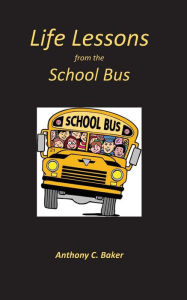
Today is the first day of school in Chattanooga, so back to the school bus I go. Therefore, in honor of all those who get behind the wheel of the big yellow machines, the following is a short adaptation from my little book, Life Lessons from the School Bus.


Crazy Obstacles

Back when I first trained to drive a school bus, all drivers were required to complete an obstacle course. I don’t know what they do these days, but one obstacle that I had to overcome it worth remembering – the tennis ball row.

The obstacle course was tough enough, but one test that we had to go through seemed totally off the wall. It was the last test, the last trial, the last obstacle of the day. All one had to do was drive a school bus across a parking lot, but without touching any tennis balls. What’s the catch?

The right side of the bus, front tire and rear tires, was to go between two rows of tennis balls, the spacing of which only left 2 inches of clearance. In other words, you only had at most 2 inches on either side of the widest part of the back tires. Touch a tennis ball and you have to start over. Go over the tennis balls – you fail.

Really, I could see how this exercise taught precision driving skills, but what was the point. When on earth was I supposed to encounter a bunch of yellow balls on the highway? Little did I know, a day would come when I would see first-hand the purpose for this lesson.

The Real Test

A few months into my driving career, I was asked to fill in on a route in the county. The route I was put on took me way out into farm country…tobacco country. After picking up a few kids, my directions led me down a gravel road, way out amidst acres of Kentucky no-man’s land. It wasn’t too long until I came upon a creek. The only way to get across the creek was to drive my 15 ton bus over a homemade, log and plank bridge.

You have GOT to be kidding me!” was the first words out of my mouth.

“No, this is the way we always go,” said the boy noticing the terror in my face.

Trembling in my driver’s seat, my muscles hardly willing to obey my brain’s idiotic commands, I slowly began my crossing. Middle of the way through, as the bus was slightly rocking back and forth, I could see that my tires were barely on the wooden planks that lay across the logs. Then it hit me – “That’s why they had us drive through those tennis balls!

The next thought that came into my mind was, “If they had told me what they were training me for, I would have found another job.”

Life Lesson

The reason for the lesson may not be obvious until the need for application.

“Knowing this, that the trying of your faith worketh patience.  But let patience have her perfect work, that ye may be perfect and entire, wanting nothing.” -James 1:3-4

Sometimes we are called by God to go through tests and trials which we don’t understand. What we need to realize is that God knows what is ahead of us, what bridges we may have to cross.

Let Him do what He must to train you for the road ahead. You may be the one responsible for carrying someone over to the other side.

Leave a comment

Filed under Life Lessons, Parenting, wisdom

Jesus Paid It All and the Payment Was Permanent Part Five

A guest post by Wally Fry

jesus saves

Sin has earthly consequences which are not necessarily handed out by God, but just the natural outflow of our actions. King David is one of the finest examples of actions and consequences we can find anywhere in the Bible. Only a very few people would even try to make a case for David being unsaved; there is almost universal agreement that as we speak, David is in Heaven with The Lord. Yet, we all also know the truly terrible sins David committed at one point in his life. We all know the story of his adultery with Bathsheeba and his murder of her husband Uriah. David certainly was forgiven by God for those sins, but if one reads the full story of his Kingdom it is easy to see that the consequences of what David did set the stage for many things.

  • The rape of his daughter Tamar by her half brother Amnon and Amnons subsequent murder by Absalom. 2 Samuel 13
  • Absalom’s banishment from the house of David and partial restoration. 2 Samuel 14
  • Absalom’s later rebellion against David. 2 Samuel 15-19

Just a casual reading of this story and it is easy to draw the conclusion that David’s failure as both a father and husband led ultimately to some very serious consequences. One might even say that his other son Solomon behaved in some of the ways he did due to the example set by his father David.

To sum up the above, eternal security in our salvation is not a license to run out and sin all we want to. I heard a preacher say once, “Since I got saved I sin all I want to;” the audience grew silent and he then stated, “but I don’t want to.” Let’s recap quickly.

  • True saving faith and salvation will produce works, or fruit
  • We will all be judged for the quality of our works.
  • God will discipline and chastise us for our actions
  • We still face earthly consequences for the things we do

7 Comments

Filed under Uncategorized

Scars To Your Subjectivity

I Heard a Song

Even though it’s been out for a while – like over a year – it was just a few months ago that I heard “Scars To Your Beautiful” for the first time while doing some channel surfing on the radio (actually, it was on my Amazon Prime music app, but let’s not get picky).

If you have never heard the song, or seen the official video featuring the artist, Alessia Cara, then take a moment and absorb the message… Then let’s talk.

OK, did you listen? Did you pay close attention to the lyrics, including the testimonies of the people featured in the video? What did you think?

Who Made Her the Beauty Judge?

First, I think it is terrible to bully people because of their looks. Despite what they say about sticks and stones, words hurt deeply. Therefore, I can sympathize with the message of the song, for I was made fun of when I was young. People, especially kids, can be cruel.

But, as I listened to the song in the car, something came to mind that made me pause the music (you can do that with Amazon Prime) and say to my daughter who was riding with me, “You do realize, don’t you, that this song makes absolutely no sense without God?”

“What do you mean,” Haley responded? Well, that’s not what she really said. Actually, she just turned in my direction, tilted her head down, lifted up her eyes and eyebrows, and mumbled out a “Hmmm?”

I then asked, “Who is this girl (the singer) to say someone is beautiful just the way she is? Who defines what is beautiful?”

Seriously, haven’t we always been told, “Beauty is in the eye of the beholder”? Of course we have! So, if that is so, what is wrong with saying someone is ugly? What if I don’t behold beauty, but scary?

Alessia Cara sings the following in the chorus:

But there’s a hope that’s waiting for you in the dark
You should know you’re beautiful just the way you are
And you don’t have to change a thing
The world could change its heart
No scars to your beautiful, we’re stars and we’re beautiful

Honestly, I’m not trying to be funny, but what gives her the right to say those things? Why should anyone know she’s beautiful just the way she is? Why shouldn’t she or he have to change? For crying out loud, why should the whole world be expected to change its beauty standards to fit the self-proclaimed, totally subjective beauty definitions of an outwardly-odd human?

If we are nothing but space junk, the product of chance, and nothing any more special than naked apes, why should any of us think we are intrinsically beautiful? And what kind of hope is in the dark?

Intrinsic Beauty

Believe it or not, I talked about all this with my daughter while the song was paused. Then I said, “It’s because we are made in the image of God…because we were created by Him…because Jesus was willing to go to the cross for us so that we could be saved…because God loves us…

Each and every one of us is a unique masterpiece, intricately woven together, shaped by the Hand of the Master Artist of the universe. So, despite the critical eye of the beholder; despite the subjective, labeling trends that give definition to fleeting beauty; the One who made you, who loves you, and sees deep into your soul says, “You were worth the nails.”

That’s why you’re beautiful.

5 Comments

Filed under General Observations, Love of God, self-worth

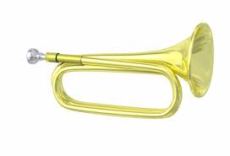
When you hear the sound of the trumpet…

Nearly seven years ago (Oct. 28, 2010) I wrote the following post. Now that a new school year is upon us – and now that I’m actually pastoring in Soddy Daisy, TN, it seems appropriate to be reminded of some some things that are as true today as they were back then.


Last night (10/28/2010) I had the honor to participate in an event of community prayer.  I was invited to speak by a student at Soddy Daisy High School.  If you don’t know what happened, a whole bunch of people gathered together in the park to celebrate our right and freedom to pray, even though it was recently mandated that prayer be stopped before football games.  This meeting was organized by students who decided enough was enough.

In my closing remarks (I spoke for 7 1/2 minutes) I brought up the story of Nehemiah, specifically a part in chapter 4, verse 20. Nehemiah, in response to threats from enemies intent on stopping them from rebuilding the wall around Jerusalem, set people on the wall as lookouts.   Being that the wall was big and spread out, and being that there were few people, Nehemiah came up with a plan.  He said :

“The work is great and extensive, and we are separated far from one another on the wall.  Wherever you hear the sound of the trumpet, rally to us there.  Our God will fight for us.” Nehemiah 4:19-20 NKJV

To me, and I am just little ol’ me, there should have been a lot more people present last night.  Why?  A trumpet was sounded for the body of Christ to come to the aid of not only Soddy Daisy, but for all of Hamilton County.  An attack on our freedoms, as both Christians and Americans, has come to our soil.  Why is it that our schedules and programs and our own sections of the wall are more important than stopping the enemy somewhere else?

Last night was your typical “Wednesday night prayer meeting” night.  Besides the fact that prayer is rarely the object of attention at a lot of these meetings, what would have been wrong with jumping in the church bus and heading to where the trumpet was sounding?  Where there may have been 500+ at this event last night, there should have been 1-2000.  Why were they not there? Because it was more important for local congregations to remain safe and snug in their own little sections of  “the wall.”  

Here was a prime example of LEGALISM in action, for many did not want to participate in an event that featured speakers who weren’t part of a particular denomination.  

Here was a prime example of LAZINESS, for it may have been difficult to get people together to go somewhere on a weeknight, especially if it wasn’t to Ryan’s (the local steak house) or the bowling alley.  

Here was a prime example of DENIAL, PRIDE, and APATHY, for there were others who did not attend because they either didn’t think there’s a problem, it wasn’t their idea, or they just really didn’t care.  Folks, what has been “typical” needs to be trashed.

This past Sunday I told my congregation that I would be in Soddy Daisy on Wednesday night because a trumpet had been sounded.  I went to stand in the gap with my brothers and sisters who cared enough to make a public stand against the tyranny of a few over the wishes of the people.  

In the future, when other trumpets sound,  I pray that the churches of our county and our country will rally together in defense of the few walls we have left in this nation… a nation that, for now, claims to be “under God.”

May our God truly fight for us, for we don’t seem to want to fight for ourselves.

…Remember the Lord, great and awesome, and fight for your brethren, your sons, your daughters, your wives, and your houses. – Nehemiah 4:14

Leave a comment

Filed under baptist, Christian Living, Christian Unity, General Observations, Independent Baptist, legalism, Southern Baptist, World View

Focusing On Jesus, and the Art of Throwing Kicks and Punches

Physical Therapy

About a week and a half ago I hurt my foot – my Achilles tendon, to be precise. I was mowing grass with a push mower on this deity-forsaken hill (the front part of the same yard where I fell three years ago and tore my right rotator cuff) when I strained the tendon where it inserts into the right part of my right heel. The pain woke me up from my sleep.

And this is what the front yard looked like until someone else came and mowed it for me. Did you know the grass in Tennessee could grow to 30 feet?

Because I could barely walk, even with crutches, I had to go to the orthopedic doc to find out how bad I was hurt. Long story short, I ended up going to physical therapy to strengthen my ankle and receive treatment for the tendon. As of today, praise God, everything is going well and I’m back on my feet with little or no pain.

But I’m NEVER mowing that yard again! I’ll make my daughters do it!

Physical Observation

Well, as I was sitting with an ice pack on my foot, there was a woman across the room throwing a weighted ball onto a slanted trampoline. The object of this exercise was to strengthen her ankle and increase her balance.

Earlier, not long after I got to physical therapy, I, too, was doing something to strengthen my ankle and help with my balance. So, as I was waiting for the timer to go off so they could remove the ice pack, I had time to ponder something.

Martial Arts

I began a conversation with one of the physical therapists standing close by and asked a few questions similar to the following:

“Are you familiar with martial arts? Have you ever noticed how martial artists have great balance? Have you ever considered teaching people how to balance the way I learned?”

The physical therapist was not too familiar with what I was talking about, so I explained.

Amateur artist’s rendering of actual martial artist named Anthony.

“When I learned how to fight, I learned to keep my eyes focused on my opponent. I never looked down, or around, only at the person I was fighting, usually in his eyes. As long as I kept my eyes on the one I was fighting, straight ahead, I could kick, punch, do whatever, all the while keeping my balance.”

“That’s interesting,” the therapist replied.

And here’s the thing. In my therapy I had to stand on a soft cushion, putting all my weight on the heel of my right foot. As long as I focused on an object in front of me, I could stand there with no support on that one foot and never fall. As soon as I looked around or looked down at my foot, I would lose my balance.

And when I eat at Chinese restaurants I catch all the stray flies with my chopsticks.

Focusing On Jesus

If you are already a believer, and if you’re familiar with Peter and his stroll across the water, then you’ve probably already figured out most of what I’m about to say: When we keep our eyes on Jesus, we are less likely to fall.

However, I never thought about Peter when my foot was being iced; I just thought about Jesus. You see, I don’t get to ride in too many boats, and I’m not likely to get out of one once I’m in it. On the other hand, this old flesh gets distracted and falls every chance it gets, even when the ground is solid and flat.

Instead of glancing around at what’s going on in the world; instead of looking down and wincing at what causes me pain; instead of looking at the clock and wondering when it’s all going to end; maybe I should keep my eyes focused on my Heavenly Sensei (Jesus), bring this body under control, keep it in balance, and train it for the fight.

After all, I’d like to land a few more good ones on the Devil, wouldn’t you?

2 Comments

Filed under Christian Maturity, fitness, General Observations

Humility ~ Part 2

This is Part 2 in a series on Humility by guest blogger Donald N. Norris.


In my last post, we began to explore the Godly characteristic of humility.  I made my confession that   I certainly don’t have much of a reputation for being humble.  In this post, we will look at the concept of humility from the pages of the Tanakh (Old Testament).

Humility Defined

Humility is a personal quality in which an individual shows dependence on God and respect for other persons.  Various Bible translations use humble, meekness, gentleness, tender, mild, afflicted and considerate to describe the characteristic of humility.

Humility in the Tanakh [1]

The Tanakh connects the quality of humility with Israel’s lowly experience as slaves in Egypt – a poor, afflicted, and suffering people.  And the Egyptians treated us harshly and afflicted us, and imposed hard labor on us.” (Deuteronomy 26:6 emphasis added.) The Hebrew word translated as humility is similar to another Hebrew word meaning “to be afflicted.”  Humility was closely associated with individuals who were poor and afflicted (see 2 Samuel 22:28).

What God desires most is not outward sacrifices but a humble spirit.  “The sacrifices of God are a broken spirit; A broken and a contrite heart, O God, You will not despise.” (Psalm 51:17)

“He has told you, O man, what is good; And what does the LORD require of you But to do justice, to love kindness, And to walk humbly with your God?” (Micah 6:8)

Such a humble spirit shows itself in several ways:

  1. Recognition of one’s sinfulness before a Holy God. “Woe is me, for I am ruined!  Because I am a man of unclean lips, And I live among a people of unclean lips; For my eyes have seen the King, the LORD of hosts.” (Isaiah 6:5)
  2. Obedience to God. “You shall remember all the way which the LORD your God has led you in the wilderness these forty years, that He might humble you, testing you, to know what was in your heart, whether you would keep His commandments or not.”  (Deuteronomy 8:2)
  3. Submission to God. “‘Because your heart was tender and you humbled yourself before the LORD when you heard what I spoke against this place and against its inhabitants that they should become a desolation and a curse, and you have torn your clothes and wept before Me, I truly have heard you,’ declares the LORD.”  (2 Kings 22:19)
  4. “He leads the humble in justice, And He teaches the humble His way.” (Psalm 25:9)

The Tanakh also promised blessings to those who were humble:

  • When pride comes, then comes dishonor, But with the humble is wisdom.” (Proverbs 11:2)
  • “You shall remember all the way which the LORD your God has led you in the wilderness these forty years, that He might humble you, testing you, to know what was in your heart, whether you would keep His commandments or not.” (Deuteronomy 8:2)
  • Good news. “The Spirit of the Lord GOD is upon me, Because the LORD has anointed me To bring good news to the afflicted; He has sent me to bind up the brokenhearted, To proclaim liberty to captives And freedom to prisoners.”  (Isaiah 61:1)  Yeshua quoted this verse in Luke 4:18.
  • “Though He scoffs at the scoffers, Yet He gives grace to the afflicted.” (Proverbs 3:34
  • “The fear of the LORD is the instruction for wisdom, And before honor comes humility.” (Proverbs 15:33)

The experience of many kings indicated that those who humble themselves before God will be exalted (see 1 Kings 21:29; 2 Kings 22:19; 2 Chronicles 32:26; 33:12, 19). Those who do not humble themselves before God will be afflicted (2 Chronicles 33:23; 36:12).

The prophet Zephaniah appealed to the “humble” of the land to seek the Lord.  “Seek the LORD, all you humble of the earth who have carried out His ordinances; seek righteousness, seek humility. Perhaps you will be hidden in the day of the LORD’S anger.” (Zephaniah 2:3) He knew they were the ones who would listen to him and accept God’s message.

The pathway to revival is the way of humility.  If my people who are called by My name humble themselves and pray and seek My face and turn from their wicked ways, then I will hear from heaven, will forgive their sin and will heal their land.”  (2 Chronicles 7:14)

In my next post, we will explore the concept of humility in the Brit Hadashah (New Testament).


[1] Unless otherwise noted, all scripture references in this series will be from the New American Standard Bible (NASB ~ 1995 Update)

Leave a comment

Filed under Bible Study, blogging, Guest Posts

Unity, Liberty, Charity: Disagreeing With Grace


The Way It Should Be

Isn’t it wonderful to have a platform where we can openly discuss the Bible? Isn’t it wonderful to be able to express our thoughts over the web without fear of retribution or imprisonment? Unfortunately, we often misuse the wonderful gifts we’ve been given, the gifts of the internet and our blogs, to bellow out our opinions as we blast our opponents, rarely taking advantage of the freedom we have to show grace, mercy, and love to our brothers and sisters in Christ.

A few days ago we started this discussion of glossolalia (speaking in tongues) and its modern relevance to the Church. What I have seen so far, both by way of posts and comments, has truly been encouraging. The series is still young, but I’ve yet to see a single critical, ungracious comment! Everyone who has written has been cordial, even in disagreement. That is the way it should be!

Therefore, before I go any further or get any deeper into the discussion at hand, I feel it best to clarify some things about my personal beliefs. The reason for doing so is to lay the groundwork for any further posts or comments I may write while addressing this particular subject of contention and misunderstanding within the Body of Christ.

Clarifying My Position

First of all, I am happy to say that I have many dear friends who differ with me on the issue of glossolalia (speaking in tongues). Those friends are not only in the Charismatic/Pentecostal branches of Christendom, but even within my own Baptist circles. Therefore, it is not my intention to belittle or demean what they believe, nor is it my wish to harm our relationships by openly disagreeing with certain doctrines they hold dear – they are family, and I love them. No, my sole intention is simply to state what I believe and why I believe it.

To be very honest, there are times when I wonder if it would be best just to leave things as they are and never discuss our differences. For example, some of the most godly and faithful people I know have a different understanding of the passages on which I will expound in a future post: they truly believe that the 4th and 14th verses of 1 Corinthians both affirm and give evidence for the faith to which they hold. Therefore, when they enter into their prayer closets and humbly bow before God in intercession, should their view of secondary or tertiary doctrines be a concern of mine? So what if their persistent, fervent, private prayer leads to ecstatic speech? If they are encouraged in the Faith, and it only leads them to stand stronger in it, why should I care? Honestly, at least they are praying! Lest we forget, right theology does not a prayer warrior make.

Nevertheless, as a minister I am tasked with the responsibility to read the Book distinctly, give the sense, and cause the listener to understand what’s being read (Nehemiah 8:8). As a preacher I am supposed to be “instant in season [and] out of season,” speaking the truth in love, despite the consequence or mood (2 Timothy 4:2). And should I choose to remain silent, never offering a proper treatment of a particular passage, even if doing so would seemingly cause no harm, then my shame would be justified (2 Timothy 2:15). Scripture is not up to “private interpretation” (2 Peter 1:20), so it is always appropriate and ultimately edifying to get closer to the interpretation that’s correct.

The second thing I would like to make clear is that I cannot, in good conscience, label myself a total cessationist (i.e., one who believes the spiritual gift of tongues ceased with the apostolic age); there is still room in my understanding of glossolalia for God to work outside my denominational box. However, it is of my opinion that the overwhelming majority of modern-day examples of glossolalia are nothing more than “ecstatic speech” (emotionally-induced language-like sounds). Even without referring back to the directives issued by Paul in1 Corinthians 14:27-33, the average example of glossolalia fails the most simple of linguistic tests, therefore demonstrating that whatever is being spoken may sound like a language, but it isn’t. Then, when one does insert 1 Corinthians 14:27-33 back into the equation, the average Charismatic or Pentecostal worship service becomes incredulous (i.e., ten people running around the sanctuary and speaking in tongues at the same time, all without an interpretation).  Simply put, if glossolalia is a gift still being given, the actual practice of it in public worship is probably extremely rare.

In my next post on this subject I am only going to address one particular verse of Scripture, 1 Corinthians 14:4. There are obviously several other passages which could be discussed, but for the sake of brevity (as if this post was short), this one verse, viewed in context, will be enough for me – at least for a while.

For the time being, “In essentials unity, in non-essentials liberty, in all things charity” (Rupertus Meldenius, circa 1627).

4 Comments

Filed under Christian Maturity, Christian Unity, Christianity, Relationships and Family, Theology