Yes, this is meant for my fellow ministers of the Gospel. However, feel free to make use of this advice wherever it is applicable.
You may have not given the subject a lot of thought, but if you are new to public speaking or preaching, you may have experienced the struggle to find good illustrations. But don’t worry, that’s OK! Even veteran public speakers usually have at least one or two books of illustrations in their library.
However, it is very important to distinguish between a story, a joke, and a true illustration. They are not all the same. Depending on the context, using one at the wrong time or the in wrong place in your sermon may do more harm than good, if not outright damage.
Comedians like to say, “timing is everything.“ But when it comes to sermon illustrations, timing is not as important as making the truth understandable. The difference a story or a joke and an illustration is that the story informs; the joke elicits a response (a laugh); while the illustration helps to clarify or illuminate.
So be careful. Icebreakers meant to warm up a crowd or not illustrations. In most cases, jokes are not illustrations. A story, unless it helps the listener to better understand or apply the truth that you are trying to communicate, is not an illustration, but a time waster.
Keep in mind that time is irreplaceable. It may be necessary to break the opening tension with a joke or a story that relates to your audience, but understand that you only have so much time to communicate a life-changing truth. The reason rabbit trails should be avoided is because even though what you say might be important or even entertaining, it may not serve to communicate the main point of your sermon. In all likelihood, it will only distract.
You don’t have time for that.
Bovinating: verb: derived from bovine (cow); meant to express in a more elegant way the slang term BS (“You’re just bs-ing me.”). Not to be confused with Bloviate.
Today, June 11, is the anniversary of the death of a mighty man of God: a preacher, a pastor, my father. He died the week before Father’s day.
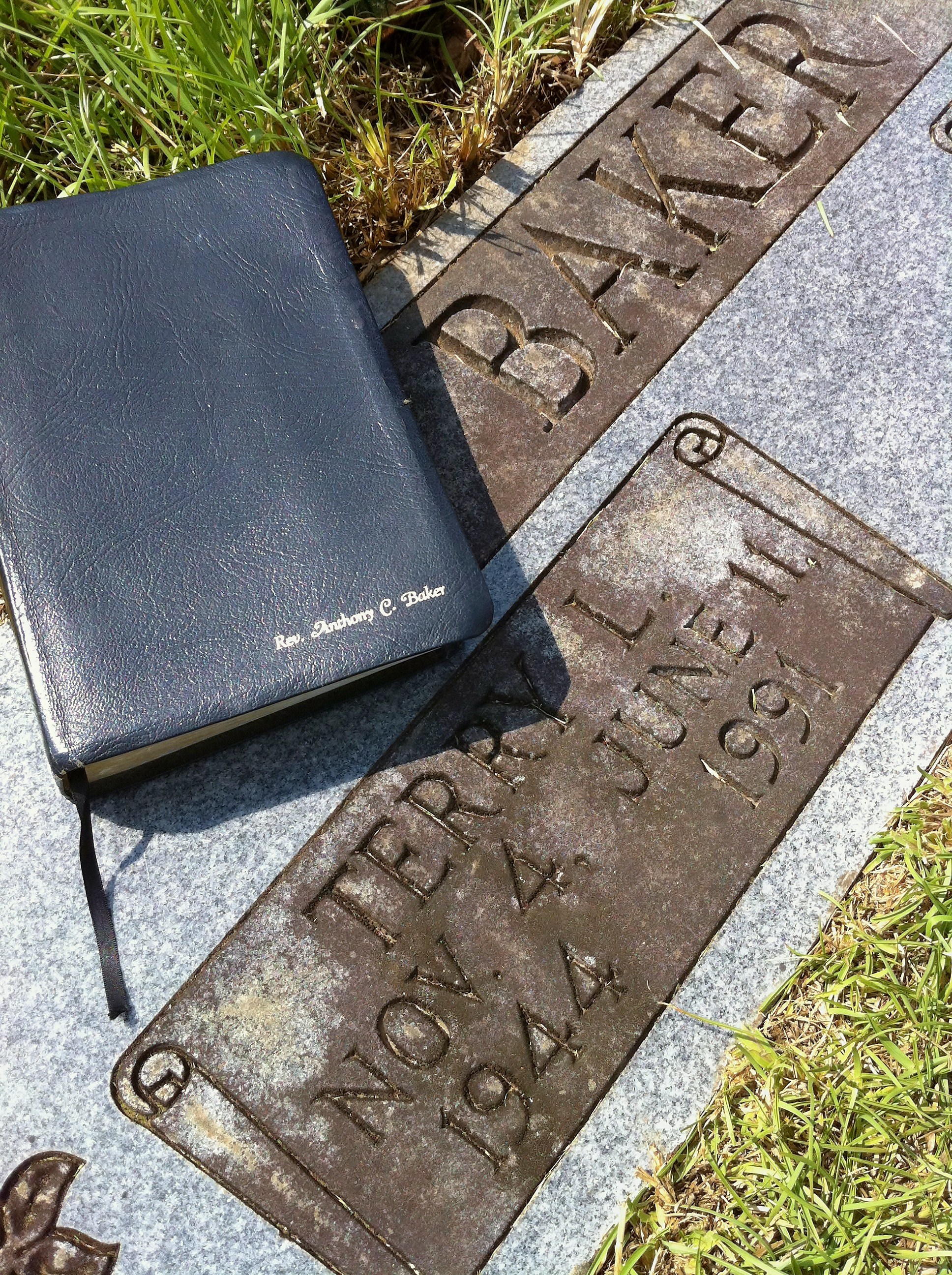
Several years ago I went to his grave and placed my Bible on his tombstone. There, glistening in the sun, were the gilded words “Rev. Anthony C. Baker.” It was a symbolic answer to a question I had received more than a few times. 
You Still Preaching?
I don’t hear it too much anymore, but I used to hear it rather frequently. Family members, old friends, former acquaintances, and the average person I never wanted to see again would come up to me and ask, “Hey, you still preaching?”
Maybe it’s the thing to do. Maybe it is customary to ask a person if they are still doing what they were doing the last time you saw them. I guess it makes sense.
But it’s when they ask if I’m still preaching that hurts on several different levels. Is it something I’d actually stop doing?
Some Statistics
In reality, it’s not that unreasonable to ask someone who once accepted the call to ministry if he is still preaching. Even though it sorta feels like an insult, I shouldn’t be surprised by other people’s shock. I mean, it has been 40 years since I made my calling public. I’ve known more than one who has walked away the first year.
If more people knew the statistics, few would ever enter the ministry. Stop and think about it, would you enter a career with the highest rate of heart attacks? Would you take out student loans for a degree that demands you work multiple jobs? Consider these sad facts…
70% felt God called them to pastoral ministry before their ministry began, but after three years of ministry, only fifty percent still felt called.
80% of pastors’ spouses wish their spouse would choose another profession.
70% of pastors constantly fight depression.
80% of adult children of pastors surveyed have had to seek professional help for depression.
70% of pastors do not have a close friend, confidant, or mentor.
80% of seminary and Bible school graduates who enter the ministry will leave the ministry within the first five years.
Still Preaching
Yet, even though I am longer in the pastorate, I’m still preaching. It may surprise people who haven’t seen me in a while, but I’m still doing the Lord’s work and still following the call I first heard when I was 16. It may sound strange, but I can’t help it.
“But if I say I’ll never mention the LORD or speak in his name, his word burns in my heart like a fire. It’s like a fire in my bones! I am worn out trying to hold it in! I can’t do it!” – Jeremiah 20:9 NLT
“For though I preach the gospel, I have nothing to glory of: for necessity is laid upon me; yea, woe is unto me, if I preach not the gospel!” – 1 Corinthians 9:16 KJV
That old Bible has a lot more wear on it since I took that picture years ago. But that’s OK, I’ve got a few cracks in my leather, too.
But Dad, two things remain true, despite all these years: that grave won’t always hold you, and I’ll keep preaching until we meet again. 
Good evening, everyone! I thought I would take a moment to share with you what I’m about to do.
As some of you may already know, I started a new YouTube channel called Edify!. Yes, that’s with an explanation point because there is another channel out there by the same name without one.
The goal of the channel is to upload videos every day of the week (which is a rather monumental task when one works a full-time job). They are less than 10 minutes long so they can also be posted to TikTok on the same days as YouTube.
Honestly, since I am not regularly preaching anywhere these days, this is a good outlet for me. I guess what I do in these videos is teach more than preach, but you will catch me on a soap box once in a while.
But since preparing new material for 5 times a week can be challenging, it should not surprise you that some of what I am going to be sharing on video are older posts I wrote for this blog. Why not? All I have to do is tweak them a little, add them to the teleprompter software, and then presto! A video!
One of the first post-to-videos I do will be on my “pre-salvation testimony.” For that matter, next week’s theme will be about having a personal testimony, a story to tell.
If you haven’t already visited my new channel, I’d really appreciate it if you would. And, if you have any suggestions on how I could make the channel better, please let me know.
Not long ago my wife and I visited a particular church for the first time. I don’t want to tell you where it was or who did the preaching because what I’m about to write is not flattering. And should I tell you where we went, you might think what we experienced was the norm, when it might have not been.
Believe me, I know what it is like to be judged by one poorly delivered sermon. Heck, I’ve even been misjudged by an expertly delivered and totally biblical sermon! Therefore, I don’t want to disparage a pastor after hearing him only once.
However, what I expect from a preacher is rarely delivered these days. Honestly, it’s like every time a new preacher steps up to the pulpit, the voice of the Dread Pirate Roberts whispers in my ear, “Get used to disappointment.”
What I typically receive is a topical sermon based on a topical series that starts with a text and only comes back to it when mentioning the sermon title.
Sadly, what I have grown accustomed to are “how to” sermons loosely based on biblical principles but often drawn from Scripture verses taken out of context.
But what is it that I expect? Not much, just five simple things.
WHAT I EXPECT… are sermons that exegete the Holy Word of God, even without artistic and often unnecessary alliterations.
WHAT I EXPECT… is a preacher who will take the Bible, read it, explain it, then make application, not the other way around.
WHAT I EXPECT… is to be wowed and amazed by the wonderous, Holy Spirit-inspired, inerrant Word of God, not the delivery of the one tasked to preach it.
WHAT I EXPECT… is a sermon that treats passages from the Bible as revealed Scripture, not just supporting references.
WHAT I EXPECT… is nothing more and nothing less than what we read of in the book of Nehemiah. There we read of when Ezra built a “pulpit” of wood (a raised place from which to be heard) and, along with a few others, opened up the long-forgotten Law of God and read it to an attentive, standing crowd.
So they read in the book in the law of God distinctly, and gave the sense, and caused them to understand the reading.
Nehemiah 8:8 KJV
If the above verse isn’t clear enough, the CSB renders it, “They read out of the book of the law of God, translating and giving the meaning so that the people could understand what was read.”
When you add application to the above formula, that’s when you get good preaching.
This morning I turned to the book of Ezekiel and came across a short outline I prepared years ago. That 5-point outline directed me across the page to a verse that has, in the past, been what you would call a “life verse.”
And I sought for a man among them, that should make up the hedge, and stand in the gap before me for the land, that I should not destroy it: but I found none.
Ezekiel 22:30
Upon leaving the church where I last pastored, I’ve been forced to do some self-examination. Being completely honest, there are still some things I need to improve. With humility and prayer, I will seek God’s help in those areas.
Regardless, now is not the time to accept defeat or wonder about my abilities – NOW is the time to step up and stand in the gap. That is true for all of us!
I will probably preach a sermon this coming Sunday based on this passage of Scripture, so I won’t go into much detail in this post. However, I feel it important to encourage you (and myself) to remember that God isn’t looking for the perfect soldiers; all He is asking for are WILLING ones.
Unfortunately, all it takes is for us to receive one discouraging comment or critical observation to make us abandon our posts and our weapons, thereby leaving just enough of a gap through which God’s judgment can enter and destroy the very ministries and individuals we supposedly love.
Do your own study of Ezekiel 22, particularly verse 30, and then see how you can use the following outline to create your own sermon.
5 Ways to Stand in the Gap
Answer the Call
Be a Warrior
Look for Broken Places
Pray for God’s Mercy
Don’t Give Up
Lord willing, this coming Sunday on my YouTube channel I will address this subject and use this outline. Join me for the premiere at 11 a.m. Eastern.
When in ministry, full-time or not, there are moments when we must move from one field to another. Sometimes it’s planned and orderly, while other times we find ourselves making that move unexpectedly, or at least sooner than we planned. However, the one encouraging truth for those who love God and are called according to His purpose is that “all things work together for good.”
It’s a Romans 8:28 day every day!
Regardless, moving from one place to another is never easy, especially when you’ve grown to love the people and the place where you’ve been serving. That’s the current situation facing my wife and me.
The Ups and Downs
For the last three years (three years and six weeks, to be exact), we have been living and ministering in Warthen, GA at Bethlehem Baptist Church. The last three years have been anything but normal, but I do believe that’s been part of what has endeared us to the area. It was so nice to experience a genuinely small-town atmosphere, especially during COVID.
But don’t misunderstand me, there are downsides to living and ministering in a small community. For one, having to drive an hour and a half to go to the hospital or to a doctor for anything other than a sniffle got a little old. My wife and I would schedule our appointments and shopping on the same day so that we wouldn’t have to make multiple trips . . . three hours on the road for one appointment was insanity.
Another downside is the simple fact that everyone in a small community either knows everyone else or they’re related in some way. This makes talking with someone in secret nearly impossible. And for the love of all that’s civil, NEVER say anything bad about somebody unless you want everyone to know.
But everyone knowing everyone is also a sweet and wholesome thing, too! Sure, the slightest misspoken word can bring all hades down on one’s head, but everyone being in everyone else’s business can also prove beneficial when times are hard. The willingness to help each other out of a jam is not something you find as often in larger communities.
A Special Breed
However, when it comes to pastoring a small church in a small community, it takes a special breed of person to succeed. Evidently, I’m not that kind of person.
Small churches in small, rural communities more often desire a pastor who:
assumes the role of fun uncle, wise grandfather, or ever-present brother-in-law who stops by unannounced to see what’s for dinner
is always soft-spoken and deliberate with his words, never blunt
charms the non-attending church members into returning
says the most comforting things at all funerals (yes, even for the heathen)
has a working understanding of all outdoor activities, including, but not limited to, hunting, fishing, trucks, factory work, grilling, the military life, chainsaws, and deep-frying turkeys
and rarely preaches Greek and Hebrew-free sermons that are longer than 25 minutes.
So, does that mean that I’m not called to the pastorate if I’m not like the gentle shepherd above? Heavens, no!
Granted, if I’m to be honest, being told more than once that I’m not the “best pastor” led to some depressing days. Honestly, it stung. I even found myself doing some self-re-evaluations.
The conclusion was that yes, I’m called; I’m just different.
My Calling
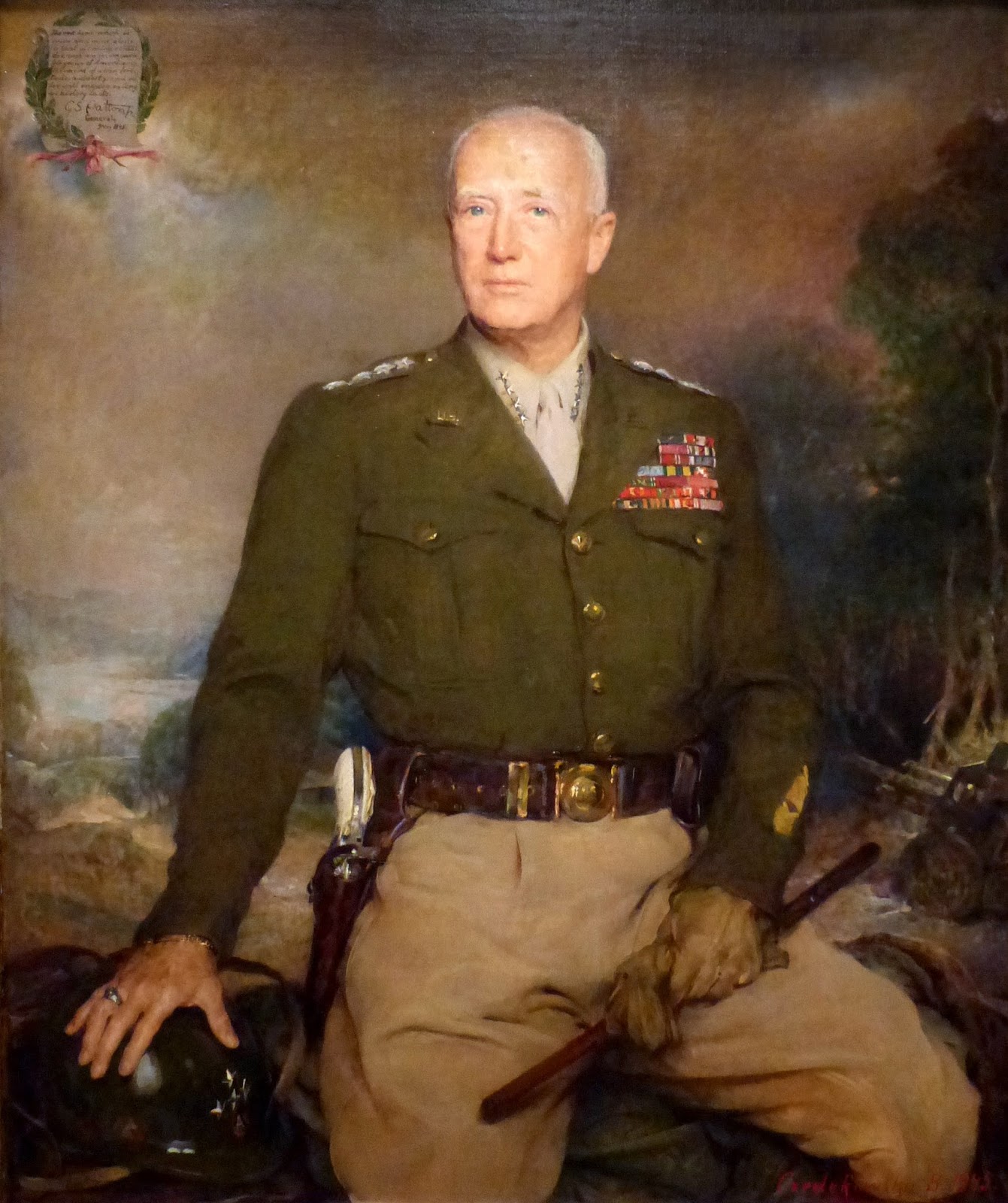
Official George S. Patton portrait
I sometimes think of the World War 2 generals like Eisenhower and Patton. If you know your history, General Dwight D. Eisenhower and General George S. Patton were both super patriotic military geniuses, but their personalities couldn’t have been more different. One was a calm, calculated, diplomatic leader whose gifts and abilities led him to be selected as the Allied Supreme Commander during WWII. The other was a complicated, often eccentric, warrior who loathed cowardice and felt destined for glory on the field of battle.
I might be more of a Patton than an Eisenhower, just without the cursing and all the reincarnation beliefs. However, if there was any general with which I would aspire to be compared to, it would be General Robert E. Lee, a man of utmost loyalty and conviction who led an army of men willing to follow him into the mouth of hell itself. He was both a warrior AND a gentleman.
But I’m not called to be a general.
My calling is to preach and teach the Word of God without apology or intimidation. More than an itinerate evangelist, my calling extends to laying doctrinal foundations on which can be built the solid and grounded faiths which can withstand the strongest storms of life. So, this kind of teaching and preaching requires time with a congregation and cannot be achieved through one or two series of sermons.
I’m a Stirrer
What’s more, when I first arrived at Bethlehem Baptist, it wasn’t long before one of our deacons gave me the nickname of “Spoon”. . . because I had the tendency to “stir things up.” It wasn’t that I tried to cause problems or move too quickly; it was just my personality. As much as I believe in tradition, “the way things have always been” can be the enemy of souls and the waster of precious, irreplicable time.
When things are left to sit and settle for too long, the ingredients separate and lose their combined effectiveness. Sometimes stirring or shaking things up involves nothing more than reawakening the inherent abilities already present. Remember what Paul told Timothy?
Wherefore I put thee in remembrance that thou stir up the gift of God, which is in thee by the putting on of my hands.
2 Timothy 1:6
And let’s not forget the words of Peter.
Yea, I think it meet, as long as I am in this tabernacle, to stir you up by putting you in remembrance . . . This second epistle, beloved, I now write unto you; in both which I stir up your pure minds by way of remembrance . . .
2 Peter 1:13; 3:1
Please don’t misunderstand me, I think it is important for every God-called pastor to show love and compassion to his flock by being there for them through the ups and downs, the joys and sorrows of life. However, there is a reason that in Acts chapter 6 the infant Church in Jerusalem was instructed to select the first official deacons. I like the way it reads in the following translation.
So the Twelve called a meeting of all the believers. They said, “We apostles should spend our time teaching the word of God, not running a food program. And so, brothers, select seven men who are well respected and are full of the Spirit and wisdom. We will give them this responsibility. Then we apostles can spend our time in prayer and teaching the word.”
Acts 6:2-4 NLT
Note, the apostles had no problem “running a food program” in the beginning. It only became a problem when it began to take away from their primary responsibilities: prayer and teaching the Word.
How We’ll All Be Happy
Don’t expect me to show up to your home unannounced.
Don’t expect me to visit you in the hospital if I don’t know you’re there.
Don’t expect me to stalk you and show up uninvited to all your activities. Invite me and I will come!
I mean, seriously, do you REALLY want me showing up when you least expect it?
That’s a job for a deacon 😉
Therefore, give me a place where I can pray, study, teach and preach the inerrant, all-sufficient Word of God, or as the apostle Paul would say, “the whole gospel,” and I will have found my happy place.
Believe it or not, crossing the Jordan River was never meant to be a metaphor for dying and going to Heaven. I know that a lot of songs make it seem that way, like “when I cross ol’ chilly Jordan,” or “I don’t have to cross Jordan alone.”
But if Heaven is like the Promised Land, you better hope there’s a “Second Amendment” somewhere. I mean, because God didn’t tell Moses to tell the people that WHEN they pass over the Jordan into the land of Canaan they could lay back and eat grapes, drink milk, and get fat on endless supplies of honey.
No, when they passed over the Jordan they were to engage in total warfare – we’re talking “scorched earth” stuff. Look at Numbers 33:52-53.
Then ye shall drive out all the inhabitants of the land from before you, and destroy all their pictures, and destroy all their molten images, and quite pluck down all their high places: And ye shall dispossess [the inhabitants] of the land, and dwell therein: for I have given you the land to possess it.
Drive Out ALL the inhabitants
This isn’t their land anymore! Even though they have been here for ages, they are only squatters, now. But their history goes back so far! Doesn’t matter. Make ‘em get gone! They might say, “You can’t come in here and make me leave; I own this place!” Oh, well, you may THINK you do, but it’s actually God who holds the title.
The earth is the LORD’s, and all its fullness, The world and those who dwell therein. – Psalm 24:1
For every beast of the forest is Mine, and the cattle on a thousand hills. I know all the birds of the mountains, and the wild beasts of the field are Mine. “If I were hungry, I would not tell you; For the world is Mine, and all its fullness. – Psalm 50:10-12
Indeed heaven and the highest heavens belong to the LORD your God, also the earth with all that is in it. – Deut. 10:14
Maybe this is a good time to be reminded that whatever we think we own, it’s only on loan from the Owner of everything. I mean, seriously, people find it so hard to give to the Lord, and I do mean give…like in an offering, or to missions, not just your time and prayers. But what they tend to forget is that there is NOTHING they have that is theirs!
“Oh, preacher, but I worked for everything I’ve got!” Yeah, and do you know what God has to say about that? Turn back a little way to Deuteronomy 8:17-18.
And thou say in thine heart, My power and the might of mine hand hath gotten me this wealth. But thou shalt remember the LORD thy God: for it is he that giveth thee power to get wealth, that he may establish his covenant which he sware unto thy fathers, as it is this day.
There is nothing in this world, not a thing, that we own. It’s all temporary. Sure, we may have a title or a deed that keeps other people from taking our stuff, but never forget that you and I wouldn’t have a thing if it wasn’t for the grace of God.
As a matter of fact, it could be argued that one of the obstacles we face is the giant of our own arrogance that makes us think God’s will is a matter of opinion, that we have a right to keep all He has given us like we own it.
If you want to see the sermon I preached in its entirety, click on the video link below.
For many years I was under the impression that pastors were closer to God than the rest of us church goers. My father, already my hero, was a pastor, so thinking that way probably came naturally.
However, over the past few decades of ministry I’ve come to realize there is very little in the average pastor that’s different from anyone else. We have our times of frustration, moments of self-doubt, and occasionally mess up. We don’t have all the answers, nor do we know all the questions to ask. We are only human.
Yet, what is true for the pastor is true for everyone; we are called to be holy. In 1 Peter 1:16 we read, “…be ye holy, for I am holy.” This is impossible, of course, without Jesus Christ living within us. He not only makes us holy (set apart) by giving us His life, but His life lived through us makes us more and more like Him. The new life we have in Jesus, living and working through us, along with our obedience to the Word of God, not only sets us apart from the world; it makes us capable of reaching the world!
This week someone asked me, “How do you preach?” “Well, I don’t scream hell fire and damnation, if that’s what you mean,” I replied. “However, I call sin what it is when I need to,” I continued. “But the big difference is that I try to preach like I’m the one sitting in the pew.”
Look, if you think I look down from the pulpit with a holier-than-thou attitude, trust me, I don’t. As a matter of fact, it is only by the grace of God that I am where I am. He has called me and gifted me for a specific role, but that doesn’t make me a better person, only one whose house is made of glass (figuratively, of course). Just ask my wife and daughters.
No, because I’m a sinner saved by grace, the call to be “holy as I am holy” is as convicting to me when I preach it as when I’m in the pew on the receiving end. The difference between the congregation and myself, as with any pastor, is that I have been given the responsibility to share the message faithfully and boldly. God is holding me accountable.
This Sunday don’t think of your pastor as a man who’s “preaching” at you; think of him as a fellow servant of God trying to complete the task before him with faithfulness to the message, even if it preaches at him.









 The Recovering Legalist