Category Archives: God

Corresponding With a Muslim About Jesus

A couple of months ago I was asked to visit (as a guest) a mosque here in Chattanooga. It was not my intention to debate anyone. For that matter, I did my best to avoid conversation. However, there was a man there who had met my daughter the month before and had discussed with her the divinity of Jesus.  When he found out that I was there this time, he came over and began to talk to me. In other words, he started it, not me.

Hammad used to go a Baptist church, but converted to Islam after reading the Quran. Later he wrote The Evidence, a small book meant to prove that Jesus was never crucified and that He never claimed to be God. When he sat down to talk with me, he was amazed to discover that I had actually read his book. He asked, “So, what did you think about it?”

“Honestly,” I replied, “I thought it had a lot of errors in it.”

A little taken aback by my forwardness and honesty, he said, “Oh, really? Like what?”

From that point I began to point out places in his work where he had misapplied Scripture and made unrealistic claims that were obviously contradicted by other passages in the Bible. I told Hammad that if he really wanted his arguments to carry more weight, it might be good for him to better learn the Bible he was trying to discredit and deny.

One particular claim he made was that none of Jesus’ disciples saw him crucified, therefore there were no actual witnesses. That is why, as he explained, Jesus appeared to the disciples – to prove to them that He was alive…that He had not actually been killed.

I said, “However, there were witnesses to the crucifixion, and one of those was an actual disciple. Jesus even spoke to him.”

“Who was that?” he asked.

“John. Jesus spoke to him and told him to take care of his mother, Mary, who was also there,” I replied.

“I’ve never read that before. Where’s it written?” Hamaad asked.

“In the book of John.”

“Really?” he said as he looked a little stunned. “Can you send me that in an email?”

“Sure,” I said. “I would be happy to.”

We agreed to correspond by email, therefore I sent him an email addressing some questions he’d asked. He sent an email in response, attempting to show me where I was wrong, using the Quran to prove it. He then went on to ask me to answer one question, if nothing else: “Where did Jesus ever say, ‘I am God’?”

I responded with two back-to-back emails, the first one dealing with the authority of Scripture, the second being the one I’m including in this post.

Yes, it’s long, but it’s here if you want to read it. Who knows, you might find something interesting in it.

Please pray for Mr. Hamaad. Pray that he will come to a better understanding of the faith that he left, that he will actually come to know Jesus as his Lord and Savior.


Greetings,

In my last email, I primarily focused on one thing: the veracity and authority of the Bible. I hope you understood it was not my intent to be offensive in any way, only to point out the differences between you and me, primarily that we have very different opinions of the Bible and the Quran. I hope it was helpful. It will certainly have a bearing on the subject matter of this email, that’s for sure.

There were some other questions you asked, and there were other issues in your book on which I disagreed, but I guess one question you asked me to address is surely one of the most important: Did Jesus ever claim to be God? It’s along the same line as the question Jesus asked His disciples in Matthew 16:13: “Whom do men say that I the Son of man am?

I am well aware that one of the cornerstones of your faith is the shahada: “there is no god but Allah, and Muhammad is the messenger of Allah.” I’m also aware of John 17:3, a passage Muslims typically use in an attempt to show that Jesus denied being God.

But aside from John 17:3, which could be debated at another time, I believe you issued the challenge to show anywhere in the Bible where Jesus actually spoke the words, “I am God.”  You were confident that I would never be able to provide you with those exact words, and rightfully so, for those exact words are not found in the New Testament.

However, I would like for you to consider the fact that even though Jesus never spoke THOSE exact words, He did say other words that carried the same meaning, thereby supporting the conclusion that Jesus did in fact believe and say that He was Divine, and Muslim interpretation of John 17:3 is out of harmony with the whole of Scripture.

But again, if at this point you are looking only for those three words – “I am God” – then nothing I say will be helpful. If you have already determined that you will reject similar statements that carry the same meaning, then I guess what I’m writing is futile. However, I will do my best to give you an answer to what you requested.

To begin with, I would like to take you back to the Old Testament, back to where the Messiah was foretold. Before Jesus was ever born, he was spoken of in terms that were nothing short of shocking: He would be “God with us.”

In Isaiah 7:14 we read the prophecy that the promised Son would be born of a Virgin and called “Immanuel.”

“Therefore the Lord himself shall give you a sign; Behold, a virgin shall conceive, and bear a son, and shall call his name Immanuel.” – Isaiah 7:14

That this verse was speaking of Jesus was confirmed by Matthew when he recorded the words of the angel of the Lord as he comforted Joseph regarding Mary’s pregnancy:

Matthew 1:23 – “Behold, a virgin shall be with child, and shall bring forth a son, and they shall call his name Emmanuel, which being interpreted is, God with us.”

If Isaiah 7:14 wasn’t clear enough, Isaiah 9:6 states that the coming Messiah “shall be called Wonderful, Counsellor, The mighty God, The everlasting Father, The Prince of Peace.”

Now, stop and think about that verse for just one moment. Who besides God could be called God? There is no other God but God, correct? Who besides God could be called “everlasting”? Even if this verse was not prophetically speaking of Jesus, is there any other person who could fit the bill? Who else besides God is uncreated (“everlasting”)?

Speaking of “everlasting Father,” what is a characteristic of God that no one else can have? There are several attributes that are unique to God (omnipotence, omnipresence, omniscience, etc.), but just looking at this one thing, only God can be eternal, correct? Only God has existed before time was created. Only God has always been, always in the present, eternal.

You asked me to show anywhere Jesus said, “I am God.” Well, based on the above verses, it would seem, then, that a clear example would be found in John 8:58

“Jesus said unto them, Verily, verily, I say unto you, Before Abraham was, I am.”

Speaking to the Pharisees, Jesus was clear enough to cause them to pick up stones to kill Him. In the present tense and indicative mood He made it crystal clear He was more than a man, more than a prophet, but actually the eternally existent, the “I am.” What did God say to Moses from the burning bush (Exodus 3:14)?

I Am that I Am…

The Pharisees knew exactly what Jesus meant when He said that, and that is why they wanted to kill Him.

Again, I believe that what you wanted from me was to show anywhere in the Bible where Jesus actually made the claim or said the words that He was God, correct? However, would you accept any other verses in the Bible that claim it for Him? For example, there is the classic passage of John 1:1-3. There, Jesus is referred to as the Word of God who was “with” God and “was” God.

“In the beginning was the Word, and the Word was with God, and the Word was God. The same was in the beginning with God. All things were made by him; and without him was not any thing made that was made.” – John 1:1-3

You know, many like yourself argue that Jesus was a created human being, not eternal. However, the above verses plainly state that all things were made by Him, and nothing that was made (and that would include any created being) was made without Him. Verse 4 of the same chapter goes even further to make this truth clear: Jesus was not just a man; He was the light and life of all men, which necessitated His pre-existence.

“In him was life; and the life was the light of men.” – John 1:4

And besides the many other places, the Book of Revelation makes it pretty clear Jesus was way more than just another prophet:

Behold, he cometh ewith clouds; and every eye shall see him, and they also which pierced him: and all kindreds of the earth shall wail because of him. Even so, Amen.  I am Alpha and Omega, hthe beginning and the ending, saith the Lord, which is, and which was, and which is to come, the Almighty” (Rev. 1:7-8).[i]

For that matter, it is in Revelation 1:17-18 that we read where Jesus Himself spoke of His death and resurrection: “…Fear not; I am the first and the last: I am he that liveth, and was dead; and, behold, I am alive for evermore, Amen; and have the keys of hell and of death.”[ii]

The “I Am” statements…

Now, if you will notice, just like in the last verse, there are a lot of places where Jesus claimed “I am…” this or “I am…” that.

In seven passages John records the well-known “I Am” sayings where Jesus describes himself using a graphic metaphor: “I am the bread* of life*” (6:35, 41, 48, 51); “I am the light* of the world” (8:12; 9:5); “I am the door of the sheep” (10:7, 9); “I am the good shepherd*” (10:11, 14); “I am the resurrection and the life” (11:25); “I am the way, the truth, and the life” (14:6); and “I am the true vine*” (15:1, 5).[1]

In each one of these statements Jesus was doing a lot more than illustrating with metaphor; He was declaring fact. Jesus didn’t say that He was just a door, or a way, or a light; He claimed to be THE Door, THE Way, THE Light. He emphatically declared that He was THE Truth and THE Life.

By declaring these things, Jesus was saying that all other “truth” was subordinate to Him. He was saying that there was NO other way – no path, no road, no pilgrimage, no hajj – to God but through Him. But even more, He was declaring that He was more than the One who spoke or demonstrated truth; He WAS Truth! The same applied to all the other “I AM” statements.

The “Truth” Claim…

If Jesus had never once said the exact words “I am God,” He essentially said the very same thing with the “I Am” statements. Why? Let’s just consider the word “truth.”

The Bible does not provide a systematic account of the nature of truth in either its theological or philosophical dimensions. Nevertheless great prominence is given to the idea of truth in Scripture because God is the God of truth (Pss 31:5; 108:4; 146:6) who speaks and judges truly (Pss 57:3; 96:13). God is the God of all truth because he is the Creator, and it is impossible for him to lie (Heb 6:18).[2]

If Jesus had been only a man, there would have been an element of untruth in Him. As a matter of fact, 1 John 1:8-10 states that if we say we have no sin, then we deceive ourselves and the truth is not in us. Even worse, if we say that we have not sinned, we make God a liar, and his Word is not in us! How, then, could Jesus have claimed to be “the way, the truth, and the life” (John 14:6)?

What man, even a perfect man, could be the actual embodiment of Truth? Only God, who took on flesh, could claim such a thing and not be a total liar.

Like I said in the last email, all that I’ve just written will carry little weight unless you believe that the Bible is the inspired Word of God. If you approach it as flawed, misinterpreted, corrupted by men, and superseded by the Quran, then does it really matter what Jesus said? If your only accepted record of Jesus is found in a book that was written long after the Gospels, over 400 years after the last book written by John (around 90 A.D.), what does it matter what Jesus said in the Bible? He could have plainly said “I AM GOD!” a thousand times, but it wouldn’t matter to you, would it?

Think about it… You trust the words of a denier of the divinity of Jesus over the record of His own words and those who actually walked with Him.

The only logical way for you to prove to me that Jesus is not God, or at least that He did not claim to be God, is to show it to me in the cannon of Scripture. And as I have just now written, that will be a difficult challenge, indeed.

Please forgive me if I have in any way offended, for I am not fully versed in what is appropriate and what is inappropriate when discussing Islam with a Muslim. It is my hope that since you came from a Christian background, you can discern my intentions are genuine and in the spirit of love.

I would like to close this email by suggesting you ask for a copy of the late Nabeel Qureshi’s book No God but One: Allah or Jesus? Qureshi was a Muslim who converted to Christianity, but only after he was able to answer for himself the question you have asked me. You might find his perspective enlightening.

Thank you, again, for the opportunity to correspond, and happy Thanksgiving!

Respectfully,

Anthony Baker


[1] G. M. Burge, “‘‍I Am‍’ Sayings,” ed. Joel B. Green and Scot McKnight, Dictionary of Jesus and the Gospels (Downers Grove, IL: InterVarsity Press, 1992), 354.

[2] Walter A. Elwell and Barry J. Beitzel, “Truth,” Baker Encyclopedia of the Bible (Grand Rapids, MI: Baker Book House, 1988), 2108.

[i] The Holy Bible: King James Version, Electronic Edition of the 1900 Authorized Version. (Bellingham, WA: Logos Research Systems, Inc., 2009), Re 1:7–8.

[ii] The Holy Bible: King James Version, Electronic Edition of the 1900 Authorized Version. (Bellingham, WA: Logos Research Systems, Inc., 2009), Re 1:17–18.

3 Comments

Filed under Apologetics, Christianity, God, Theology, Witnessing

Just Stomp Me. Selah.

“Let the enemy persecute my soul, and take [it]; yea, let him tread down my life upon the earth, and lay mine honour in the dust. Selah.” – Psalm 7:5

FullSizeRender (1)Selah. A musical notation calling us to pause, to rest for moment and consider what has just been said. In this verse David asks God to let his enemy “persecute” him and essentially pound him into the earth! Why? Let’s think about it.

Out of Context

Should we read this verse as a stand-alone statement, apart from the context in which it was written, David would appear to have some serious mental problems. Is that what he is telling us to think about?

In this one verse there are three separate actions for which David is asking God to allow.

  1. Let the enemy persecute and take my soul.
  2. Let the enemy tread down (walk all over and stomp on) my life.
  3. Let the enemy lay my honour in the dust.

Why would David ask God to allow these things? Was he crazy? Not hardly.

In Proper Context

When we examine the full context of Psalm 7,  what we see is David crying out to God for deliverance from another one of his enemies, Cush the Benjamite. Evidently Cush had made some serious accusations concerning David’s actions, accusing him of some very bad things.

“O LORD my God, if I have done this: If there is iniquity in my hands, If I have repaid evil to him who was at peace with me, Or have plundered my enemy without cause…” – Psalm 7:3-4 NKJV

Iniquity…doing evil to the one with whom he was at peace…plundering his enemy without cause… What in the world did Cush think David did? We may never know.

However, David was so confident that whatever Cush was accusing him of was a fabrication – a lie – that he was willing to suggest his own destruction should the accusation be true.

Making Application

Are you living in such a way that you could pray with confidence: “Lord, let my enemy destroy me, even drag my soul to hell, should I actually be guilty of whatever he’s accusing me of.”

If not, then maybe we should pray another prayer, one in which David asked God to show him anything that needed changing.

“Search me, O God, and know my heart: try me, and know my thoughts: And see if [there be any] wicked way in me, and lead me in the way everlasting.” – Psalm 139:23-24 KJV

I’d say it’s far better to let God do a work on us before our enemy does a number on us.


Leave a comment

Filed under Christian Living, God, Selah, Theology, worship

We’re All Sinners. Selah.

“Stand in awe, and sin not: commune with your own heart upon your bed, and be still. Selah.” – Psalm 4:4

FullSizeRender (1)Selah. A musical notation calling us to pause, to rest for a moment and consider what has just been said. In this verse, we are told to “commune” with our own hearts upon our beds. What about? Let’s think about it.

How Long?

Before, in the previous selah in Psalm 4:2, David was asking the question “How long?” How long would those whom he had once trusted betray him? How long would his former friends treat him like an enemy? How long would they promote lies over truth, and turn his “glory into shame?”

You and I may not be kings in exile, or have former commanders in our personal guard out for our head. However, there may be people who lie about you; spread untruths about you at work; misrepresent you to your children, or withhold that little bit of evidence just to win their case against you. How long will they get away with it?

You observe the culture. You watch the news and see the movies. You shake your head with disgust as you witness sin and shame, practically every deviancy known to man, promoted like it was the new gospel. You narrow your eyes and grit your teeth and whisper under your breath, “They should be glad I’m not God.” How long will God let them get away with it?

Awful Angry

Stand in awe, and sin not…” The Septuagint renders it “Be ye angry, and sin not…” The same is repeated by the Apostle Paul in Eph. 4:26 when he says, “Be ye angry, and sin not: let not the sun go down upon your wrath.” So why awe in one and angry in the other?

The word translated both as “awe” and “angry” is an interesting one. Consider Strong’s treatment of it:

רָגַז râgaz, raw-gaz’; a primitive root; to quiver (with any violent emotion, especially anger or fear):—be afraid, stand in awe, disquiet, fall out, fret, move, provoke, quake, rage, shake, tremble, trouble, be wroth.

So, when David is telling us to stand in “awe,” he is not telling us to do something like look up to the stars and go, “WOW!” No, David is giving us permission, as Paul did, to be angry; angry to the point of violently shaking, full of emotion and rage.

Just without sin.

Go to Bed?

So, just to make it clear, it’s OK to get angry, just as long as it’s a righteous anger (the last thing we want to be found guilty of is a lack of emotion when confronted with perversion and injustice; apathy is its own sin).  But in an apparent contrast with the later writing of Paul, what does King David suggest we do?

Go to bed and think about it? He said, “…commune with your own heart upon your bed, and be still. Selah.

But wait! I thought the Apostle Paul said we shouldn’t go to bed angry? What’s the difference?

The difference is GRACE, pure and simple. And hallelujah for that!

Humble Communion

Go ahead, get angry at the sin of the world. Go ahead, tremble with indignant anger at the way the glory of God is impugned on a day-to-day basis. Go ahead, quiver and shake with anger over the way people have been treating you – you have that right. But there’s something else you need to do: Remember the grace of God.

No, David is not telling us to go to bed angry and stew on it; he is encouraging us to remember that we are sinners, also.

To “commune with your own heart” means to reflect on yourself and your own condition. And when we add to that the words “be still” (דָּמַם [dā·mǎm]), which according to some* carries with it the idea of wailing and lamenting, along with being silent, what we have is the suggestion to be angry, but to remember we are sinners, too.

When David was treated horribly, he got angry, but he also remembered that if it wasn’t for God’s mercy he would suffer the same fate as the wicked. So, although we should get angry, at times, it is important for us to remember that although God is righteous, He is also gracious and good.

Thank Him for His mercy as you commune with your soul, and let Him handle those other people. Selah.


*William Lee Holladay and Ludwig Köhler, A Concise Hebrew and Aramaic Lexicon of the Old Testament (Leiden: Brill, 2000), 72.

*James Swanson, Dictionary of Biblical Languages with Semantic Domains: Hebrew (Old Testament) (Oak Harbor: Logos Research Systems, Inc., 1997).

3 Comments

Filed under Christian Living, God, Selah, Theology, worship

Barriers to Church Growth #8 (Selfish Fasting)

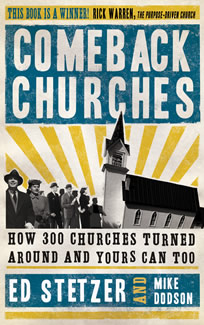
A very revealing study was done, leading to a book detailing how 300 churches went from declining or dying, to growing. In Comeback Churches, written by Ed Stetzer and Mike Dodson, there is a list of 30 different barriers to church growth. Having received permission from the publisher (B&H Publishing Group), I would like to discuss a different barrier each week.

“People think of fasting as being for themselves.”

Moreover when ye fast, be not, as the hypocrites, of a sad countenance: for they disfigure their faces, that they may appear unto men to fast. Verily I say unto you, They have their reward. But thou, when thou fastest, anoint thine head, and wash thy face; That thou appear not unto men to fast, but unto thy Father which is in secret: and thy Father, which seeth in secret, shall reward thee openly.” – Matthew 6:16-18

Wherefore have we fasted, say they, and thou seest not? wherefore have we afflicted our soul, and thou takest no knowledge? Behold, in the day of your fast ye find pleasure, and exact all your labours.” – Isaiah 58:3ff

One of the great tools of prayer is fasting. But before we go off too quickly and label it as a “tool” or a “key” to answered prayer and holiness, consider the motive behind it.

Why do people fast? Why do people abstain from food or drink when they pray. Honestly, many do it only to either be seen by men, or to be thought more highly of by God. Neither are proper motivations for fasting.

It’s all about me…

In today’s church culture there are many who promote various ways and means to health, wealth, and spiritual success. You know the type – they’re constantly begging for you to sow a “seed of faith” into their ministries (or should I say “scams” and “snake oil factories?”). There are even those who promote fasting as a way to becoming more holy (then offer a book in exchange for a gift of any amount above $20).

The real problem with all of that is the fact that it preys on the flesh, the sinful tendency to think of “self” more than the will of God. It may help a televangelist get rich when you sow a “seed,” but it won’t bring you closer to God if you are expecting a hundred-fold return on your “investment.” When it’s “all about me,” God is not glorified.

Not a means to an end…

Without getting into a long study of the topic of fasting, let’s just say that most fasting is done for the wrong reasons. Look at the rest of the verses in Isaiah 58, for example. It was not that the people were avoiding fasting; they were even abusing themselves. Yet, God was not pleased. He was not interested in their fastings. He wanted their hearts.

There are so many ways the church could benefit if we would seek the heart of God, not our own desires. If we sought after God with a pure heart, asking Him to burden us with a desire for the lost and broken, fasting would come naturally. Most examples of fasting in the Bible were not begun with intent, but were the result of brokenness. Most of the time the fast was the result of one’s lack of desire for anything other than hearing from God. How different is that from the modern Christian who gives up a meal or two and expects, in return for their great sacrifice of earthly pleasure, an answer to a selfish prayer?

Fasting should never be a means to an end. It should be the natural result of one who can find no pleasure, no solace, no comfort in anything other than a word from the Bread of Life. Anything else borders on an attempt to manipulate the King of Glory into feeling sorry for us. What’s worse, fasting as a means to an end for a request which is intended to be “consumed upon [our] lusts” is no different than self-mutilization or witchcraft.

God will not grow a church that seeks to glorify itself or seek its own desires, especially if it attempts to bribe God in the process.

1 Comment

Filed under book review, Christian Maturity, Food, God, Uncategorized

How Long? Selah.

“O ye sons of men, how long will ye turn my glory into shame? how long will ye love vanity, and seek after leasing? Selah.” – Psalm 4:2

FullSizeRender (1)Selah. A word that calls us to stop for just a moment and contemplate what we’ve just read. This morning pause and consider the glory of God.

“My glory”

It is important that we realize first that when David writes these words it is not only about himself. This is one of those verses which have a double meaning: one that is meant for the time it was written, and another that implies a bigger story. In this case, it’s about the glory of God.

In case you’ve ever wondered, the word glory carries with it the idea of a “heaviness” or a “burden.” It concerns one’s “reputation.”

“Sons of men…”

David was probably writing to men whom at one point were his trusted friends, but now they were trying to kill him. These were men who made up his inner circle of government, who acted in his name. Yet now, here they were in rebellion, turning the glory of David’s reign into shame.

Sons of men was something of a title of honor and dignity.

“Vanity” and “Leasing”

Vanity is that which is hollow and worthless. Vanity is that beauty that fades, the riches that decay. Yet, what does the world love? It chases after fleeting fame and false beauty. It’s constantly trying one-up God’s creation. Yet, men “love” it; literally, they “flirt” with it. Why not seek after things that last?

“Leasing” is another word for lying. David is asking why it is that men seek after lies? I guess the answer could be found in the modern context of news. Why do we keep going to the media for truth about the world when we know they rarely tell the truth?

From Glory to Shame

God is asking His creation – the ones who bear the fingerprint of their Creator – “Why do you turn MY glory into shame?” Why do men and women constantly seek after emptiness and lies, when the Truth is right in front of them?

Why did David’s men rebell against him, knowing he was God’s annointed King of Israel? Why do men rebel against Jesus, the eternal King of Glory? After all, we are who we are because of God; we are the jewel of His creation? Why do we love to devalue ourselves, turning His glory into shame?

Tragic, isn’t it? Nevertheless, the “how long” part of this verse hints at something very important: We can’t rob God’s glory and impune His name forever.

Just think about that for a while.

Leave a comment

Filed under Bible Study, God, Selah

Proper Fear and Persuading Others

Not long ago I preached a sermon to my congregation, the following text being one of several that I used.

Knowing therefore the terror of the Lord, we persuade men…” – 2 Corinthians 5:11a

There is always talk about the fear of terrorism these days, yet very few talk about the fear of God. Why is that? After all, aren’t we commanded to fear the Lord? Isn’t it the wise thing to do?

The fear of the LORD is the beginning of wisdom: and the knowledge of the holy is understanding.” – Proverbs 9:10

The problem is that we get so distracted by the common, temporal fears of this world forget about the eternal. Some of us are terrified of what others may find in our closets, but forget that God knows all. Our minds are so cluttered with all the stresses of this life that we forget about what comes after.

Both of the previous verses also talk about “knowing” and  the “knowledge” of God. In the first passage (2 Cor. 5:11a) the Apostle Paul is essentially telling the Corinthians: “Hey, it’s because we know who God is and what He’s capable of, not to mention the fact that we must all stand before Him one day (5:10), that we do our dead-level best to tell it to you like it is!”

In the second passage, wise King Solomon is telling anyone who will listen, “The more you know God, the better you’ll understand how life works.” Knowing and understanding who God is will produce produce fear: terror in His enemies; reverential fear in those who love Him.

Jesus said: “And fear not them which kill the body, but are not able to kill the soul: but rather fear Him which is able to destroy both soul and body in hell” (Matthew 10:28). [emphasis added]

So, while ever-present bad news will tend to make us want to run and hide or take matters into our own hands, keep everything in its proper perspective. Those who serve the Living Savior; those who are reconciled to God by the atonement of the cross of Christ; those who were once strangers, but now have been made children of the Father, can find peace and rest in the fearfully omnipotent hand of our faithful Creator.

Wherefore let them that suffer according to the will of God commit the keeping of their souls to him in well doing, as unto a faithful Creator.” – 1 Peter 4:19 

The only ones who should be living in terror, in fear of what may come today or tomorrow, are those who have never known God, have forgotten God, or worse, mock Him (Romans 1:18-32).

When we persuade others to fear God in the proper way, they will come to know His love and love Him in return. Then, instead of living in terror, ironically, “perfect love casteth out fear” (1 John 4:18).

For ye have not received the spirit of bondage again to fear; but ye have received the Spirit of adoption, whereby we cry, Abba, Father.” – Romans 8:15 

Are you living in fear? Can you call God “Abba, Father” (Daddy)? A proper relationship will produce a proper fear; terror is the product of rebellion.

If you don’t fully understand what I’ve written, or if you’d like to know more about how to live in peace without terror, click on the Eternal Life tab at the top of the page and follow the instructions.

6 Comments

Filed under Bible Study, God, salvation, Struggles and Trials

Who is Jesus? Key biblical, historical, and scientific evidence. — Opened Heart Ministry

The following post was written by Dr. Rob Oberto, but it is so worth sharing! I would encourage you to check out his blog and let him know I sent you 🙂


https://videopress.com/embed/e1FfLaZT?hd=0&autoPlay=0&permalink=0&loop=0

In this brief post I share with you the key biblical, historical, and scientific evidence that I have gleened from over 39 years of academic, professional, and personal study.

via Who is Jesus? Key biblical, historical, and scientific evidence. — Opened Heart Ministry

Leave a comment

by | October 10, 2018 · 8:58 pm

Our King Moves As He Wills

Whenever you feel like Satan has you in checkmate, just remember that life is not a game of chess.

There is only one King, and He moves in strange and mysterious ways.

Leave a comment

Filed under God

God Did Not Create Another God

Would you take a moment and consider something?

When God created man, He didn’t create another God.

You might think that’s nothing new, but it is a very, very important truth – one that is rarely unpacked when discussing issues of sin and suffering.

There are people who wonder why God, if He exists and is so powerful and wise, created a free agent who could sin (break God’s law).

Others question why Scripture would suggest that Jesus was slain before the foundations of the world (1 Peter 1:19-20).

The answer to these questions and many more is that God did not create another God, only man.

God has certain characteristics that Man could never have simply because he was created. The most obvious are that he is not eternal, omnipotent, immutable, or omniscient. The most important is that Man, no matter how perfect he was at the moment of creation, was not holy as God is Holy.

If God were to create another like unto Himself, then God would not be God. If Man could be created, he couldn’t be eternal.

No matter what God created, His creation could never be Himself, and therefore not God.

God is eternally immutable, unchanging, therefore He cannot sin. On the other hand, Man is not eternal, nor immutable, so even from the beginning of creation, he had the potential, however remote, to sin. Therefore, even though God did not create sin, nor did He cause Adam to sin, sin was inevitable simply because God created a creature that was not Himself.

Why was it part of God’s plan that Jesus would be crucified, even before Adam even sinned? Because simply creating Man brought with it the inevitable possibility, the inevitable reality, that he would need to be redeemed – because he is Man, not God.

In this was manifested the love of God toward us, because that God sent his only begotten Son into the world, that we might live through him. Herein is love, not that we loved God, but that he loved us, and sent his Son to be the propitiation for our sins. – 1 John 4:9-10 KJV

Simply put, the only way sin could have been avoided would have been for God to never create any being capable of freely communing with Him. If he had created a robot, a machine, then sin would not have been inevitable. But since Adam was given the freedom to choose, a will, and since he was not God, the inevitable required an Emmanuel.

1 Comment

Filed under Christianity, God, grace, Jesus, salvation

Five Things About God’s Hands

Maybe you are at a point in your life where you doubt God. Maybe you doubt He cares. Or, even if He cares, you wonder why you can’t see it.

I hope the following list of what God’s hands do will bring you some comfort and encouragement.

  1. They Created Man (Gen. 2:7). As much as we would like to think that we are self-made, there is a Hand that formed us from the dust of the earth. We are not like the rest of creation which was simply spoken into existence; we were fashioned by the loving, artistic hand of the Creator, and His fingerprints are all over us.
  2. They Contain the Believer (John 10:27-29). The believer should never worry about his salvation. He should never worry about being stolen away. Thank God that we are in His hand, and nothing, not even ourselves, can remove us from His omnipotent protection.
  3. They Chastise the Child (Prov. 3:12; 13:24; 22:15; 19:18; Deut. 8:5; Rev. 3:19). God is not a Father who encourages “timeouts;” He knows how to apply loving discipline to our seats of instruction. If more parents would worry less about the world’s wisdom and suggestions and follow the wise instruction of Scripture, we might not have as many entitlement-claiming, over-grown bratty children running the streets demanding their own way.
  4. They Carry the Broken (Isa. 40:11). Praise the Lord for His mercy and love! As the gentle shepherd who must sometimes break the leg of the wandering lamb, God must discipline us. However, it is then that He carries us close to his bosom where we learn to love being in His presence.
  5. They Catch the Stumbler (Psa. 37:23-24). There are times when we stumble, but because He is holding our hand, we will not “utterly” fall.

Jonathan Edwards preached in 1741, it is a “fearful thing to fall into the hands of an angry God.” But as a child of God, there is no better place to be!

David said, even after he had sinned, “Let me fall into the hand of the Lord…” (1 Chron. 21:13). He knew the truth that brought comfort, a comfort the world does not know: “The LORD will not cast off his people…” (Psa. 94:14).

Praise God for His loving, providing, protecting, parenting, and guiding hand! 

1 Comment

Filed under God