Category Archives: Apologetics

The Human Cell: Evidence of Design, or Misinterpretation?

First, a couple of videos.

Here’s my take.

You all know the old saying, “If it looks like a duck, etc…it is a duck,” don’t you? When we see something that looks and acts like another something with which we are already very familiar, the most logical explanation for the similarity is to initially assume is that the two somethings are, in fact, alike. They don’t have to be exactly alike to be of the same something, just like a ball is a ball regardless of the size, texture, or chemical makeup. Even my 2 year-old granddaughter, based on her short life experience, is not wrong when she notices a spherical object, points, and yells out, “Ball!”

We carry with us information and definitions acquired through experience, along with developed presuppositions When we observe a buzzing factory, we assume it to be a buzzing factory based on what we already know from experience about building or making things. To describe the factory, then, as something other than what is observable and recognizable as a place of production would require one of two things: either the observer has never seen or had any concept of manufacturing and assembly, or that he is being intellectually dishonest.

One would have to have never tied a shoe, prepared a meal, or completed any task requiring a process to not recognize a factory for what it is. At the very least the observer should be able to recognize the industrial process as being similar to other processes with which he is already familiar: the kind when going step-by-step makes a thing. Therefore, to observe a factory in operation and then declare that the factory, even the whole process of manufacturing, including subcontracting and logistics, is nothing more than an illusion of design and a product of chance is to throw out rationality in favor of a presumed belief.

It amazes me how that one can learn more and more about the complexities (yes, even irreducible complexities) of the human cell and still maintain random chance and time created and honed everything, from the machines down to the software in a factory which purpose is to make a thing.

It is easy to simply claim there is no Designer or Creator behind the unfathomable complexities of human existence. All one needs is the presupposition that no matter what one encounters, it is NOT what it may appear to be. If we first presuppose there is no God, then what may appear to be the result of vision and design can be waved off as only an illusion, a false equation, or the projection of a preconceived delusion acting as a coping mechanism.

However, living in a modern, industrial world, I find it hard to understand how anyone with any amount of intelligence can maintain “natural selection,” copious amounts of time, and blind chance are the architects of anything, much less the preliminary mechanisms and processes which bring about its construction.

I actually work in an automobile manufacturing plant. I have witnessed the entire process of building a Volkswagen Atlas. Even more, I have participated with my own hands in the making of these vehicles. I have been involved in the logistics of securing parts of all kinds and placing even the smallest in precise positions for robots to weld. In order for one functioning vehicle to roll off the assembly line, the things that must take place in the right way at the right moment and in the right amount are just staggering. And we are only talking about a car, not the human body and each cell!

2025 Volkswagen Atlas Peak Edition 

For just a moment, think about that 2025 VW Atlas with all the bells and whistles of a luxury SUV. Imagine it painted your favorite color as it is cranked and driven out the big bay doors toward the staging area where it will be shipped. Should you spend your $50,000 to buy one, you will expect it to perform at a certain level while maintaining its structural integrity. After all, the lives of your family and yourself will depend on it.

Now, imagine that SUV backing into the proving and detailing area once again. Then, imagine it backing up to the automated assembly line where it is once again placed on the moving floor. Keep reversing until the vehicle is completely disassembled, stripped of paint and sealer, even un-welded (if that was possible) and reduced to small stamped pieces of sheet metal that make up the body. Are we done? No.

Credit: plastonline.org

Look around at all the bins full of sheet metal parts, plastic spacers, barrels of sealant, bolts, nuts, and even the box of tiny copper tips for one of the thousand-plus $200,000-dollar robots spot-welding 24/7 according to software monitored 4,000 miles away. How did all that get there? If left alone, would a VW Atlas once again roll out the door? Even in a billion years?

Even more, consider all the things that must take place in the process of manufacturing the individual components. For every piece of that vehicle (about 5,000) there is a company, a business plan, a CEO, workers, machines that must be maintained, and materials which must be ordered and stocked. And then there are the truck drivers and the forklift drivers and the mechanics who keep those machines running and those parts on schedule.

Parts must be made according to specific tolerances. Parts must be assembled in a certain way. People have to do their assigned duties with quality, safety, and integrity. Everything must go a certain way, or else the very integrity of the vehicle could be compromised. Nothing, and I mean NOTHING is unplanned and left to chance when literal lives could be at stake.

How long would it take for a brand new Volkswagen to roll off the assembly line on its own? Any answer other than “never” would be absurd. And why is that? Because nothing in the observable world testifies to this being possible. From experience and observation we have acquired enough wisdom to determine two things: first, a car doesn’t design and build itself; and second, an expertly built and functioning vehicle must not be the result of design-less, random chance.

Therefore, it is not irrational, when we observe what appears to be design and purpose, to assume there was a Designer with a plan for how the thing would function. Everywhere else in creation and everyday life we observe the natural rhythms of cause and effect. When we see a jet flying in the sky above us, we take for granted the craft was designed and built in a factory, it’s going somewhere, and that people are on it. Even when a rock hits our windshield, we know something caused the rock to leave the pavement.

It’s only the one who cannot, no matter the evidence, no matter the logic, accept that there’s a Watchmaker in the history of the watch on the shore. He asserts there is no evidence for the Watchmaker; there is nothing about the Watchmaker that he’d like should he exist; that not enough jewels were in the movement to signal true intelligence; and that though it may look like a watch and function like a watch, we don’t know for sure what we think a watch is, or whether it is actually represented in the thing on the shore.

For all we know, the supposed watch somehow came from the depths by some means not yet discovered.

“All we can know for sure,” he would say, “is that there appears to be a thing on the shore with interesting similarities to other observable things, but whatever it is, it is because it is and that’s it. To entertain any other conclusions might lead to inconvenient truths, and we can’t go there.”

All I know is that even though I’m not a biologist, I’m pretty certain I can recognize a duck when I see it.

And a watch.

1 Comment

Filed under Apologetics, watches

You Won’t Offend Me

A New Friend

I had a couple of good conversations with a new friend this week. It all started with me being bored out of my mind and trying not to fall asleep at work. Having worked with him a little before, and sort of expecting a little of what was to come, I decided to walk over to where I saw him standing and ask him a very, VERY open-ended question.

To paraphrase, I asked, “So, tell me something philosophical.” It was like opening a faucet, LOL! What I was not expecting was the volume of conversation. Obviously, I struck a nerve!

A Second Conversation

So, it was the next day – in the only down time I had (coincidence?) – that this young man walked over to me and started a conversation. If nothing else, he would have made my day by the way he started . . . “Based on yesterday’s conversation, I’m assuming you’re a Christian?” Let me tell you, that alone was a shot in the arm that I needed that very moment!

It was too fast-paced and in-depth to recount what was talked about, but there was one thing my new friend said that made me smile. He prefaced a statement he was about to make with, “I don’t want to offend you…

You Won’t Offend Me, Honestly

It’s not the first time I’ve been told that. Actually, it was just a couple of months ago that an older man who hired on the same time as I did asked what I had done for a living before coming to work at Volkswagen. When I answered that I had been a full-time pastor, he immediately returned with, “Well, I don’t want to offend you, but I don’t believe what you believe.

How is this supposed to offend me? Why would I be offended by someone telling me he doesn’t believe the same things as me? It’s possibly because when he’s mentioned it to other believers they’ve gasped with indignation and shock. Sort of like, “Whaaat? How is that possible? You must be a bad, bad person!

But seriously, it doesn’t offend me when someone tells me he doesn’t believe what I believe. All it does it open the door for the kind of conversation I live for!

Beware the Crack

So, to all my new and old friends out there, “offend” away! Go ahead, tell me what you believe that differs from what I believe. Seriously, I’d love to hear it! All I ask is that YOU return the favor and not get offended when I ask you questions about how you came to your conclusion.

Let me give you a little advice, however. If you want to continue being an atheist or agnostic, or whatever it is that leads you to believe I might be offended by your words, beware of the cracks that may develop in your philosophical foundation. As soon as you begin to open up to honest conversation, you risk hearing a perspective that might change YOUR mind. You risk developing a crack of doubt in your own presuppositional opinions, a crack that may allow a tiny seed of faith to sneak in and take root.

So, no, you won’t offend me; you will encourage me! All you can do is convince me that I’m in the right place at the right time, just as God ordained.

The thing about foundation cracks is that they rarely close back up; they just go deeper and wider.

Leave a comment

Filed under Apologetics, Christianity, Faith, Witnessing

“There is no god.”

Recently I saw a bumper sticker – actually, it was on the rear of the car, on the PAINT! – that stated in simple black and white, “There is no god.”

I guess, because it was meant to strike at the very core of what I believe, along with every other person with a positive view of the existence of deity, it caught my attention, so much so that I took a picture with my cell phone.

But instead of getting angry or indignant – I mean, what’s the use? – instead, I started thinking about the statement itself: there is no god.

The significance of the little “g” instead of a capital one should not be overlooked; it was certainly intentional (I am supposing…and I’m going to be generous in my assumption, here…that the creator and user of the sticker were cognizant of the theological implications). To have used a capital “G” instead of a small one would have only addressed the existence of the personal being whom we collectively refer to as “God.” Therefore, whether the God of Christianity or not, the creator and user of this sticker could not limit their four-word statement; it had to be all-inclusive. To only say that there is no God (with a capital G) could leave open the possibility that there is, still, other gods.

But this does raise at least one question that I will also assume the users of this sticker are prepared to answer. Were they actually referencing the words of the God of the Bible? Was it a brilliantly disguised doctrinal declaration? In Deuteronomy 32:39 we read:

See now that I, even I, am he, and there is no god with me: I kill, and I make alive; I wound, and I heal: neither is there any that can deliver out of my hand.” (Emphasis added)

If so, instead of assuming the sticker “There is no god” is an atheistic statement, should we infer a pro-monotheistic, Judeo-Christian intent? I mean, words matter, right?

But a second question came to mind shortly after the first: Where’s the evidence?

You see, for the longest time, even from the Bible days, there have been those who not only question the existence of God but ask believers for evidence that supports the existence of God. “Show me the evidence” has been the first and most successful weapon in their arsenal, for it has often silenced and reduced, even intimidated believers into all they could bring to the table was a non-scientific, faith-only kind of argument. However, it shouldn’t be so!

“Where’s the evidence” should not be an exclusive question from the atheist or agnostic; believers should be quick to ask the same thing. If the sticker is meant to be a dogmatic statement, and we can only assume that it is, where is the evidence that supports such a declaration?

Now, here’s the thing: if you want to use the same condescending, arrogant, elitist response that the atheists use, whatever the sticker’s owner says, no matter what they present as evidence for their conclusion, your only reply needs to be, “Well, that’s not evidence,” or “That’s not good enough.

What’s so funny, you see, is that there IS evidence and it’s all over the place for BOTH sides of the argument! As a matter of fact, the crazy thing is that it’s the SAME evidence! The key to the argument before the judge and jury is how the evidence is to be interpreted. For example, in a murder trial you may have a truck load of evidence such as bloody carpet, a gun, a body, fingerprints, DNA, powder residue, personal effects, and eyewitness statements. But depending on the ability and the agenda of the lawyer using the evidence, what should be a key piece that leads to conviction ends up being a parody of the whole trial. Anyone remember the bloody glove and the saying “If it doesn’t fit, you must acquit”?

But then there’s another thing. Why is it that those who insist there is no god can at the same time be adamant that extraterrestrial life is a statistical necessity? Where’s the logical consistency in that?

I mean, if the universe is so infinitely huge that it is juvenile and arrogant to think we might be the only ones living in it, considering the untapped depth of research into things like quantum physics and parallel dimensions and the constantly repeated statement of “This might change all we know about da da da…,” who is more arrogant, the one who says, “Based on the preponderance of evidence, I personally conclude that there must be a Creator, for the universe, as complicated and beautiful as it is, could not have come into existence out of nothing or create itself,” or the one who can sum up all knowledge in a bumper sticker that says, “There is no god.”?

Fortunately, my wife won’t let me put stickers on our cars.

11 Comments

Filed under Apologetics, General Observations, God

The Joy of Writing

Why do we enjoy writing?

I have a simple theory…

Writing is almost like creating something from nothing: from the mind into reality. Therefore, writing brings the writer joy because in his DNA is the ink stain of the One who created him.

In every writer is a little bit of the Author, evidence of His handiwork.

My actual keyboard 🙂

1 Comment

Filed under Apologetics, blogging, writing

The Real Problem with the Problem of Evil

An Old Debate

One of the most common reasons for denying the existence of God is the problem of evil in the world. Just ask any group of atheists to give their top ten reasons for unbelief and surely one will claim as number one, “If there is a God, then why is there so much evil in the world?” For many, this is the pièce de résistance of rebuttals. How could a good God be real and allow all the suffering in the world to continue unabated – assuming He is even good? The eighteenth century philosopher, David Hume described the problem this way in Dialogues concerning Natural Religion, 1779:

“Is God willing to prevent evil, but not able? then he is impotent. Is he able, but not willing? then is he malevolent. Is he both able and willing? whence then is evil?” (Stackhouse 1998, 11)

So, the “problem of evil,” and its source, has been an issue of philosophical debate for centuries.  The existence of evil in the world, along with unanswered questions, has even become evidence enough for some to embrace atheism.  Therefore, because so many philosophers and theologians have tried for ages to reconcile the existence of God with the existence of evil, I dare say that nothing I write will be new.  But, if anyone were to challenge my belief in God, along with my faith in Jesus Christ, with the argument that the problem of evil constitutes proof God does not exist, then I would possibly respond with arguments based on the following thought:

Without the existence of God, there should be no evil to be a problem, and that’s the real problem with “the Problem of Evil.”

Evil? What Is It?

What exactly is “evil?” Now, that may sound like an absurd kind of question to ask, but if the existence of evil is the evidence that is supposed to expose my faith as a fraud, at best, or even a lie, then what is it?  Is it something tangible? Is it metaphysical? Is it theoretical? What is it, exactly? Does it have any particular form? How can it be distinguished from what is called good? On what do the atheists and agnostics base their definition of this thing called “evil?”

Amazingly, the answers are not all the same, nor in some cases even grounded in reality. However, it is imperative to understand that we must define this God-killer, because its definition will determine our conclusions and help to clarify our assumptions.

When C. S. Lewis was an atheist, for example, his “argument against God was that the universe seemed so cruel and unjust.” (Lewis 1989) There he had it, or so he thought. God could not exist because so much evil exists. But how did he arrive at “this idea of just and unjust?” Lewis said, “A man does not call a line crooked unless he has some idea of a straight line.” (Lewis 1989) “Tell me,” I would say, “what is evil, and how do you recognize it when you see it?

The Adjective

To start, evil must be understood to be an adjective. Evil is a description of something that is not good. Evil is not a thing. The word “evil” only describes the thing, the thought, and the action. Technically, “evil” does not exist, only what it describes.

Some people say that they cannot believe in God because why or how could a good God, if He was perfect, create evil? They think of evil as something that must have not existed until God made it. But evil “isn’t a kind of molecule or a virus…infecting or affecting everything it encounters.  There was no time when God said, ‘Let there be evil,’ and there was evil.” (Stackhouse 1998)  As John G. Stackhouse put it, “evil becomes a noun only in the abstract.” Additionally, in his book Can God Be Trusted, Stackhouse says of evil:

“An action can be evil, or an event can be evil, or a quality can be evil, or a being can be evil. And we can lump all these particular evils together in our minds and come up with a category ‘evil.’ We can even go on to discuss it as if it were a particular thing, so long as we do not forget that we are always dealing with a category or group of particular evil things, not a thing itself.” (Stackhouse 1998, 31)

So then, if evil is a description, how is it that we come to use the adjective, or as Lewis put it, the “crooked line,” without first having some idea of what is a “straight” one?  Defining what is good is as important as defining evil. To know what is evil, we must first have some assumption as to what is not evil.

The crazy thing is that if God does not exist, and man is nothing more than a collection of random matter, both good and evil are purely relative – their existence is based purely on one’s perspective.  So, in other words, the one who says that there is no God, based on the existence of evil, is literally basing his belief on pure opinion, not on anything objective. Therefore, in order to bring an accusation against the goodness of God, one must have a base line. What is the standard by which we determine what is good and what is evil?

The Standard
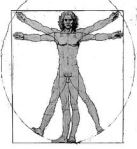
Some use Man as the baseline. They compare God to the standard set by what is thought to be good behavior in this world. They rationalize that if God is real, at least according to monotheistic dogma, He must be all-powerful, perfectly good, and the supreme example of love, kindness, and providential care. Because it is preached that God is a better Father than earthly fathers, Mark Twain took it upon himself to write:

The best minds will tell you that when a man has begotten a child he is morally bound to tenderly care for it…[yet], God’s treatment of his earthly children, every day and every night, is the exact opposite of that, yet those minds warmly justify those crimes…when he commits them.” (Tonie Doe Media 2007)

So then, according to Twain, God could not exist because if He did, He would act consistent with our understanding of what a good and loving earthly father would do.  In other words, if God cannot, in all His perfection, behave better toward His children than the most common man, His credentials are therefore revoked, and He must cease to exist.  However, this is so illogical.

Who are we to say that God, if He is perfect, and we are imperfect, ever treats His children poorly? Do the protesting cries of a toddler who has had poison taken from his grasp carry more weight than the decision of the earthly father to take it away? How, then, are we to automatically assume that the infantile tendencies of finite man are wiser than the infinitely Mature?

Using Man as a baseline for what is good and evil is pure arrogance.

Whose Line Is It?

In reality, the problem of evil is really a problem for the atheist. He, who denies the existence of a Creator and accepts only the realities of evil in the world, essentially has nothing about which to complain.  Everything should be just fine and dandy, but it’s not.  The atheist knows that evil things happen to both good and bad people.

He sees the hurt, feels the pain, and begs for justice. The reality of evil in the world causes men to cry out for justice; for things to be made right. This is a problem, though, because knowing that a crooked line is not straight hints at the fact that a Line-drawer exists.

The Followers’ Fault

Others take a different approach. They claim that God does not exist except in the evil intentions of his followers to control others through guilt. They claim that God is just a fabrication of priests to keep mankind from behaving “naturally.”

They say that nature is good, and if anything, God is evil for trying to get man to behave contrary to the very way he was created to behave. One guru said, “It seems that for those who worship God, the opposite to God is not that which is ‘evil,’ but that which is natural.” He said of animals, comparing them to men, “They don’t worship God, they don’t go to church, they don’t have any theology.  They don’t have any feeling of guilt, they are simply natural.” (Osho 2009)  In other words, if there is evil in the world, it is because our belief in God has inflicted it.

The Majority Response

But for the majority of the hurting world, pain is real, loss is real, and evil is manifested daily.  Many see the things that happen to innocent people, especially children, and wonder, “If there is a loving God, why doesn’t he do anything about this?

These people, many of which hold on to hope as long as they can, finally succumb to their doubts and conclude that the only way to explain away the pain is to admit that it is just part of life, part of the natural world, part of what makes us human; alone, in our quest to make life easier, free of pain, free from evil; alone, without God.

These are the ones, I believe, that lure more away from the faith than any Darwinist.  They are the ones who have seen evil face-to-face and cannot fathom a God who would allow it to continue.  And because their experiences are so painful and tragic, the devout are left speechless and without explanation. Ellie Wiesel is a good example.

Wiesel’s Observation

Wiesel was a teenager when he saw his family murdered in the Nazi death camps.  But it was only after witnessing one particular act of horror – the slow, hanging death of a young boy – that he turned away from his faith in God.

In the book Night, his Nobel prize-winning autobiography, Wiesel said he heard a man behind him ask, “Where is God now?” As he stood there, being forced to stare into a pitiful, wide-eyed, swollen face of a dying child, a voice within replied, “Where is He? Here He is – He is hanging here on the gallows…” (Wiesel 1982) Because there was no justification, even in the big scheme of things, Ellie Wiesel’s God died with the executed boy.

But as sad as it is, without God, who can say what happened to that boy was any worse than the slaughter of an animal?  Are we not all just animals – some more evolved than others?

The Real Problem

To me, the problem of evil is not a problem for the believer to explain, but one for the non-believer.  Aside from the theological arguments about the character of God, without God, to turn Hume’s question around, “whence then is evil?

Without God, evil is relative to one’s desires and personal pleasure.  Does it really even matter whether or not God could do anything about evil in the world when the whole question is moot if He didn’t exist?

With God, evil is defined as that which is against His law, that which stands opposed to His standards, and that which describes all who take pleasure in such rebellion. Without God, evil is just a matter of opinion.

That is the real “problem of evil.”


Works Cited

Lewis, C. S. “Atheism.” In The Quotable Lewis, by C. S. Lewis, 59. Wheaton: Tyndale House Publishers, Inc., 1989.

Osho. The God Conspiracy: the path from superstition to superconsciousness. New York: Osho Media International, 2009.

Stackhouse, John G. Can God Be Trusted. New York: Oxford University Press, 1998.

Tonie Doe Media. In The Atheist’s Bible, 129. New York: Harper Collins, 2007.

Wiesel, Ellie. Night. New York: Bantam Books, 1982.

Leave a comment

Filed under Apologetics, Culture Wars, Faith, General Observations, Life/Death, Struggles and Trials

The Day After Christmas Is Proof We Need to Be Redeemed

I know that the title was a little long, but don’t let it intimidate you. Yes, for some of you what you are about to read will be profound – it may even hurt your head.

Yet, despite how much you’ve endured this week, please take just a minute or two, read on, and consider the following thought:

The feelings we have after Christmas point to the fact that we have not been fully redeemed. Our bodies are still waiting for that final transformation.

[We] also groan within ourselves, eagerly waiting for adoption, the redemption of our bodies. – Romans 8:23b CSB

What I am saying, brothers and sisters, is this: Flesh and blood cannot inherit the kingdom of God, nor can corruption inherit incorruption. Listen, I am telling you a mystery: We will not all fall asleep, but we will all be changed, in a moment, in the twinkling of an eye, at the last trumpet. For the trumpet will sound, and the dead will be raised incorruptible, and we will be changed. For this corruptible body must be clothed with incorruptibility, and this mortal body must be clothed with immortality. – 1 Corinthians 15:50-53 CSB

What does this have to do with “after Christmas“?

Celebrating Christmas has completely worn me out. I’m tired of carols, smiles, joy, and jingle bells… even eggnog. I need a break.

So, just imagine how difficult it would be to survive heaven for more than a day or two?

Not only will we need new bodies that never grow old, get weak, or want to go to bed before sundown, but we will need to be set free from all the chains of this mortal flesh! In other words, everything that turns an elf into a Grinch around December 26th or 27th.

Last year I conducted a funeral service for the wife of a dear friend. I spoke of her death as a process we all must go through: a process of putting off this mortal, corruptible body and putting on an immortal one. I spoke of how we would either all have to die or be changed in the “twinkling of an eye,” but none of us are ready for heaven as is.

Our corruptible minds and bodies must be exchanged for that which is incorruptible, else we won’t be able to endure the celebration that is to come!

Without being changed, heaven would be full of worn-out billion-year-olds leaving the dirty dishes for the angels to deal with.

Heaven will be a celebration of the Redeemer by the redeemed.

If the corruptible got in, it wouldn’t be long before they felt like hell.

2 Comments

Filed under Apologetics, Christmas, clothing, salvation, the future, worship

The REAL Snow Man and Richard Dawkins


Here is just another example of insight into the human psyche I gained while driving a school bus. Enjoy!

The Setting

One morning, after picking up several young children, one little boy – a kindergartener –  began to sing one of his most favorite songs…”Let It Go.

Another little boy who was sitting next to him, a second-grader, began pleading with him to stop, after which he begged me to intervene. I couldn’t help it – I had to……let it go, let it go!

The Conversation

The younger boy (Boy 1) was singing the theme song from Frozen, to which the older boy (Boy 2) responded with his own lyrics: “Shuh-uht up! Shuh-uht up! I don’t want you to sing anymo-oh-ore!

An illustration of mine from "Life Lessons from the School Bus"

An illustration of mine from the book Life Lessons from the School Bus.

Me:  What’s wrong? Don’t you like Frozen?

Boy 2:  NO! It’s a stupid movie!

Me:  What, you don’t like singing snowmen? What about Frosty the Snowman?

Boy 2:  I like Frosty, but he was real! Somebody put a hat on him and he started moving.

Me:  So, you don’t like Olaf?

Boy 2:  I like him, OK, but he’s not real…not like Frosty.

Seriously, if I made this stuff up it wouldn’t be as funny.

Sorta Like…

You know, the above story is sort of like arguments adults have. One particular argument that comes to mind is the one about where life on earth came from (I know the analogy isn’t perfect, but I hope you get the point).

Man 1:  I love to sing about Creation! “Oh Lord my God, when I in awestruck wonder, consider all the worlds Thy hands have made!

Man 2:  Stop it! I don’t want to hear all that nonsense! Sing something else, or sing nothing at all.

Man 1:  But I want to sing! “Then sings my soul, my Savior, God, to Thee. ‘How great thou Art! How great Thou art!

Man 2:  STOP IT! I don’t want to hear it! God is NOT great! God is NOT great! He doesn’t even exist!

Man 1:  Yes, He does! And because He created me and gave me life, I want to give Him praise.

Man 2:  Oh, give me a break! I love life as much as anyone, if not more, but I’m not going to praise your God for it!

Man 1:  Oh, really? You believe that human life evolved from something that came from nothing? Do you really want to sing praises to nothingness?

Man 2:  Don’t be silly! Haven’t you ever heard of panspermia?

Man 1:  Uh, no. Not really.

Man 2:  You simpleton! You naive worshipper of a mythical fairy-god! You’re nothing but a slave to a worthless, iron-age book of man-made fiction. Life on earth didn’t evolve from nothing; it was planted here by intelligent life from beyond, from outer space.

Man 1:  Right! You mean God?

Man 2:  No! You idiot! Aliens!

Man 1:  Huh? But…

Man 2:  Shut up! I don’t want to hear any more of your foolishness! God is not real; aliens are!


If you think the above was hyperbole (an over-the-top exaggeration), you’ve evidently never watched the video of the famous atheist Dr. Richard Dawkins. 

Click on the link and try not to laugh.

(Video of Richard Dawkins defending the theory of panspermia: the theory that alien intelligent life, not a Creator God, placed life on this planet.)

Umm…OK…  Let it go! Let it go!

“Through faith we understand that the worlds were framed by the word of God, so that things which are seen were not made of things which do appear.” – Hebrews 11:3

3 Comments

Filed under Aliens, Apologetics, Humor

Are You a “Nerd”?

In an effort to get a better understanding of the the word, I did what any self-respecting scholar would do: I “googled” it. Well, actually, that’s not correct, I “binged” it.

Anyway, I found several different definitions for nerd. Some of them, quite frankly, seemed a little harsh.

  • (Noun) a foolish or contemptible person who lacks social skills or is boringly studious.
  • (Verb) engage in or discuss a technical field obsessively or with great attention to detail.
  • A person, especially a man, who is not attractive and is awkward or socially embarrassing.
  • A person who is extremely interested in one subject, especially computers, and knows a lot of facts about it.

So, to sum it up, a “nerd” is not a good thing until you need one . . . or until one becomes a billionaire and his looks and social skills no longer matter.

On the other hand, being called a “nerd” could be sort of a compliment.

Called Black by the Pot

There’s an old saying about an iron pot and an iron kettle. If you have seen them you know what they look like – they’re both jet black. Well, when a black pot looks at a black kettle and with smug indignation points out said kettle’s blackness, what you have is either hypocrisy or irony.

I R O N y …. see what I did there? 😉

So, when just the other day I was told by gamers and Discord server owners that I was a nerd, well … this kettle had to laugh at the pots.

I’m on Discord!

By the way – and this is important – I am taking part in a brand new mission field!

If you are a gamer, then you are familiar with Discord. Believe it or not, this is one of the greatest mission fields we have seen in our lifetimes. No joke.

If you would like to check out what I’m doing, along with a list of growing content on our server, FaithChatt, then click the link below and join in! Currently I am doing a Bible study through the book of Ephesians every Friday morning at 9 a.m. (Eastern).

discord.gg/faithchatt

Back to the NERD Stuff

Anyway, last Friday morning while teaching in Ephesians on Discord, I began talking about my love for watches. The purpose was illustrate how that when we are really into something, we talk about it. We talk about what we know.

Photo by Matilda Wormwood on Pexels.com

It wasn’t long after I started with the analogy that I heard muffled laughter . . . snickers (not the candy kind) . . . and the hint of a conversation going on in the chat room. That’s when these guys, the ones who know all about “bots” and “bumps” and “boosts,” said, “You’re a nerd.”

Riiiiiight.

That’s when I really got to thinking …. am I a “nerd” about Jesus? Are you?

You see, when it comes to so many things we get excited about, we are quick to tell people all about it. Just a tiny opportunity is all we need.

Are we that way about Jesus?

Can we go on and on about who He is? Can we boast about His stats? Are we so familiar with Him that we can talk for hours about all the quests we’ve been on and the battles we’ve won?

And for all the watch lovers out there like me, you get so excited about those man-made jeweled movements that tell time, but what about the One who created time?

Are we nerds about Jesus?

Why not?

4 Comments

Filed under Apologetics, Bible Study, Christianity, Jesus

If You Have Honest Questions, Why Not Ask?

2 Comments

Filed under Apologetics, Bible Study, Christianity, Faith

The Day After Christmas Is Proof We Need to Be Redeemed

I know that the title was a little long, but don’t let it intimidate you. Yes, for some of you what you are about to read will be profound – it may even hurt your head.

Yet, despite how much you’ve endured this week, please take just a minute or two, read on, and consider the following thought:

The feelings we have after Christmas point to the fact that we have not been fully redeemed. Our bodies are still waiting for that final transformation.

[We] also groan within ourselves, eagerly waiting for adoption, the redemption of our bodies. – Romans 8:23b CSB

What I am saying, brothers and sisters, is this: Flesh and blood cannot inherit the kingdom of God, nor can corruption inherit incorruption. Listen, I am telling you a mystery: We will not all fall asleep, but we will all be changed, in a moment, in the twinkling of an eye, at the last trumpet. For the trumpet will sound, and the dead will be raised incorruptible, and we will be changed. For this corruptible body must be clothed with incorruptibility, and this mortal body must be clothed with immortality. – 1 Corinthians 15:50-53 CSB

What does this have to do with “after Christmas“?

Celebrating Christmas has completely worn me out. I’m tired of carols, smiles, joy, and jingle bells… even eggnog. I need a break.

So, just imagine how difficult it would be to survive heaven for more than a day or two?

Not only will we need new bodies that never grow old, get weak, or want to go to bed before sundown, but we will need to be set free from all the chains of this mortal flesh! In other words, everything that turns an elf into a Grinch around December 26th or 27th.

Last week I conducted a funeral service for the wife of a dear friend. I spoke of her death as a process we all must go through: a process of putting off this mortal, corruptible body and putting on an immortal one. I spoke of how we would either all have to die or be changed in the “twinkling of an eye,” but none of us are ready for heaven as is.

Our corruptible minds and bodies must be exchanged for that which is incorruptible, else we won’t be able to endure the celebration that is to come.

Without being changed, heaven would be full of worn-out billion-year-olds leaving the dirty dishes for the angels to deal with.

Heaven will be a celebration of the Redeemer by the redeemed.

If the corruptible got in, it wouldn’t be long before they felt like hell.

5 Comments

Filed under Apologetics, Christmas, clothing, salvation, the future, worship