Husband, dad, pastor, artist, and musician. Time Magazine's Person of the Year in 2006 (no joke!). Loves coffee (big time), good movies, and sarcastic humor. Holds a Doctorate in Ministry. Most importantly, a servant of the Lord Jesus Christ. All glory belongs to Him! Matthew 5:16
Things are slowly getting back to normal and I’m painting again.
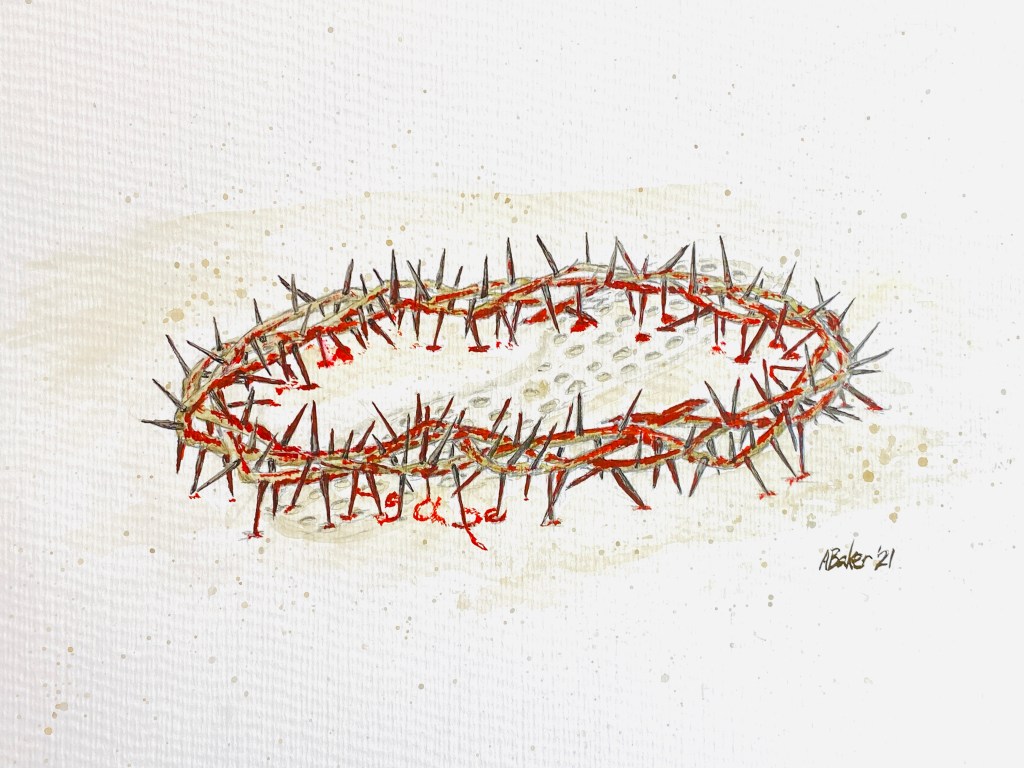
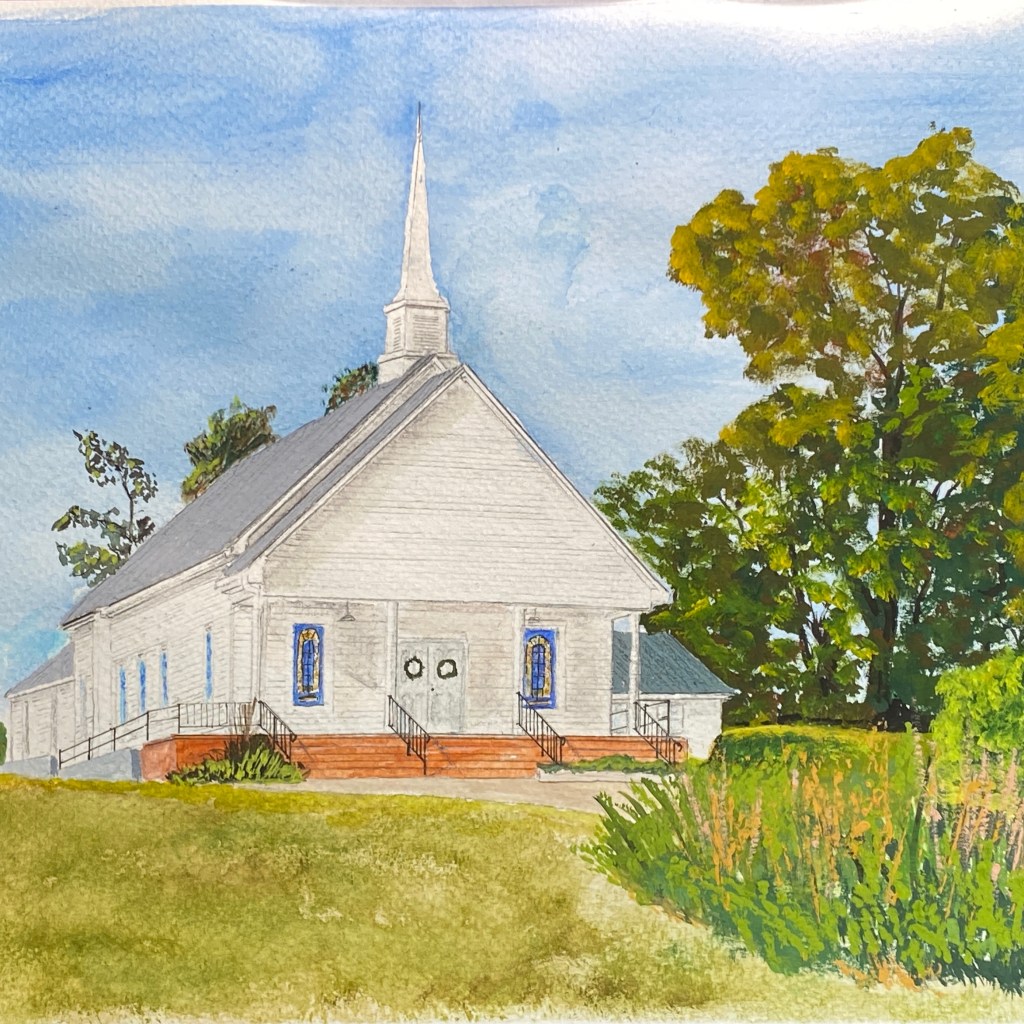
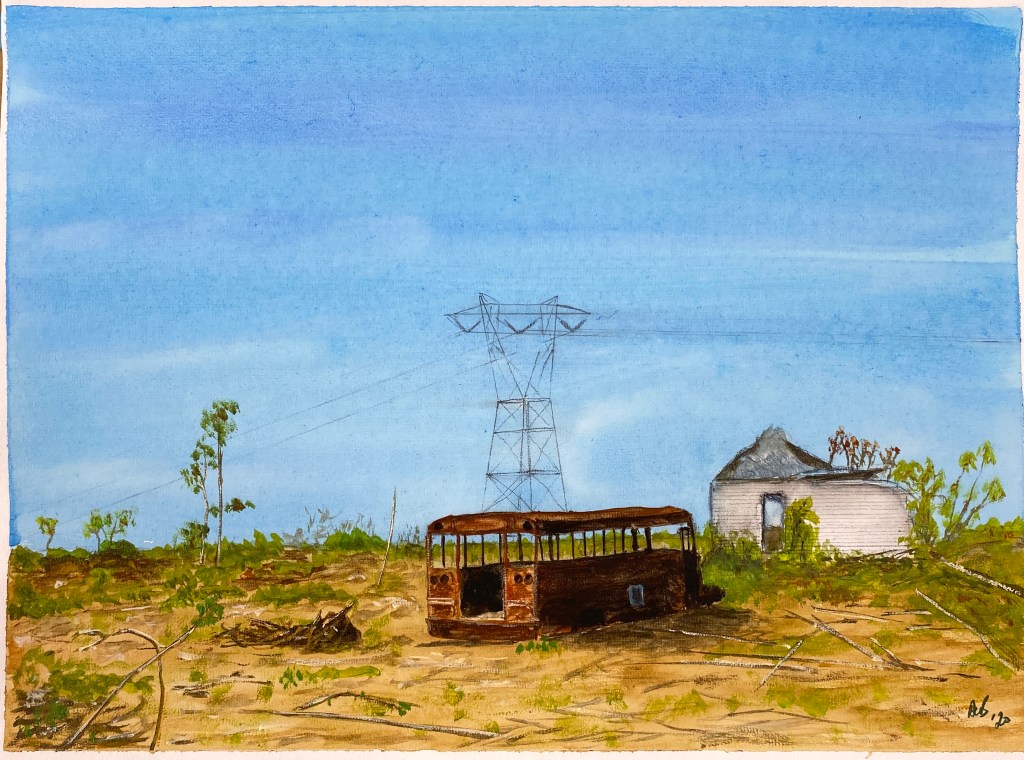
If you would like to beautify your dreary environment or cover a hole in your wall, please consider my drawings, paintings, and photographs 🙂
Original works will vary in price, but the cost of prints will be pretty much the same across the board. ALL prices will INCLUDE the cost of shipping within the United States.
The highest quality prints are those that look and feel like the original watercolor painting. They also cost more to make. They are the “gicleé reproduction” prints.
Photographic prints are still high quality, but easier to produce. They will cost considerably less.
9×12” gicleé reproduction prints are $30 (with free shipping in the U.S.
5×7” gicleé prints are $16.50 (free shipping)
9×12” photographic prints are $12 (free shipping)
5×7” photographic prints are $10 (includes shipping)
Below are a few examples. More are coming in the weeks ahead.
The events of this week led me to change what I was going to speak on Wednesday evening. I hope you will take the time to hear what God put on my heart.
As an added bonus, my sister plays the piano and sings an original piece to start things off.
Honestly, who would have thunk that by moving down here to Georgia I would play a part in American history? Well, after tomorrow my vote could determine the direction of this nation.
I mean, you know, just pastoring a church gives one the chance to impact lives for generations to come. But pastoring a church in Georgia right now, right on the cusp of one of the most important elections – EVER – makes me tremble.
But, like I’ve said before, “…for such a time as this.”
Don’t Tell Them
One of the more sensitive issues of ministry is that of politics. As you are surely aware, we pastors are not supposed to tell people how to vote. To do so could potentially result in a church losing its tax-exempt status.
Yet, as you have surely seen over the last few years, more and more pastors and religious leaders are making it clear where what boxes they want you to check. Without question – it’s not even an argument – African-American churches (which overwhelmingly support Democrat candidates) have long been known as being active politically, even to the point of specifically endorsing candidates from the pulpit. It’s even expected that the Democrat candidates make appearances in black churches.
Then, of course, there are the other churches that support more conservative candidates, most always Republican. In lots of cases, the candidates will go to those churches to speak, also. But the Republican church visits are nothing in comparison to the other party’s efforts.
And when it comes to what pastors are allowed to say; when it comes to how far a pastor should go in stating support for a particular candidate or party; when it comes to a pastor talking politics at all . . . the white churches and the Republicans barely hold a candle to rest. It’s not even a contest.
But that’s not how I’m going to roll this time.
Perdue and Loeffler
To be honest, if anyone in my congregation votes for Jon Ossoff or Raphael Warnock, I’d be terribly surprised. To the best of my knowledge, based on nothing more than objective observation, most of my congregation will vote Republican tomorrow. Yet, I still won’t get up behind the pulpit and say, “Go vote for so-and-so.”
But since this is my blog, I will say exactly what I think. It’s still my right and I’m free to exercise it.
If you live in Georgia, as I do, and you vote for either Jon Ossoff or Raphael Warnock, then the blood of America will be on your hands.
I will boldly beg of you to vote for either David Perdue or Kelly Loeffler.
The Agenda: Fundamental Change
Folks, if Ossoff and Warnock are elected and placed in the United States Senate, America will never be the same, and that’s their goal.
I don’t have to go through all their promises. All I have to do is to get you to understand that with a Democrat majority in the Senate, the House, and with a Democrat President, they will complete what Barak Obama said he wanted to do: “Fundamentally transform America.”
Stop and think about those three words for just a moment. What does one mean when he says he wants to “fundamentally change” or transform anything? If I were to stand before my congregation and exclaim, “This year we are going to fundamentally change Christianity”? Would it still be Christianity without its fundamentals?
What if you told your wife or husband, “Tonight’s date-night will fundamentally change our marriage”? What would that mean? Would that be a good thing? Maybe.
But when you propose, even promise to bring “fundamental change” to something, what you end up with is NOT what you started with. Consider what Wordhippo.com offered as synonyms to “fundamentally change.”
Then, from a legal standpoint, what is a proper definition? Consider the following from LawInsider.com:
“Fundamental Change means a dissolution or liquidation of the Company, a sale of substantially all of the assets of the Company, a merger or consolidation of the Company with or into any other corporation, regardless of whether the Company is the surviving corporation, or a statutory share exchange involving capital stock of the Company.”
Barak Obama promised it. Biden promised it. Ossoff and Warnock promise it (either directly or by association). And if they get elected to the Senate, then the Democrat party will have little to nothing stopping them from destroying this country.
Just keep in mind, these are the people of the party who now say “amen and a-woman.”
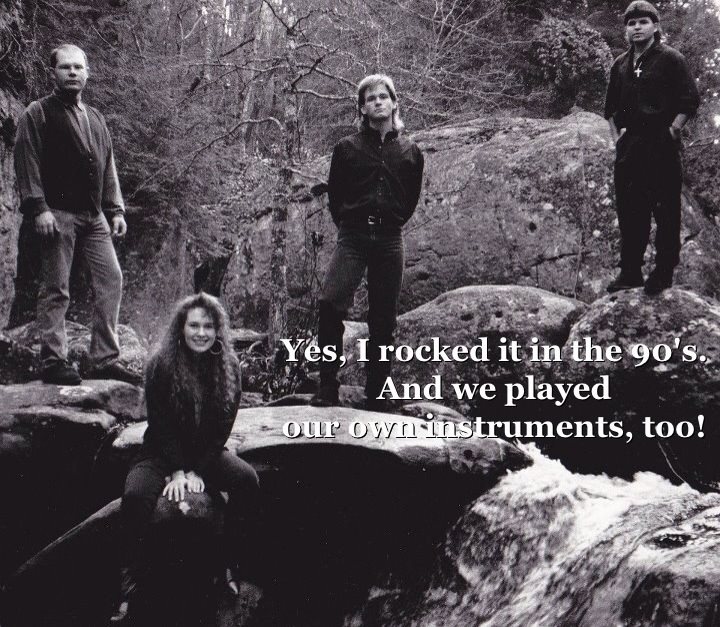
Mirror Image on the rocks in the creek behind my grandparent’s house on the mountain in Soddy Daisy, TN
It’s the dream of many young people to have a garage band. A few of them actually put a band together that can crank, get in gear, and drive out of the garage.
Back in the late ’80s and early ’90s my sister and I had a band called “Mirror Image.” We came on to the scene at a time when musical styles were in the process of changing and popular Christian music was still trying to find itself. Stylistically, we were either too early, or too late.
Nevertheless, our final incarnation, consisting of my sister, Rebecca (keyboard & vocals), Steve Castlen (drums), Jody Gould (guitar), and myself (bass), was a locally popular band that, at least, made a small impact on eternity. Our music was original (either written by Rebecca, me, or the group), fun, and intended to reach a younger generation with the gospel of Christ.
As a result, more than a few young people came to know Jesus as their Savior! I can remember one concert in Dayton, TN, where 7 or 8 youth accepted Christ!
A New Year
It’s now 2021 (Hallelujah!), Mirror Image is no more, and all of the band members have gone on to other things. Rebecca has been living in Germany for the last 10 years and is married to a German citizen, Carlos (I gladly call him my brother-in-law). Fortunately for all of us, she has been here with us in the States for the last couple of months visiting because of our mother’s health.
I’m not too sure what all the rest of the guys are doing these days. I do know they are all well, married, and still doing music in some way or another. It’s been a long-time dream of mine to get everybody back together (including our first band members, like our first lead-guitarist Alex Quarles) for a reunion concert. But, as you can imagine, it’s not been easy or practical.
However, since Rebecca has been back, before she returns to Germany in a week or so, we are going to partially fulfill my dream of a reunion concert! This coming Sunday morning we are going to perform at the church where I’m the pastor (Bethlehem Baptist, Warthen, GA)! Yes, it will be a reunion concert (if only with half the band)!
If you can’t be there, I hope you can watch it on Facebook Live.
An Old Song
One thing that has changed since the 1990s is our age – we aren’t the young and energetic 20-somethings we used to be. Therefore, not only our health but our tastes in music have changed a little and matured. Therefore, the songs that Rebecca and I will be playing will sound a little different than they did 25 years ago, especially since it will be performed on only the piano and bass, with an acoustic guitar thrown in on a few.
But to give you an idea of what we sounded like back in the day, I’ve included below a recording (made during a practice session in a Sunday School room). It’s a song I wrote called “New Age.”
“New Age” talks about how many religions and cults point toward a coming day when the world will enter a “new age” of peace, understanding, and oneness. The only problem is that those who dogmatically worship one God must be “taken out” of the world, one way or another.
The New Age, the Paradigm Shift, the new age of human evolution: none of it can come to pass as long as Christians are still in the world. Ironically, Christians believe the same thing.
We refer to it as “the Rapture.”
“New Age”
click here to listen
(Written by Anthony Baker; Performed by Mirror Image)
Glad it’s over, but at least I’m better prepared for the next catastrophe. Amen?
Thank you, everyone. All of you who have read any of my posts, all of you are appreciated, even Stephen in Canada 😉
Tonight, at 6pm our time, we are going to be having a New Year’s Eve service. It won’t be a long one, nor will it be a traditional-like service. All I plan to do is read a verse or two from the Bible and ask if anyone would like to share a word or two about the past year. Then, as Jesus and his disciples did right before He was taken to be tried, we will have our version of the Passover meal: the Lord’s Supper.
Jesus said of the Passover meal, and by extension the celebration of that last supper we observe today, “Do this in remembrance of me.” Paul said that as often as we partake in the communion meal, we “proclaim His death” until He returns. I want to offer it tonight for both those reasons.
Remember Jesus. If that is one thing we probably did not do enough of is think of Jesus during the last year. On the other hand, it is very possible that many people who never thought about God at all had their minds on things eternal. Did we as Christians take advantage of that opportunity? Did we think about life and death as much as those who were without hope?
I can’t help but think that the Church has been given a rare opportunity, at least a once-in-a-lifetime chance to offer Christ during a time of great uncertainty and questioning. For most of the past year we have seen something comparative to the Ethiopian reading a scroll he barely understood and we as Phillip being sent to answer his questions. How many of us have even considered the answers?
Proclaim His death until He comes. The second thing about communion is that by partaking in it we show that we have put our faith in the finished work of Christ on the cross. We believe that His blood was shed and His body was broken on our behalf, and that Jesus was buried only to rise again. And we believe, as He promised to rise again, He also promised to return. Therefore, we partake with a grateful and expectant heart as we proclaim to the watching world where our faith lies.
Before I go, I want to clue you in to the subject matter of my next substantive post. As some of you may have read, a man named Stephen has been leaving some pretty harsh and antagonistic comments here on the blog. I have honestly come close a time or two to blocking him. However, I’ve not been able to do that.
So, in a previous comment to Stephen, I said that I would like to take his accusations and false charges and answer them one-by-one. Unfortunately, a lot has happened over the last couple of months and I forgot to do so. However, I am in the process of compiling ALL Stephens comments going back to January of this year. From these comments I am going to pull specific issues and questions that I will attempt to address. Please pray that the Lord will use the material I post to open the eyes of blind and allow the hard-of-hearing to hear His voice.
It’s early on a Sunday morning, 15 minutes before 7 a.m., to be exact. I’m sitting here at the dining room table with my Bible and my laptop (graciously provided to me by our church), contemplating the Scripture I am going to be sharing a few hours from now.
What I am about to say is not for everyone, for not everyone has been given the responsibility to lead. Nevertheless, though not all of us will have the opportunity and calling to shepherd a congregation of believers, each and every one of us will at some point be responsible for communicating truth to those for whom we are one day going to give an account.
The verse from this morning’s text that has captured my attention is Titus 2:15.
“These things speak, and exhort, and rebuke with all authority. Let no man despise thee.”
That was the King James Version rendering. Now, let’s read the text as translated in another version.
You must teach these things and encourage the believers to do them. You have the authority to correct them when necessary, so don’t let anyone disregard what you say.
Titus 2:15 NLT
What I think we as pastors need to remember is that what we have to say needs to be taken seriously. If, however, we stand before our flocks as shepherds with no staff, not only are we “despised,” but so is the Word we are called to teach.
Those who know me the best know that I am a nice guy. Seriously, I hate confrontation so much that I will go to great lengths to avoid it. I want to be liked, even to a fault.
But when it comes to preaching and pastoring, we must take very seriously Paul’s admonition to Titus. As Paul left Titus in Crete to “set in order the things that are wanting,” so has God ordained us to set and keep things in order(1:5), speak those things which become sound doctrine (2:1), and remind believers of their obligations and responsibilities as representatives of God’s grace (3:1).
The problem we in leadership face is how to demand attention, to “let no one despise” us, without coming across as authoritarians or tyrants. Is a pastor to be a bully in the pulpit? Is he supposed to lord his authority over the sheep and force them to lie down in green pasture? Some think so.
However, it is Jesus who exemplified for us the model of servant leadership which draws attention. It is this same kind of example the apostles left us when we read of their boldness after Pentecost.
Our authority comes from the Word of God. Our boldness comes from the Holy Spirit. We are equally accountable as both heralds and subjects.
If we find ourselves timid, skiddish, reluctant, or intimidated behind the pulpit, we must ask ourselves some very point-blank questions. Who are we trying to please, God or man? Why are we called to be heralds? Just to be heard, or to proclaim the Message of the King?
Should we actually “speak the things that become sound doctrine,” then we are accountable to God for what we say, for we are to speak what He is saying. If we are tasked with heralding the Word, then God will hold us accountable for getting the message out to those who need to hear.
If we cower or hesitate in our duty, then we either doubt the authority of the Word, or we proclaim it in the power of our own strength. There is no excuse for the pastor, the shepherd, the man of God to stand behind the pulpit or on the neon-lit stage and waste time offering suggestions and scratching itching ears when we are plainly told, “These things speak…”
“Let no man despise thee” tells us there is a responsibility incumbent upon the preacher.
Therefore, unless you are going to mount the pulpit this morning with authority as one tasked with an urgent message from the King of the universe. . . unless you are going to “be strong in the Lord, and the power of His might” (Ephesian 6:10). . .
I know that the title was a little long, but don’t let it intimidate you. Yes, for some of you what you are about to read will be profound – it may even hurt your head.
Yet, despite how much you’ve endured this week, please take just a minute or two, read on, and consider the following thought:
The feelings we have after Christmas point to the fact that we have not been fully redeemed. Our bodies are still waiting for that final transformation.
[We] also groan within ourselves, eagerly waiting for adoption, the redemption of our bodies. – Romans 8:23b CSB
What I am saying, brothers and sisters, is this: Flesh and blood cannot inherit the kingdom of God, nor can corruption inherit incorruption. Listen, I am telling you a mystery: We will not all fall asleep, but we will all be changed, in a moment, in the twinkling of an eye, at the last trumpet. For the trumpet will sound, and the dead will be raised incorruptible, and we will be changed. For this corruptible body must be clothed with incorruptibility, and this mortal body must be clothed with immortality. – 1 Corinthians 15:50-53 CSB
What does this have to do with “after Christmas“?
Celebrating Christmas has completely worn me out. I’m tired of carols, smiles, joy, and jingle bells… even eggnog. I need a break.
So, just imagine how difficult it would be to survive heaven for more than a day or two?
Not only will we need new bodies that never grow old, get weak, or want to go to bed before sundown, but we will need to be set free from all the chains of this mortal flesh! In other words, everything that turns an elf into a Grinch around December 26th or 27th.
Last week I conducted a funeral service for the wife of a dear friend. I spoke of her death as a process we all must go through: a process of putting off this mortal, corruptible body and putting on an immortal one. I spoke of how we would either all have to die or be changed in the “twinkling of an eye,” but none of us are ready for heaven as is.
Our corruptible minds and bodies must be exchanged for that which is incorruptible, else we won’t be able to endure the celebration that is to come.
Without being changed, heaven would be full of worn-out billion-year-olds leaving the dirty dishes for the angels to deal with.
Heaven will be a celebration of the Redeemer by the redeemed.
If the corruptible got in, it wouldn’t be long before they felt like hell.
This month will see a lot of Christmas sermons preached, and if you actually go to church somewhere, you might actually get to hear some 😉
But if you aren’t planning on attending any church services this December, or if you just can’t get enough of sermons on the subject of Christmas, I would encourage you to listen to the one I’m attaching below.
Several years ago (2012) while pastoring at another church, I delivered a sermon entitled “Christmas Is the Gospel.” It was recorded on my iPhone that was sitting on the pulpit, so don’t expect too high a quality of production.
Why did the angels tell the shepherds what they are about to hear was “good tidings”? Pick up a Bible and turn to the book of Luke, chapter two, and follow along.