Tag Archives: Bible

It’s the Bible, Not a Telephone Game

Dear friends,

This afternoon I was skimming through posts on Facebook and came across a discussion on the reliability of the Bible. A lady named Shannon questioned the claim that the Bible we have today is the same scripture from thousands of years ago.

Shannon asked, Ever play the game telephone? Try doing that over a course of a couple of centuries and a few languages.” 

Well, I felt I should engage Shannon, so I offered her some resources I thought might be helpful. I want to share them with you guys, too.

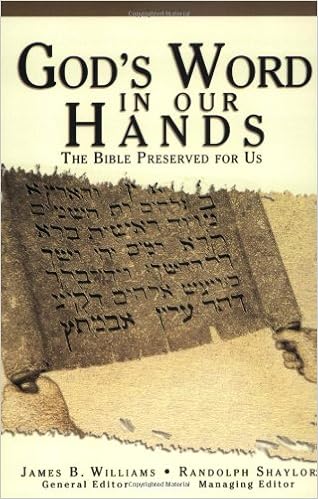
First, please try to find a copy of the book God’s Word In Our Hands: The Bible Preserved for Us. I have a copy in my library and let me tell you, it is an invaluable resource.

Click on the picture of the book for a link to Amazon.

Secondly, if you can take the time, watch this lecture by Dr. Sean McDowell (son of Josh McDowell) on the reliability of the Bible.

Yes, we may disagree on what some of it means, but it would be intellectually silly to write off the Bible as nothing more than the result of 2000-year’s worth of playing “telephone.”

Essentially, I am fully convinced that what we have today is the preserved Word of God, regardless of how long it’s been since the originals were penned. The textual evidence is overwhelming that what we have in our hands is reliable.

2 Comments

Filed under Apologetics

My Most Popular Post of All Time

Now that we are beginning a new year (2018) I thought I would skip the anual list of “Top Posts” and go straight to the top – the consistent #1 – the most viewed post in 2017 and every year since it was first published (2011):

“Was John R. Rice a Heretic?”

Here’s your chance to read the post that put me on the map…without all the drawn-out, hateful comments 😉


On the 400th anniversary of the 1611 King James Version of the Bible, I would like to pose a question to my brothers and sisters who refuse to recognize any other translation: was John R. Rice a heretic? If you do not know to whom I am referring, let me give you a little background information.

Dr. John R. Rice

Dr. Rice, who died in 1980, was one of the most well-known fundamentalist writers and evangelists of the 20th century. He wrote more than 200 books and booklets which were published in many languages and sold all over the world. He condemned the compromise, liberalism, and apostasy being taught at major denominational colleges and seminaries.  He fought for a return to holiness and the fundamentals of the Christian faith. But what I think he will always be remembered for is his founding of the weekly paper, Sword of the Lord.

For the record, I highly respect Dr. Rice. I have in my personal library several of his works published back in the 1960’s. He was a great writer and a great preacher; however, he was not flawless. He said some things back in the day that I have a hard time with. On the other hand, he had some things to say that would shock the average reader of Sword of the Lord and the typical legalist who believes the KJV is the one-and-only perfect, preserved text for the English-speaking world.  Unlike the Sword which continually decries any other translation as dangerous and confusing, Dr. Rice actually recommended the 1901 ASV. OK, would somebody get a glass of water for the fainting KJV-only person on the floor? Dr. John R. Rice, founder and editor of the Sword of the Lord newspaper, actually said that the…

“…American Standard Version, translated in 1901, is perhaps the most accurate of all versions… It takes advantage of the three great manuscripts – the Sinaiticus, the Vatican, and the Alexandrian manuscripts – which were not available when the King James Version was translated.”   from, Dr. Rice, Here Is My Question (Wheaton: Sword of the Lord, 1962), p. 59.

As an overall explanation of his beliefs on the topic of multiple translations, Dr. Rice also stated:

“[There] are many, many translations. The differences in the translations are so minor, so insignificant, that we can be sure not a single doctrine, not a single statement of fact, not a single command or exhortation, has been missed in our translations. And where the Word of God is not perfectly translated in one instance, it is corrected in another translation. And if the Word of God is not perfectly portrayed in one translation, it is portrayed, surely, in the winnowed sum of them all… Have copyists passed on to us any major errors so that in any particular matter we miss the Word of God? There is abundant evidence that they have not. Do the various translations differ materially on any doctrine, any fact of history, any Christian duty, on the plan of salvation, or the Person of Christ, or any comfort or instruction? No, they do not! God has preserved His Scriptures. – from, Our God-Breathed Book, the Bible (Murfreesboro, TN: Sword of the Lord Publishers, 1969), p. 355.

Now, according to many legalists, at least to those who refuse to read or use any other translation of the Bible than the King James 1611, Dr. Rice, who had probably been one of their heroes, is now a liberal. Poor guy! He did so much!

I believe that God inspired His Word (2 Timothy 3:16). I believe He gave it to us in the original autographs. I believe that He has preserved copies of those originals in the examples we have of Greek, Hebrew, and Aramaic manuscripts. What I do not believe is that the King James Version was the one-and-only, forever-settled-as-pure-and-inspired translation. It is ONLY a translation. To say that no other English translation is the Word of God is to say that the Geneva Bible, 51 years older than the KJV, was just a book.

The Kings James Version of the Bible changed the world. We should all be grateful for it. I still use it many times when preaching, and especially when memorizing verses. But even though the KJV was and is a blessing of God, His Word is preserved in the ORIGINAL TEXTS. Anything other than the original languages, including the King James Version, is a translation.

Our goal should be to use the best translations of the texts at our disposal when we are preaching and teaching, comparing them with each other and the originals, when possible, so that we can better understand how God’s Word should be understood in today’s language. After all, if you can’t understand it, doing you no good is the least of your worries – doing harm because of a faulty understanding based on a changed vocabulary is far worse. That is where the REAL heresy comes from.

But hey, it doesn’t matter which translation, if you are not reading it and studying it on your own, you might as well be reading Harry Potter and the Temple of Whatever. READ your Bible. STUDY your Bible. Let the Holy Spirit guide you as you read and study and then a wonderful thing will happen – you won’t be ashamed in the end (2 Timothy 2:15); you will find light for your path (Psalm 119:105); and you will know how not to sin against God (Psalm 119:11). Even the ASV, ESV, HCSB, or the NIV will tell you that….right, Dr. Rice?

2 Comments

Filed under baptist, legalism, translations

Make the Time

There is so much I’ve got to do, and very little time to do it. So many things on my critical to-do list that it’s probably impossible to get them all done.

In the midst of all this I have a small list of things I want to write about, including some more in-depth responses to readers.

But here’s the thing I must remember… I may not have much time to write, but I must make the time to read. My blog is not as important as His book.


7 Comments

Filed under Bible Study

Fear In the Christmas Story

Christmas Sermons

You may have never considered it, but it’s a challenge to come up with Christmas sermons year after year without being too repetitive. Sure, one could simply preach through Luke 2 every year, but a little creativity can go a long way.

This year I will preach a couple of sermons I have preached in other places, but they will be new to the folk here at South Soddy Baptist. The first Christmas sermon of the year will be based on the notes I’m going to share with you this morning.

To Fear, Or Not to Fear

Did you know there are actually some honest-to-goodness phobias related to Christmas? Here are just a few.

  • Selaphobia – the fear of flashing Christmas lights.
  • Ghabhphobia – the fear of presents or gifts.
  • Krikophobia – the fear of church services.
  • Cyssanophobia – the fear of kissing under the mistletoe.
  • Festivalisophobia – a phobia of the whole Christmas thing.

Therefore, it shouldn’t be any wonder that we can find several places in the Bible where angels told people to “fear not.” Folks back in Bethlehem around 2,000 years ago probably didn’t have a fear of kissing under the mistletoe, but they had every reason to be frightened by talking beings clothed in bright light telling them about babies in mangers, virgin births, and wedding plans.

The story of Christ’s birth is associated with great joy, but it was also full of great initial fear. At least one person in the story (King Herod) never got over his phobias and paranoia, but he never heard an angel tell him “fear not,” either.

Below are my notes/outline from which I will deliver this morning’s sermon at South Soddy Baptist Church. When you have a moment, read the Scriptures I reference. See for yourself what the Spirit has to say.

“Fear In the Christmas Story”

1. Luke 1:12  Zacharias (a faithful, praying priest) was “troubled” (G5015, tarasso), and “fear”(5401, phobos) fell upon him.

The angel said, “Fear (phobeo) not…thy prayer is heard.”

2. Luke 1:29  Mary (a confused young girl) was “troubled” (1298, diatarasso)

The angel said, “Fear not, Mary: for thou hast found favor with God.”

3. Matthew 1:20  The angel of the Lord appeared to Joseph (hurt and scared) in a dream and said, “fear (phobeo) not to take Mary thy wife…”

4. Luke 1:65  “Fear (phobos) came on all that dwelt around” Zacharias and Elisabeth when Zacharias’ “mouth was opened…his tongue was loosed, and he spake, and praised God.”

5. Luke 2:9  The shepherds were “sore afraid” (phobeo phobos megas) …see also Daniel 10:7-8 and Revelation 1:17.

The angel said, “Fear (phobeo) not: for, behold, I bring you good tidings of great joy, which shall be to all people.”

6. Matthew 2:3  Herod, because the wise men asked, “Where is he that is born King of the Jews,” was “troubled” (taraso), and all Jerusalem with him.

7. What should we take away from this today?

  1. True holiness will expose humanity’s sinfulness.
  2. Godly fear will be answered with peace, result in obedience, and respond with praise.
  3. The fear of Christmas will manifest itself in hate, a lack of peace and joy, and no hope.
  4. If you trust in Jesus, He promises the peace of Christmas year-round. John 14:27Peace I leave with you, my peace I give unto you: not as the world giveth, give I unto you. Let not your heart be troubled, neither let it be afraid.

Boston Psychotherapist, Dr. Karen Ruskin (an agnostic) said: “[Some atheists are] not unlike the bully who pushes other people down in order to make himself feel better. There are atheists who have a very uncomfortable belief about [their non-belief] they feel the need to push other people down. There is an emotional confusion among some atheists that drives them to promote their product on others [to make them feel better about themselves]. – From an interview on Bill O’Reilly, 12/2/14


5 Comments

Filed under Bible Study, Christianity, Christmas, Church, Preaching

I’ve Been Tozered

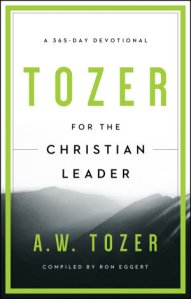
A couple of weeks ago I started reading a new devotional every morning. It is a compilation of writings from A.W. Tozer, and it is meant for the Christian leader.

To be honest, I have been convicted by some of the things that I have read.  Today’s entry alone gave me reason to pause and consider my own carnality.  In the devotion entitled Faith Dares to Fail, Tozer says:

The man who is elated by success and cast down by failure is still a carnal man. At best his fruit will have a worm in it.” Believe me, there are times when I get down.

But it was yesterday’s devontion that stood out the most out of all the ones I have read recently. In Greatness Has Its Price, Tozer uses painful analogy to point out one reason why most Christians (and churches) are pitifully inadequate and effective, the power of the Holy Spirit aside:

The amount of loafing practiced by the average Christian in spiritual things would ruin a concert pianist if he allowed himself to do the same thing in the field of music. The idle puttering around that we see in church circles would end the career of a big-league pitcher in one week. No scientist could solve his exacting problem if he took as little interest in it as the rank and file of Christians take in the art of being holy. The nation whose soldiers were as soft and undisciplined as the soldiers of the churches would be conquered by the first enemy that attacked it. Triumphs are not won by men and easy chairs. Success is costly.”

Yet, even though we are told to “be ye holy, even as I am holy,” we treat our faith like a weekend leisure activity, never caring much about the eternal outcome, only the present pleasure of half-hearted activity and even less commitment. Need proof?

  •  How many verses of scripture have you memorized “that [you] might not sin against God”?
  •  Is your commitment level to a local sports facility more than your commitment level to a local assembly of believers?
  •  Do you brag more about your child’s batting average than his boldness to tell others about Jesus?
  •  When’s the last time you ever voluntarily did any Bible study outside of what was spoonfed to you in church?

Is there any wonder the church, along with most of its members, is weak?  We’ve forgotten what it means to “be sober and vigilant.” We’ve become lazy and insubordinate soldiers in the army of our God,  yet spend millions in research to determine why we’ve lost ground to the Enemy.  We’ve even traded our powerful pulpits for motivational ministries that adjust our “easy chairs.”

Maybe it’s time we take our faith seriously – because the One to whom we will answer to does.

1 Comment

Filed under Bible Study, Christian Maturity, Christianity, Faith

Just Be Thankful You’re Alive

It is a little after 1 PM in the afternoon, and I’m sitting in our van reading my Bible. Not long from now I will go back to work and drive the school bus, completing my afternoon routes. 

As I was reading I came across a verse in the book of Lamentations, and I thought I would share it with you. 

Lamentations 3:39 (CSB) Why should any living person complain, any man, because of the punishment for his sins?

Here the idea is that if you have been punished for your sins by a Holy God, and are still alive, you have nothing to complain about! Seriously, too often we gripe and moan about the circumstances which we must endure, and yet those circumstances are so often the result of our own sinful decisions. Is it not a wonderful thing that we are so loved by our heavenly Father? He does not pour out on us the punishment we deserve, because he is rich in mercy. We are alive! We should be grateful!

Let us search and try our ways, and turn again to the LORD. Let us lift up our heart with our hands unto God in the heavens. – Lamentations 3:41-42

There are so many things in this world we could complain about. So often those who complain the most are the ones who have the most. But if there’s anything worth rejoicing about, it is the fact that we serve a God who is rich in mercy. We don’t deserve anything good, no matter how small or insignificant; we deserve judgement. 

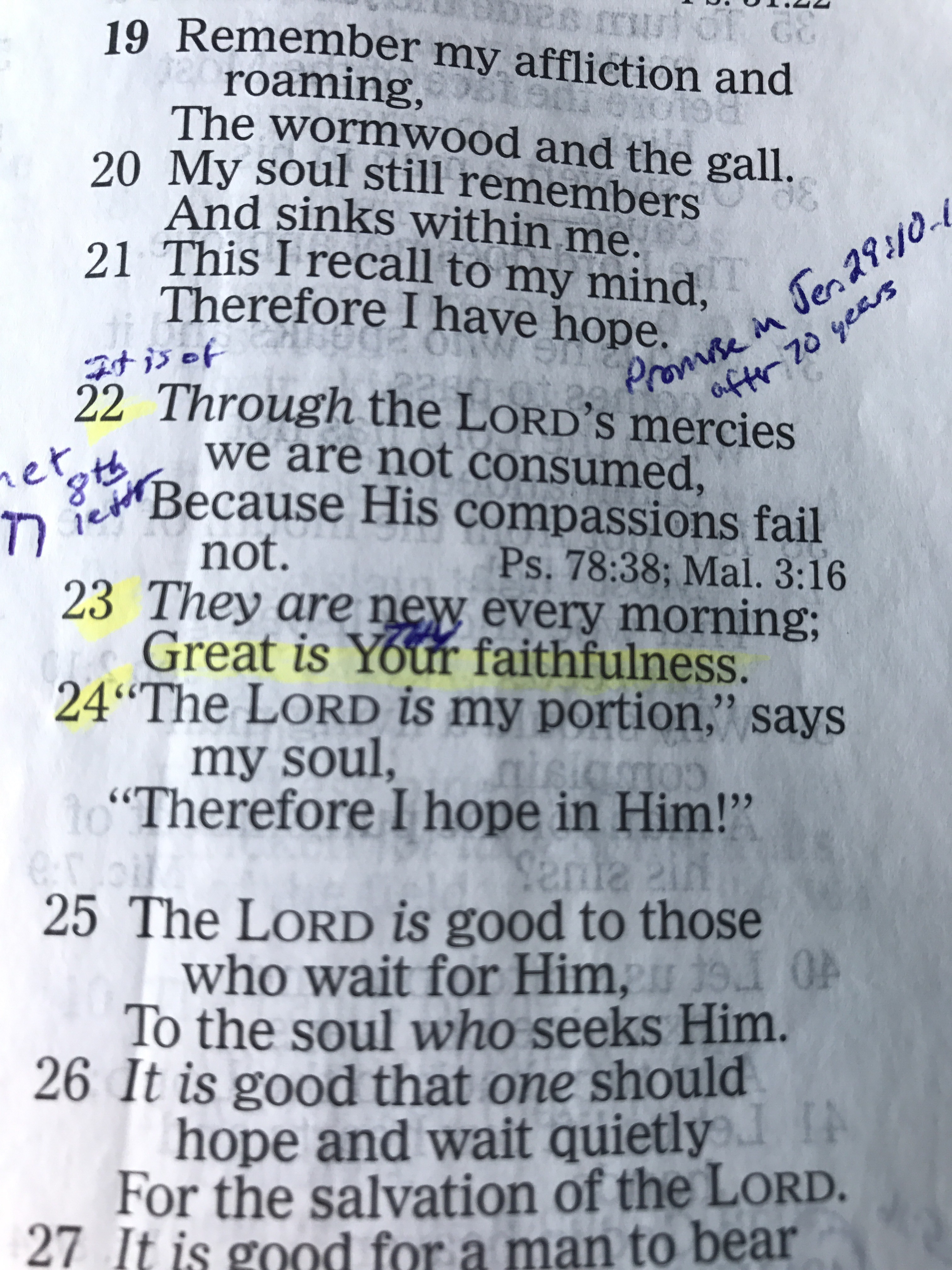
However, if I just turn back one page in my Bible I can read verse 22, where it says, “Through the LORD’S mercies we are not consumed, because his compassions fail not.” And, thankfully, they are new every morning! 

If you are reading this, then you are alive! Why not take a moment and praise Him?

10 Comments

Filed under Bible Study, God, grace, Uncategorized

A “Perfect” Role Model?

Sermon Prep

Not long ago I was doing some research for a sermon on Jonah. In the process I came across a Muslim website that made an interesting observation (and I will paraphrase):

“The Bible proves it is not true because God would not allow the prophets’ reputations to be smeared.”

The Muslim website went on to say (paraphrasing, again):

“What kind of role model would a prophet be if we read of him making mistakes?”

What kind of role model? That’s a good question! Was the Muslim author trying to say that role models had to be perfect in order to be real? Here’s a shocker – in one way or another, everybody is a role model.

If the defining characteristic of a role model is “perfection,” that would rule out King David, Solomon, Moses, Joshua, Abraham, Isaac, Jacob, Peter, Paul, Sarah, Mary (all of them), the woman who washed Jesus’ feet with her tears, and many, many others…

…especially Jonah.

Jonah

Now, Jonah wasn’t exactly the type of person after which I would want to pattern my life, but he was a prophet of God. He had some serious character flaws, though. He was angry, disobedient, and was a racist who constantly talked suicide. He even spouted off to the Lord for being too forgiving!

No, Jonah’s not the type of person I would want to emulate. But hold the whale puke! I am more like him than I thought!

  • I have run from God.
  • I have harbored racist feelings in the past, I’m ashamed to admit.
  • I have been angry and disobedient.
  • I have wondered if life was worth living.
  • I have even wanted to see whole cities destroyed, innocent people and all, after September 11, 2001.

I have been more like Jonah more than I care to admit.

The Encouraging Part

The fact is that the Bible is not only full of role models, but models of the people we already are: flawed, broken, and human. But here’s the encouraging part: even when we are not perfect, God can still use us – and change us.

  • Jonah ran from God, but God pursued.
  • Jonah disobeyed God, but it didn’t derail God’s plan.
  • Jonah got angry with God, but God responded to him with the understanding kindness of a wise Father.
  • Jonah even wanted to die, but God never belittled him. He only focused Jonah’s attention on the bigger picture: 120,000 souls, not to mention animals, whose lives were spared (Jonah 4).

I thank God that the Bible doesn’t white-wash humanity. There are so many examples of how people, just like me, can find hope, even when we’re not perfect.

The Perfect One

It is not hard to come to the conclusion that there were some really dysfunctional people in the Bible. But you know what? That’s what adds to the authenticity of Scripture. There are no “perfect” role models in the Bible, except for one – Jesus.

“For to this you have been called, because Christ also suffered for you, leaving you an example, so that you might follow in his steps. He committed no sin, neither was deceit found in his mouth.” – 1 Peter 2:21-22 ESV

“For we do not have a high priest who is unable to empathize with our weaknesses, but we have one who has been tempted in every way, just as we are–yet he did not sin. Let us then approach God’s throne of grace with confidence, so that we may receive mercy and find grace to help us in our time of need.” – Hebrews 4:15-16 NIV

I want to be more like HIM!

3 Comments

Filed under Christian Living, General Observations, God, Life Lessons, Preaching, Struggles and Trials

Humility ~ Part 3

Guest Post by: Donald N. Norris

In my last post, we looked at the concept of humility from the pages of the Tanakh.  In this post, we turn to the Brit Hadashah to help us understand the characteristic of being humble.

Humility Defined

Humility is a personal quality in which an individual shows dependence on God and respect for other persons.  Various Bible translations use humble, meekness, gentleness, tender, mild, afflicted and considerate to describe the characteristic of humility.

Humility in the Brit Hadashah [1]

Yeshua life provides the best example of what it means to have humility.  “Take My yoke upon you and learn from Me, for I am gentle and humble in heart, and you will find rest for your souls.” (Matthew 11:29; see also 1 Corinthians 4:21 and Philippians 2:1-11).

Yeshua preached and taught often about the need for humility.  “Whoever exalts himself shall be humbled; and whoever humbles himself shall be exalted.” (Matthew 23:12 and Luke 14:11; 18:14)  “Sitting down, He called the twelve and said to them, ‘If anyone wants to be first, he shall be last of all and servant of all.’” (Mark 9:35)

Yeshua urged those who desired to live by Kingdom standards to practice humility.  “At that time the disciples came to Jesus and said, ‘Who then is greatest in the kingdom of heaven?’” (Matthew 18:1ff)

A person with humility does not look down on others.  Humility in the Brit Hadashah is closely connected with the quality of “meekness.”  “Blessed are the meek, for they shall inherit the earth.”  (Matthew 5:5 ESV)

While God resists those who are proud, He provides grace for the humble.  “But He gives a greater grace. Therefore it says, ‘God is opposed to the proud, but gives grace to the humble.’”  (James 4:6)

Primary in the Brit Hadashah is the conviction that one who has humility will not be overly concerned about his or her prestige.  Whoever then humbles himself as this child, he is the greatest in the kingdom of heaven.” (Matthew 18:4)   “Be of the same mind toward one another; do not be haughty in mind, but associate with the lowly. Do not be wise in your own estimation.” (Romans 12:16)  “Or did I commit a sin in humbling myself so that you might be exalted, because I preached the gospel of God to you without charge?” (2 Corinthians 11:7)

Sha’ul believed that quality relationships with other people, especially those who had erred spiritually, hinged on the presence of gentleness, meekness or humility (see Acts 20:19; 1 Corinthians 4:21; Galatians 6:1; 2 Timothy 2:25).

Both the Tanakh and the Brit Hadashah affirm that God will exalt those who are humble and bring low those who are proud (see Luke 1:52; James 4:10; 1 Peter 5:6).

The Greek world abhorred the quality of meekness or humility, but the Christian community believed these qualities were worthy (see 2 Corinthians 10:18; Colossians 3:12; Ephesians 4:2).

A humble man is often looked upon as a coward, a cringing, despicable, slavish type of person.  Many men fear humility.  They feel humility is a sign of weakness and will make them the object of contempt and abuse; causing them to be shunned and overlooked.  This is tragic:

  • A humble spirit is necessary for salvation. “Truly I say to you, unless you are converted and become like children, you will not enter the kingdom of heaven. Whoever then humbles himself as this child, he is the greatest in the kingdom of heaven.”  (Matthew 18:3-4)
  • God’s idea of humility is not weakness and cowardice.

God makes people strong.  God infuses a new spirit within a person that causes them to conquer all throughout life.  He does not want the person walking around in pride.  He wants the person to do what the definition says: to offer himself in a spirit of submissiveness and lowliness; not to act high-minded, proud, haughty, arrogant, or assertive.

Humility has the strength to control and discipline; and it does so at the right time.

  1. The humble person has a humble state of mind.
  1. The humble person has a strong state of mind.  It is not a weak mind that ignores and neglects evil and wrongdoing, abuse and suffering.
  • If someone is suffering, humility steps in to do what it can to help.
  • If evil is being done, humility does what it can to stop and correct it.
  • If evil is running rampant and indulging itself, humility actually strikes out in anger.
  1. The humble person has a strong self-control.  The humble person controls his spirit and mind.  He controls the lusts of his flesh.  He does not give way to ill-temper, retaliation, passion, indulgence, or license. (see James 1:21)

In summary, the humble man walks in a but strong state of mind; denies himself, giving utmost consideration to others.  He shows a control and righteous anger against injustice and evil.  A humble man forgives and lives for others because of what Yeshua has done for him.

In my next post, we will explore a concept related to the characteristic of Humility:  Submission and Surrender?


[1] Unless otherwise noted, all scripture references in this series will be from the New American Standard Bible (NASB ~ 1995 Update)

2 Comments

Filed under Bible Study, Guest Posts

Jesus Paid It All, and the Payment Was Permanent (Part 4)

Guest post by Wally Fry

jesus saves

Not only does The Bible teach that grace and security are not a permit to sin, but Christians should keep in mind that we all face a judgment one day.  Understand clearly that a truly saved person will never face judgment for their sins; the issue of Heaven and Hell is decided only in this life. Believers will, however, be judged at some point in time for how they lived their lives for Jesus Christ while they were alive. The ultimate goal of every believer at the Judgment should be to hear the same words the  good steward heard in the Parable of the Talents which Jesus told, “Well done, good and faithful servant.”

Let’s take a look at this judgement believers face. We learn in Romans 14:10-12 as Paul wrote to the Roman believers, that we will all stand at the Judgment Seat of Christ and account for how we lived our lives for him. Since we aren’t going to be judged for our sins what then is the purpose of this judgment? The judgment believers face is to determine our rewards we will receive for the things we have done for Jesus while living. One of the best descriptions of what will happen can be found in 1 Corinthians 3:10-17

What we receive are crowns for various services we have rendered on behalf of Jesus Christ during our lives. Descriptions of these can be found in several places in Scripture: 2 Timothy 2:5, 2 Timothy 4:8, James 1:12, 1 Peter 5:4, and Revelation 2:10.

You can also read a full post on rewards for believers here

3 Comments

Filed under Christianity, Guest Posts, salvation

Walking or Riding?

A Familiar Story

If you are familiar with the Bible, you probably remember the story of Jesus walking on the water. And if you remember that, you may also recall that the apostle Peter was the one who walked on the water with Jesus – until he began to look around.

But if you don’t remember the story, here it is as found in the NIV version of Matthew 14:25-33.

During the fourth watch of the night Jesus went out to them, walking on the lake. When the disciples saw him walking on the lake, they were terrified.

“It’s a ghost,” they said, and cried out in fear. But Jesus immediately said to them: “Take courage! It is I. Don’t be afraid.”

“Lord, if it’s you,” Peter replied, “tell me to come to you on the water.” “Come,” he said. Then Peter got down out of the boat, walked on the water and came toward Jesus.

But when he saw the wind, he was afraid and, beginning to sink, cried out, “Lord, save me!” Immediately Jesus reached out his hand and caught him. “You of little faith,” he said, “why did you doubt?”

And when they climbed into the boat, the wind died down. Then those who were in the boat worshiped him, saying, “Truly you are the Son of God.”

Familiar Pictures
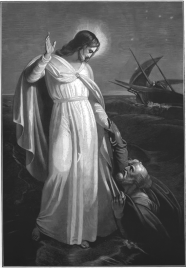
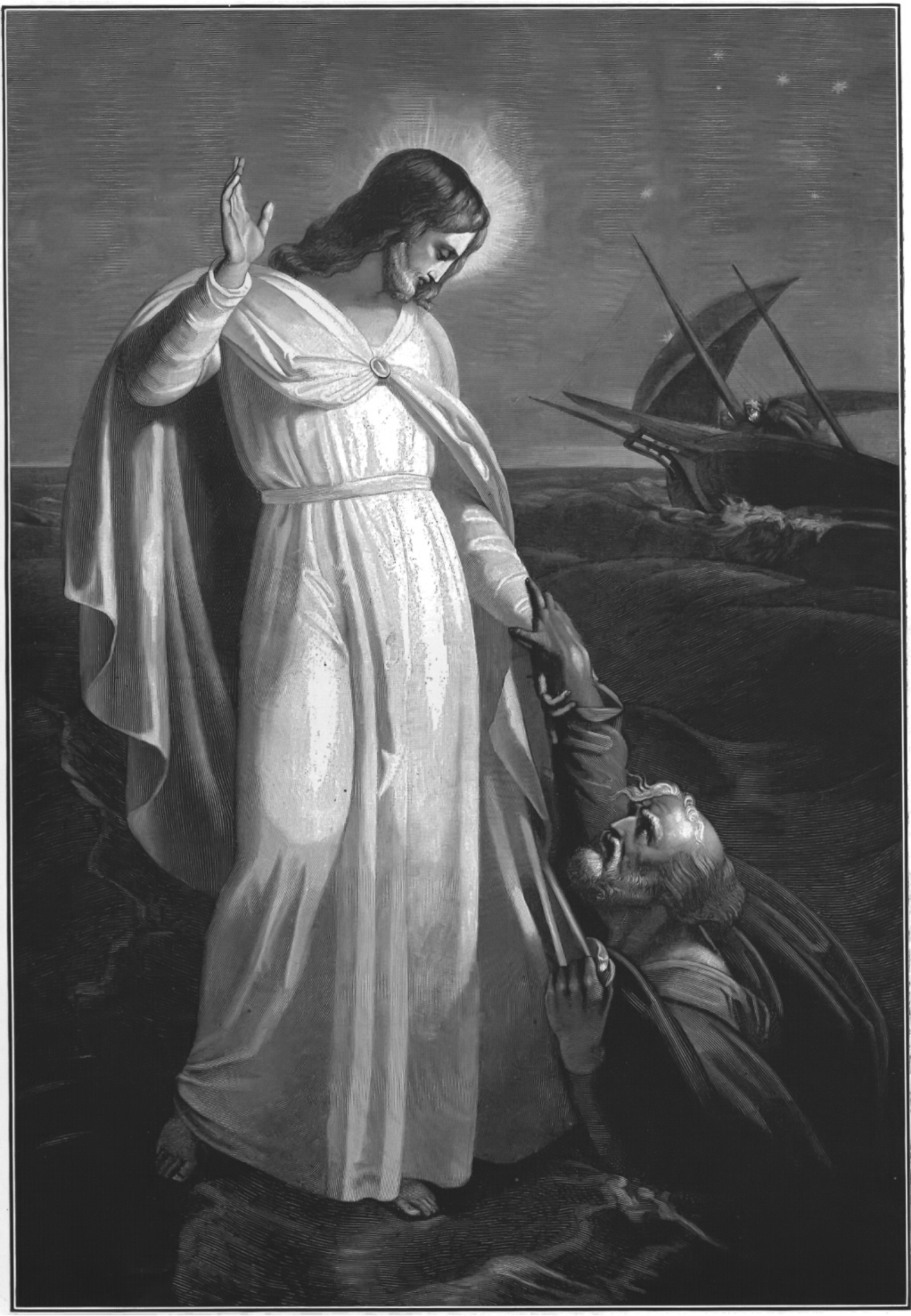
Now that you are familiar with the story, have you ever seen paintings or illustrations depicting this passage of Scripture? Of all the ones I have ever seen, Jesus is usually portrayed as a calm, sad-looking, and often effeminate water-stroller. Peter is always some scruffy-looking, heavy-as-stone fraidy-cat.

Then what about those waves? In all the depictions of this story, how high are the waves? Usually they are no more than just a few inches high around the Lord and his bobbing disciple, Peter.

Well, I am here to challenge the common perception based on these fallacious (that means stupidly wrong) paintings.

The Waves

I am not a seafaring man like my friend David Welford, but I would bet even he would say that 6-8 inch waves would have been NO problem for some experienced fishermen. What ever frightened Peter, once he looked around, had to have been more than a ripple on the surface.

Consider how the Bible described what was happening to the boat in Matthew 14:24: “But the ship was now in the midst of the sea, tossed with waves: for the wind was contrary.” Do kiddie pool waves toss a boat? No, but real waves do.

In stead of tossed, other translations use words like buffeted, beaten, and battered. The New Living Translation says that “a strong wind had risen, and they were fighting heavy waves.” It would seem to me that the disciples were facing a life-or-death struggle, not inconvenient weather.

The Wacky Request

People often belittle Peter for his “lack of faith.” They think less of him because he took his eyes off of Jesus and began to sink. But who on this earth that is not currently on anti-psychotic medication would actually ask a UWG (Unidentified Walking Ghost), “If it is you, compel me to do something totally irrational and dangerous, OK?” What kind of crazy question was that?

I believe there is more to this story than we have been told. Why didn’t Peter just ask Jesus to come a little closer? Why not just ask Him to get in the boat and take a load off? What would have caused Peter to think of leaving the boat?

Maybe, just maybe, what Jesus was doing looked like fun.

Wave Riding

The next time you look out over a stormy sea capable of sinking a boat, try to find the smooth spots. The paintings that show the Savior walking delicately over glassy H2o in the middle of a gale are unrealistic.

My guess is that Jesus was doing more than simply walking. He was having fun! He was probably surfing without a board. It is possible that He was going up and down…up and down…up and down…smiling the whole time. That’s when Peter said, “If it is you, Lord, tell me to come out there with you…that looks like fun!”

Seriously, just stop and think about it. Here was a storm that was beating up a boat and wearing out the crew; waves that were anything but small; a boat full of panicking people; and a Man walking on water. Peter must have concluded that if there was going to be any place to be, it was with Jesus, riding the waves.

With Jesus

We can’t help the fact that storms come. But if there is any lesson to be learned from this story it is that the worst possible place to be can be the safest and most peaceful, as long as our eyes are on Jesus and we are walking with Him.

Does it make sense? No. Is it irrational? Maybe. But as long as we have faith in Jesus, we can ride atop the tallest tsunami, admiring the view.

9 Comments

Filed under Faith, Struggles and Trials, Uncategorized, worship