Category Archives: Theology

A Response to Social Media Comments Addressing the Michigan Mormon Church Shooting

Good grief, people. Mormons and the rest of orthodox (technical, not denominational term) are at complete odds on core Theology, Christology, and Soteriology. If you don’t know what those words mean, please don’t act like an authority on the subject. You only expose your lack of knowledge and affirm your ecumenical liberality.

That being said, Mormons are unquestionably conservative and hold to a religion that holds one accountable for their immoral actions. And whether or not they ARE Christian, they CLAIM to be, so that places a target on them. Because of this, all of us are in the same peanut gallery, and more and more shooters are coming to the carnival to play.

The recent shooting at the Mormon church is a tragedy because every human being has a soul, and each one is created in the image of God and is intrinsically infinitely valuable. You just don’t kill people because you hate them. Period.

But there is a growing worldwide spiritual conflict between those who believe hate justifies violence and those of any faith that preaches meekness in any form. The Christian world is NOT WEAK! We are meek. There is a difference. Should we rise up as militants do from other groups and defend ourselves, the cowardly jihadists of the world would either run in terror or die for their demonic causes as the untapped might of our assets were poured out upon their heads.

Remember, Jesus COULD have summoned 10,000 angels to deliver him from the Roman cross to which he was nailed. But he didn’t. When they came to Jesus in the garden to seize him, he didn’t have to allow it. For that matter, in just one humorous nod to the omnipotent power meekly restrained before them, all the soldiers fell backwards when Jesus answered, “I am.” I sometimes wonder if our Lord fought a slight grin when that happened. Those who were wise would have realized He wasn’t being arrested, but going willingly.

At the root of all evil stands the liar himself—Lucifer, Satan, the Devil. And whatever bears even a glimmer of Christ—be it His chosen nation Israel, whose unfaithfulness only magnifies God’s faithfulness, or His blood-bought church—Satan rages against it with a hatred as old as time and as fierce as hell itself. If Mormons want to be included as objects of Satan’s hate, that’s up to them.

Those who shoot children or praying adults in schools or churches, whether Christian, Mormon, or Muslim, are tools of Satan. They can clothe themselves in whatever cloak they prefer—Marine uniform, anarchist black, or Muslim hijab—the impetus for their actions is the Enemy of God. They are all the same. Our enemy is the same.

However, the fatal flaw of our enemies’ strategy is that fear and bloodshed will secure victory. They are convinced violence will void valor, deceit will destroy decency, and terror will trounce the timid. But they, just like those who supposed their chains could bind Omnipotence, are truly impotent. Their end will come. Their progeny will cease.

“Blessed are the meek, for THEY shall inherit the earth,” said Jesus. He also cried from the cross, “Father forgive them, for they know not what they do.” The simple truth is that the proof of who is winning the war can be seen every time the victim says, “I forgive.”

For we wrestle not against flesh and blood, but against principalities, against powers, against the rulers of the darkness of this world, against spiritual wickedness in high places. —Ephesians 6:12

Leave a comment

Filed under current events, Theology, World View

Steve Harvey Isn’t Mr. Wholesome

Are you a fan of the gameshow Family Feud? Sure, there may be some haters out there, but most people enjoy watching it. And since YouTube has been around, what’s more fun that watching funny clips from the show?

Well, recently my wife and I had the opportunity to attend the taping of two shows in Tyler Perry’s studios in Atlanta, GA. It was fun, I must admit – lots of fun. I’d even encourage you to attend a taping just once for no other reason than the experience.

But once the recording of the shows began, it became very clear how much editing must take place before an episode can be aired on syndicated television. Without a bunch of editing, the “family” version of Family Feud would have to receive an adult/parental-guidance-suggested rating.

Now, most people would not be shocked to hear that Steve Harvey, the host of the show, has the tendency to use adult language. However, even though blooper reels have hinted at language used off camera, the reality is that Mr. Harvey is a potty mouth.

For instance, you may have seen how that everyone always says, “Good answer!” whenever a family member gives any kind of answer to a question. They do this because they are supposed to. They do this even when they know the answer was not a good one. But in one case the answer was so bad, even Steve Harvey had to comment to the audience.

Mr. Harvey walked away from the family and toward the edge of the stage, faced the audience, then said, “I wish you could have seen the looks on your faces…it was like, ‘What the h***?'” He then agreed with the audience that the answer was a horrible one, but then stated that “there is no f****** way that sh** will be on the board!”

That was pretty much the pattern. Whenever things got slow, or whenever something crazy was said, Harvey would walk past a line on the stage and engage the audience, often with vulgar language. It started to feel uncomfortable.

Of course, it wasn’t only Steve Harvey; the family members on stage had their moments, too. Some answers and some things talked about will NEVER be put on family television.

However, it was not just the language and the inuendo so prevalent that evening that caused me the greatest concern. To be honest, I kinda expected it. No, what was most disturbing was the final few moments of the evening when Steve Harvey spoke to the audience.

Harvey has a huge, huge following. Many people watch and listen to him and are influenced by his advice (which isn’t all bad). And if there is one thing about him that I admire, it’s his boldness to talk about his faith in God. I mean, that night was not the time to be an atheist, not unless you wanted to be called out as an idiot by the TV host.

However, even though Mr. Harvey was quick to point out things like he was nothing without God; his efforts at evangelism missed a huge mark: that Jesus is the ONLY way to God. As a matter of fact, at one point, even though Harvey was adamant one needs to believe in God, he stated it really didn’t matter who your god was, as long as you believed…. because FAITH is what’s important.

So, then, what you have is a foul-mouthed false teacher, really. Sad, especially considering the influence Steve Harvey has.

5 Comments

Filed under Faith, General Observations, Theology

Thank You Jesus for the Blood!

Hello, friends! When you get a moment, here is a video recorded at my church this morning (Sunday).

My daughter, Katie, starts off the video, then I preach.

Leave a comment

Filed under Preaching, salvation, Theology, worship

A Mini Commentary, Pt. 16 (Ephesians 4:16)

Sorry for the delay, but here is the final instalment of the mini commentary on Ephesians 4:1-16. I pray the whole series has been informative and a blessing in some way.


4:16 From whom the whole body fitly joined together and compacted by that which every joint supplieth, according to the effectual working in the measure of every part, maketh increase of the body unto the edifying of itself in love.

From whom the whole body fitly joined together

            Here is where the metaphor of the body can get a little tricky, at least compared to the way things naturally work. When a human is conceived, his DNA is already present, passed from both the mother and the father. The “blueprint of life” dictates how a child will look, how big he will be, his color of skin, etc. But Jesus, the Head of the Body, is the one who oversees the construction and placement of body parts. The mind, the Person of God, is eternal; the Body – both when He walked the earth and when He left and sent His Spirit – came into being by the will of God. There is no accidental deformity withing the Body of Christ! There are no mutations, missing parts, or inadequate ones! The WHOLE body is FITLY joined together! Hallelujah!

            Are you intimidated, discouraged, or feel out of place in the Body of Christ? Don’t feel that way! You were designed and created to fit exactly where the Head wants you. You have a purpose for which no other part in the body can fill. You are unique and designed by God.

and compacted by that which every joint supplieth,

             Here we see that not only is every person who is part of the Body a specially designed member created for a particular purpose in the overall growth of the Body, but each has a part in the unifying of the Body into a cohesive whole.[1] Paul implied this same thought in his letter to the Colossians: “That their hearts might be comforted, being knit together in love, and unto all riches of the full assurance of understanding, to the acknowledgement of the mystery of God, and of the Father, and of Christ” (Colossians 2:2).

according to the effectual working in the measure of every part,

            Now, despite the lofty example of Jesus, God “knows our frame,” that we are nothing but dust (Psalm 103:14). Therefore, notice that Paul says, “…the measure of every part.” The measure of one part of the Body, one Christian, is not going to be the same measure of another one. Too often we find ourselves comparing our spirituality to that of other more “godly” believers. In doing so we often find ourselves discouraged from not measuring up to their likeness. Look, we are all dust, and the most that we can ever be is only because of God’s grace.

            But the encouraging hope is this: what we have and all that we are, yielded to the will of the Head of the Body, is guaranteed to be effective toward the purpose for which we have been designed.

maketh increase of the body

            Simply put, a healthy member of the body, no matter the importance, will, if effectually being used, make increase to the Body. Does that mean that one must lead others to Christ in order to “make increase”? Possibly, but whatever the purpose, if doing what it’s designed to do, will contribute to the other members’ edification.

unto the edifying of itself in love.

            Herein lies the overall purpose of the gifts God gives in Christ through the Spirit: the edifying of the Church – the building up into the image and likeness of Jesus Christ. Unfortunately, there are many within the Body of Christ who think the edification of the individual member takes precedent over the body as a whole. This can be seen in the doctrine that promotes “prayer language,” or private times of prayer that consist of ecstatic speech, unknown tongues, or what is technically referred to as glossolalia. Yet, Paul addressed this very topic in 1 Corinthians 14:14-19.

            Paul said in 1 Corinthians 14:14: “For if I pray in an unknown tongue, my spirit prayeth, but my understanding is unfruitful.” He did not argue that it could never happen; he just said that if he did pray in such a way, he would not understand what was being said. Furthermore, in verses 15 and 16 he states that he would rather speak and sing in an understandable language so that everyone could benefit, especially those who “understandeth not” (v. 16). But it is in verse 17 where the letter to the Ephesians and the letter to the Corinthians cross paths: speaking in a prayer language might encourage the one praying, but “the other is not edified.” He gave (v. 11) … for (v. 12) … till (v. 13) … that (v. 14) … may (v.15) … edify (v. 16).


[1] Henry George Liddell et al., A Greek-English Lexicon (Oxford: Clarendon Press, 1996), 1675.

Leave a comment

Filed under Bible, Bible Study, Theology

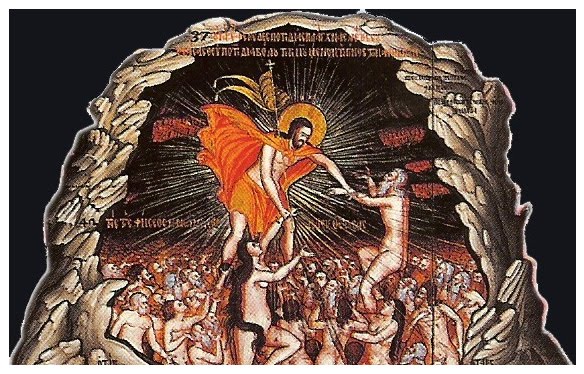
A Mini Commentary, Pt. 9 (Ephesians 4:8-10) Did Jesus Preach in Hell?

This was a more complicated section on which to comment. Frankly, this could have been much longer if I had focused more on the questionable doctrine called the “Harrowing of Hades.” Nevertheless, I hope what I have written will be of some help or encouragement.


See the source image

4:8-10 8Wherefore he saith, “When he ascended up on high, he led captivity captive, and gave gifts unto men.” 9(Now that he ascended, what is it but that he also descended first into the lower parts of the earth? 10He that descended is the same also that ascended up far above all heavens, that he might fill all things.)

v. 8: Wherefore he saith, “When he ascended up on high, he led captivity captive, and gave gifts unto men.”

Point One:     

Who is the one that “saith” in verse 8? For the answer we must go to Psalm 68:18; there we find the words of David describing God as a conquering King who spoils His enemies on the mountain and then distributes the spoils as gifts to the people, including to those who are rebellious.

However, one important question that could be asked is: to what extent do we take this comparison? In other words, how specifically analogous is the story of the conquering King to the argument that Paul is making regarding the gifts and the purposes of giving them by Jesus to the Church?

Some have suggested that what is being spoken of is Christ’s ascension to the cross, while others have suggested that after descending to the “lower parts of the earth” Christ rescued those held captive in Paradise and took them “captive” to heaven.

[Note: This teaching is also called “The Harrowing of Hades” and finds support in the Apostles’ Creed: “He descended into Hades.”]

Nevertheless, it would seem the best course of action to simply keep a consistent contextual reading in mind: one that of unity within the Church and individual gifts of grace which Jesus imparts, both to His friends and those who are rebellious, to exemplify His glory and wisdom.

Point Two:     

Beginning with verse seven, the context of Paul’s argument is the supplying each individual the things it needs to function properly in the Body of Christ, the Church. Are there deeper truths to be uncovered? Most certainly? However, we must not carry the analogy too far.

For as long as the author can remember, nearly every time the resurrection of Christ has been preached, the subject of Jesus descending to Paradise and taking the Old Testament saints out of there and up to heaven. The only problem is that there is nothing in the context of Ephesians 4:1-16 that addresses Paradise, hell, heaven, or even death! All that Paul addresses in these sixteen verses is the subject of unity.

Another passage that is linked to this verse is 1 Peter 3:19: “By which also he went and preached unto the spirits in prison.” But what is often never included with verse 19 is verse 20, which reads [emphasis added]: “Which sometime were disobedient, when once the longsuffering of God waited in the days of Noah, while the ark was a preparing, wherein few, that is, eight souls were saved by water (1 Peter 3:20 KJV).

It is quite puzzling why 1 Peter 3:19 would be used as a supporting text (along with Luke 23:43, Psalm 68:18, and Ephesians 4:8-10) for a teaching claiming Jesus went to deliver the saints, when those to whom Jesus preached were the “disobedient.”  It is therefore illogical to deduce from this passage in Ephesians that Paul was speaking of anything other than the unity of the Body of Christ, the power of God, the Kingship of Jesus the Conquering King, and Christ’s generosity.

v. 10b: …that he might fill all things.

            Building on the image of the king that ascended to conquer his enemies, Paul speaks of Jesus’ all-encompassing Lordship with a parenthetical explanation of the logical comparison being made (beginning in verse 9). This imagery of Jesus’ omnipresent authority and power in this passage can be compared to other verses, such as: Eph 1:20-21(in the heavenly places, far above all principalities); Heb 4:14 (we have a great high priest that is passed into the heavens); Heb 7:26 (a high priest became us and made higher than the heavens).

2 Comments

Filed under Bible Study, Christian Unity, Christianity, Theology

A Mini Commentary, Pt 7 (Eph. 4:6)

I’m so glad it’s Friday! Aren’t you?

But I’m not just happy it’s Friday, I’m happy that Friday means tomorrow is Saturday, then Sunday! In other words, it’s great to have something to look forward to each day of the week.

We now continue with a short commentary on Ephesians 4:6.


Photo by Brett Sayles on Pexels.com

4:6 “One God and Father of all, who is above all, and through all, and in you all.”

One God and Father of all,

            The seventh unifier of the Church is the fact that we all worship the same God and Father of all. Making up the third triad, Paul goes on to describe God our Father as above, through, and in us all. But note that Paul does not use just one or the other in the labeling of the Supreme Being; He’s both God and Father. What a glorious thought when one considers that the Creator is also our Abba! For the one outside of the Body, learning of an omnipotent and omnipresent entity from which they cannot run or hide might be terrifying! However, quite the opposite is true for the child of God. Knowing that God is not just King, Judge, and Executioner, but He’s our loving, all-caring, gracious, merciful Father full of love and pity for His own.

who [is] above all,

            Now describing the God and Father of all, first Paul describes Him as “above all.” We must never forget who God is. He is the wholly “Other” in that He is Holy like no other. There is none like Him. There is none that compare. He is above and beyond anything our imaginations can conceive and the only One to whom the angels cry day and night, “Holy, holy, holy, Lord God Almighty!” (Isaiah 6:3; Revelation 4:8).

and through all,

            But far from the God of Deism (a God who is distant and totally transcendent, without concern for His creation), this God is ever near. Unto every one of us, as Paul told the Athenians on Mars Hill, He is so close that if we would just reach out we would find Him (Acts 17:27).

and in you all.

According to Rick Brannon and Israel Loken, “Most early manuscripts have the general statement, ‘and in all,’ but some early manuscripts and related later witnesses personalize the statement to the readers with ‘and in you all.’”[1] The idea is that God is not distant, though He be far above us; He’s not unreachable or out-of-touch with His creation, for His presence can be seen and felt through it all; and more than a God “out there,” He is personal and cares about the “you.”


[1] Rick Brannan and Israel Loken, The Lexham Textual Notes on the Bible, Lexham Bible Reference Series (Bellingham, WA: Lexham Press, 2014), Eph 4:6.

Leave a comment

Filed under Bible Study, God, Theology

What Having a Thought Looks Like

Last week, as I was studying for the upcoming Sunday morning sermon, I had a thought cross my mind, which led to me jotting it down on my desk calendar.

Before long, my “thought” became notes which would affect 6 days’ worth of my calendar and become the source of much discussion between several other pastor friends and myself.

Amused, I picked up my phone and took a picture, then posted it on Facebook. I commented, “This is what having a ‘thought’ looks like.”

So, with no editing or commentary, I’d like to share my “thoughts” with you. All I did was re-write them so that they could be read in this format.

One doesn’t have to have a sin nature to sin. Angels sinned without a sin nature. Adam sinned. But, since Adam, all have sinned (Romans 5:19), whether innocent or not, for their very nature – the sin nature – is not holy as God is.

The true predicament: Are you as holy as God? No, of course not! Then that is sin! The sheer fact that we are anything less than holy defies the holy law of God which is a reflection of His nature.

The Law is not arbitrary, but in conformity with the nature of God. Therefore, no amount of keeping of the Law, even if possible, would make us holy. Only God could keep the law of His own Character, and only God could live holy and without sin, for it is His nature and only His to live consistently holy.

Therefore, no amount of law-keeping could change one’s nature, thereby making him holy, much less to become holy by keeping the law that denotes past imperfection… unholy to holy. This, again, is contrary to the nature of God which would be contrary to His Law. We have no hope! We need a Savior!

Did Adam have a sin nature that led him to sin? Or, did he willfully sin without a sin nature?

Men might be born innocent, but they are not born holy. One could then be at one moment innocent for never having willfully committed a crime, but because he is not holy, and must become holy, he is in contradiction to God’s nature (the Law within Himself) and is, therefore, a law-breaker – a sinner.

One thing is for sure – We need a Saviour! Amen?

Feel free to add YOUR thoughts below.

11 Comments

Filed under Bible Study, Christianity, salvation, Theology

Pulpit Time: August 23, 2020

Tonight is the first night of the Republican convention. I’m sure it will be far less depressing than the DNC’s version not long ago. I mean, will anybody sing a song about how Nancy Pelosi is destroying their life?

Anyway, you can sit in front of a television (or computer) and watch political pulpiteering, or you can check out some more eternally-important pulpiteering I did yesterday.

By the way, I like my new glasses!

God bless!
Anthony Baker (The Recovering Legalist)

Leave a comment

Filed under Bethlehem Baptist Church, Christianity, Preaching, Theology

What Are the Five Solas, and Did Elvis Sing About Them?

‘O Sole Mio

When I am driving long distances, particularly when I’m alone (as far as I know), I sometimes sing aloud certain songs to keep me alert. Sometimes I sing songs I know well, and other times I make up lyrics to fill in the gaps for songs I know little of.

One particular song is “‘O Sole Mio,” or “It’s Now Or Never.” I will usually sing to myself and use the words interchangeably, adding in what I know of the chorus of “It’s Now Or Never,” then make up the rest from there. The whole idea is to sing loudly, operatically, in order to keep the blood and oxygen flowing, but sometimes my own lyrics crack me up, especially when I expand on the sexually predatory characteristics of Elvis’ version.

Credit: Wikipedia

Actually, the older (1898) Neapolitan song has nothing to do with the English-language hit recorded by Elvis Presley in 1960. ‘O sole mio actually translates into “my sunshine,” while It’s now or never translates into: “I’m so turned on by your looks that we should have a one-night-stand…I’m outa here come daylight.”

So why am I telling you this? I’m glad you asked.

Sole is the Italian word for “sun.” Luce del sole is Italian for “sunlight.” So, by way of a totally unrelated personal story, I want to segue into something that should be important to us all… I want to shine some luce del sole on the Solas 🙂

“It’s now or never . . .” (Elvis)

The Five Solas

Sola is the Latin word for “alone,” and for a practically 500 years non-Catholics (such as myself) have held five particular “solas” near and dear to our theological hearts.

1. Sola scriptura: “Scripture alone”
2. Sola fide: “faith alone”
3. Sola gratia: “grace alone”
4. Solo Christo: “Christ alone”
5. Soli Deo gloria: “to the glory of God alone”

What do they mean? Well, nothing Elvis Presley was singing about, that’s for sure. The following can be found on a great website whose link is already on my sidebar, GotQuestions.org.

Sola scriptura emphasizes the Bible alone as the source of authority for Christians. By saying, “Scripture alone,” the Reformers rejected both the divine authority of the Roman Catholic Pope and confidence in sacred tradition. Only the Bible was “inspired by God” (2 Peter 1:20-21) and “God-breathed” (2 Timothy 3:16-17). Anything taught by the Pope or in tradition that contradicted the Bible was to be rejected. Sola scriptura also fueled the translation of the Bible into German, French, English, and other languages, and prompted Bible teaching in the common languages of the day, rather than in Latin.

Sola fide emphasizes salvation as a free gift. The Roman Catholic Church of the time emphasized the use of indulgences (donating money) to buy status with God. Good works, including baptism, were seen as required for salvation. Sola fide stated that salvation is a free gift to all who accept it by faith (John 3:16). Salvation is not based on human effort or good deeds (Ephesians 2:9).

Sola gratia emphasizes grace as the reason for our salvation. In other words, salvation comes from what God has done rather than what we do. Ephesians 2:8-9 teaches, “For by grace you have been saved through faith. And this is not your own doing; it is the gift of God, not a result of works, so that no one may boast.”

Solo Christo (sometimes listed as Solus Christus, “through Christ alone”) emphasizes the role of Jesus in salvation. The Roman Catholic tradition had placed church leaders such as priests in the role of intercessor between the laity and God. Reformers emphasized Jesus’ role as our “high priest” who intercedes on our behalf before the Father. Hebrews 4:15 teaches, “For we do not have a high priest who is unable to sympathize with our weaknesses, but one who in every respect has been tempted as we are, yet without sin.” Jesus is the One who offers access to God, not a human spiritual leader.

Soli Deo gloria emphasizes the glory of God as the goal of life. Rather than striving to please church leaders, keep a list of rules, or guard our own interests, our goal is to glorify the Lord. The idea of soli Deo gloria is found in 1 Corinthians 10:31: “So, whether you eat or drink, or whatever you do, do all to the glory of God.”

The five solas of the Protestant Reformation offered a strong corrective to the faulty practices and beliefs of the time, and they remain relevant today. We are called to focus on Scripture, accept salvation by grace through faith, magnify Christ, and live for God’s glory.  © Copyright 2002-2017 Got Questions Ministries

Never heard of the five solas of the Protestant Reformation before today? Well, I hope this shed some sunlight – luce del sole – on them for you 😉

43 Comments

Filed under Christianity, God, grace, Martin Luther, Theology

Something Good Worth Waiting For

I waited patiently for the LORD; and he inclined unto me, and heard my cry. – Psalm 40:1

There’s an old saying, “good things come to those who wait.” Where did it come from? Who said it first? I don’t know, although I’m sure it’s traceable. All I know is that the first verse of Psalm 40 says almost the same thing, only what comes to the one waiting is better than anything this world can offer.

Something’s Wrong

Let’s think about some things that have to be going on for this verse to make any sense. First, something is wrong. Why else would David be crying out to God? Something is wrong. Why else would he be wanting God to do something.

Last night I dealt with some serious prayer requests. One thing led to another and I brought up the question that so many ask: “If there’s a God, then why is there pain? Why do good people suffer?” Here’s another question, though: If there is no God, and still there is pain and suffering, then what’s the point? Either there is pain and suffering and people going through bad times for no reason whatsoever, or there is a great plan beyond our understanding, one being worked out by a loving God.

The pain is there, regardless. Why not believe there’s hope?

In God’s Time

The second thing to observe is the fact that God works on His own time table. David cried out, for how long we don’t know, but God’s response was not immediate.

How often to we find ourselves calling out in prayer, “Do something! Do it NOW!” In David’s case, whatever was wrong was more than he could handle on his own; he needed divine intervention. How often do search for immediate answers? How often do we question God and His timing all because we know more about what is really needed at the moment?

David waited patiently. Patience requires faith. It is impossible to please God without faith (Hebrews 11:6). Are you waiting patiently?

To Those Who Wait

To those who wait patiently on the Lord; to those who have faith that God will indeed do what is best; to those who wait God gives something that most do not realize they never truly have – His undivided attention. David waited patiently on the Lord, and He “inclined” unto him.

Picture two people sitting at a table. Lots of other people are at the table, too, just going on and on about all manner of stuff. One person tries to talk to the other, but there are so many distractions. Eventually, when the other notices how much the one wants to talk, he leans over, rests on an elbow, bends an ear, and says, “Now, what were you saying?”

God is omniscient; it’s not like He can’t hear all prayers. But within this verse we get a glimpse into the reality that there is something special, a sweet privilege that comes to those who “wait patiently on the Lord.” To reach that point of communion with the Creator of the universe, to know you have His ear: now that’s a good thing for which to wait, don’t you think?

1 Comment

Filed under Bible Study, God, Love of God, Theology