Tag Archives: slavery

My Grandfather Owned Slaves. Now I’m Freeing Them.

A Legacy Begins in Georgia

From Tarvin, England, my great-great-great-grandfather eventually settled in Georgia. In the 1830s, with the help of a dozen men, he dug a “big hole” in search of gold.

Long before the California gold rush, gold was discovered in Cherokee country—specifically, middle Georgia. After arriving in the U.S., John Hockenhull made his way south and acquired the Battle Branch Mine. Hoping to strike it rich, he and his team dug a massive, fruitless hole.
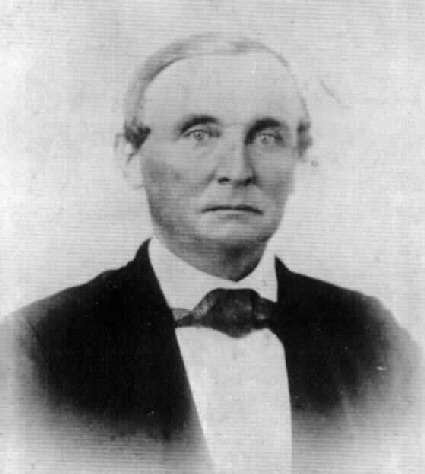
Maj. John Hockenhull, Sr.

Striking Gold Against All Odds

Nearly broke, Hockenhull released his men, promising to pay their back wages someday. All but one, John Pasco, left.

Then, like something out of a movie, Hockenhull and Pasco struck gold. On that first day, they found nuggets the size of peas and acorns. The Battle Branch Mine became the richest in the state. In a moment, my grandfather went from nearly bankrupt to wealthy.

From Gold to Bricks—Built by Slaves

With his fortune, Hockenhull entered the brick-making business. As was common at the time, he used enslaved labor—up to two dozen individuals by some estimates.

He used his bricks to build the first brick home in Dawson County, Georgia. More significantly, the bricks made by his slaves were used to construct the Dawson County courthouse in 1858. That courthouse still stands today.
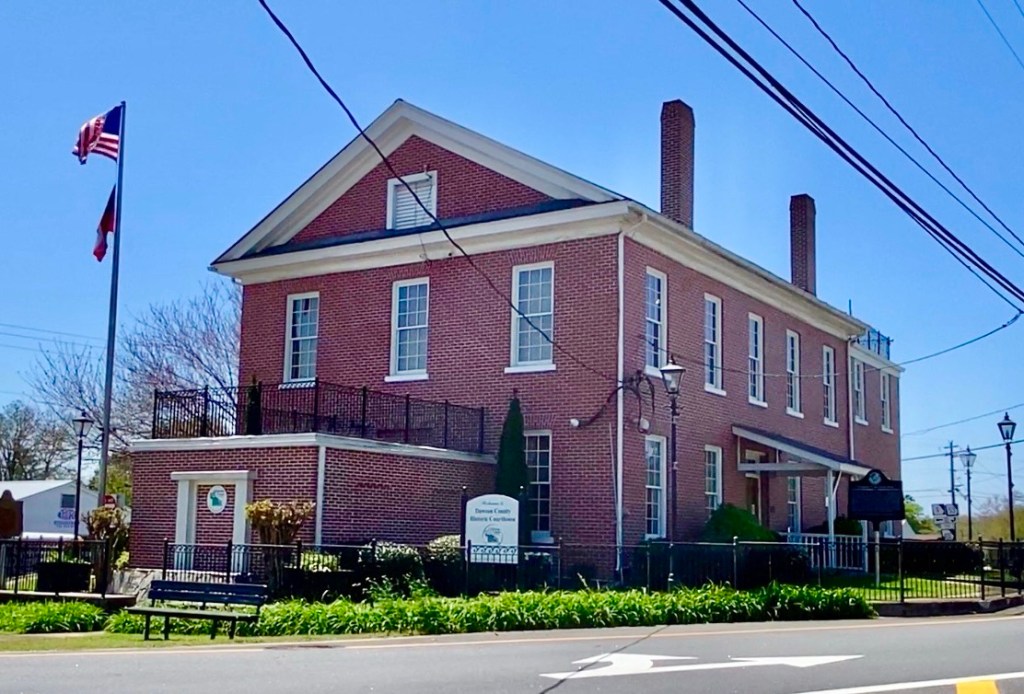
Dawson County Courthouse

Remembering the Past

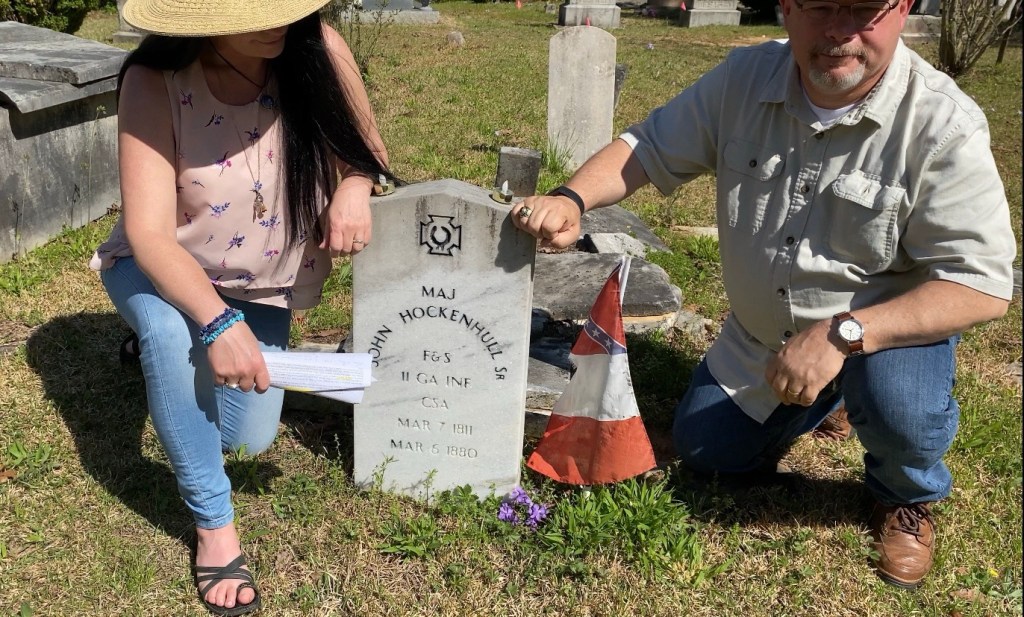
Years ago, my sister and I visited it—along with our grandfather’s grave. We couldn’t visit his home; the land is now owned by the Department of Defense.

When the Civil War broke out, Hockenhull joined the Confederacy, earning the rank of Major due to his status and business experience. He survived the war and died in 1880 at age 68.
Why Share This?

So why share this story? Am I ashamed? Trying to erase guilt? Not at all. I haven’t benefited from my ancestor’s sins, nor do I carry his guilt.

But slavery hasn’t disappeared. It just moved.

Modern Slavery in Pakistan

Today, in the brick kilns of Pakistan, entire families—men, women, and children—are trapped in generational debt slavery, making bricks in inhumane conditions.

Here’s the painful irony: in 1858, my grandfather sold bricks for $8 per 1,000. That’s around $300–$500 today. In 2025, in Pakistan, 1,000 bricks sell for just $6.

Six. Dollars.

Some try to justify American slavery by claiming slaves were “treated well.” That’s a lie. Yet, having seen it firsthand, I can say that modern-day brick kiln workers often endure even worse conditions.

Min. quota is 1,000 bricks per day

What We Can Do Now

That’s where we come in.

Through the incredible work of Grace Charity School in Toba Tek Singh, and Redeeming Love Missions—our nonprofit ministry at [Redeem.Love](https://redeem.love)—we’re rescuing entire families from modern-day slavery and giving their children a chance at education and dignity.

Instead of arguing over reparations, why not make a real difference for real slaves—right now?

Go to [Redeem.Love](https://redeem.love) and give whatever you can. We can’t change the past—but we can help change the future.

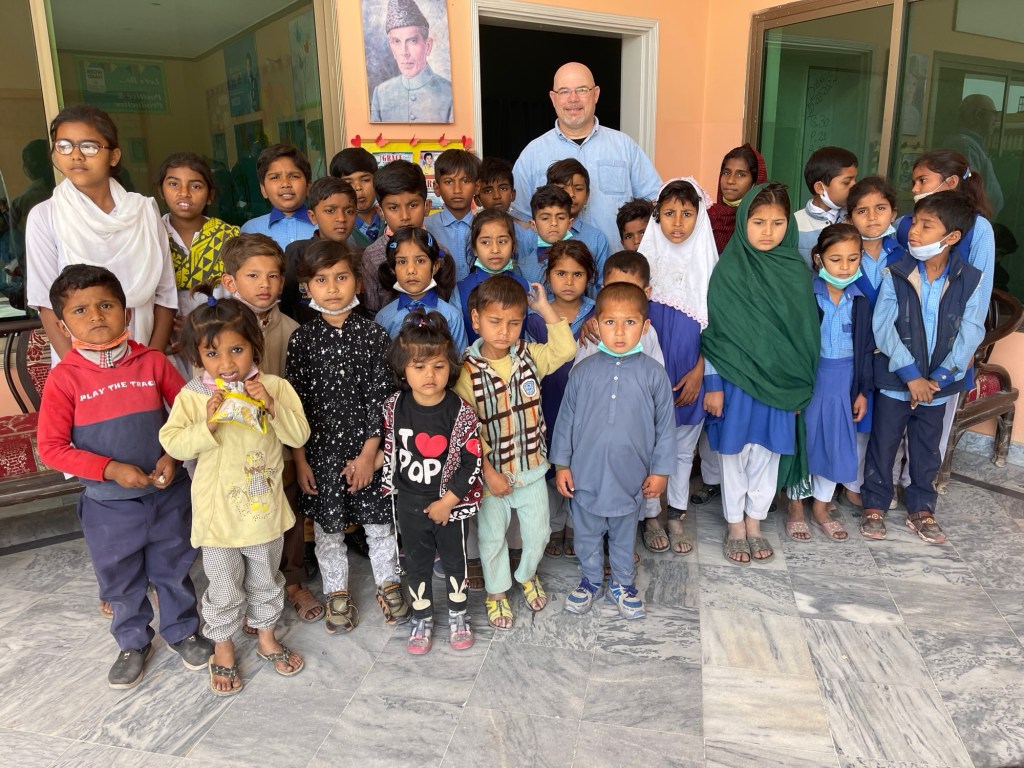
Grace Charity School, Toba Tek Singh

4 Comments

Filed under fundraising, History, ministry, Pakistan

Observations from a Middle-Georgia Pastorate: Church History and #50

The History Room

Does your young, newborn of a 20th century church have a history room? Probably not.

The last church I pastored was considered “historic,” but is was only founded in 1946, not even the 1800’s. It didn’t have a “history” room, only a file cabinet.

But this church (Bethlehem Baptist) was founded in 1791! Therefore, it has a “history room” where old church records are stored. And let me tell you, reading the minutes from a church business meeting held 230 years ago is a trip!

How Times Change!

One of the things that rarely gets discussed in modern churches is church discipline. I mean, it’s very rare that a church member gets called to the carpet for sinful behavior these days, much less barred from fellowship or excommunicated. Yet, spend some time in the history room here at BBC and you will find out that things were a LOT different 200 years ago.

I hereby submit, for your edification and entertainment, selected readings from the minutes of Bethlehem Baptist Church.

  • Jan. 1, 1791:  “Excommunicated Robert.” That’s it. Nothing else was recorded!
  • May 20, 1791:  “Restored James Spratley to full fellowship.” Well, at least something positive happened.
  • June 6, 1792:  “Church met in conference . . . Stephen Renfroe is brought on trial & gains fellowship. ‘The church still seems divided concerning a pastor & 12 of the members rise & declare themselves grieved with the calling of Benjamin Thompson as pastor. Confusion & death is like to take place.‘” Ummm, that doesn’t sound good!
  • Sept. 28, 1792: “Ch. met in conf. Nothing of note came before us. Love seems to abound.Let’s hope so!
  • April 27, 1793: “[Bethlehem Baptist Church] met in conference. No business presented. Br. Baker, his wife, & negro join us by letter. (Br. Baker later becomes Pastor) Nothing unfinished. Love abounds.” It’s about time, don’t you think?
  • March 14, 1794: “David Wilborn is censured by Sister Taylor for injustice in measuring corn.” Where did the love go?
  • June 14, 1804: “Took under consideration the conduct of James Blunt & it being made plain… Alexander Smith confessed to drinking too much. Sister Little complained that Br. James Taylor had run off a part of her land. Neal, Walker, & Edmund May (Mayo?) to reconcile matter.”
  • March 18, 1815: (One month after the War of 1812) “Friday before the 3rd Sunday in April set apart as a day of thanksgiving to God for the aversion of impending danger & the return of his mercy towards us as a nation in delivering us from Wars & bloodshed & restoring peace in our country.”
  • Jan. 15, 1820: “Br. Manning & Barber to cite Jeff & wife (colored) to attend next conference to answer for some charges alleged against him viz: dishonesty & preaching without leave of the Church. Sister Molly a woman of color, dismissed by letter. She formerly belonged to David McCard.” Seems a “negro” had been preaching without permission. He justified himself by saying he’d never been told not to. Then, two months later, the church met and decided, “As to Jeff’s preaching, the ch. thinks proper for him to lay down the practice of taking texts to advance doctrine from, but recommended him to use the gift in public of singing, prayer & exhortation.” Ah, yes! Those colored people sure knew how to sing, didn’t they?

Like I said, things sure have changed in the last 200+ years, haven’t they?

And then there was #50!

So, with all this history, my curiosity got the best of me: I wanted to know where I fell in the lineage of pastors. How many had there been, and what number was I? When I figured it out, there had been 49 men who served a total of 56 tenures here at Bethlehem (a few had been asked to serve a second or third time).

That made me the 50th man to be pastor! Or as one deacon called my last night, the “golden boy.”

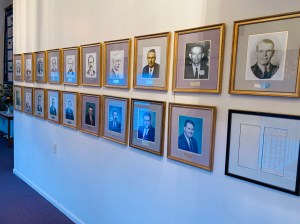
Portraits of pastors (mine isn’t up, yet). But this is only 20. 30 more are missing.

Yep, I’m the 50th pastor serving in the 57th tenure … and the second Baker. But THIS “Br. Baker” ain’t got no slaves!

“Love abounds.” For real.

Leave a comment

Filed under America, baptist, Church, Humor, places

Manipulating the Manna

As we approach the Thanksgiving holiday here in America, I have been studying Exodus 16 and Numbers 11:6-8 for this Sunday morning’s sermon. Over the next few days, I would like to share with you some of the things I’ve learned.

When you have a spare moment, please read these passages (Exodus 15:22-23; Exodus 16; and Numbers 11, particularly verses 6-8) in order to become more familiar with the text from which I am gathering my thoughts.


Manna

After the children of Israel were freed from slavery in Egypt, it took only three days for some of them to start complaining. After only six weeks of freedom from bondage, the whole Israelite camp was “murmuring” against Moses – actually, against God.

Even after all God had accomplished for them, the Israelites were somehow afraid that the One who kept them from all the plagues that befell their slavemasters, the One who had just parted the Red Sea, could not take care of them in the wilderness. Right from the beginning, they began to complain, up until the point where they began wishing they were back in bondage eating the food of slaves.

As you can read in the text, even though God had already done so much, and even though His people were faithless and idolatrous (because covetousness is the same as idolatry – see Ephesians 5:5), the Lord God was faithful to keep His own covenant and miraculously provided food from heaven – manna.

Nevertheless, even though what God provided them was sufficient to meet their needs, over time they once again began to remember with fondness the foods of Egypt. Therefore, as they became weary of the manna – as miraculous as it was – they sought ways to change it, to manipulate it, and to shape it into something akin to what they missed from the years of their captivity.

Manipulating the Gospel

Do we not do the same thing today with the simple, yet wholly-sufficient gospel of Jesus Christ? Is it not sweet and pleasant enough?

When we are forgetful (forgetful of God’s mercy and grace); when we allow discontent to develop in our hearts; when we take our eyes off God; when we doubt His promises and provision; when we selectively remember the variety of lustful pleasures in Egypt that have tainted our palate; the simple, pure, wholesome things of God lose their appeal, leading us to mix and mash the “manna” with things that suit our particular tastes.

Unfortunately, all we end up with is something no one will find palatable or satisfying.


In my next post, I will share with you some actual statistics I uncovered regarding the miracle of the manna in the wilderness. Hint: You’ll need a “boxcar” to walk away with it.

1 Comment

Filed under Bible Study, Theology